Frigates for Finding Franklin!

“Franklin Search Frigates!” What?! The three ships we are profiling today were involved in an important but unglamorous role: sustaining the search efforts for the missing sailors of the 1845 Sir John Franklin Expedition ships HMS Erebus and Terror. They helped support the search missions by caching supplies along the Alaska coast to provision the crews that were exploring the Canadian Arctic. This was important work, but is rarely mentioned in the literature about the lost Expedition or the many searches.
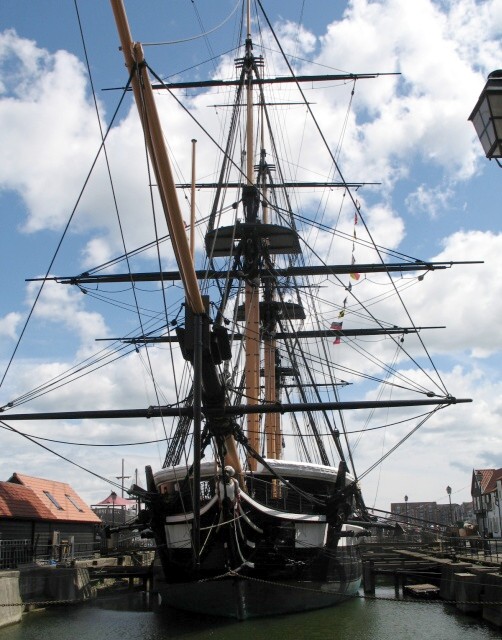
The last of the Franklin adjacent ships! HMS Trincomalee at Hartlepool Maritime Experience, 2009. Credit: Ian Petticrew, CC BY-SA 2.0 https://creativecommons.org/licenses/by-sa/2.0, via Wikimedia Commons

The Leda class frigates HMS Daedalus, Amphitrite, and Trincomalee were the largest ships that we are aware of that were involved in supporting the Franklin search efforts.1 The service of these three powerful vessels, from 1851 to 1854, involved supply missions to sustain the western Arctic searches (and especially the ongoing searches of HMS Plover under captains T. E. L. Moore and then Maguire). These efforts complement the Atholl class corvettes’ similar work, which we explored in more detail in a recent post.

The Ledas were a highly successful group of forty-seven frigates based originally on the lines of a French Hébé, which had been captured back in 1782. Copying French ships was a fine tradition in the Royal Navy.2 The design was adapted to Royal Naval requirements. These were large frigates, that displaced more than a thousand tons – twice the size of the Atholl class supply ships also assisting in the searches and three times the size of Franklin’s two missing exploration vessels. They were originally armed with thirty-eight or more heavy cannon – the main armament on the expansive 150’ gundeck consisted of twenty-eight 18-pounders. During the War of 1812, a member of the class, HMS Shannon, had captured USS Chesapeake in an incredible duel off Boston.
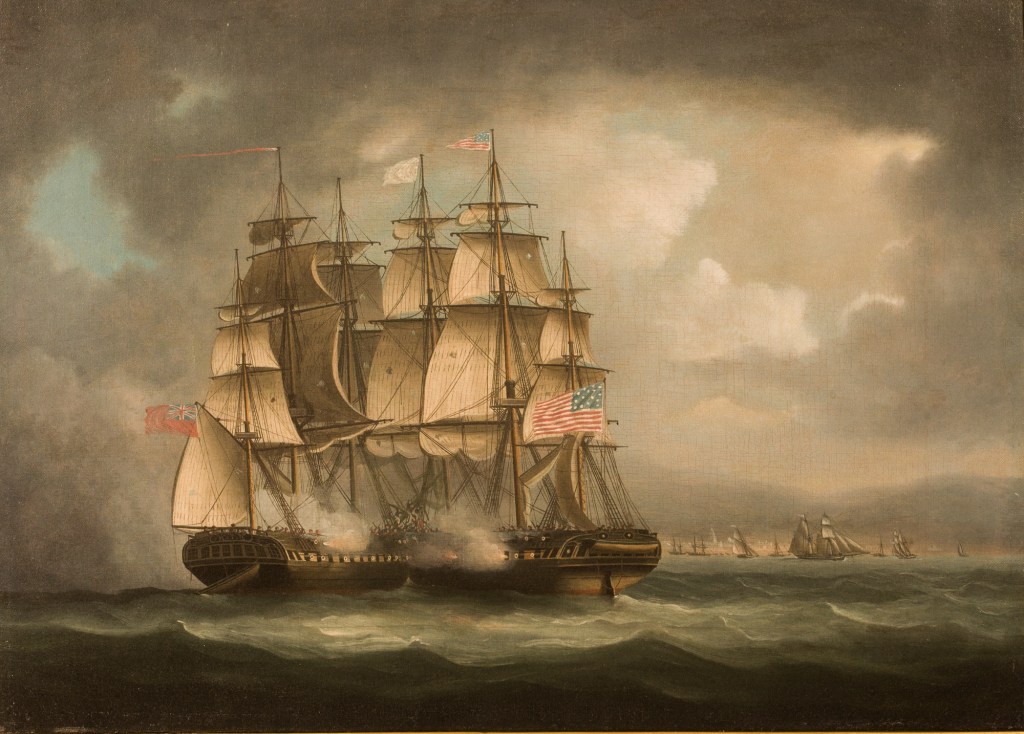
HMS Shannon boards USS Chesapeake on the afternoon of 1 June 1813 off Boston, by Thomas Buttersworth via wikimedia commons. Shannon (left) displays the original fine lines and traditional galleries of the first Leda frigates.

Since units were under construction for almost thirty years, the design was modified many times. “Improved” members of the class eventually boasted updated diagonal framing and circular sterns. The early Victorian sailing navy was serving through an innovative period of technical experimentation, and Ledas underwent some quite radical transformations in their long careers. Today, astonishingly, two members of the class, HMS Trincomalee and Unicorn, are preserved and show different eras of the design.

A 1968 view of HMS Unicorn showing small masts stepped, and the innovative “round stern” design that allowed more cannon to be trained aft, to defend the vulnerable stern. Unicorn and Daedalus were nearly identical. Courtesy of National History Ships UK http://www.nationalhistoricships.org

Daedalus was launched in 1824 just prior to the similar Unicorn, which survives today as a museum ship. Both ships featured the then-revolutionary “circular stern” design. Like Unicorn, she was left in reserve status for decades. The design was cut-down or razéed and converted to a steam-powered screw-propelled 19-gun corvette in 1844, with the stern galleries omitted. Given the odd numbering of cannon, she likely had a single rotating gun over the stern. She famously “tangled” with an enormous sea serpent near the Cape of Good Hope in 1848. Under the command of Captain George Wellesley, Daedalus was sent in 1851 to support the searches of HMS Plover. Daedalus survived as a naval reserve drill ship until 1911 when she was dismantled at Bristol.
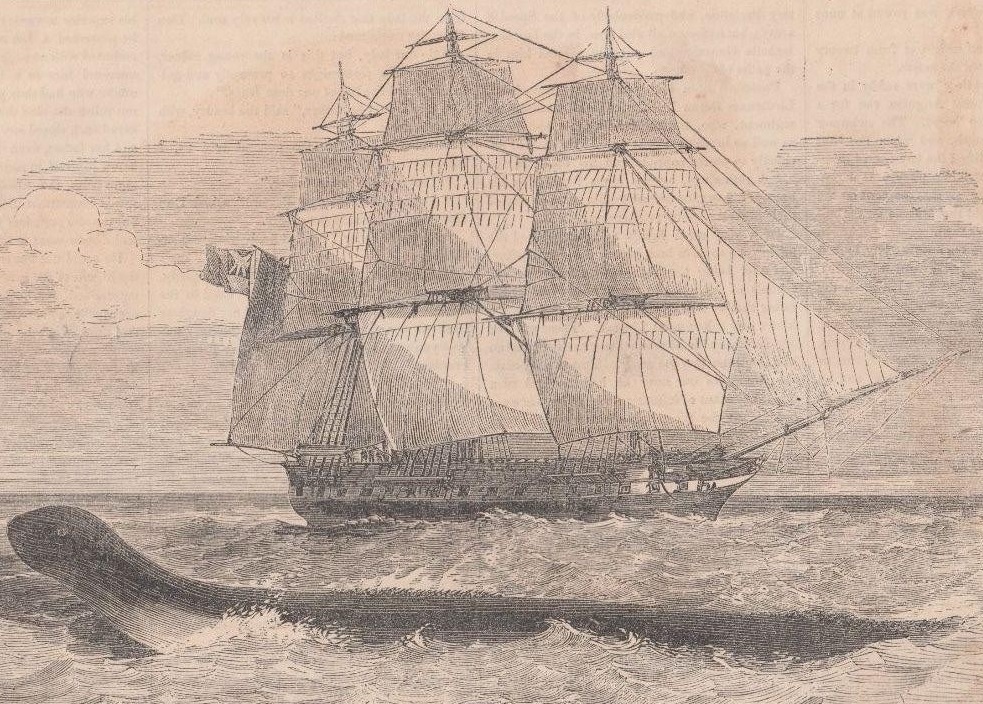
“Sea Serpent Sighted by HBMS Daedalus,” from Gleason’s Pictorial 3 July 1852. [Detail of]. This is a nice depiction of Daedalus refitted to a corvette, though we can’t speak to the accuracy of the sea serpent. Uploader Andrewelston inston, CC BY-SA 4.0 https://creativecommons.org/licenses/by-sa/4.0, via Wikimedia Commons

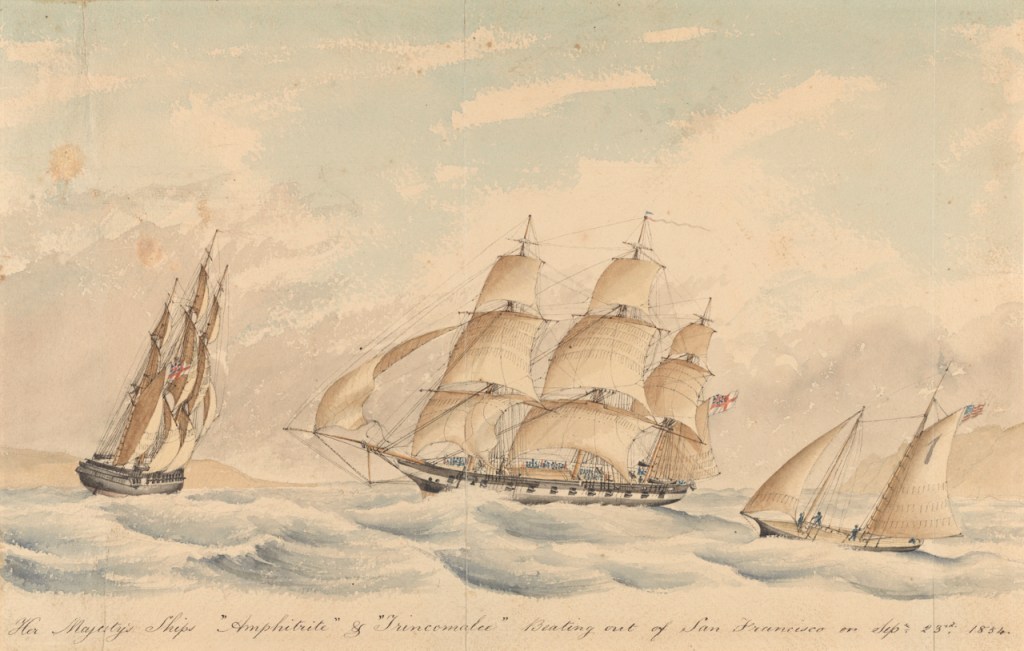
Amphitrite was built in Mumbai of teak, a durable hardwood that proved as resilient as the traditional English oak. She was launched in 1816. While serving as a unit of the Pacific Squadron, under the command of Captain Charles Frederick, she was used on supply missions in 1852 and again in 1853. From the illustrations used in this post, she appears to be the only ship of the three that had not been substantially rebuilt to the lighter specifications of a corvette by the 1850s. Amphitrite was eventually broken up in 1875.
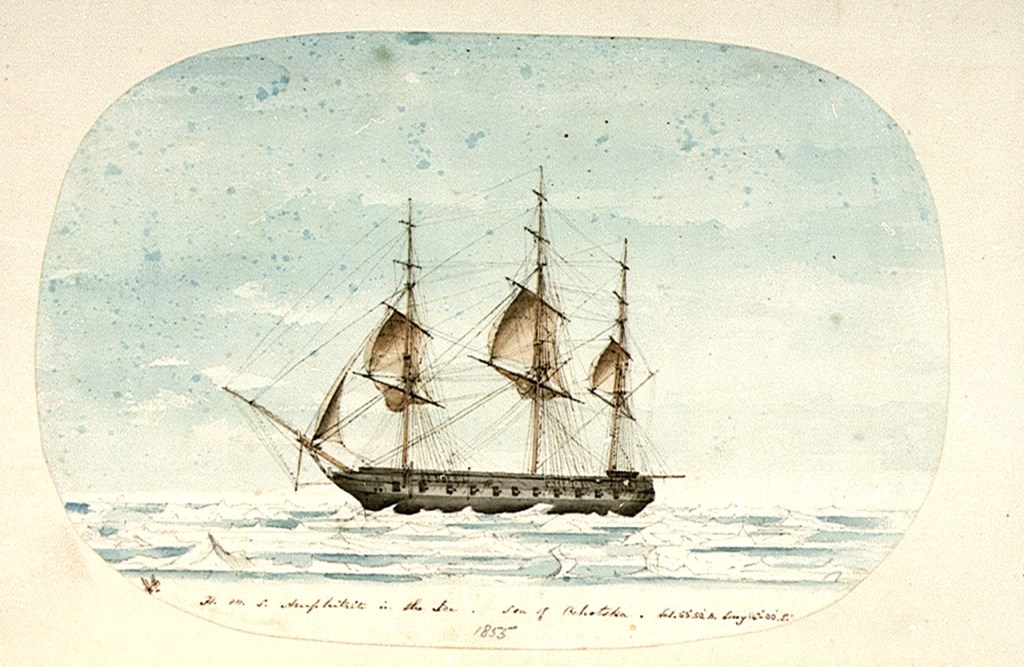
“HMS Amphitrite in the Ice, Sea of Ochotska. Lat. 53o 50′.n. Lony.142o OO’.E” Watercolour by Henry Hand. Credit: National Maritime Museum, Greenwich, London.
Her Majesty’s Ships Amphitrite & Trincomalee leaving San Francisco, 1854. Amphitrite (left) displays the elements of the Leda class design, whereas Trincomalee (centre) had been refitted as a corvette. Watercolour by Henry Hand, PAH0799 Credit: National Maritime Museum, Greenwich, London.

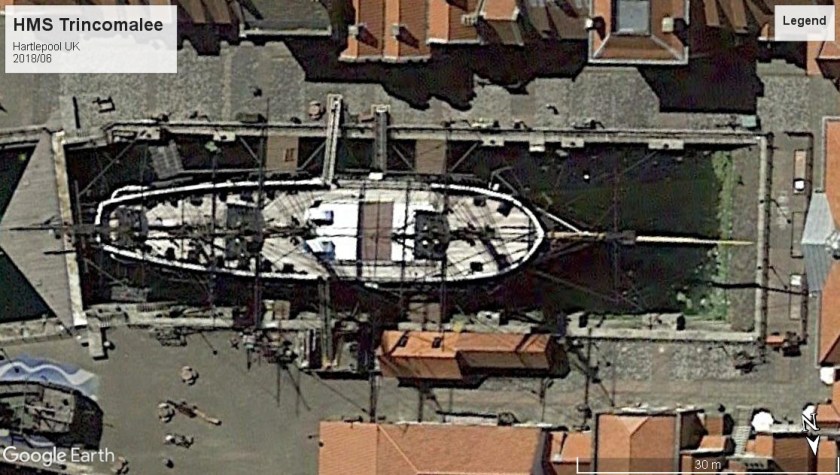
Trincomalee was also a teak-built frigate built in Mumbai. She was launched in 1817 and had to transit to England for completion. Soon after arrival, she was placed in reserve status and remained that way until 1845. The ship was under refit at the same time as Franklin’s ships, Erebus and Terror, and was modified with a new elliptical stern and down-rated as a corvette. Interestingly, this stern is actually a later style than the circular sterns of Daedalus and Unicorn, but fits aesthetically more with the traditional lineage of elaborate Georgian-era galleries. Trincomalee, a unit of the Pacific Squadron, was sent up to Alaska in 1854, under the command of Captain Wallace Houston, and met HMS Rattlesnake. Serving for more than a century as a tender, and a training ship, TS Foudroyant – the companion of the venerable Trafalgar prize Implacable – she was preserved as a museum ship during the 1990s.
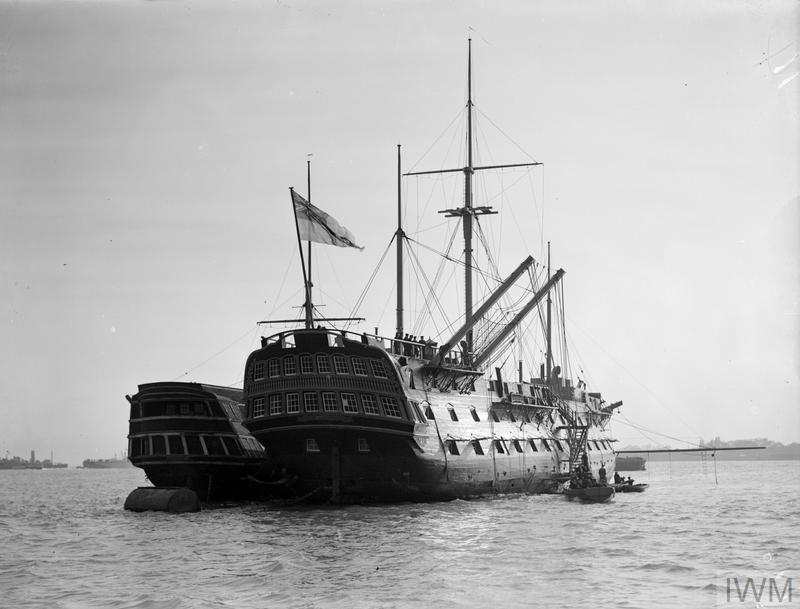
Training Ships Foudroyant (left) and Implacable. Foudroyant was and would be renamed Trincomalee, while Implacable, scuttled in 1949, was originally the French prize Duguay-Trouin, captured at the Battle of Trafalgar, 1805. © IWM (A 25960)

Today this lovely frigate, restored to her 19th Century appearance, exists as the last non-wrecked vessel that participated in any way in the Franklin searches.
  1. The author is again basing this off the list of participating ships found in W. Gillies Ross’s “The Type and Number of Expeditions in the Franklin Search 1847–1859,” ARCTIC Vol. 55, No. 1 (MARCH 2002) 57–69 https://pubs.aina.ucalgary.ca/arctic/Arctic55-1-57.pdf ↩︎
  2. The origins of the whole frigate category were from French vessels captured during the War of the Austrian Succession (1740-48). The same is arguably true of the move from inferior third rate line-of-battle ships to proper 74-gunners in the mid-18th Century. ↩︎


An Aerial Reconnaissance of the Cold War Royal Canadian Navy

Using Google Earth imagery to document warships, the one problem is, you can never go back. Before about the year 2000, there are very few captures. This means the warship types documented in our pages overwhelming represent ship classes in service from the late 1970s (leaving service in the early 2000s) up to today.

HMCS Mackenzie Sep. 1962 (cropped), a fine example of the St. Laurent class and their derivatives, up to twenty units which served from the mid-1950s to the 1990s, with none preserved. Credit: Department of National Defence CN-6516/ Library and Archives Canada

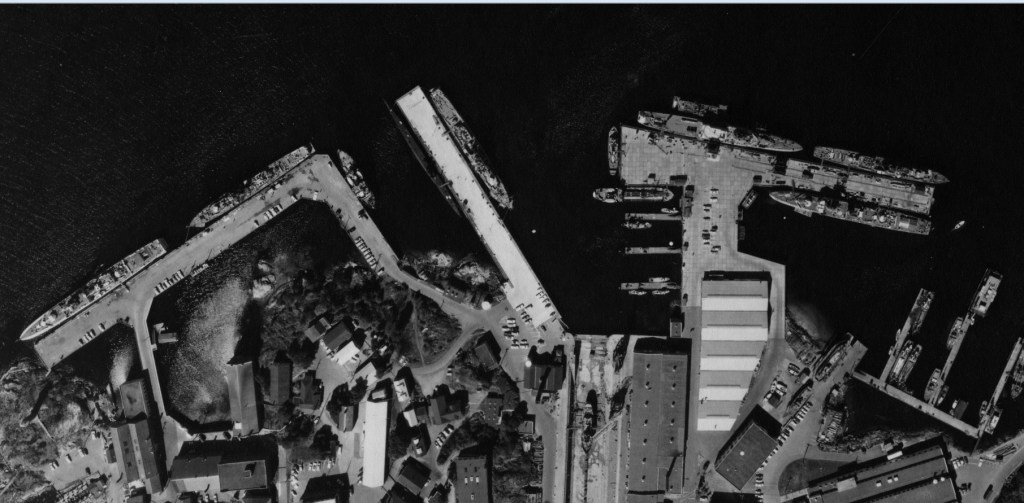
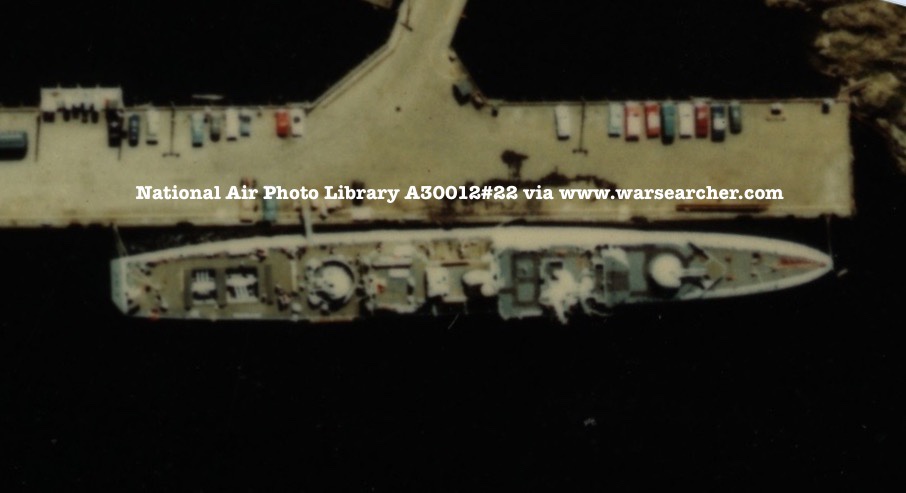
Wouldn’t it be nice if older aerial imagery of naval ports could be incorporated into our database? Well, for our home fleet, the Royal Canadian Navy (RCN), we were able to do just that. In the Fall of 2022, as the World blundered out of Pandemic closures, the Shipsearcher Identification Section (SIS) deployed to the offices of the National Air Photo Library, at Natural Resources Canada. We have been updating our list with these unique views. We look forward to continuing the research.

Where the aerial mapping magic happens: Ottawa’s Booth St. National Air Photo Library, a federalist pile roughly contemporary with the early Cold War fleet.

Wading through photo reconnaissance flight lines and a challenging database, we called up aerials from Esquimalt, BC, and Halifax, NS, from the 1960s and early 1970s. What we found was a target-rich environment of Cold War fleet units on Atlantic and Pacific coasts.

The RCN Pacific Command fleet at Esquimalt BC on a sunny 12 April 1965. This view was captured by an aircraft of 408 RCAF Squadron at roughly 2,500 feet. Here we see three modern destroyer escorts, three Prestonian class escorts, HMCS Grilse (submarine) and a variety of auxiliaries. Credit: National Air Photo Library VRR2634 photo 1047 NRCAN. Crown Copyright.

The RCN of the early postwar era continued to be oriented to Anti-Submarine Warfare (ASW). The aerial mapping flights caught views of St. Laurent class and follow-on Destroyer Escorts, including some of the newer upgrades with helicopter flight decks or ASROC anti-submarine mortars replacing a Limbo ASW launcher.

A 1966 view of one of the RCN’s sleek 1950s designed Destroyer Escorts, at Esquimalt, showing both Limbo Anti-submarine mortars in uncovered wells aft, a 3″/50 caliber turret forward, and a 3″/70 caliber turret in the bows.

Older Prestonian-class ocean escorts, based on wartime River class frigate hulls, were economical conversions. To complement these surface combatants, we also have a view of both former USN submarines HMCS Grilse, a Balao class diesel-electric attack boat and veteran of World War 2 that had served six war patrols in the Pacific War, and HMCS Rainbow, a similar Tench class. Before the acquisition of new Oberon class boats, these two old boats –Rainbow succeeding Grilse– kept the submarine service afloat. Other long-gone RCN units we added range from Cape Class fleet maintenance ships (having posted about the last of these), HMCS Provider replenishment ship, HMCS Labrador icebreaker, and the list goes on down to the little Bird Class patrol boats.

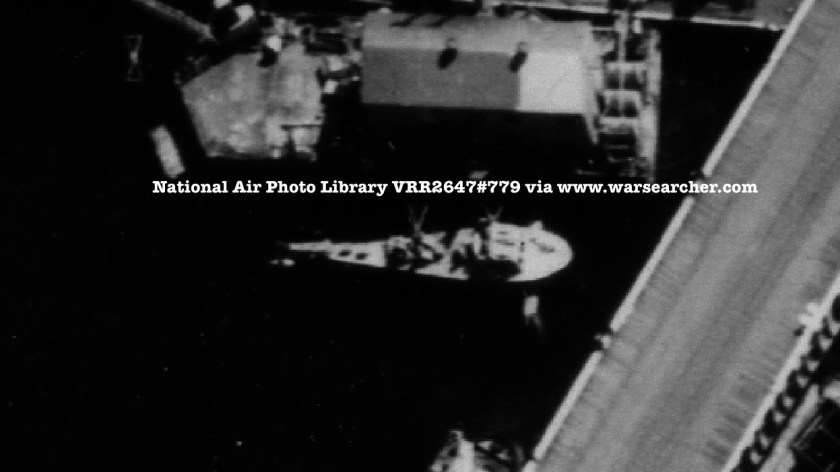
A remarkable view of Baddeck R-103 experimental hydrofoil at the Government Wharf, Dartmouth June 1964. National Air Photo Library NRCAN VRR2647 photo 779 Crown Copyright.

We encourage you to visit the pages to see these views of a vanished era in Canadian naval history. It all adds up to a more robust documentation of the post-Second World War Canadian Navy: 18 new views that help add 10 new classes of RCN ships. We hope to continue to expand our listings to include new sources of aerial or satellite imagery.

This little fellow may help bridge the gap in capability until we can procure our fleet of aerial maritime reconnaissance drones. [Edited] Bundesarchiv_Bild_183-R01996,_Brieftaube_mit_Fotokamera.jpg: o.Ang.derivative work: Hans Adler, CC BY-SA 3.0 DE , via Wikimedia Commons

South American Fleets added to the Project!

The Ship Identification Section (SIS) at Shipsearcher are very pleased to announce five new pages of satellite views, giving a veritable tour-de-force of large South American navies! These nations have interesting fleets made up of a diverse collection of ships, often acquired from elsewhere. The pages are for Brazil, Peru, Chile, Argentina, and Ecuador.

Almirante Grau
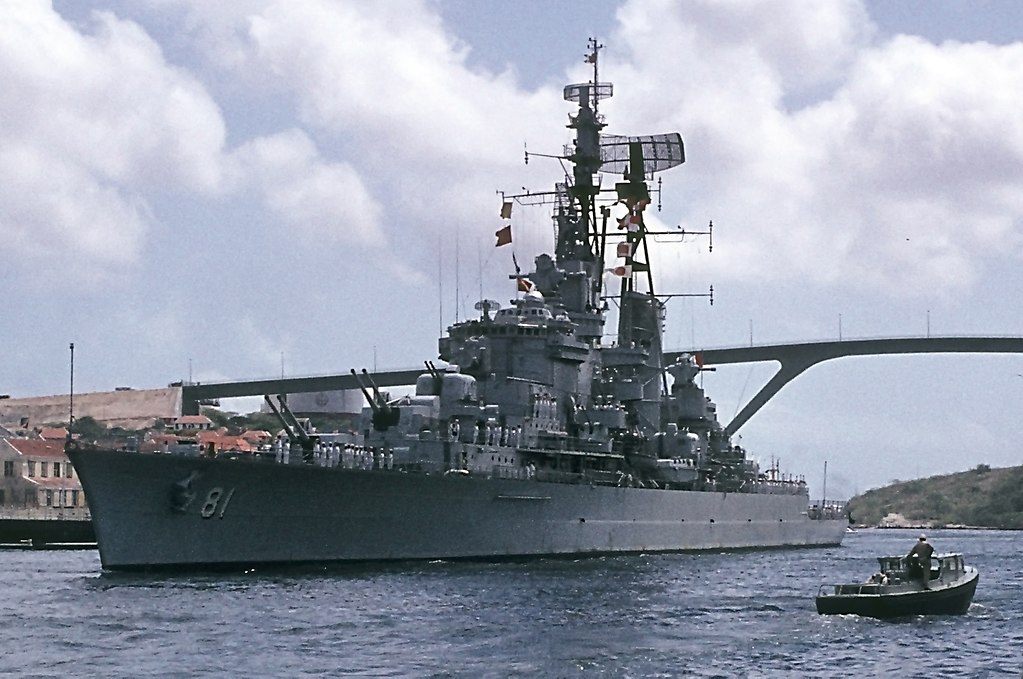
Peruvian cruiser BAP Almirante Grau at Curaçao, June 1973. CLM-81 Credit: Lswarte / CC BY

These views add 39 more pages, 63 classes of ships, and 94 satellite views to the database. The largest and most capable navy documented is Brazil’s fleet, which ranges from a recently-retired aircraft carrier to the last operational river dreadnought, the Parnaiba, originally commissioned in 1938. We have been trying to locate this active monitor in the interior of Brazil for months! We eventually found it far up the Paraguay River at the Mato Gosso do Sul port of Base fluvial de ladário.

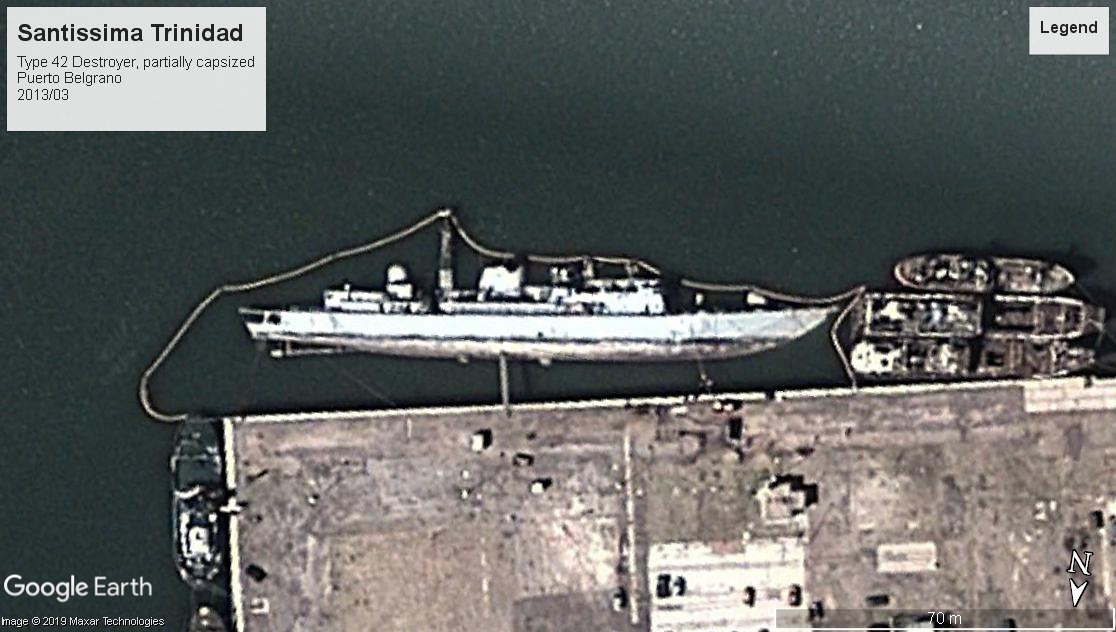
There is much to discover about the other navies, too! Argentina’s fleet have been going through a lengthy period of neglect, symbolized by the sinking of the retired ARA Santissima Trinidad at its berth in 2013, and the tragic loss of the ARA San Juan submarine in 2017.

Santissima Trinidad Puerto Belgrano ARG 2013
Shipsearcher staff discovery: ships viewed in profile from a satellite are not doing well.
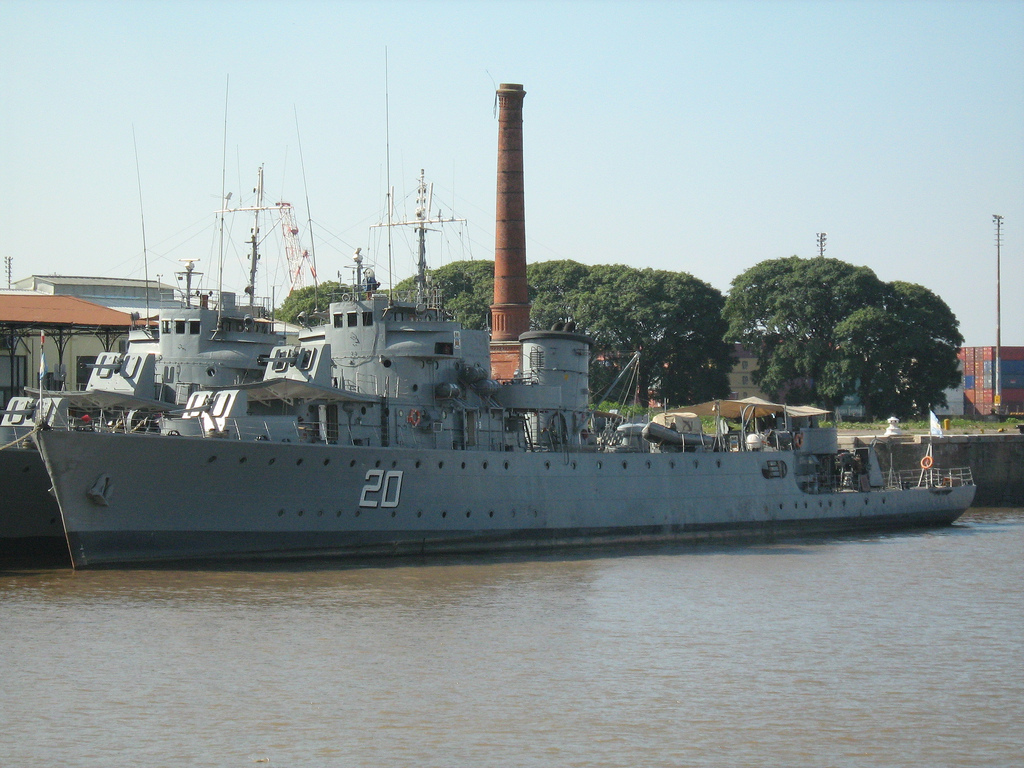
Muratureclass Buenos Aires
One highlight of Argentina’s fleet is the Murature class patrol ships, with one ship, ARA King, in commission since 1946! Credit: Diegoventu / CC BY-SA

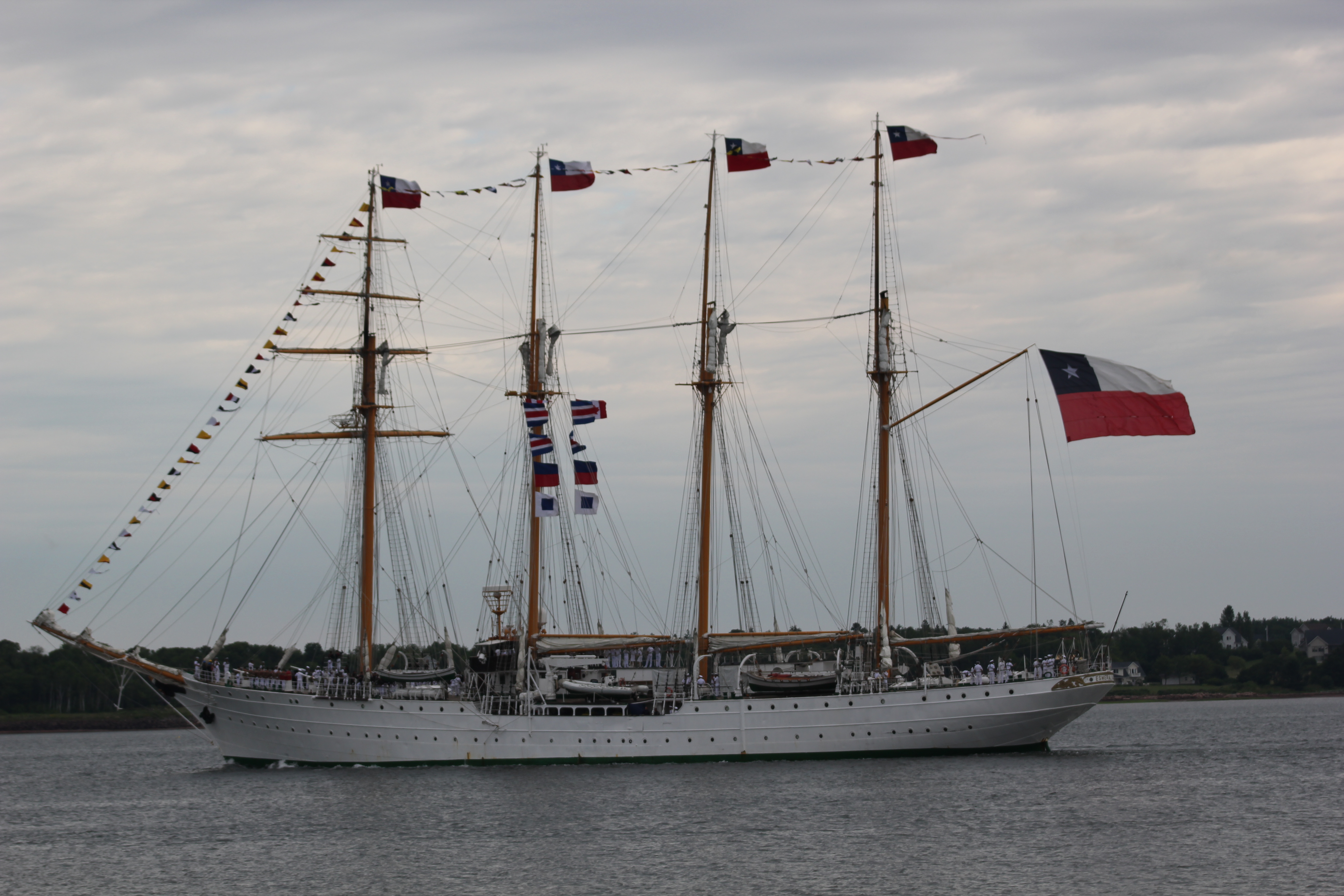
Peru’s pages include the recently decommissioned light cruiser, BAP Almirante Grau, which was once the pride of the Dutch Navy. Chile has a great variety of frigates and a lovely sail training ship with a troubled past, the Esmeralda, which was once used by the Pinochet regime as a jail for political prisoners.

IMG_1097
Esmeralda entering Charlottetown Harbour, PEI, Canada, July 2017. Credit: Warsearcher.com

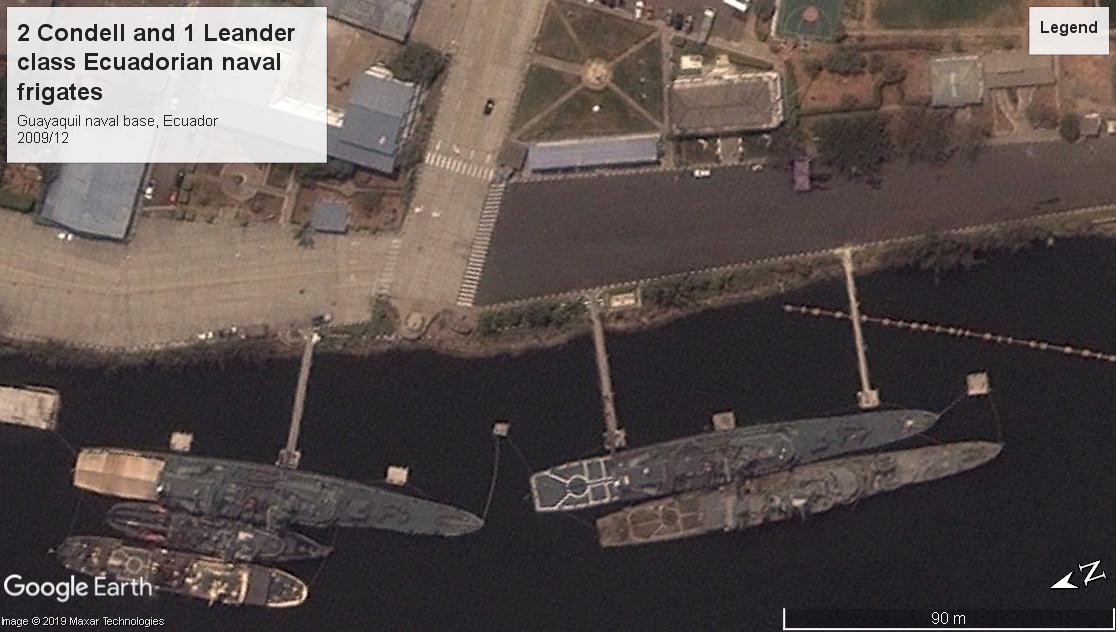
Ecuador’s small fleet includes a US Second World War Landing Ship (Tank), and some updated Leander-class warships, which have been serving for almost a half-century. We hope you enjoy these views, and welcome comments and suggestions.condell and leander class frigates ecuador 2009


See the weird and wonderful Romanian Navy!

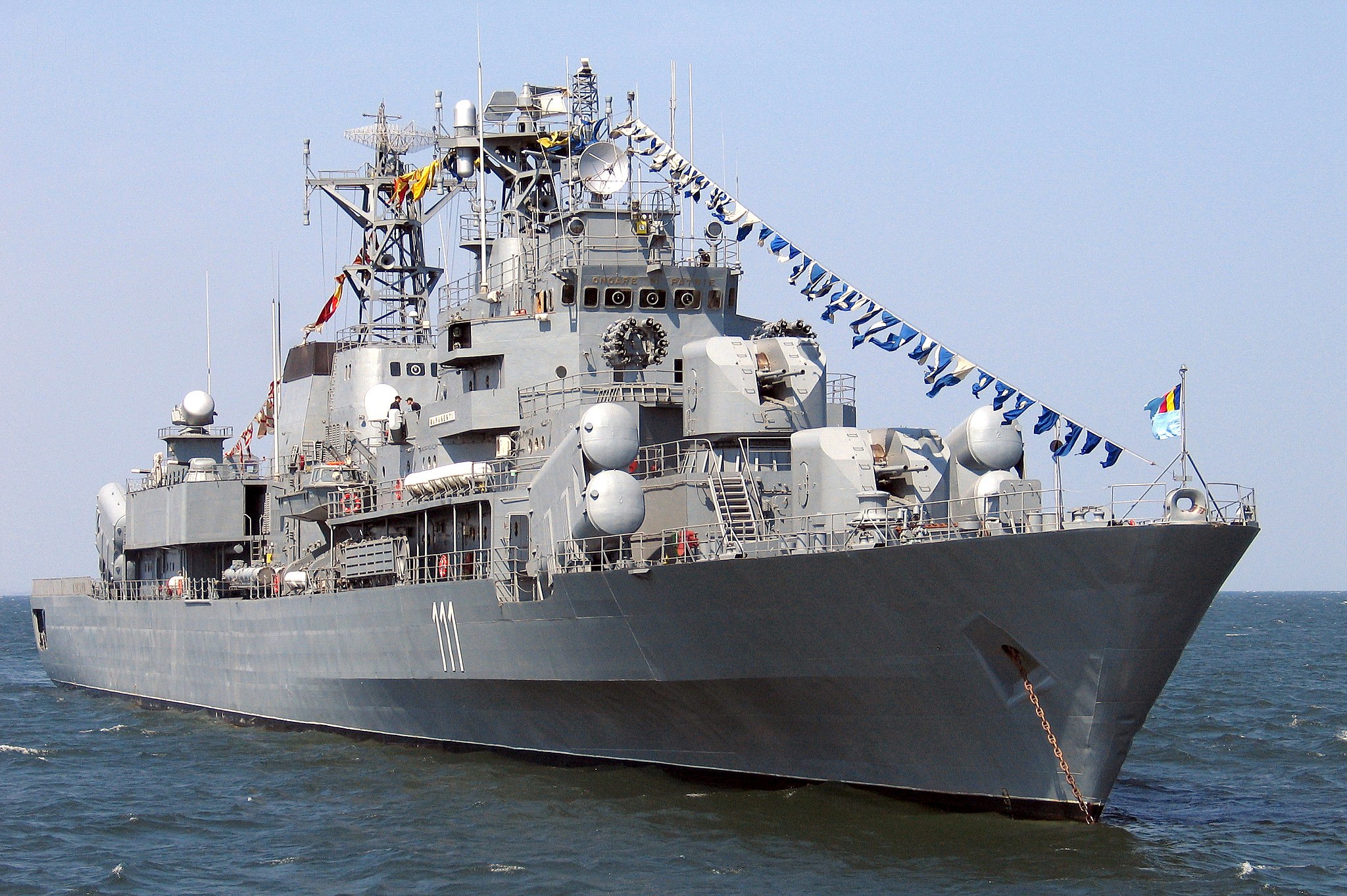
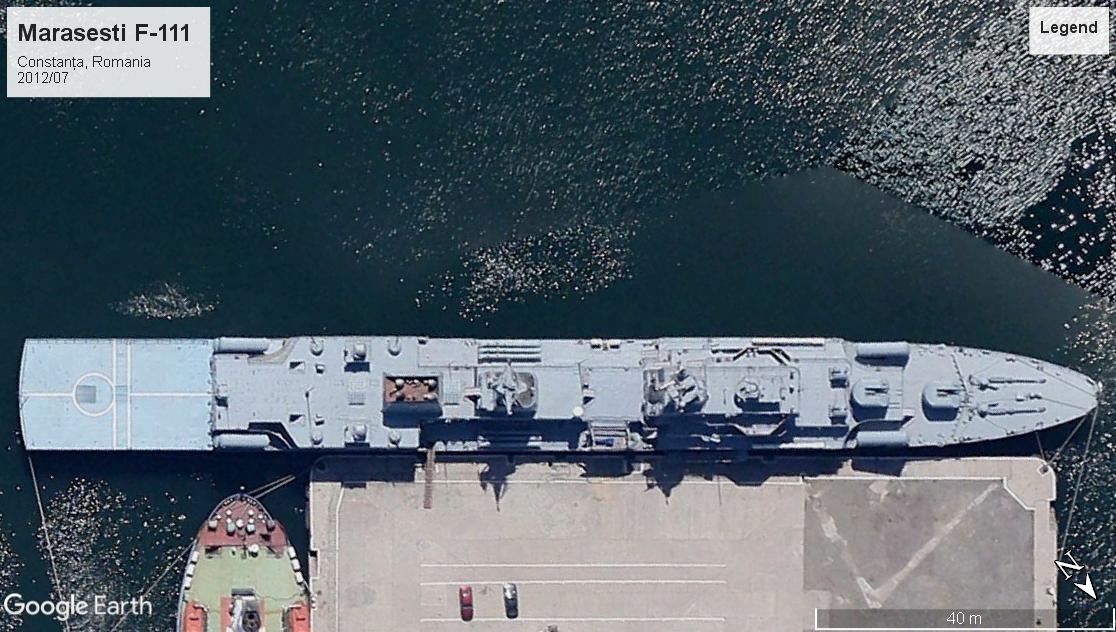
Though not one of the largest or most powerful, there are some fascinating and eccentric qualities to the Romanian Navy’s fleet. Romania’s is the 15th navy documented by Shipsearcher staff. The longtime flagship, ROS Mărășești, was originally conceived as a light cruiser, during the Communist era. As the largest domestic warship design, she emerged as a Romanian original, with a heavy gun and missile armament. By the time of her commissioning in 1992, now on her third name, she had been reclassified as a destroyer. Nowadays she serves as a frigate.

MARASESTI_FRIGATE_AT_THE_NAVAL_FORCES_DAY
ROS Marasesti F-111, displaying the forward twin 76mm guns, tubes for Termit anti-ship missiles, and twin anti-submarine rocket launchers (just forward of the bridge). MAPN / CC BY-SA

Marasesti F-111 Constanta 2012

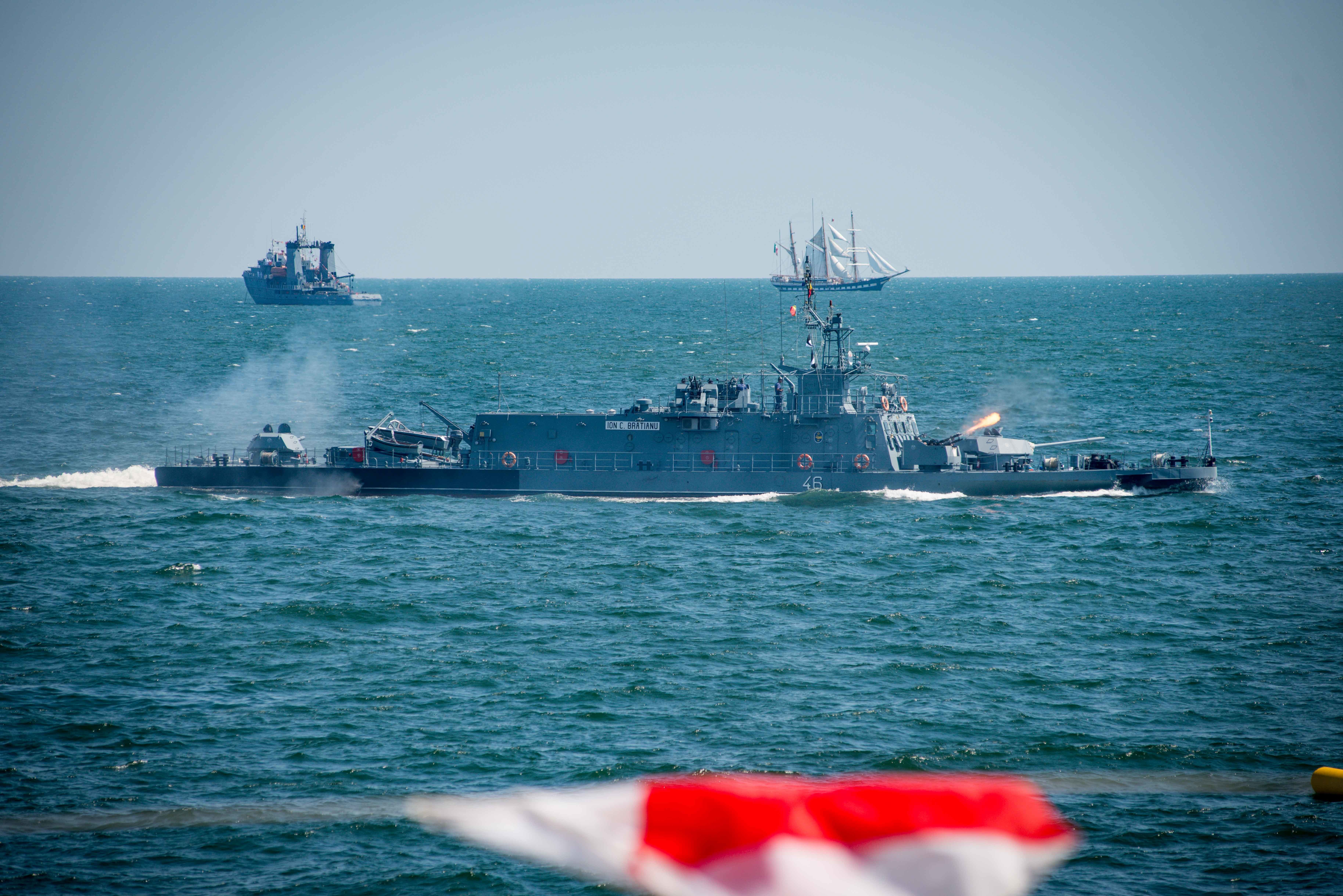
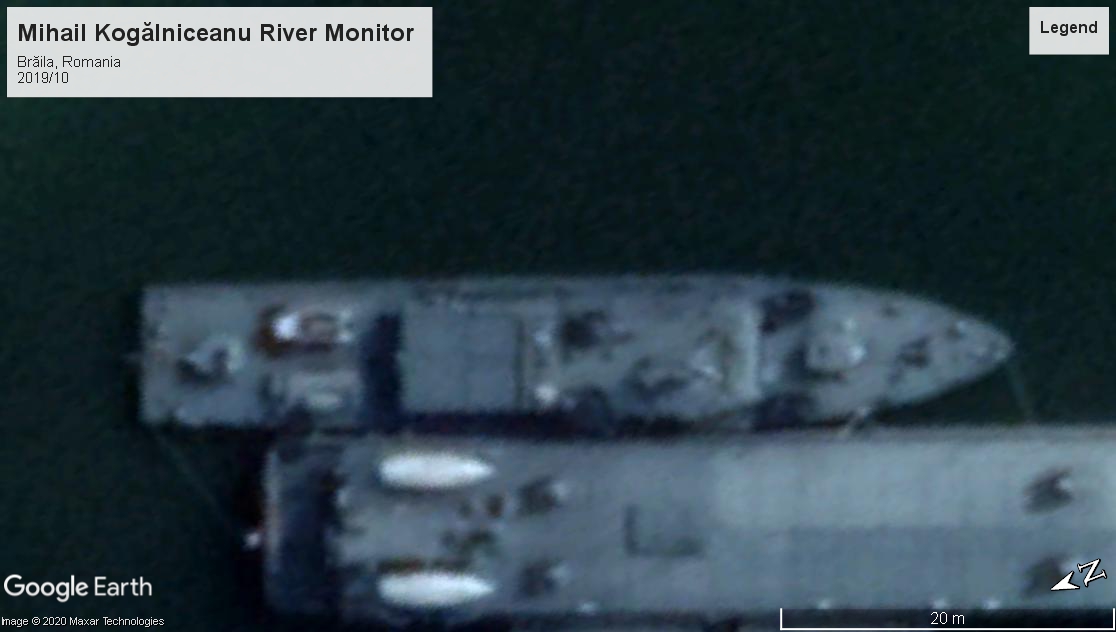
Another remarkable feature of the fleet is the Danube (river) Flotilla, which has a motley assortment of units. The heavy-weights or river dreadnoughts are two distinct classes of river monitors, sailing out of Tulcea and Brăila. These gunboats bristle with an assortment of machine guns and turrets armed with TR-85 100mm tank guns!

180815-N-WO404-382
The monitor Ion C. Bratianu F-46, Mihail Kogălniceanu class, during Aug. 2018 Romanian Navy Day celebrations. US Navy Official 4651743 MC2 Jonathan Nelson

Mihail Kogalniceanu class river monitor Danube2019Other ships span the gamut from old Soviet and newer Chinese designs, to ex-British Type 22 frigates. A Kilo class submarine and the lovely sail training vessel Mircea round out the new Romanian Navy pages. We hope you enjoy this fleet of ships!
2020 – The Next Navy in our Sights!

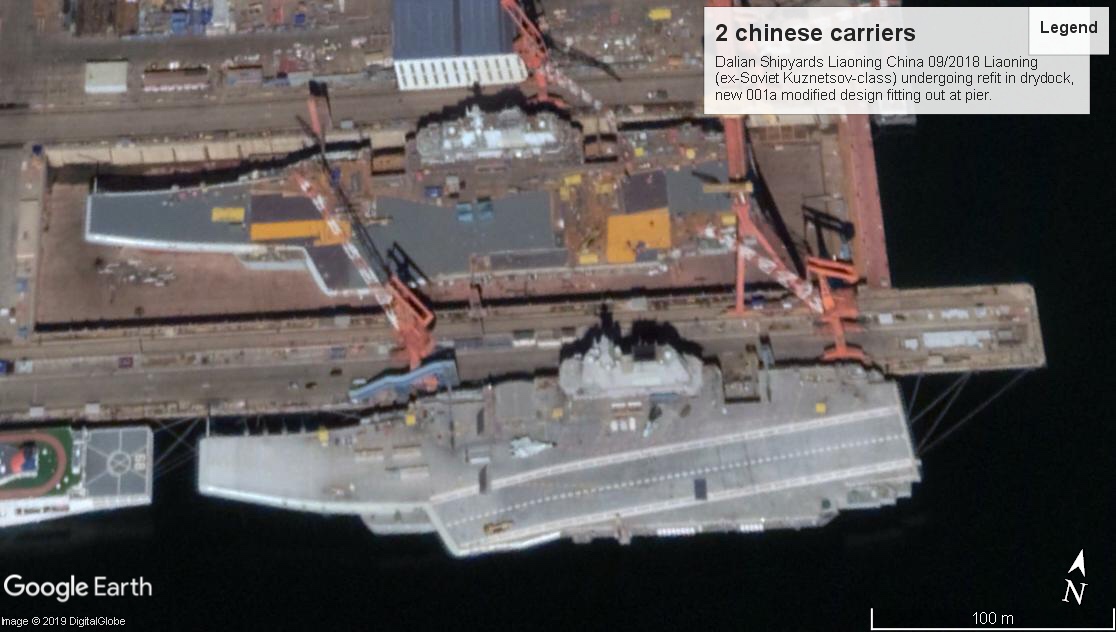
A powerful fleet is emerging from the mists of the South China Sea. Led by a pair of carriers, in line ahead, cruisers, destroyers, frigates, amphibious assault ships, landing ships and other units are being systematically identified and logged in the Shipsearcher Database by Ship Identification Directorate (SID) staff.
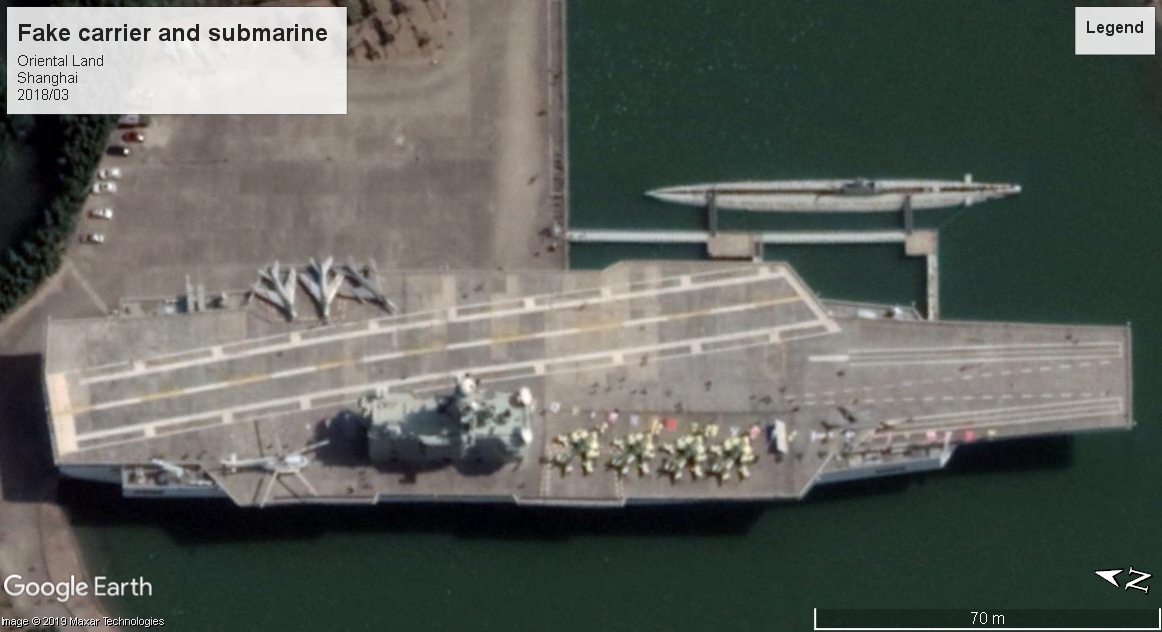
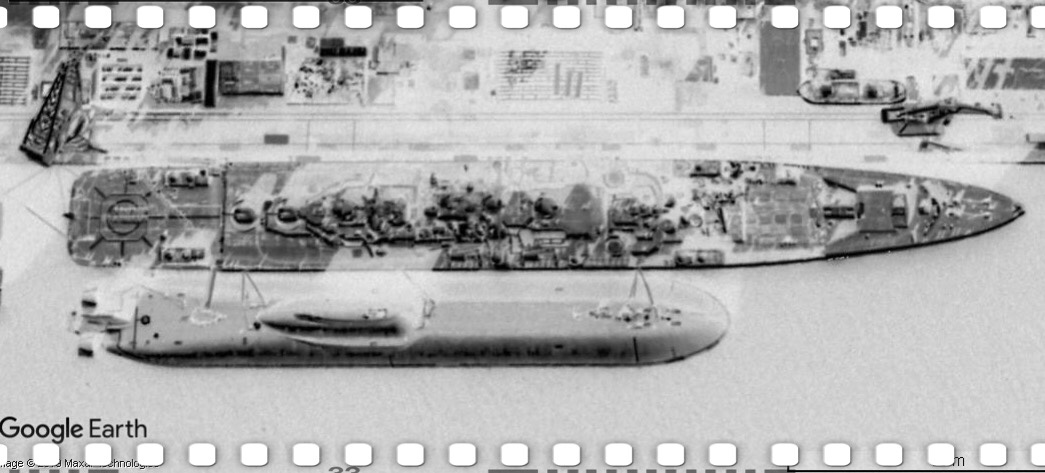
The People’s Republic of China-where even the theme park attractions scare the hell out of naval observers.

The last of the large shipsearcher pages will be the People’s Liberation Army Navy (PLAN). The PRC fleet was once viewed as an out-dated adjunct to the massive land forces. These days, the furious pace of naval construction is setting China on a path to become the World’s penultimate naval force, second only to the USN. In the meantime, please check out any of the other 13 navies on the site!

The entire Russian Northern Fleet has sortied and they are searching for YOU!!

Comrades, this is your captain. It is an honor to speak to you today, and I am honored to be sailing with you on the maiden voyage of our motherland’s most recent achievement. Once more, we play our dangerous game, a game of chess against our old adversary — The American Navy. For forty years, your fathers before you and your older brothers played this game and played it well. But today the game is different. We have the advantage. (Captain Marco Ramius – Hunt for Red October)

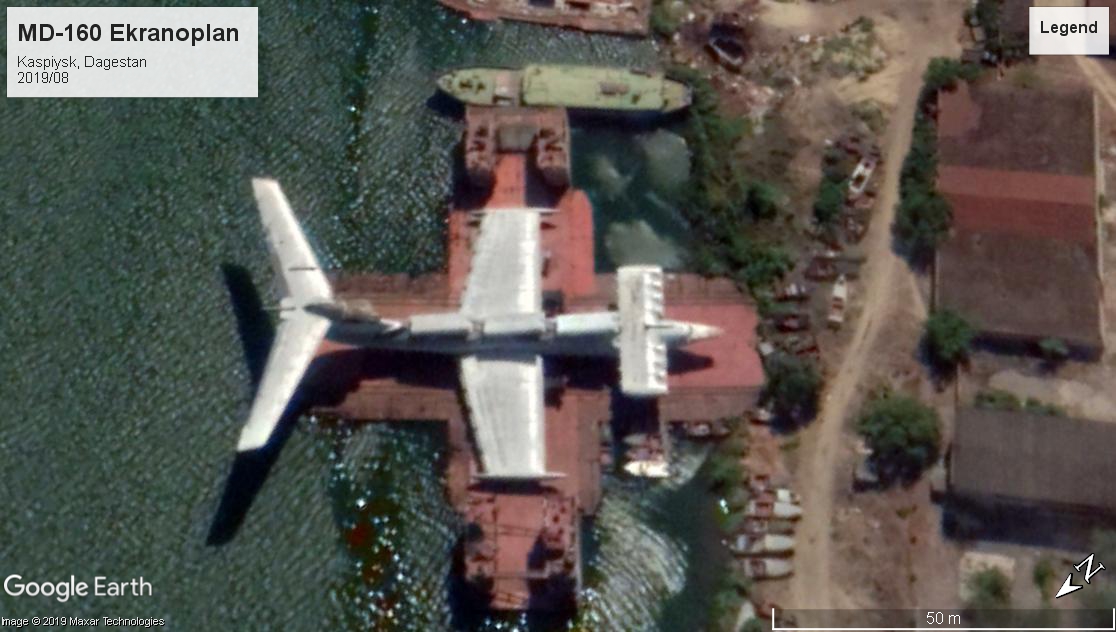
Introducing Russian Surface Units – Current and Retired. It joins the Soviet / Russian submarines page to document many classes of Russian warships, from the massive Kirov class battlecruisers to new stealth frigates. Among the strangest of naval vessels, near the end of the list, are the Ekranoplans: These are the daughters of the “Caspian Sea Monster.” You will have to visit the page to untangle that shipsearcher statement!

Navies Down Under!

Two new pages explore the past and present surface warships of the Royal Australian Navy (RAN) and the Royal New Zealand Navy (RNZN). For shipsearcher staff, it was particularly challenging to locate imagery of these vessels, as they were all loaded upside down (we hope you enjoyed that truly elevated piece of imagery-related humour)!

img_1113
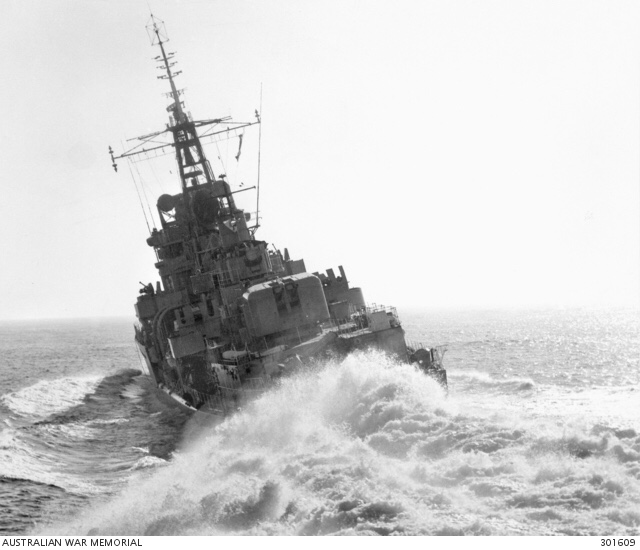
HMAS Vampire D-11 ca. 1959 © Australian War Memorial 301609 https://creativecommons.org/licenses/by-nc/3.0/au/

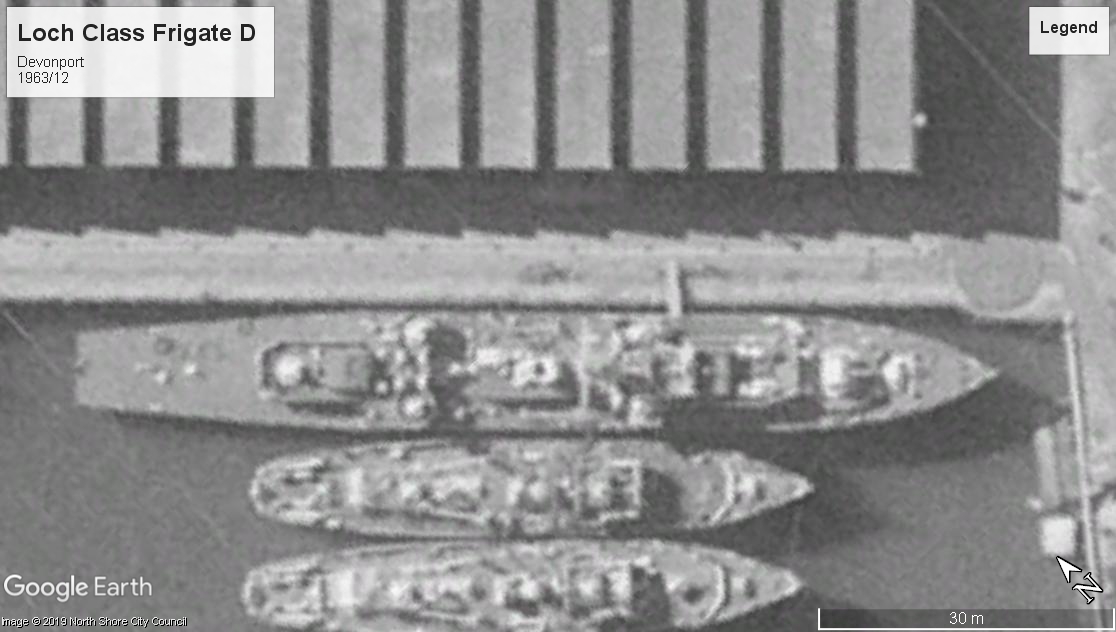
Some of the more interesting features of these pages include the RNZN 1963 views of Devonport Naval Base, Auckland’s major naval facility. The aerial views make identification of early Cold War and long-service Second World War-built warships possible. As for the RAN, the range of ship classes depicted speaks to a diversified, potent force capable of undertaking a range of missions. As always, we have taken pains to track down long out of service or preserved warships.

Loch Class D Devonport 1963
Loch Class frigate and Bathurst Class corvettes, 1963 view of Devonport near Auckland, NZ

These posts complement pages on some of the other Commonwealth navies: Royal Navy and Royal Canadian Navy

Royal Navy Shipsearcher page now up!

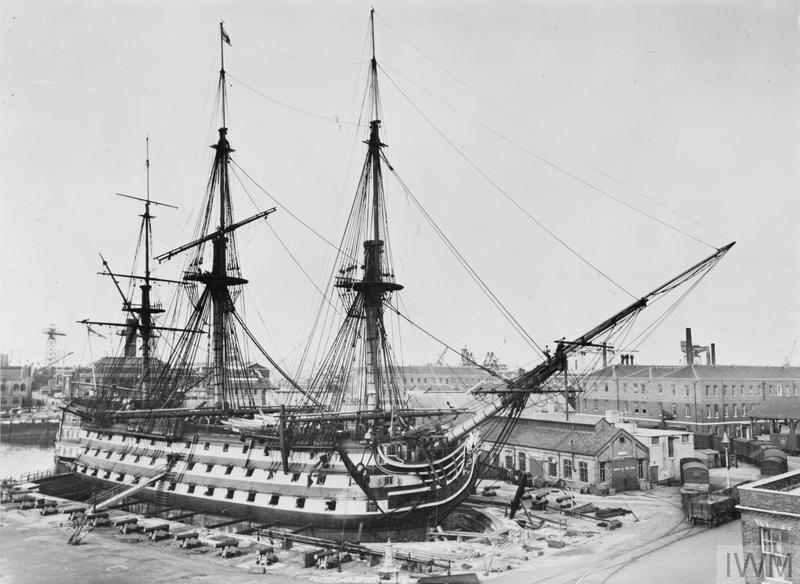
“Heart of Oak are our ships, jolly tars are our men, we are always ready; Steady, boys, steady, We’ll fight and we’ll conquer again and again”…so goes the chorus of Heart of Oak, the official march of the Royal Navy, Royal Marines, and several Commonwealth navies [Youtube rendition here]. The oldest ship on this new shipsearcher page – Royal Navy Surface Units – Current and Retired – is HMS Victory.

HMS Victory portsmouth 1945
HMS Victory, raising the yards in August 1945 © IWM (A 30810)

This first-rate line of battle ship was being built when Heart of Oak first appeared on the London scene to commemorate the victories of 1759. Our Royal Navy page starts with Victory and spans 260 years to the newly commissioned and largest-ever British carrier, HMS Queen Elizabeth.

HMS Queen Elizabeth R08 Halifax 2019
HMS Queen Elizabeth R-08 in Halifax NS, Sep. 2019

Another unique feature of this page is the use of the Kent County Council Archives historical aerial mosaic photos (provided to Google Earth), which allow for Second World War-era captures of ships in Chatham Royal Dockyard. These views make ship identification of famous RN ship classes, such as County Class Cruisers, and aircraft carriers possible. For the first time, we also have a category for monitors, which during the first half of the twentieth century were tubby, short vessels that mounted a few battleship-sized guns! As always, we hope you appreciate the listing, and would be happy to hear about issues with any identification: help us identify our views of unknown ships!HM Monitor Chatham Kent SWW