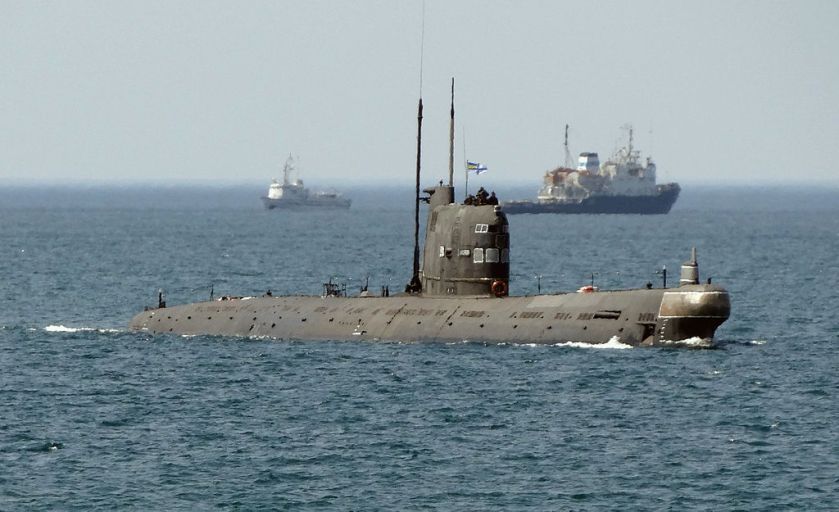
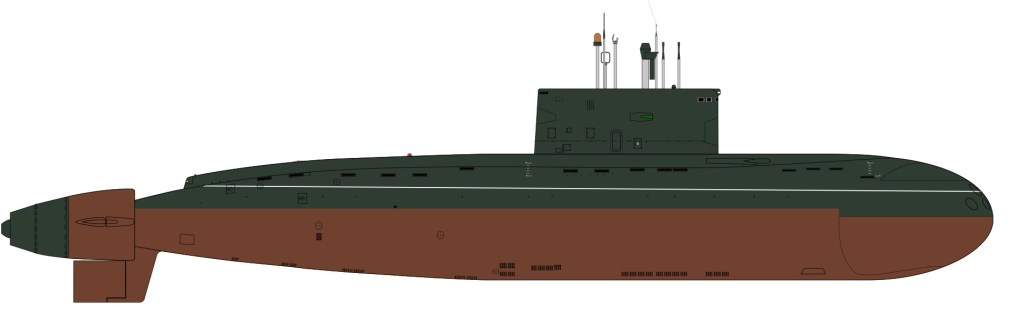
B-871, a Kilo class submarine, has an interesting history. This continues our series of unusual Soviet/Russian submarines. Following on from many classes of Soviet attack boats, the Kilo design (NATO designation for these) was a leap forward in capability, with the first boat commissioned in 1980. Kilos had a very different overall hull shape from earlier diesel-electric boats, such as the Tango and Foxtrot classes. With the same armament of six 533mm torpedo tubes and naval mines, they were smaller and harder to detect than Tangos, and were clad in the same sound-absorbing anechoic rubber tiles. More than forty original Project 877 Paltus (the Russian designation) boats were built at five shipyards. Several units were exported to India, China, Iran, Romania, Poland, and Myanmar. Thirty more boats of the “Improved Kilo” or Project 636 Varshavyanka class have also joined the fleets of Russia, Algeria, China, and Vietnam, with more updated boats still under construction.
The Iranian Navy’s second Russian-built Kilo class attack submarine en route delivery, 1993. NARA: USN Official 330-CFD-DN-SC-94-00800
B-871, built at Gorky shipyard, transited the Volga and Don River/canal systems to its new homeport of Sevastopol, the headquarters of the Black Sea Fleet (BSF), to be commissioned Dec. 1990. It has spent most of its career in Sevastopol, and has now served three navies: The Navy of the Soviet Union, the Ukrainian Navy, and the Russian Navy.
Upon the dissolution of the USSR, in late December 1991, the crew in Sevastopol voted to join the newly-independent Ukraine, in a process we described in our post on the Ukrainian Navy: The Only Easy Day was Never. This new attack boat would have been one of the most able of a small force of mostly abysmal submarines handed over to Ukraine. It would have been a good running mate to the other functional boat, the older foxtrot class submarine Zaporizhzhia.
Zaporizhya UA-01 Foxtrot class submarine, ca. 2012. Credit: Credit: Pavlo1 at Ukrainian Wikipedia, CC BY-SA 3.0, via Wikimedia Commons
The Russian official version of this is different, with a crew uprising reported as suppressed immediately and no acknowledgement of Ukrainian Naval service. The submarine was frequently non-operational during the mid-1990s, as the Ukrainian Navy did not have the inventory of parts or the spare batteries to safely operate the sub.
B-871 was back in Russian service by 1997. According to the contemporary edition of Jane’s Fighting Ships, it was extensively modified during 1998. It was fitted with an enormous pump-jet propulsor in place of the usual screw, and received the unique Russian designation of Project 877V. At the time, this was cutting-edge technology for a Russian military submarine. Western powers, such as Britain, had built pump-jet propelled submarines. Adapting the proven Kilo design was a sensible way to trial the technology. Sometime during the early millennium the sub was named “Alrosa,” reflecting its’ sponsorship by this group of diamond-mining corporations.
B-871 Alrosa showing the enormous pump-jet propulsor aft, which is the distinctive feature of this kilo class boat. Credit: Mike1979 Russia, CC BY-SA 3.0 https://creativecommons.org/licenses/by-sa/3.0, via Wikimedia Commons
By the 2010s, after years of uneventful service, Alrosa was supposed to have left Sevastopol to join the Baltic Fleet (though the boat should be close to retirement). The BSF was to upgrade to all improved Kilo type boats. This has not happened, and the current Russian War in Ukraine ensures the boat will not leave the Black Sea. Alrosa was in very lengthy refit which had just finished when Russia invaded Ukraine. The refit also has reportedly involved an enormous upgrade to the lethality of the submarine – launch tubes to be able to operate Kalibr cruise missiles.
A brief visual survey of Russian Black Sea Fleet warship losses – reality vs. false reporting
Adapted from official Ukraine 2022 postage stamp, designed by Boris Groh. via wikimedia commons.
The war losses the Russian Black Sea Fleet (BSF) has suffered during the current Invasion of Ukraine are historically significant. At the time of writing, they are the most severe losses sustained by a major naval service since 1945.1 In the Black Sea’s confined area of operations, the loss of a few major units is significant. Since the Bosporus and Dardanelles Straits are closed to warships from warring navies, Russia can’t reinforce the BSF with the numerous units now present in the Mediterranean or elsewhere.2 The rest of its navy- the third largest by most measurements-is effectively sidelined.3
For information about the Ukrainian Navy units lost during both the 2014 Russian Annexation of Crimea and now the 2022 Russian Invasion, please see our recent post “The Ukrainian Navy’s Fighting Ships – The only easy day was Never.” We also have more detailed ship listings for Ukraine and Russia. All satellite imagery below shows actual units of the BSF, home-ported at the main naval ports of Sevastopol or Novorossiysk. This post was updated as of March 2024. We removed a section of this post which featured units erroneously reported as destroyed, as these became increasingly irrelevant to track based on the confirmed totals of damaged and destroyed Russian warships.
The 2022-2024 BSF casualties: 11-12 vessels, ca. 34,170 tons destroyed; 2-3 vessels, 8,800 tons damaged:
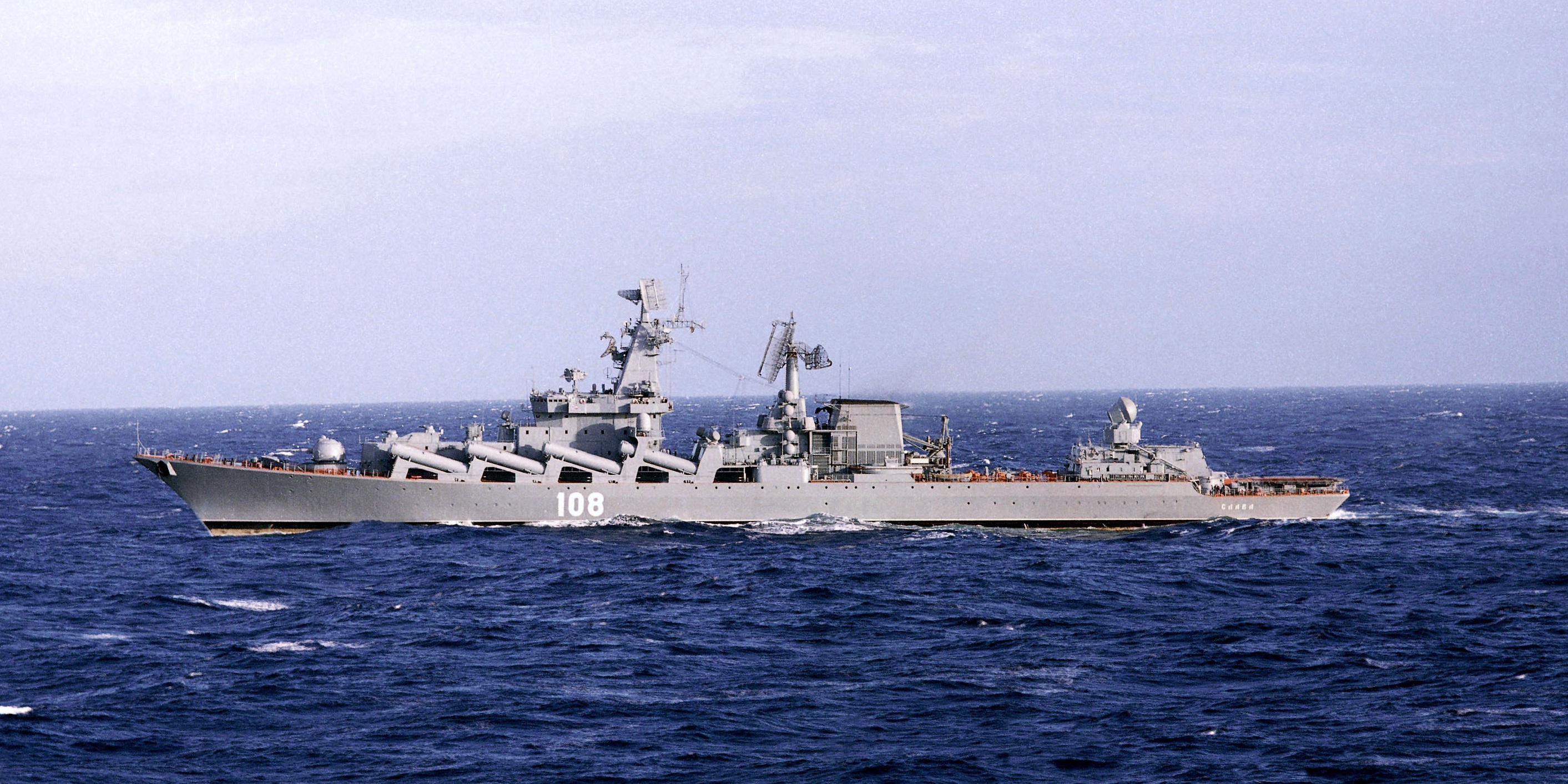
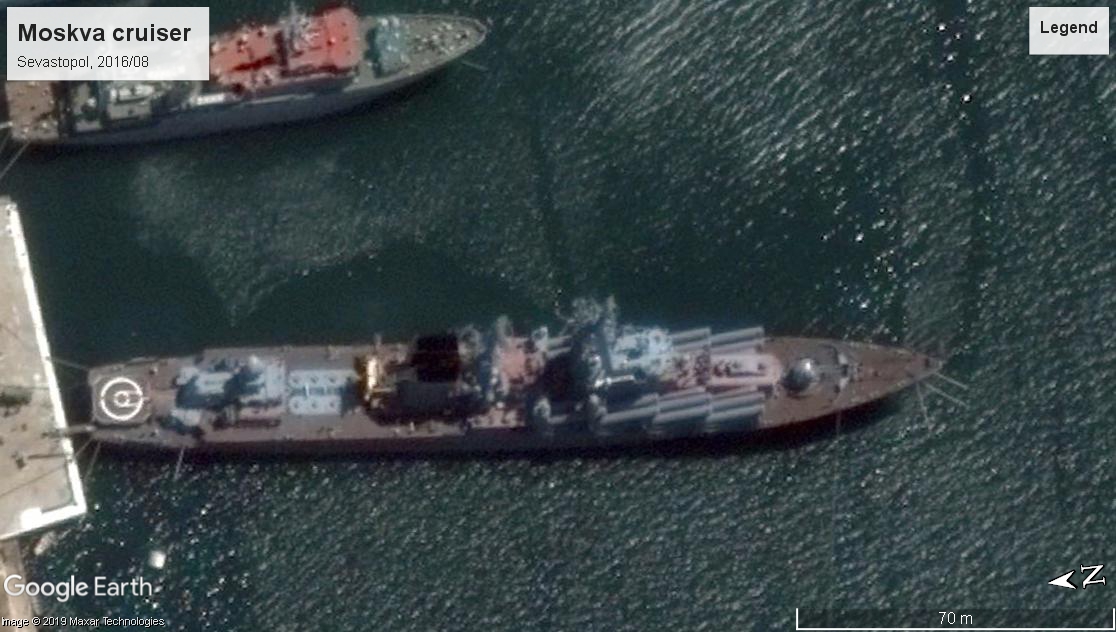
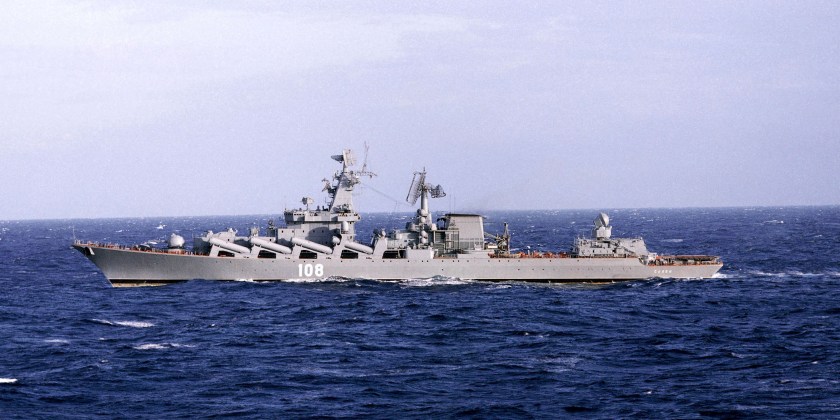
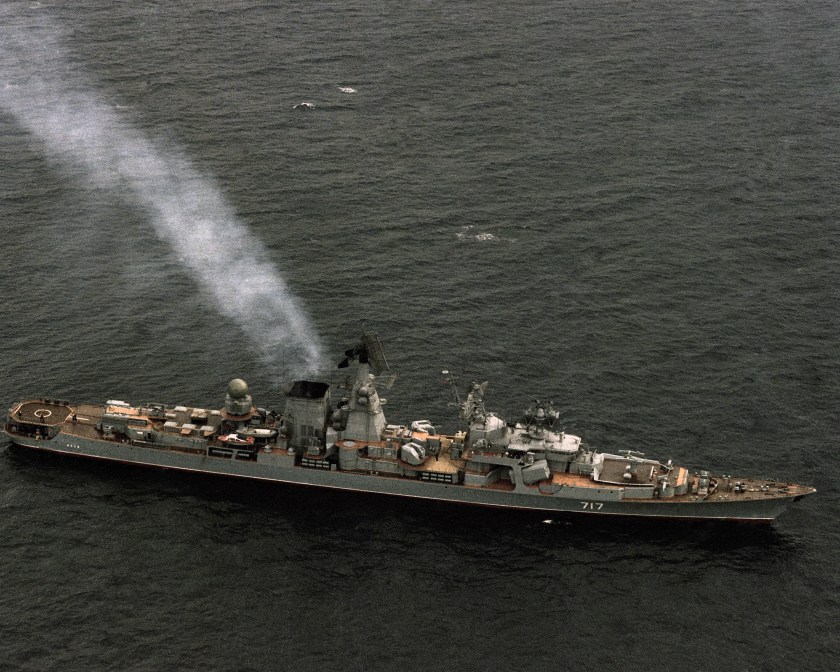
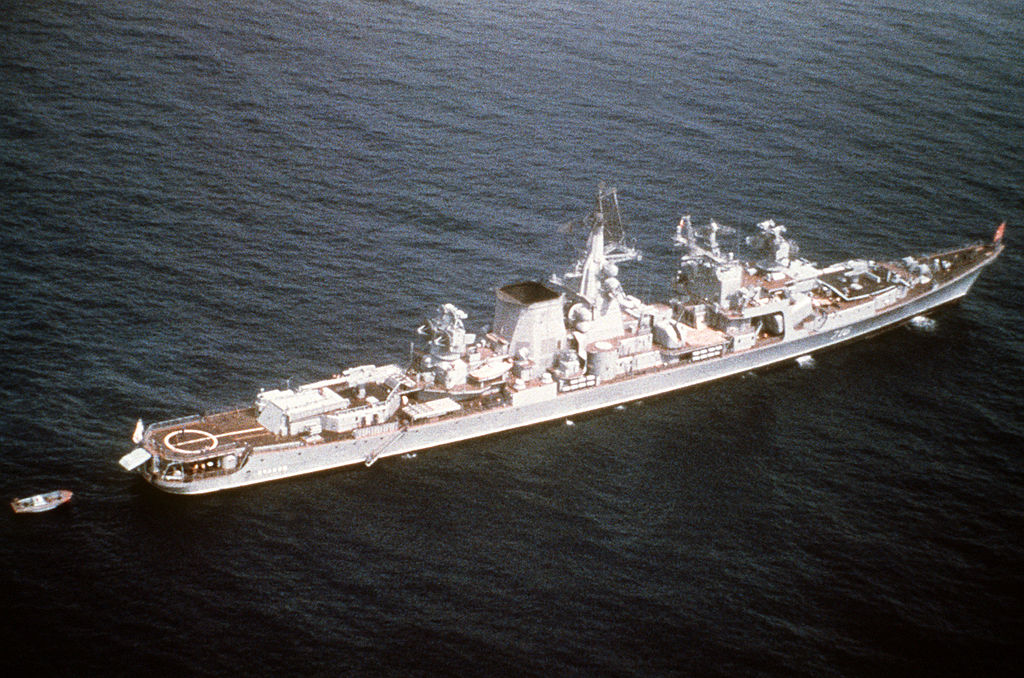
Moskva, Slava class/project 1164 Atlant missile cruiser (1983-14 April 2022). LOA 612’/186.5m TDISP 11,500 tons. Formerly the Soviet Navy’s Slava, built at Mykolaiv. Slava and the other units of the class were updates to a series of missile cruisers armed with so-called “carrier killing” anti-ship missiles. They were intended as an economical alternative to the massive nuclear-powered Kirov class. Slava, renamed Moskva after the Soviet collapse, served as the longtime flagship of the Black Sea Fleet. It was engaged in blockading the Southern Naval Base of the Ukrainian Navy at Lake Donuzlav, during the 2014 Annexation of Crimea. At the beginning of the Russian Invasion of 2022, it conspicuously participated in the attack/seizure of Snake Island on 24 February 2022. Extensively damaged by two Ukrainian Neptune Anti-ship missiles 13 April 2022, it sank the next day while efforts were underway to tow it back to Sevastopol. This is the first flagship of a major fleet lost since the Second World War, and the largest warship lost in combat since at least the Admiral Belgrano (Argentinian Navy), a veteran former USN cruiser which was sunk during the 1982 Falklands War. During late April, the Kommuna, the elderly salvage vessel, was sent to the wreck to recover equipment or human remains.
Soviet guided missile cruiser Slava underway in the Mediterranean Sea. [detail of], 1986. Credit NARA, USN official 330-CFD-DN-SC-86-03642 (PH1 Paul D. Goodrich)
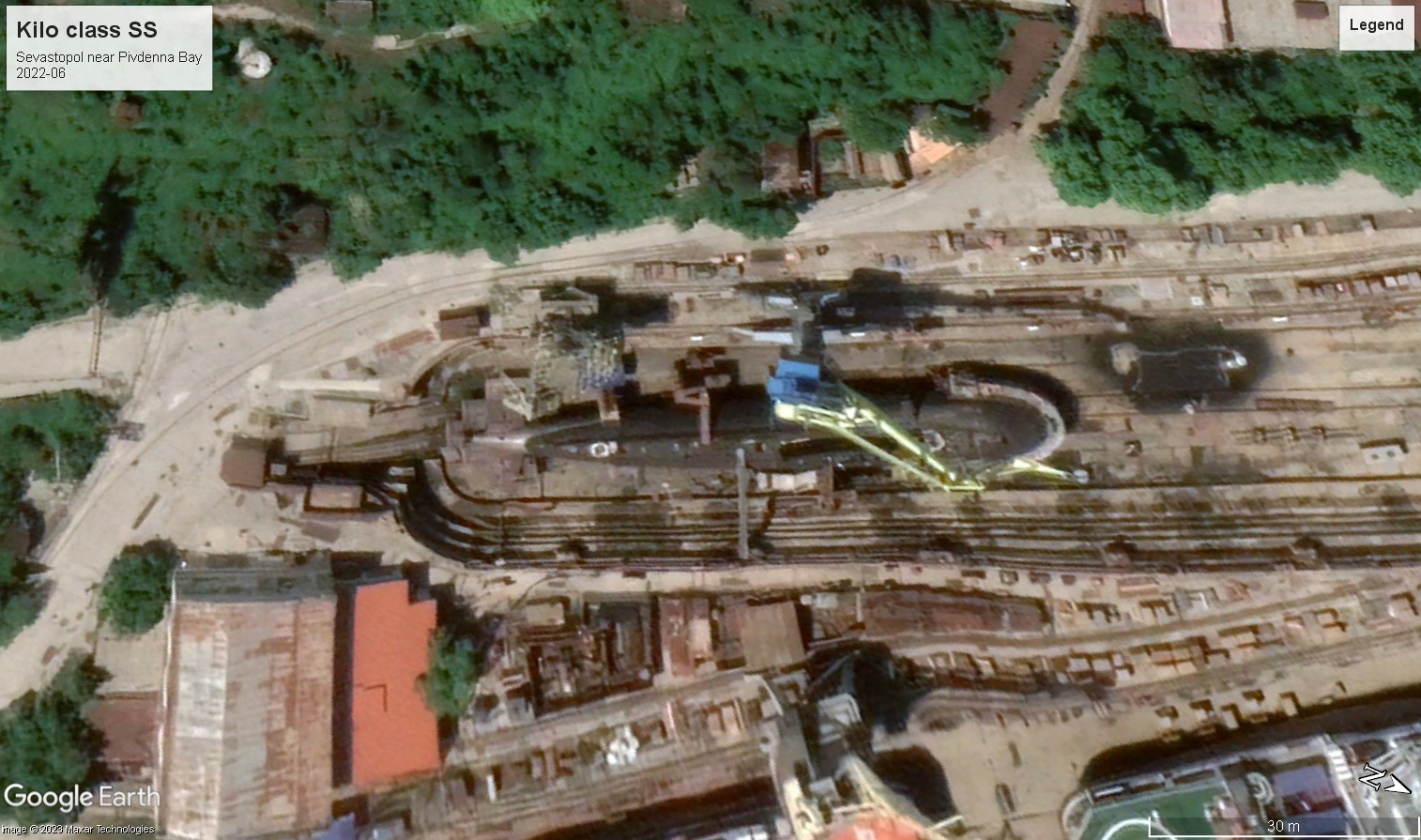
Rostov na Donu / Rostov-on-Don B-237 Kilo Class (2014) diesel-electric submarine LOA 230-242′ / 70.1-73.8 m TDISP 3,900 tons. Destroyed or severely damaged 13 Sept. 2023 during a Ukrainian drone attack on Russian units in drydock in Sevastopol.
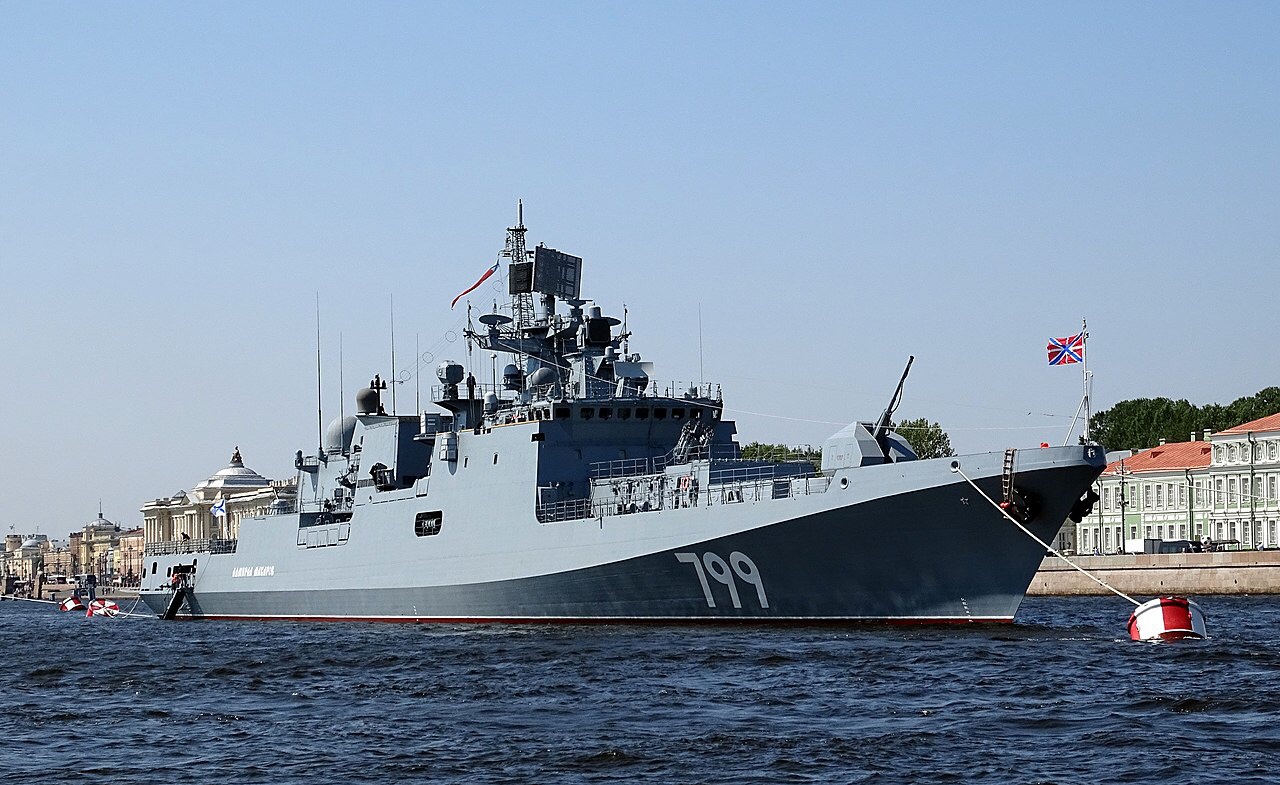
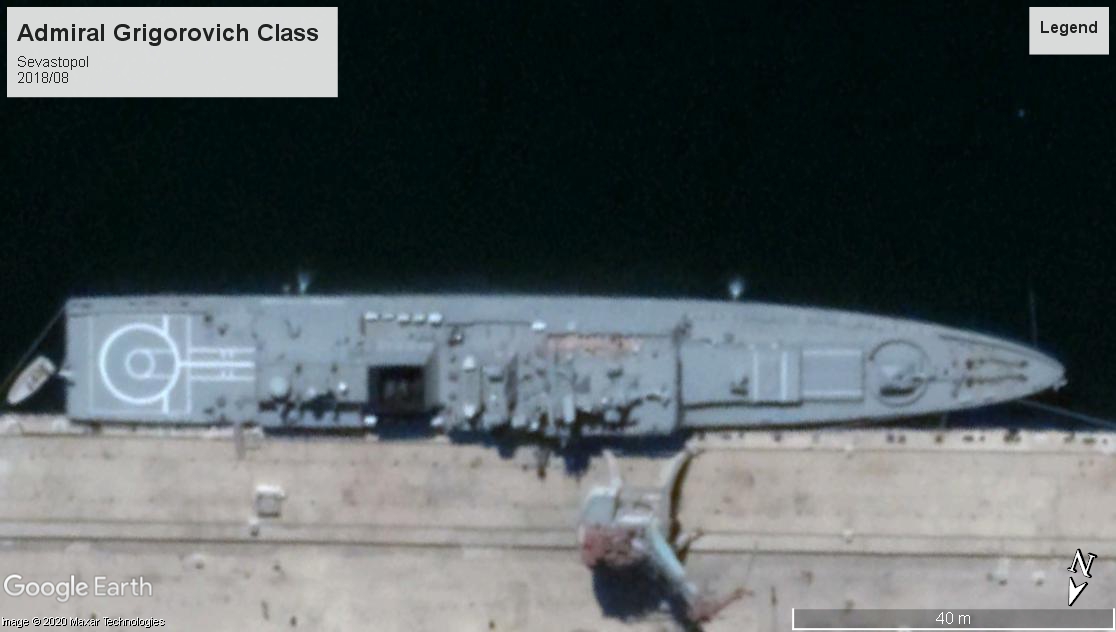
Admiral Makarov, Admiral Grigorovich class Frigate (2017). LOA 409’/124.7m TDISP 4,000 tons. Reportedly this frigate, the BSF flagship after the destruction of Moskva, was damaged during the 29 October 2022 attack by USVs and UAVs (surface and air drones). Earlier reports of damage sustained on 6 May 2022 appear to have not been accurate.
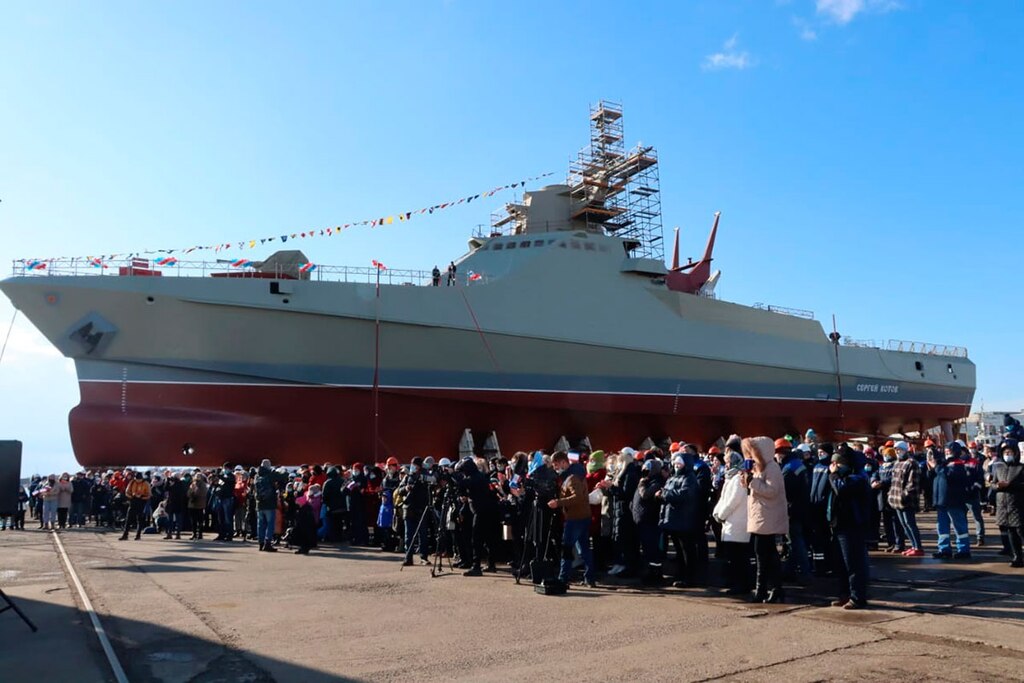
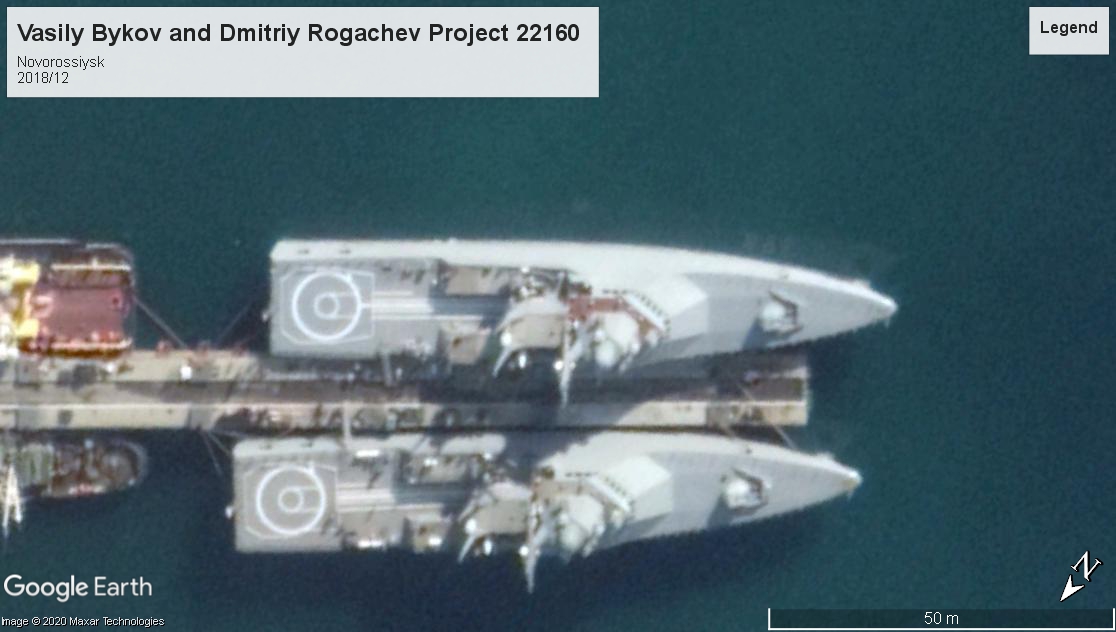
Sergei Kotov / Project 22160 Large Patrol Boat (2021). LOA 308’/93.9m TDISP 1,500 tons. New member of BSF fleer. Reported as destroyed 5 March 2024 near Kerch Strait by multiple Ukrainian USV strikes.
Sergei Kotov being Launched, 2021-01. Credit: Mil.ru, CC BY 4.0 , via Wikimedia Commons
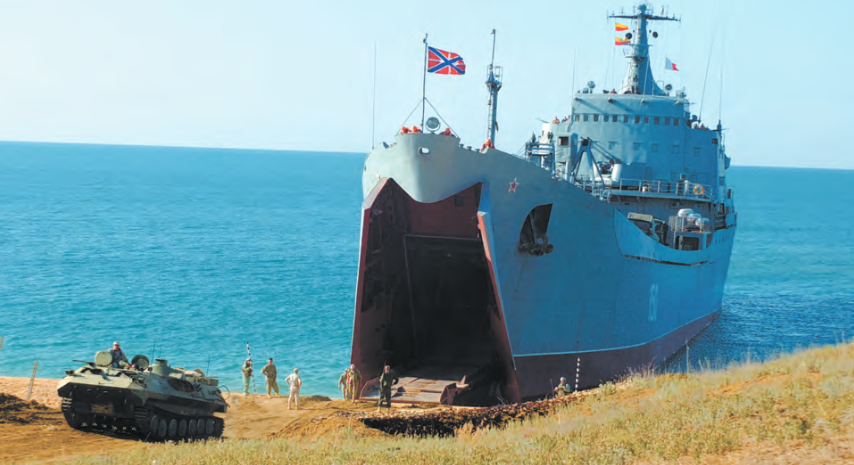
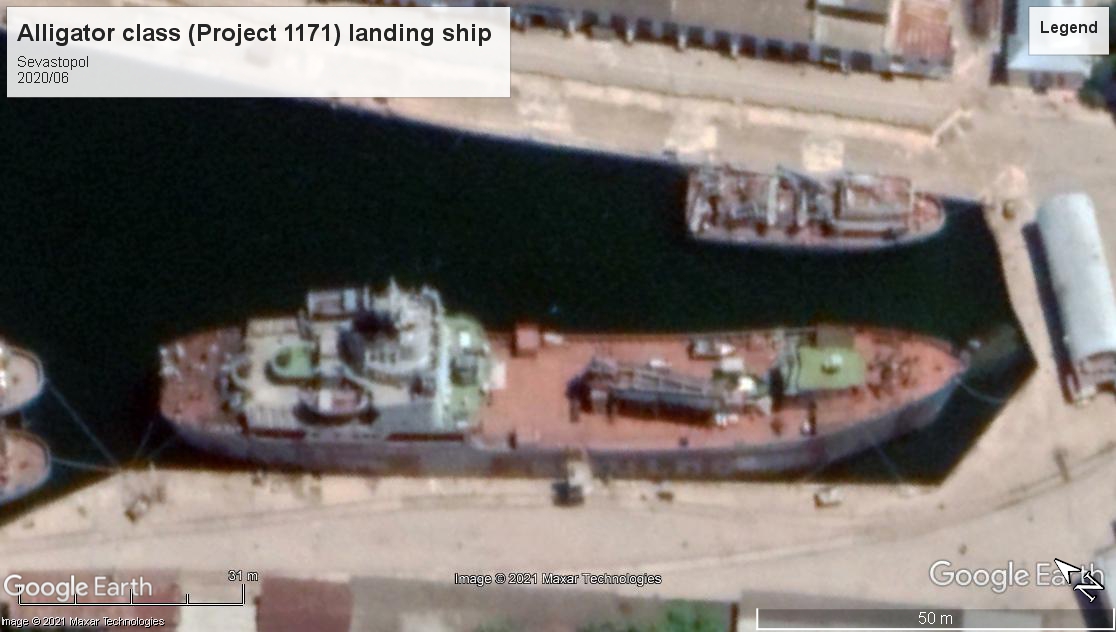
Saratov BDK-65 pennant 150 Alligator class/ Project 1171 Tapir Landing Ship (1966-24 March 2022). LOA 370’/112.8m TDISP 4,600 tons. Sunk at the port of Berdiansk, when hit by a tactical ballistic missile. Later it appeared to have been raised and salvaged, transported to Kerch. Two Ropucha II class landing ships escaped the harbour with some damage.
Saratov landing an infantry fighting vehicle on exercises, Oct. 2021. Credit: Mil.ru, CC BY 4.0 , via Wikimedia Commons
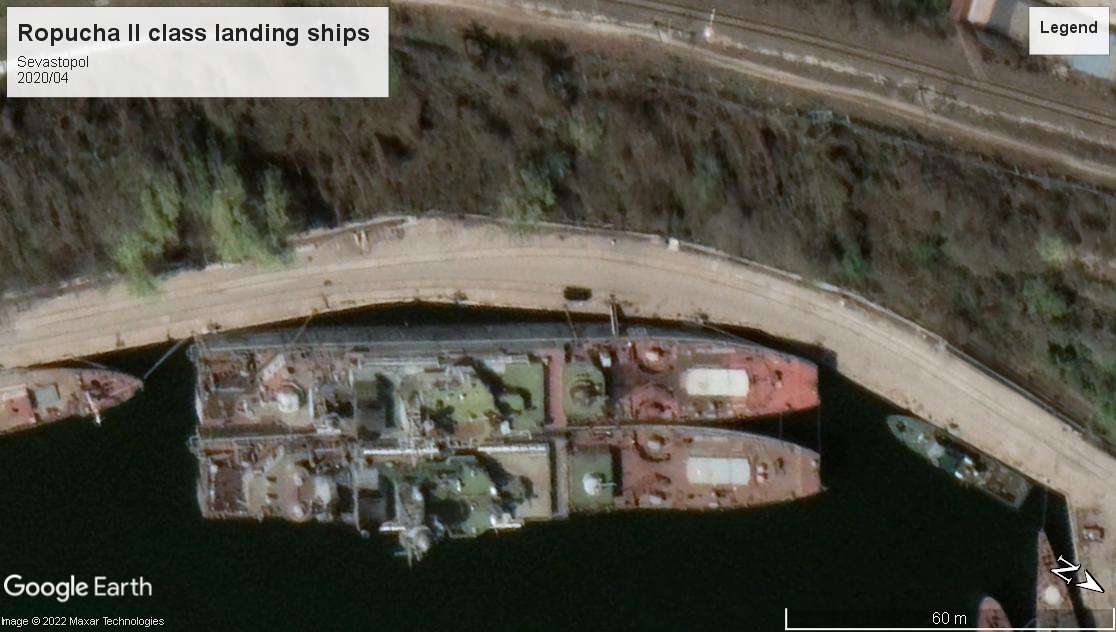
Ropucha II / Project 775M class landing ships LOA 369’/112.5m TDISP 4,000 tons. (4 destroyed or severely damaged)
NovocherkasskAug. 2010. Credit: Александр Вепрёв, CC BY-SA 3.0 , via Wikimedia Commons
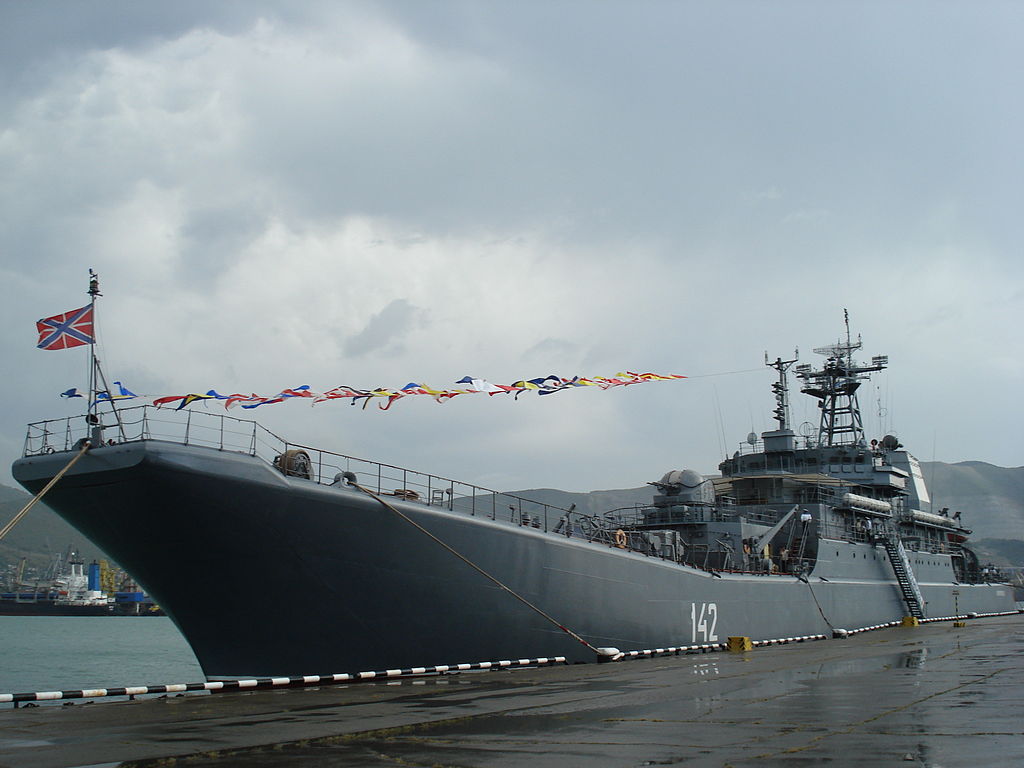
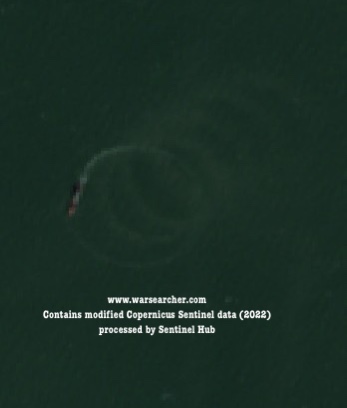
Caesar Kunikov (1986) destroyed 13 February 2024 by multiple USV attacks off the Crimean coast at Alupka. It was already been damaged 24 March 2022 at Berdyansk when Saratov landing ship was destroyed. This ship’s captain was killed and the foredeck was observed to be on fire. When the Ropuchas fled the burning port facilities, one ship circled, seemingly out of control and “Bismarking” South of the port.
24 March 2022 sentinel image of a Ropucha class circling out of control SW of Berdyansk.
Novocherkassk (1987) reported heavily damaged or destroyed 26 December 2023 at Feodosiia by cruise missiles launched by Ukrainian air force jets. It may have already been damaged 24 March 2022 at Berdyansk when Saratov landing ship was destroyed. When the Ropuchas fled the burning port facilities, one ship circled, seemingly out of control and “Bismarcking” South of the port.
The inboard ship appears to be Caesar Kunikov, based on the visible portions of the pennant number.
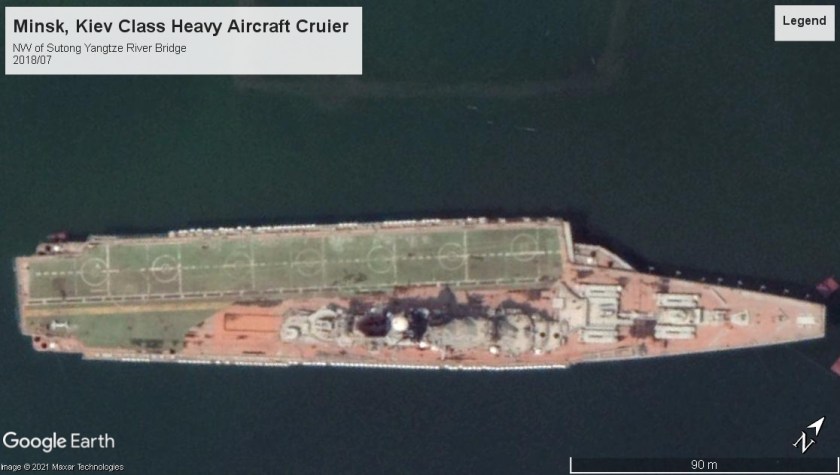
Minsk (1983) destroyed or severely damaged in drydock in Sevastopol 13 Sept. 2023, during a Ukrainian drone attack on Russian units in drydock.
Olenegorsky Gornyak (1976) severely damaged August 4th 2023 by a Ukrainian USV near Novorrosiysk.
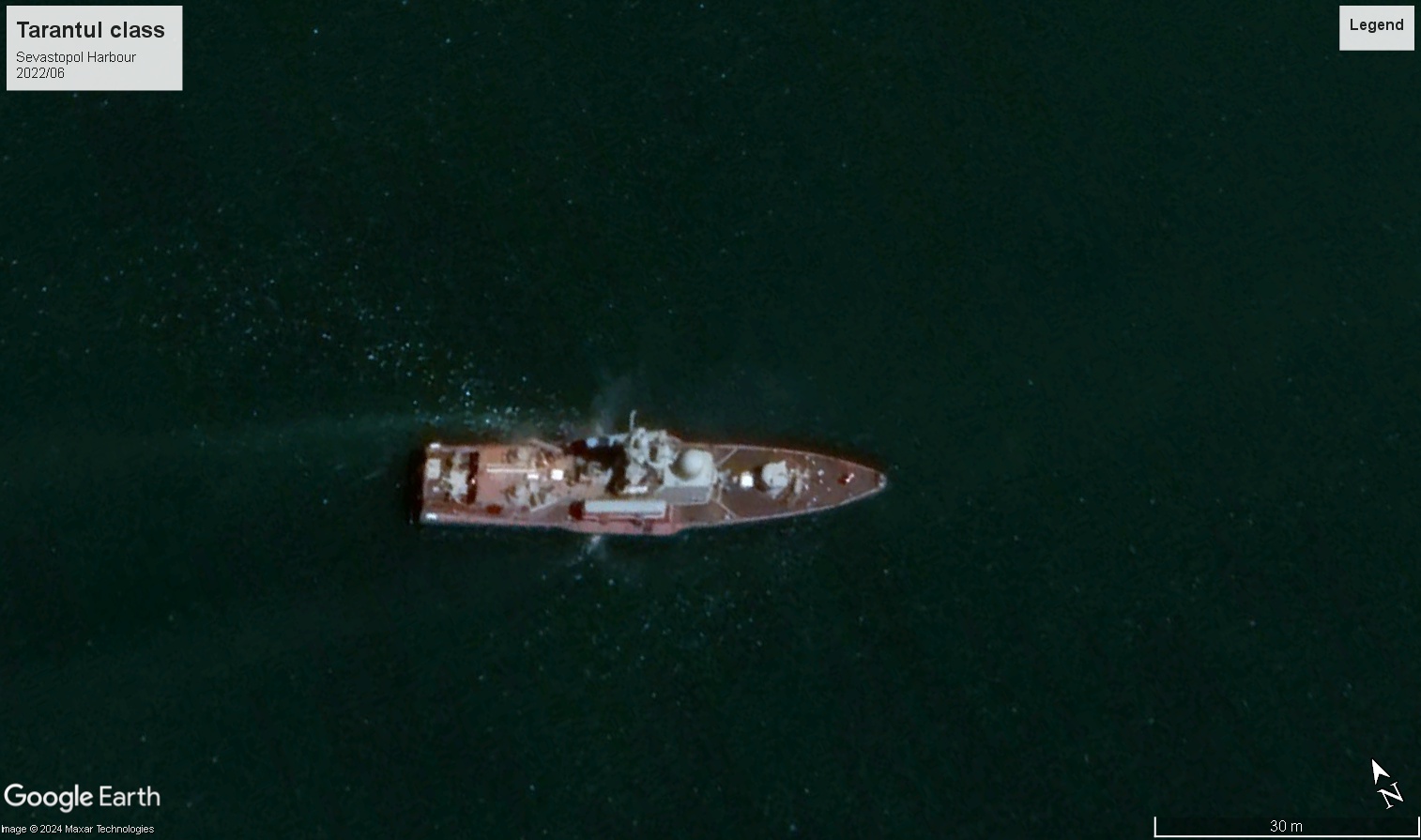
Ivanovets (1989) Tarantul III class missile corvette. LOA 184’/ 56.1 m TDISP 540 tons. Reportedly destroyed on Lake Donuzlav by Ukrainian uncrewed surface drones, 31 January 2024.
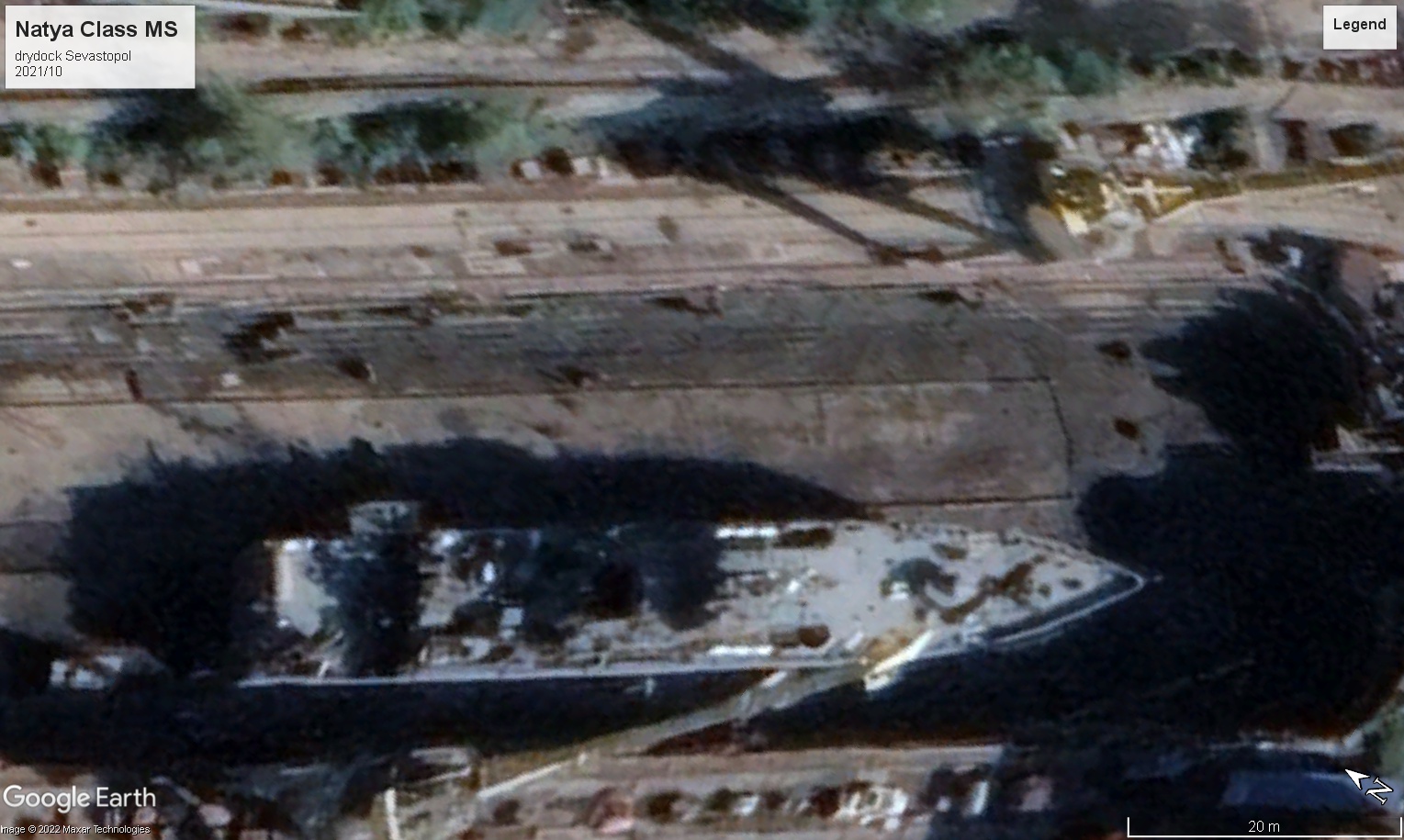
Ivan Golubets (1973) Natya class / Project 266M minesweeper . LOA 200’/61m TDISP 870 tons. Damaged during unmanned surface drone attack on Sevastopol port, 29 Oct. 2022.
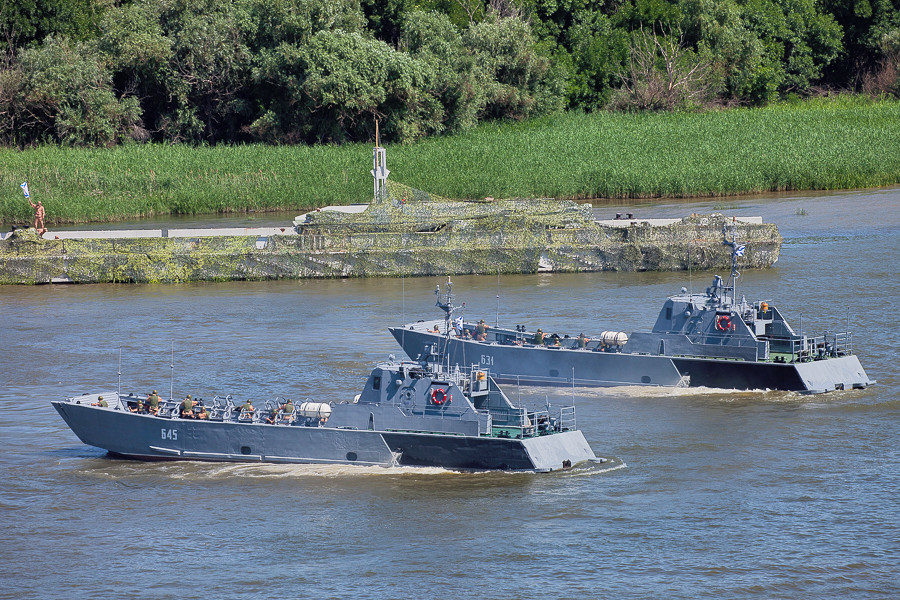
Serna class/Project 11770 landing craft (6 May 2022). LOA 85’/25.7m TDISP 61 tons. Destroyed by a Bayraktar TB-2 drone while offloading supplies at Snake Island.
Serna class Landing Craft at Astrakhan, Caspian Sea Flotilla, 2015. Credit: Mil.ru, CC BY 4.0 , via Wikimedia Commons
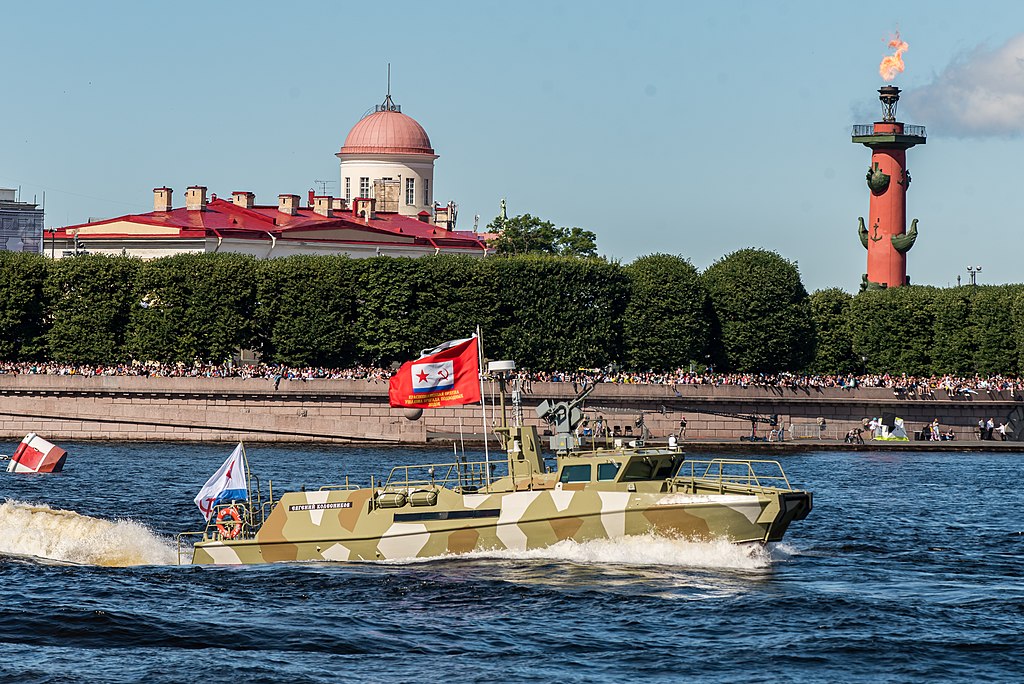
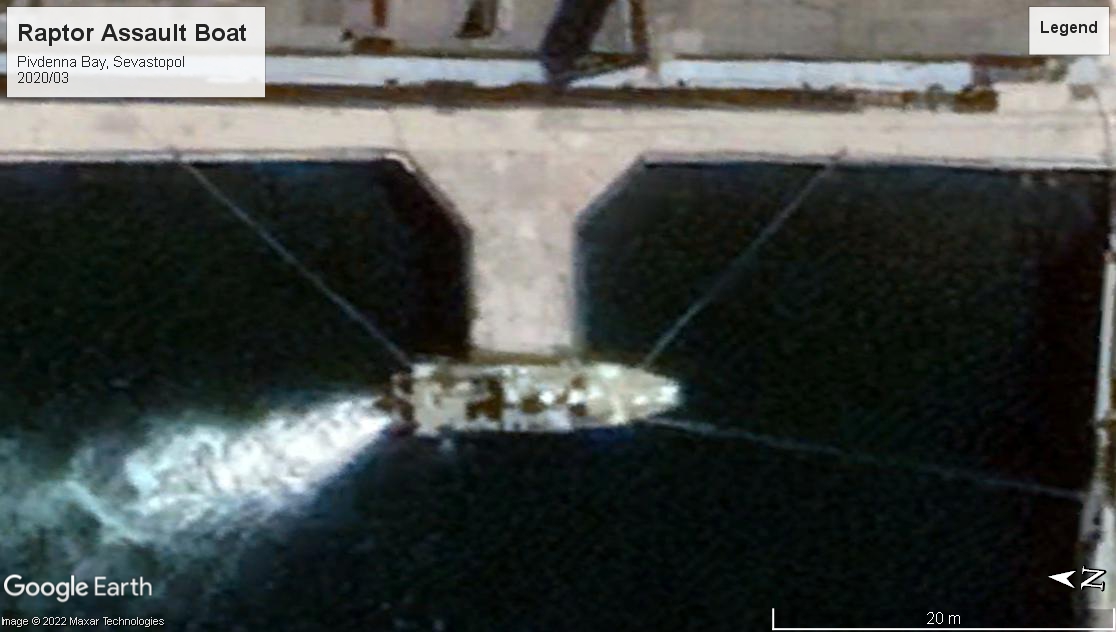
Raptor class / Project 03160 Assault Boat (2 or 3 lost 21 March 2022 AND 2 May 2022). LOA 55’/16.9m TDISP 23 tons. Entered service around 2015. One unit destroyed or damaged by a soldier with a rocket launcher at Mariupol on 21 March, two units destroyed 2 May at Snake Island by a Bayraktar TB-2 drone.
Raptor Assault Boat, ca. Credit: Okras, CC BY-SA 4.0 , via Wikimedia Commons
During the Falklands War, the next most significant naval actions of the postwar era, the Royal Navy lost two destroyers, two frigates, a landing ship, and a landing craft, which total to around 22,100 tons, not counting the SS Atlantic Conveyor, which was a large merchant ship engaged in military activities. ↩︎
The terms of the 1936 Montreux Convention that limits access to the Black Sea are more complicated than this, however, the result is that Russia cannot reinforce its Black Sea Fleet. ↩︎
Reports indicate some of the Caspian Sea Flotilla ships have been involved in a limited way, firing Kalibr missiles at Ukrainian targets. ↩︎
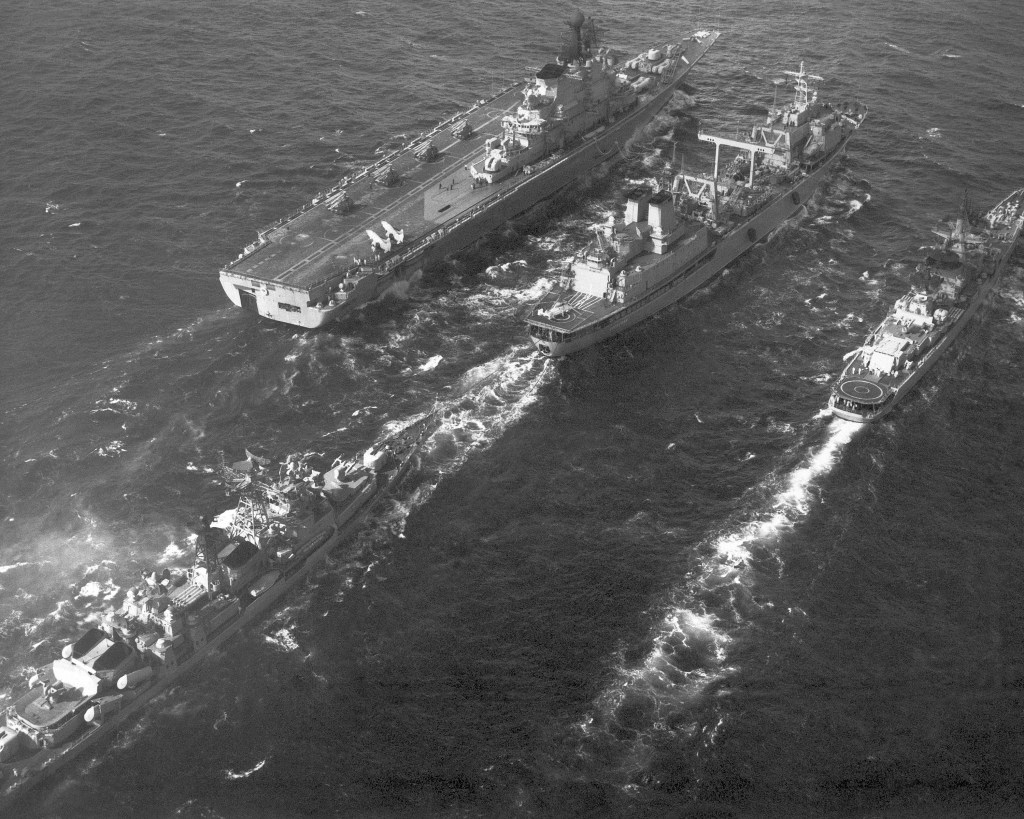
If you grew up during the Cold War, you might well have thought that the warships the Soviet Union was churning out were pretty cool! They were sleek, full of giant sensors and dangerous looking weapons, and they had different design categories than the accepted US and Western war fleets. What was a missile-carrying heavy aviation cruiser? Few knew, but it certainly looked like a scarier carrier!
Soviet 1985 Replenishment at Sea by the fleet oiler Berezina of a Kiev class aviation cruiser, a Kresta II class missile cruiser and a Kashin class destroyer. NARA USN 330-CFD-DN-SN-86-00851
These ships almost all came out of a group of shipyards in the Black Sea, in the (then) Ukrainian Soviet Socialist Republic, at Mykolaiv. The shipyards there went by several names over the years, but it makes sense to combine the products of the Marti, 444 shipyards, the Black Sea shipyards and the 61 Kommunara (named for the 61 Communards) shipyards.
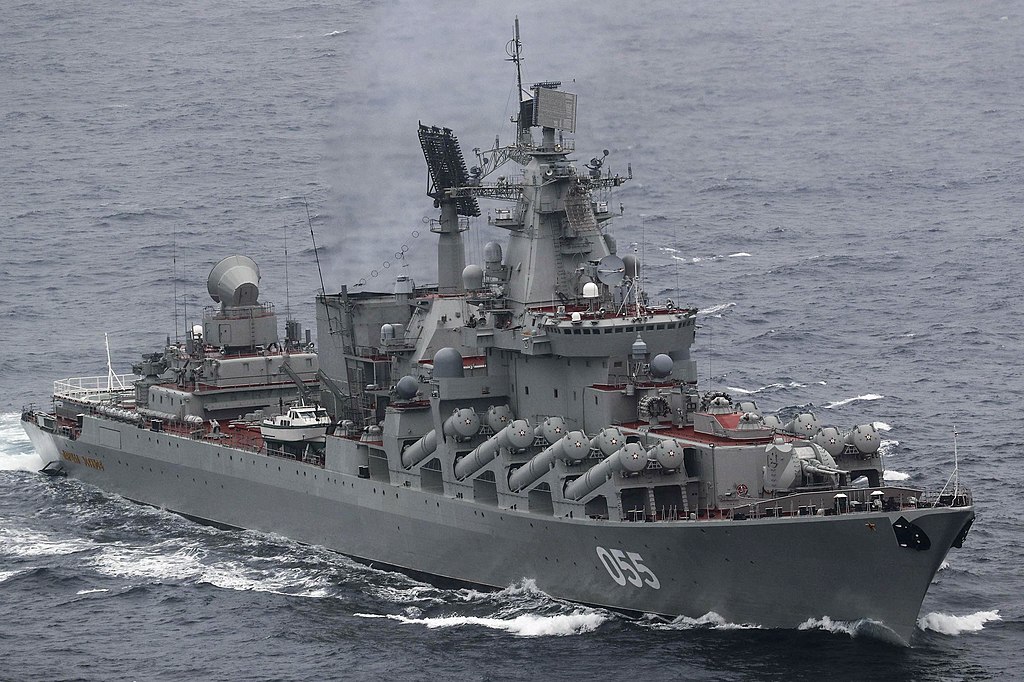
Marshal Ustinov (formerly Admiral Flota Lobov), Slava class cruiser completed at Mykolaiv in 1986, during a 2018 intercept by HMS St. Albans (Photo: LPHOT SEELEY/MOD)
The appearance of these ships often led Western analysts to some pretty dire conclusions about advanced Soviet naval capabilities. An early example of this was the “Sverdlov scare” of the 1950s, where analysts overestimated a new class of cruisers. These were in fact some of the last of a breed of old-style gun cruisers, which were throw-backs to Italian interwar designs. We later heard about the carrier-killing Soviet missile cruisers, with their enormous jet-aircraft-sized missiles. The Slava class with their serried ranks of missile tubes, were the last of those designs. To Western defence analysts, the oddest designs may have been the succession of cruiser/carrier hybrids, which combined aviation facilities, a large flight deck, and the potent anti-ship and anti-submarine weapons and sensors of a large cruiser.
We have assembled a list of these large warships, and encourage our readers to delve further by exploring the links to existing satellite views.* Several of the Mykolaiv-built ships continue to serve, in the Russian, Chinese, and Indian navies.
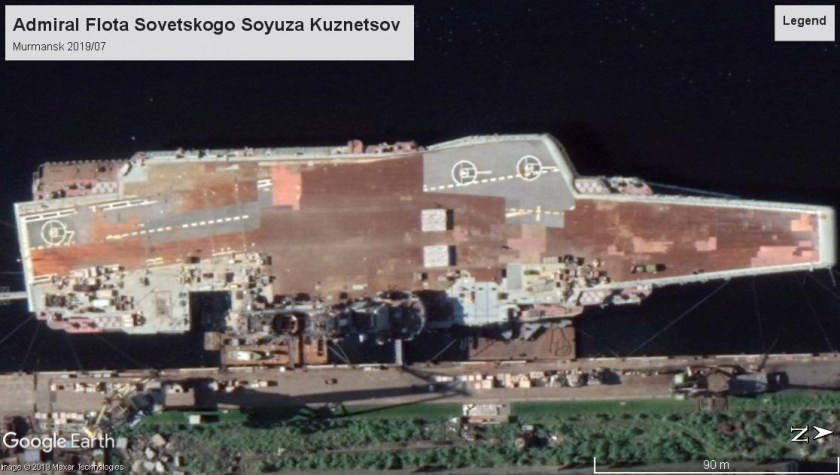
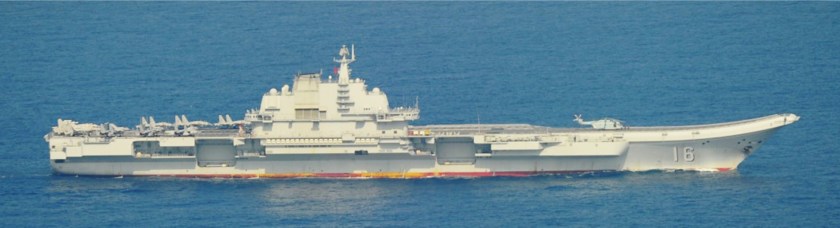
Kusnetsov class carriers – LOA 1001’ / 305 m TDISP 58,000 tons (2 active, 1 in Russia, 1 sold to China by Ukraine-for scrap) Sevice since 1990. Kuznetsov and Liaoning (China) still the largest Soviet / Russian warships. Liaoning was resurrected from the incomplete hulk Varyag, whose construction was stalled. A modern refinement of this design is China’s Type 002 carrier. The “ski jump” at the bows makes this the first Soviet carrier that was able to operate conventional combat jets. Kuznetsov has been undergoing a lengthy refit with many delays.
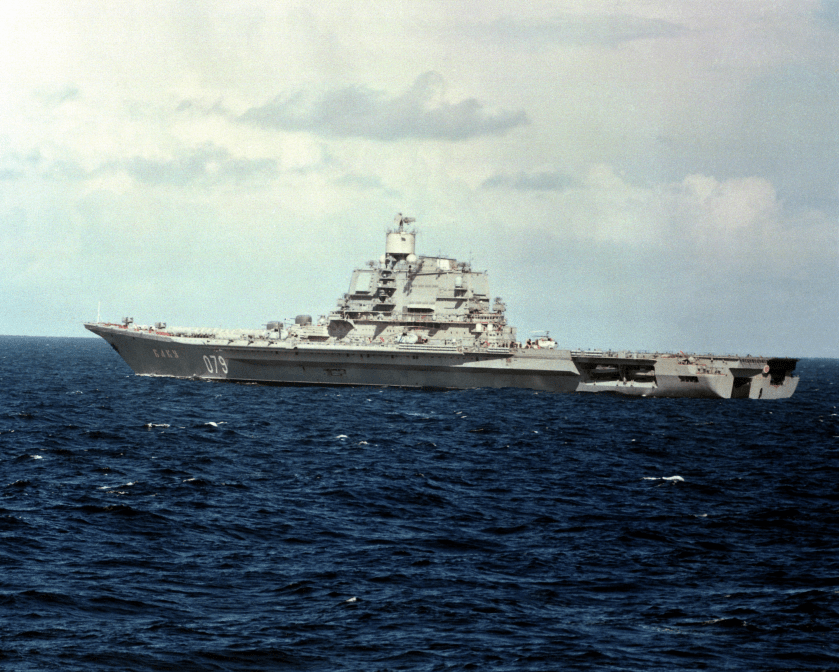
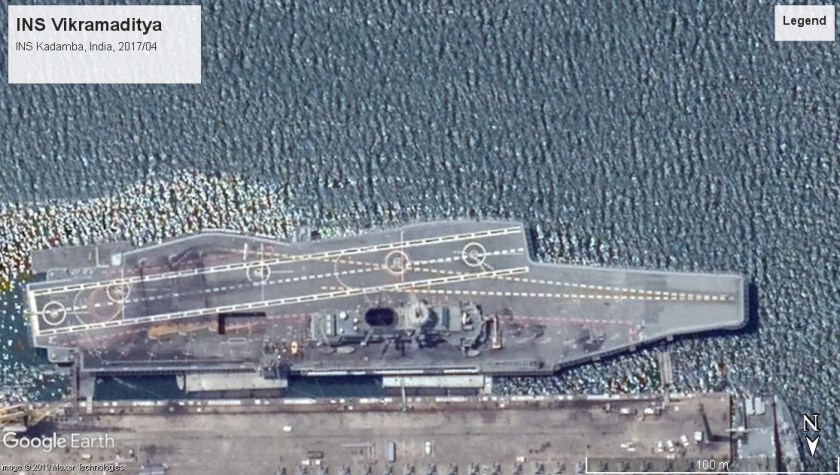
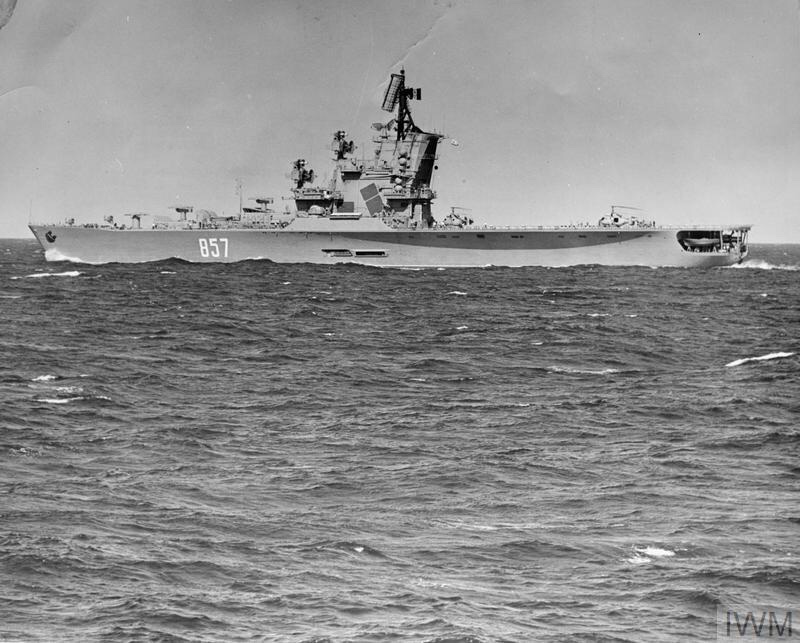
Kiev class / Project 1143 Krechyet carriers – LOA 896′ / 273 m TDISP 45,000 tons (4 units, 1 active as converted Indian aircraft carrier, 1 scrapped, 2 preserved in China) service since 1975. This combined cruiser-like armament in the bows with a large flight deck which could operate helicopters and Vertical Takeoff and Landing VTOL Yak-38 “Forger” jets. The example that was refitted for India was updated with a full carrier deck.
Kiev class Baku, in 1989. NARA: US Navy 330-CFD-DN-SC-90-05958
Moskva class / Project 1123 Kondor helicopter cruisers – LOA 620′ / 189 m TDISP 15,300 tons (both units built Mykolaiv) service 1967-1996. These ships excited particular interest as the first Soviet aircraft carriers, and represented a new direction for Soviet naval policy. Their half-cruiser, half-helicopter carrier design looked particularly modern. In practice, they were not particularly successful ships. Similar designs were the French Jean d’Arc, and the Italian Vittorio Veneto, both also 1960s helicopter/cruisers.
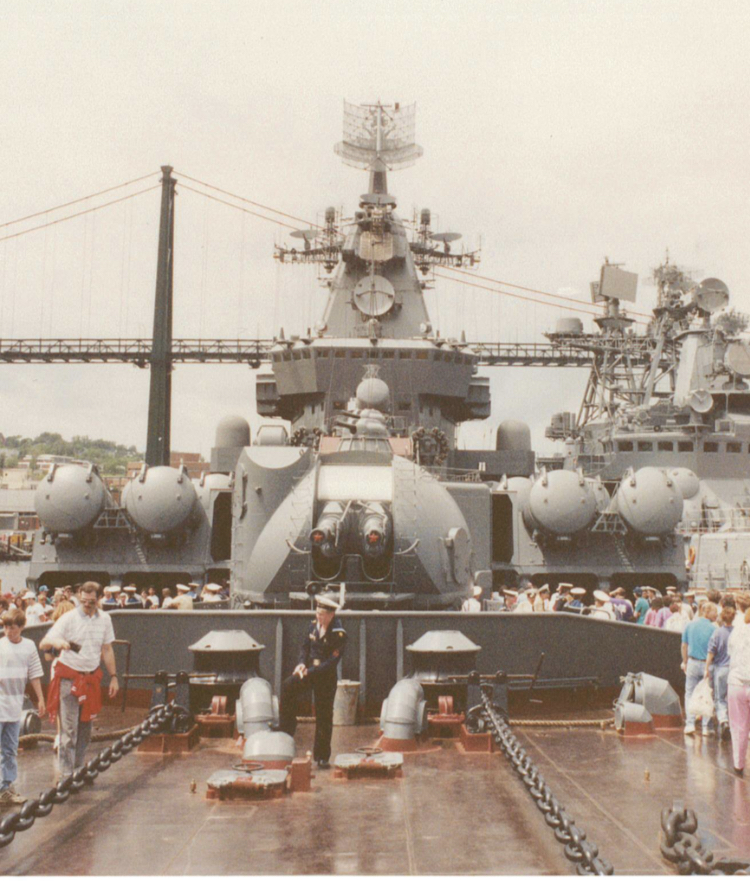
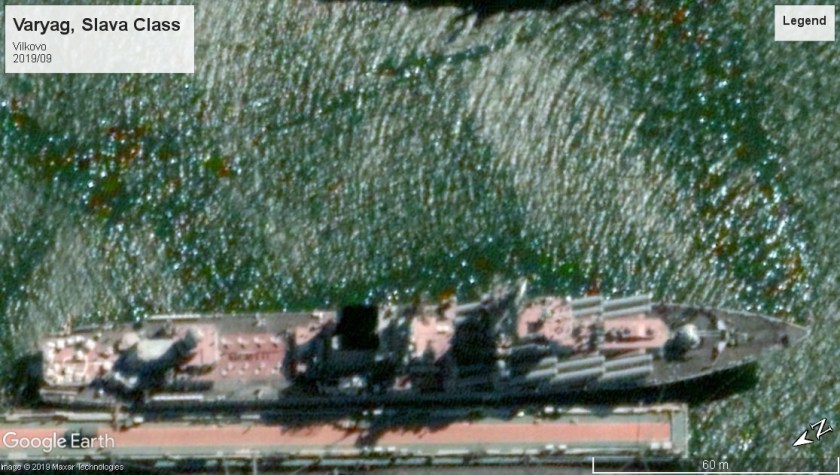
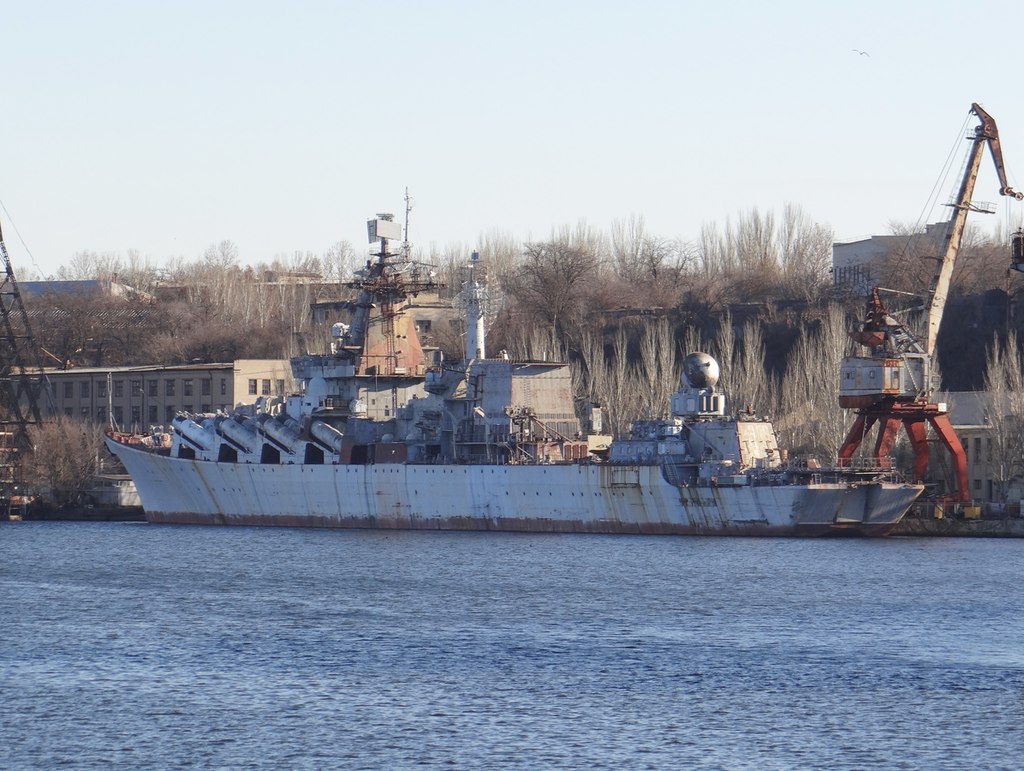
Slava class / Project 1164 Atlant missile cruisers – LOA 612′ / 186.4 m TDISP 11,500 tons (All 3 units built at Mykolaiv, 1 other unit remains unfinished) Service from 1982. These so-called “carrier killers” were designed to overcome USN carrier group defences and destroy the supercarriers with massive SS-N-12 Sandbox cruise-missiles. Each Slava holds 16 tubes angled forward. Operating as the Russian Black Sea Fleet’s flagship, Moskva was sunk 2022/04/14 after being struck by two Ukrainian R-360 Neptune anti-ship missiles during the Russian War in Ukraine. The other two Russian Slavas, normally each based with the North Sea and Pacific fleets, remain in the Eastern Mediterranean.
A port beam view of the Soviet guided missile cruiser SLAVA (renamed Moskva during the 1990s) underway [detail of], 1986. USN official Marshal Ustinov visiting Halifax, Nova Scotia with other units, July, 1993, alongside Admiral Kharlamov destroyer. This bow view shows the potent Sandbox missile tubes and bow AK-130 dual 130mm gun. Credit: Warsearcher.comVaryag, formerly Chervona Ukrayina, completed 1989, usually based out of the Pacific Fleet.ex-Ukrayina at Mykolaiv (old Kommunara shipyard). Credit: ПТУ-3 г. Херсон (PTU-3 g. Kherson) · Kherson, CC BY 4.0 , via Wikimedia Commons
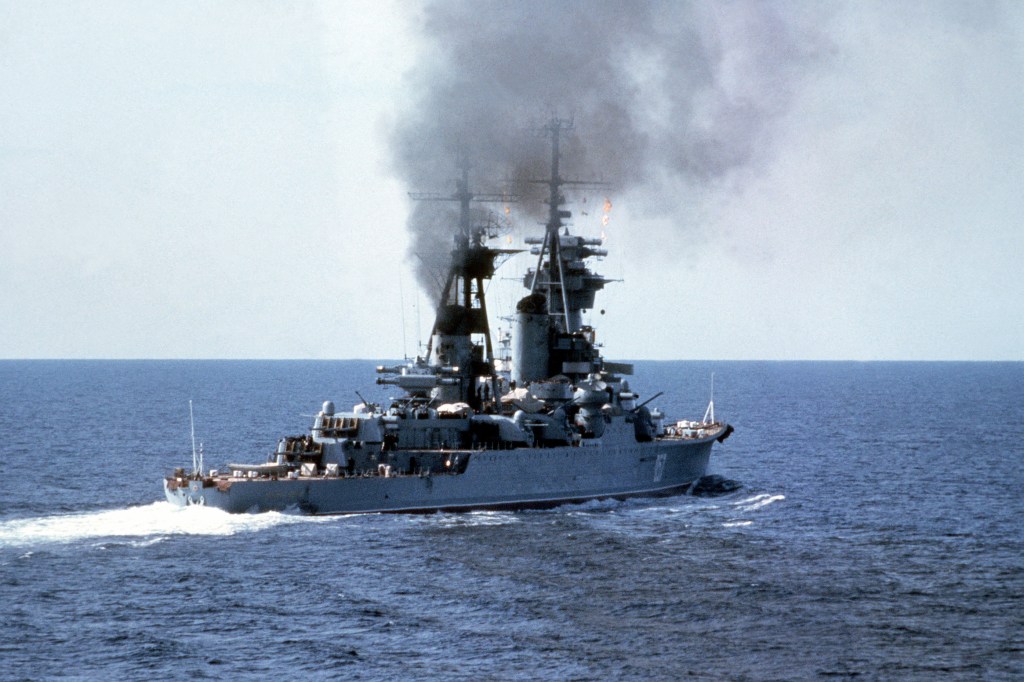
Kara class / Project 1134B Berkut Bmissile cruisers – LOA 568′ / 173.2 m TDISP 9,700 tons (all 7 units built Mykolaiv) service 1971-2014. The Karas were an improvement on the earlier Kynda and Kresta classes of missile cruisers. Compared to most of the ships on this page, these good-looking ships are conventional! They are virtually the same size as the USN Ticonderoga class. One of the ships we found a view of, Azov, was the first ship fitted with a Vertical Launch System (VLS), for a trial Surface-to-Air /S300F/SA-N-6 missile. See our post “The Last blockship?” about the Ochakov, the last remaining Kara hulk, which was used as a blockship by the Russian against the Ukrainian Navy’s Southern Base, to devastating effect.
Kara Class cruiser Kerch n.d. Kerch was the last in service, and was promptly scrapped near Sevastopol. NARA: 330-CFD-DN-SC-89-01795Ochakov, decommissioned 2011 but used as a blockship by the Russians during the 2014 Annexation of Crimea, to block up Lake Donuslav. Now lying abandoned near the Russian-seized Southern Naval Base.
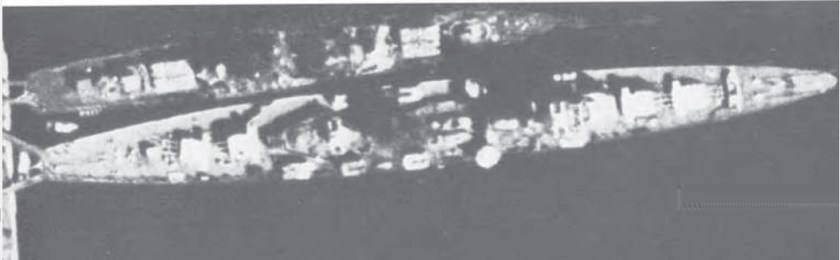
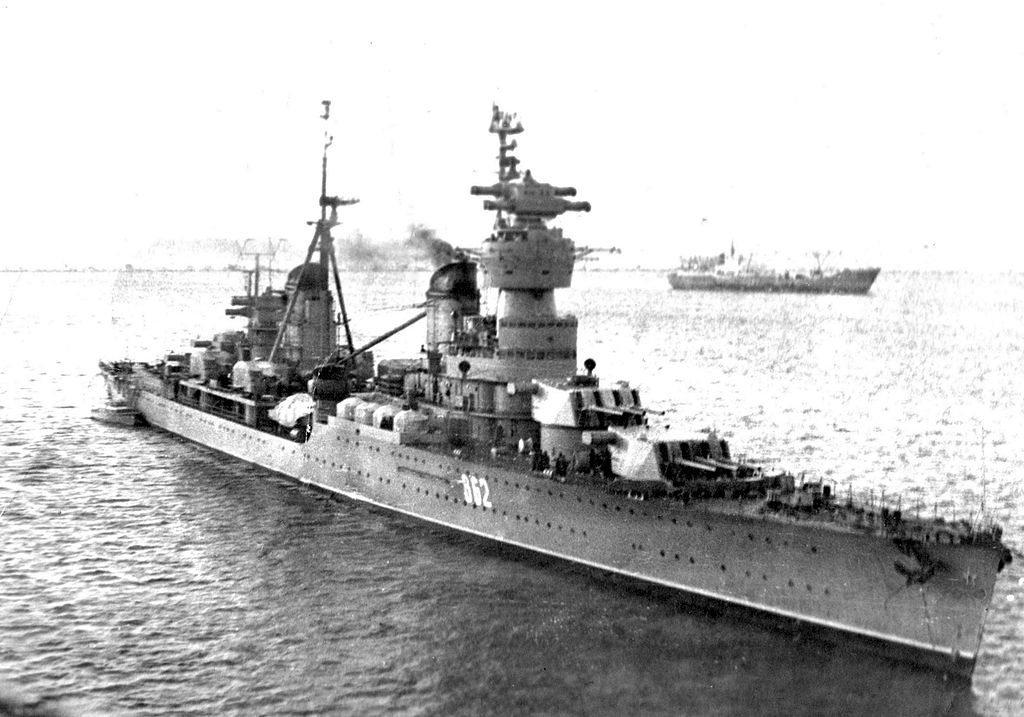
Sverdlov class / Project 68bis cruisers – LOA 689′ / 210 m TDISP 16,600 tons (4 units, including museum ship Mikhail Kutuzov at Novorossiysk) service 1952-2000 (Mikhail Kutuzov was in commission much longer until converted to museum ship). This design was a refinement of the earlier Chapeyev class, and were impressive-looking gun cruisers with four triple 6″ / 152 mm gun turrets. They served very long careers and were converted to a number of roles, such as command cruisers. Others received aviation facilities. Unlike many World War Two-era USN cruisers, they proved unable to carry a modern anti-ship missile system.
A Soviet Sverdlov class light cruiser underway, 1983. NARA USN 330-CFD-DN-ST-84-01596 (PH2 D. Beech)Sverdlov class cruiser at Vladivostok, undated declassified Hexagon KH-9 imagery (cropped view] from the National Reconnaissance Office, available from an official US report at the NRO website. From other ships present, this appears to be from the late 1970s or early 1980s.
Chapeyev class/ Project 68 cruisers – LOA 659′ / 201 m TDISP 14,100 tons (2 built ca. 1950, after two earlier units had been destroyed while under construction by Nazi Germany) Service 1950-1981. This designed enlarged the Kirov class and updated the armour and the primary guns, to 4 triple 6″ / 152 mm gun turrets that could fire a respectable half-dozen rounds a minute . None were completed by the war’s end.
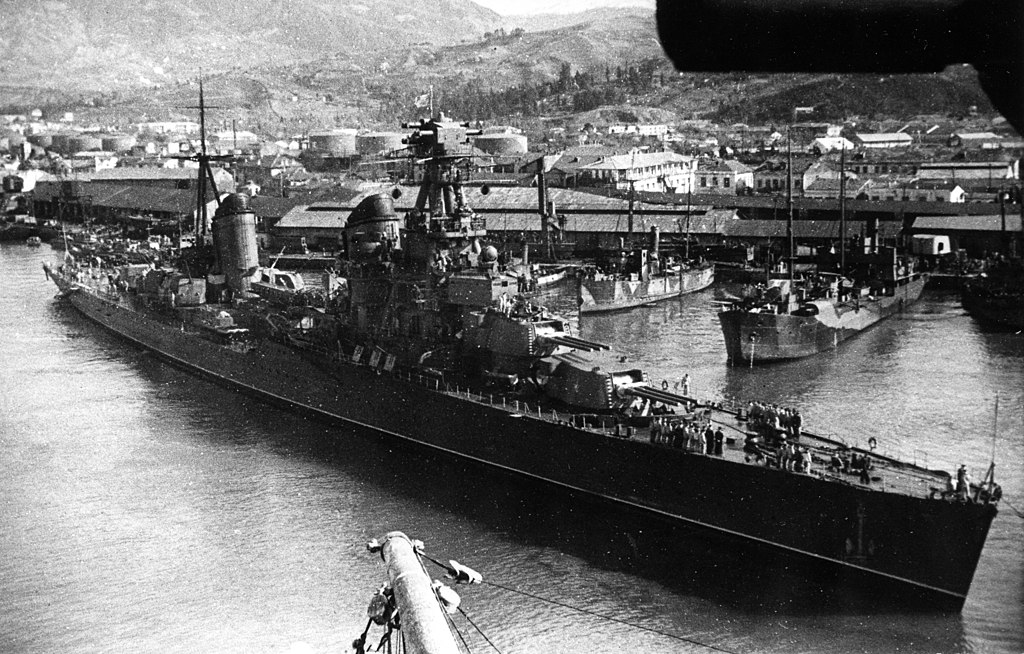
Kirov class / Project 26/26bis cruisers – LOA 628′ / 191.3 m TDISP 9.500 tons (1 original, 1 upgraded, built at Mykolaiv) service 1938-1970. These ships were medium cruisers armed with powerful 7.1 ” / 180 mm guns in three triple turrets. Unfortunately the design had shoe-horned these larger guns in, and they could only fire an abysmal one or two rounds a minute. They were an adapted Italian Navy cruiser design by Ansaldo, and were the first large ships completed in Russia since the 1917 Communist Revolution. These served with distinction during the war.
The Soviet cruiser Voroshilov in Batumi, 1942. Credit: Unknown authorUnknown author, Public domain, via Wikimedia Commons
* This is not a complete list, and there were classes of battleships in the early 20th C, Shchuka wartime submarines and smaller ships built here. Some of the important destroyers and frigates include the Kashin, Kanin and Skoryy class destroyers, Riga class frigates. Another interesting class of ships were the Malina class depot/repair ships built to service nuclear-powered submarines.
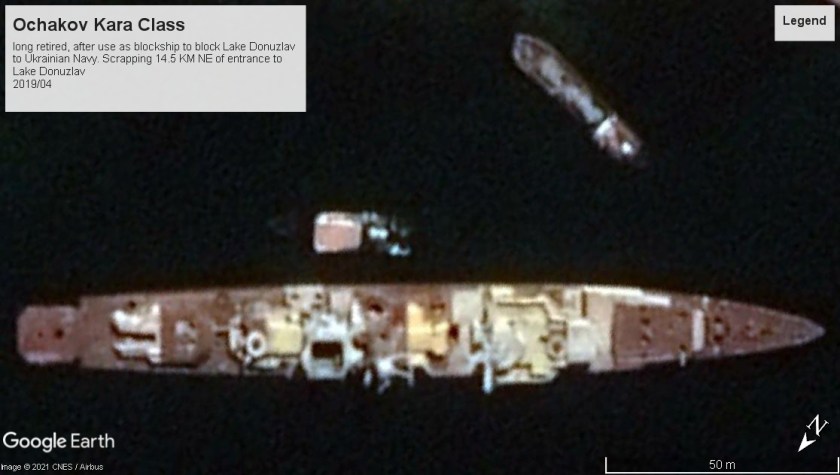
It’s odd to think of a Cold War missile cruiser ending up a blockship in the 21st Century, but this is exactly what happened to the Kara / Project 1134B missile cruiser Ochakov near its long-time Black Sea naval base, Sevastopol. At 570-feet long, and 9,700 tons displacement, these “large anti-submarine warships” (in Soviet classification) were almost exactly the same size as the USN Ticonderoga class missile cruisers. They were built in nearby Mykolaiv, a center of Soviet Russian shipbuilding now located within the borders of Ukraine. Ochakov had a long career, serving from 1973-2011. The ship had been inactive at Sevastopol since modernization was halted in 2000.
Ochakov “in her prime” taken from a USN aircraft Feb. 1982. USN photo DN-ST-82-04655, Public domain, via Wikimedia Commons
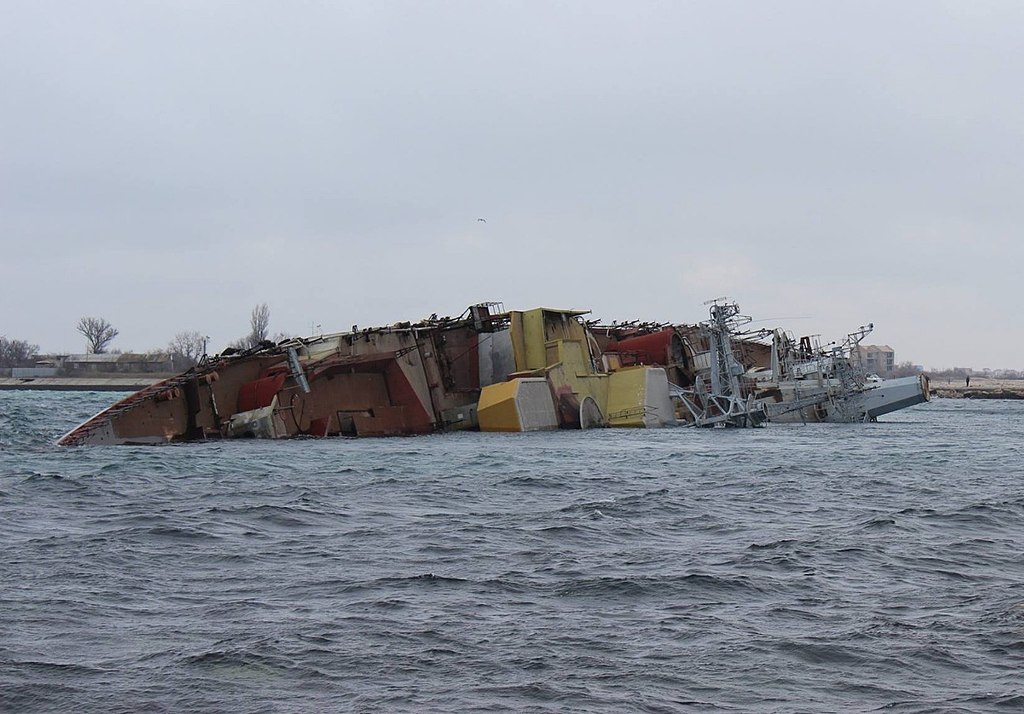
The retired ship is infamous, though, for something that happened after her active life. Ochakov was repurposed by the Russian forces to to seal Ukrainian ships in Lake Donuzlav during the March 2014 early stages of the Russo-Ukrainian War. A naval task force of the Russian Black Sea Fleet, which included the larger Slava class missile cruiser Moskva, towed Ochakov early on the 6th of March to a location just astride the narrow Donuzlav Pass, where the vessel was purposefully sunk. Ochakov came to rest partially-submerged on its port side in shallow water. For those unfamiliar with the term, a blockship is any ship, naval or civilian, deliberately sunk to block a river, channel, canal, strait, fjord, or entrance to a port, for either defensive or offensive purposes.
The hostile act of bottling up the Lake with the Ochakov hulk and two other small ships had strategic consequences: it led directly to the surrender of the Ukranian Navy’s Southern Naval Base whose dozen warships could not escape to other naval facilities in the Black Sea.
Wikipedia currently reports Ochakov was raised in late 2014 and towed back to Inkerman, near Sevastopol, to be dismantled. Satellite imagery clearly shows that the ship never left the Lake.
As it awaits dismantlement, Ochakov is the last unit of its class in existence. The other Kara in Sevastopol, Kerch, served until damaged by a fire in 2014. Kerch was scrapped in late 2020. This is probably where the confusion came from. For other information we have about this and two other Kara class cruisers, see the Russian current and retired cruisers listing.
Ochakov in Donuzlav, two years after it was used as a blockship nearby by Russian forces. It is now several kilometers up the Lake from the Pass, resting near other rusting hulks. Credit: Mitte27, CC BY-SA 4.0 , via Wikimedia Commons
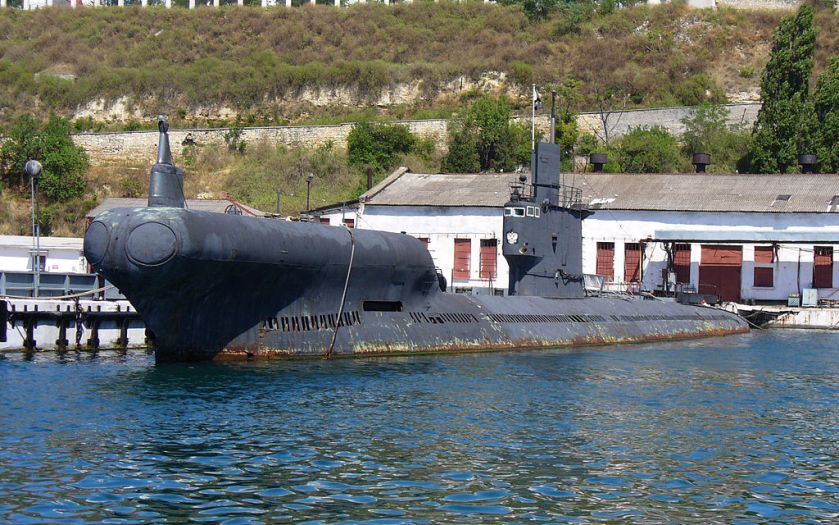
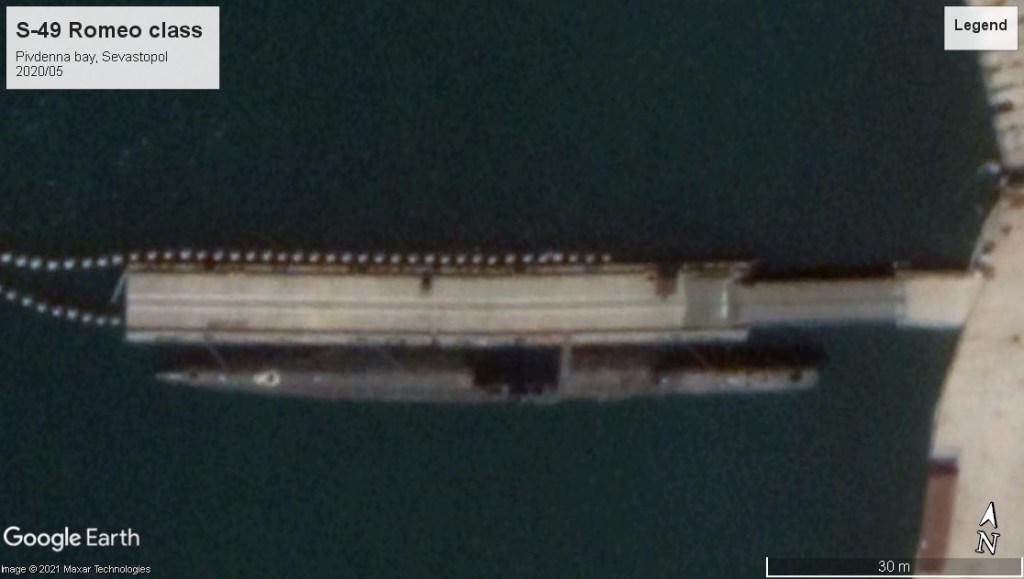
Continuing our theme of strange Soviet subs, we feature the Project 633RV / a modified variant of the NATO-designated Romeo class Diesel-Electric attack submarines. S-49/PZS-50 (Commissioned in 1961) is still in existence, up a bay in Sevastopol.
S-49 at Prvidenna Bay, Sevastopol. Credit: George Chernilevsky, Public domain, via Wikimedia Commons
The major modifications of 1970-1972 to two Romeo boats were the addition of (conspicuous) 650mm tubes above the bows for a test Anti-Submarine Warfare missile system the RPK-7 “Veter”, while 2 of the 533mm torpedo tubes were also modified for RPK-6 “Vodopad” ASW missiles. Both these are NATO-designated SS-N-16 “Stallion.” These could be armed with an Anti-Submarine Warfare torpedo or a nuclear depth charge. The Veter had a range of roughly 100km. S-49 was reportedly decommissioned late 2019, and may become a museum boat.
S-49 docked at Pivdenna Bay, Sevastopol. The distinctive housing over the bow, for the two enlarged tubes, can be seen, whereas the rest of the submarine appears similar to other Romeo boats, accessible at the above link to our Russian submarines page.
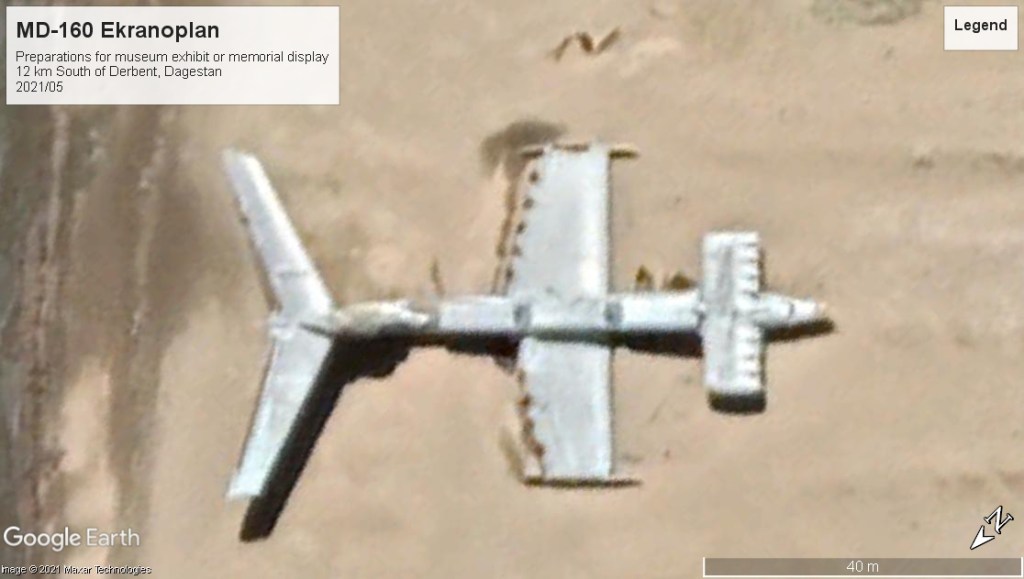
We located new views of the Soviet naval ekranoplan MD-160, the only completed Lun-class Ekranoplan, on the beach South of Derbent, Republic of Dagestan, and have added these to our listing of these very unusual craft!
MD-160, detailed view.MD-160 hauled ashore 12 km south of Derbent on the Caspian coast.
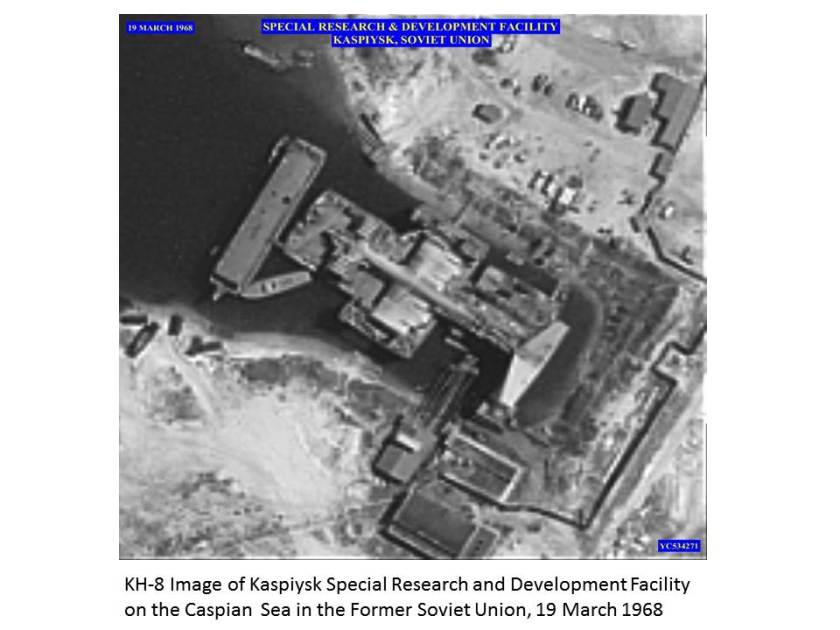
Towed down the coast from its long-term outside storage at Kaspiysk in late July, 2020, this 242-foot long “Caspian Sea Monster” is intended to join the collection of the giant Patriot Park museum/reanactment center.* It grounded accidentally and became stuck on the beach in the surf, and was feared to have been significantly damaged. However, recent efforts in December succeeded in moving it inland, out of harm’s way. MD-160 is a Lun-class “ground-effect” or “wing-in-ground” vehicle. It was a development of the 302-foot long KM, the largest aerial vehicle of its time (new entry for this beastly craft in the listing). Soviet Ekranoplans were designed at the Central Hydrofoil Design Bureau, and mostly the product of visionary designs by hydrofoil expert Rostislav Alexeyev.
KH-8 satellite image of the Soviet naval base at Kaspiysk from 1968 showing the larger KM. National Reconnaissance Office.
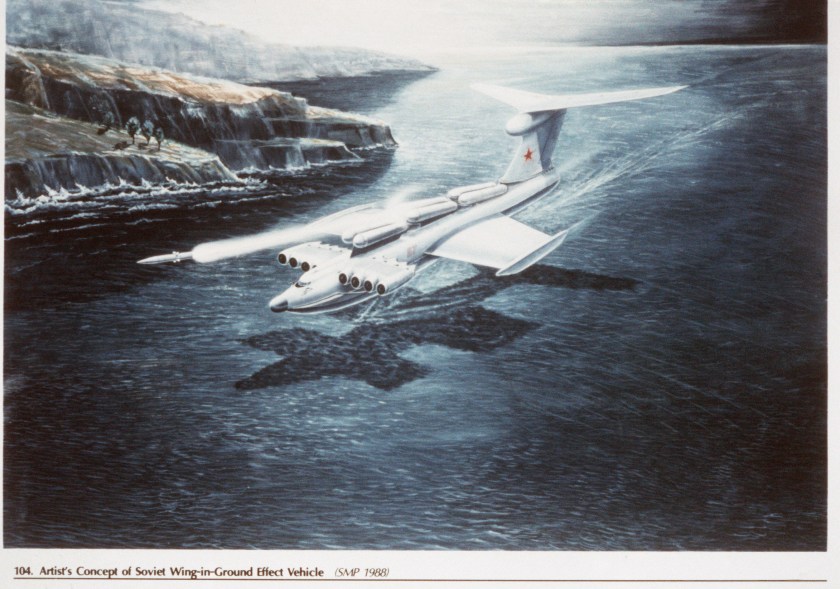
MD-160 entered service in 1987 and was retired sometime during the late 1990s. Unlike the KM, and smaller ekranoplans, it was armed with six enormous p-270 Moskit anti-ship cruise missiles, mounted in pairs of tubes staggered along the dorsal surfaces of the fuselage. Guidance systems for these were found in bulges in the nose and just at the leading edge of the massive tail section. It had stubby wings with a wingspan of 144-feet. Eight Kuznetsov NK-87 turbojet engines, mounted in pods of four jets on each side of the cockpit, powered this strange craft.
Artist’s conception of an ekranoplan, which closely resembles the Lun-class, ca. 1988 NARA: 330-CFD-DD-ST-88-09484 (unidentified artist)
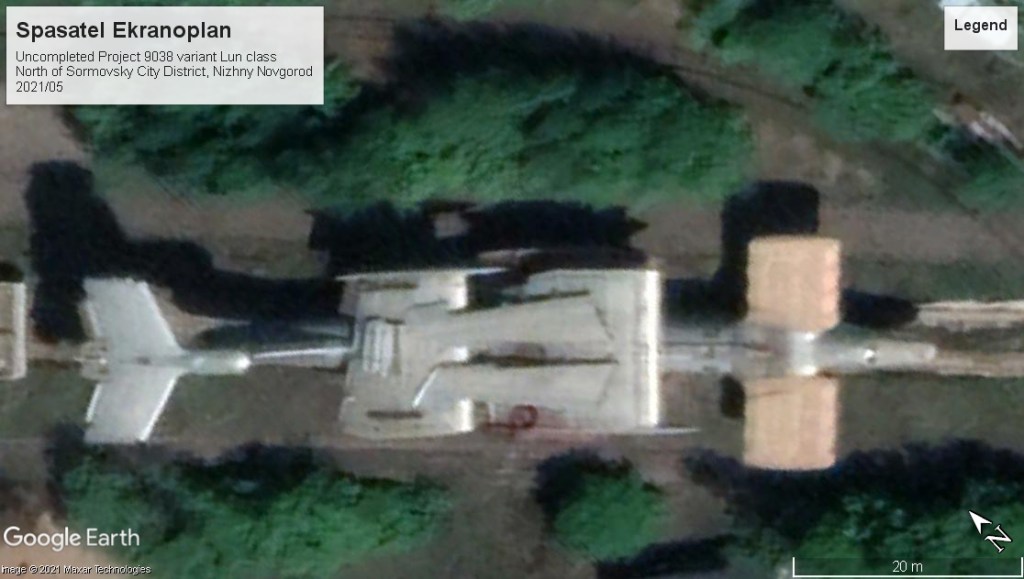
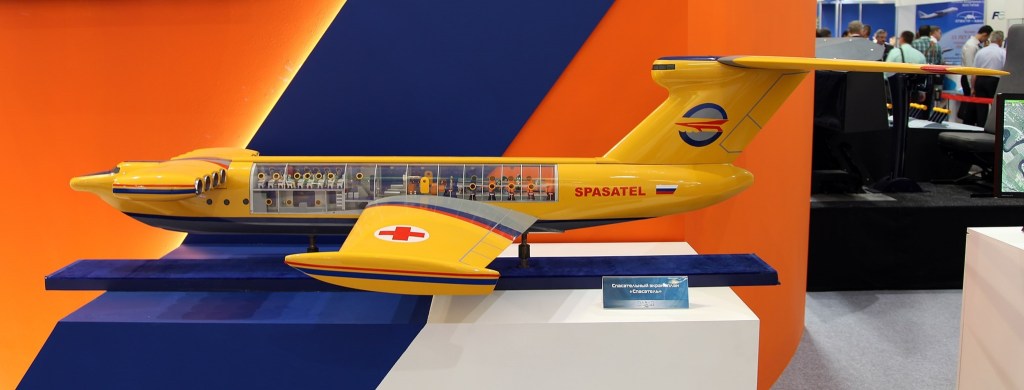
While researching MD-160, we heard for the first time about a “sister-plan.” There exists a second, unfinished variant named Spasatel (Russian for “Rescuer”), whose design was modified, removing the anti-ship missile tubes. It was intended to serve as an ambulance transport or Search and Rescue craft…maybe a hospital ekranoplan!
The unfinished variant of the Lun class ekranoplan, Spasatel appears largely intact from this view, with both wings and the tail surfaces dismantled and stacked separately on top of the fuselage.
Left unfinished upon the collapse of the Soviet Union, It was stored in a shed near the shipyards at Nizhny Novgorod, until moved outside around 2014. there is some interest in resuming the project! The view above shows all the major pieces are stacked on the fuselage. For more views of ekranoplans, please check out our Russian Navy – Ekranoplans listing page.
A cutaway model of Spasatel at MAKS airshow, 2015, showing the arrangement as a medical transport ekranoplan. [detail of] Credit: Vitaly V. Kuzmin, CC BY-SA 4.0 https://creativecommons.org/licenses/by-sa/4.0, via Wikimedia Commons
* The original KM was called the “Caspian Sea Monster” by Western observers, so these Lun class ekranoplans may more accurately be the daughters of the Caspian Sea Monster.
There have been many unusual Soviet submarine modifications, and the modified Yankee class “Big Nose” Project 09780 Akson-2 was one of them!
Kazan ca. 1996-2000. Credit: АО «Центр судоремонта „Звёздочка“», Attribution, via Wikimedia Commons
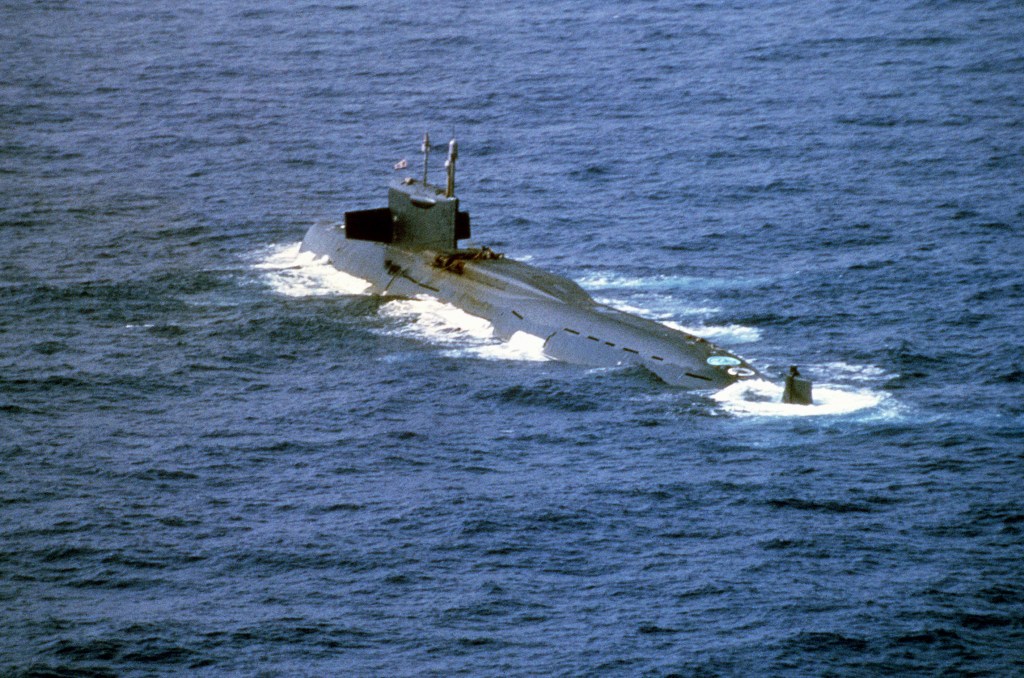
K-403 began life as a Project 667A “boomer” SSBN Nuclear-powered Ballistic Missile Submarine, which received the NATO designation “Yankee class”. These were the first Russian missile boats with a conventional layout of missile tubes behind the sail – 16 SS-N-6 SLBMs. They were roughly contemporary to the USN “Forty-one for Freedom” classes, and, as Russian boats go, they looked downright normal – very similar to their Polaris-armed adversaries serving in the USN and Royal Navy.
K-219, another Yankee class boat, on the surface, after having been damaged by a missile propellant fire October 1986. Out of a class of 34 boats, this was the only loss. NARA: 330-CFD-DN-ST-87-00760
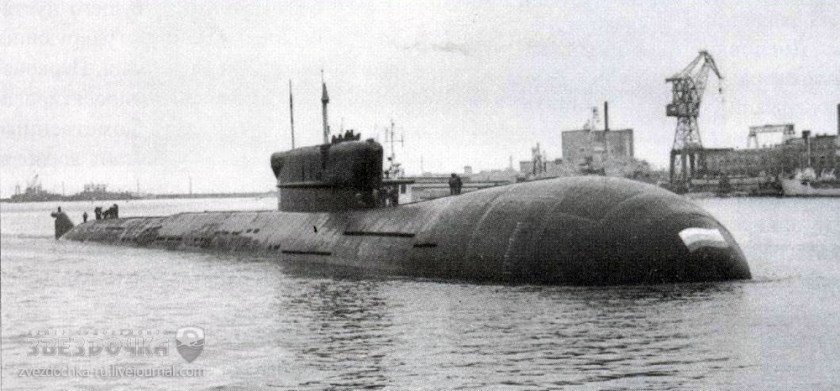
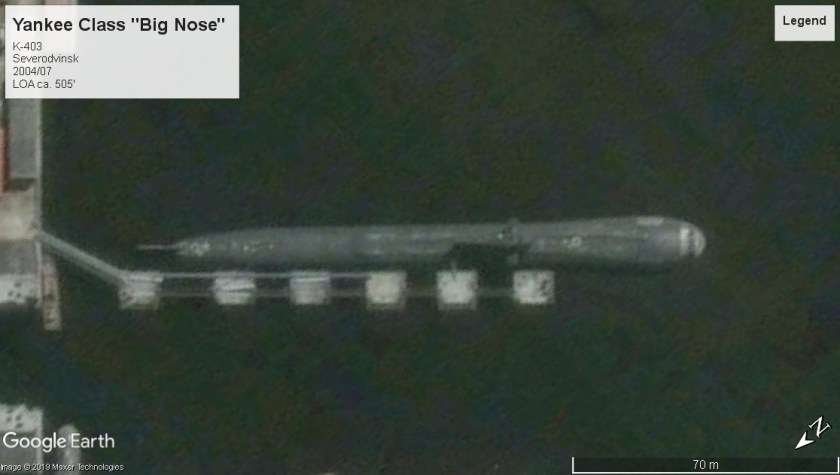
K-403 Kazan was commissioned in 1971, and would be modified several times. The website RussianShips.Info gives a summary of these modifications. During the early 1980s, K-403 was modified to a Project 667AK Akson or NATO “Yankee Pod” configuration, with the missile compartment removed and a towed sonar housing atop the rudder, which looked like what wound up installed on Oscar II class SSGNs. A decade later came the Project 09780 Akson-2 “Big Nose” conversion – a distinctive swollen bow section to house the large Irtysh spherical sonar prototype. At some point, K-403 was fully disarmed, with the bow torpedo tubes also removed.
Identification of K-403 based on wikipedia article on Yankee Class, which lists this boat as dismantled in the nearby drydock, in 2010. This boat was in multiple Severodvinsk captures 2004-2010.
The Kazan then served as the test-bed for the Irtysh/Amfora sonar system. THe trials must have been successful, as the system is fitted to current Project 885M (NATO Yasen-M) Nuclear Cruise Missile/Attack boats. K-403 was reportedly decommissioned around 2004 and scrapped at Severodvinsk in 2010. K-403 and K-411 (another oddity-a heavily modified, stretched mothership) were the last of the Yankees known to exist.
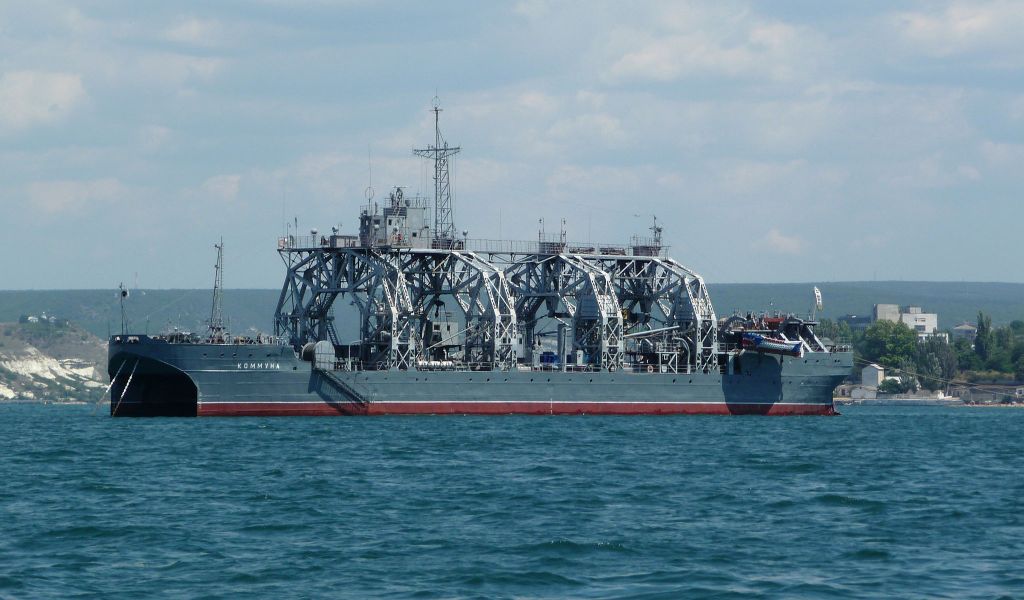
Kommuna rescue ship, Sevastopol, 2009. George Chernilevsky / Public domain
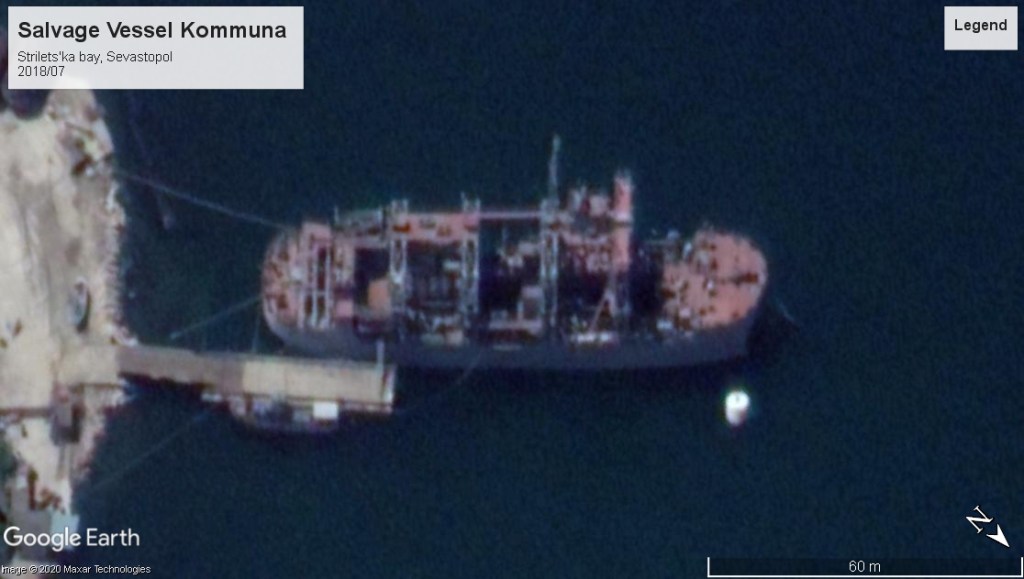
The Komunna has been salvaging Russian subs since the time of the last Czar, Nicholas II. She was loosely modeled on the Imperial German ship, SMS Vulkan. Shipsearcher staff located the catamaran-style vessel, with four enormous connecting trusses, in a bay near Sevastopol, in the Crimea. This specialized ship is the oldest operational warship in the World. Entering service in 1915, “Volkhov” (her name from 1915-1922), salvaged submarines from the First World War.
This almost oblique satellite capture of the Kommuna shows the characteristic features: very wide double hulled design bridged by stern and bow decks, with four enormous connecting trusses and a bridge structure between the first and second trusses.
During the Second World War, at the Siege of Leningrad, crews worked tirelessly to help Soviet defenders salvage and raise tanks and other vehicles that had fallen thru the ice bridge resupplying the beleaguered city. Russian regimes have come and gone, but Kommuna has remained active salvaging submarines, other shipwrecks, and even advanced aircraft on the seafloor. A 1999 refit saw her outfitted as a submarine rescue ship, with modern equipment. Recent additions include a British Remotely Operated Vehicle (ROV), the Pantera Plus, and other rescue submersibles. Visit the page for Russian naval auxiliaries and other vessels for Kommuna and other unique Russian warships!
Comrades, this is your captain. It is anhonor to speak to you today, and I am honored to be sailing with you on the maiden voyage of our motherland’s most recent achievement. Once more, we play our dangerous game, a game ofchess against our old adversary — The American Navy. For forty years, your fathers before you and your older brothers played this game and played it well. But today the game is different. We have the advantage.(Captain Marco Ramius – Hunt for Red October)
Introducing Russian Surface Units – Current and Retired. It joins the Soviet / Russian submarines page to document many classes of Russian warships, from the massive Kirov class battlecruisers to new stealth frigates. Among the strangest of naval vessels, near the end of the list, are the Ekranoplans: These are the daughters of the “Caspian Sea Monster.” You will have to visit the page to untangle that shipsearcher statement!
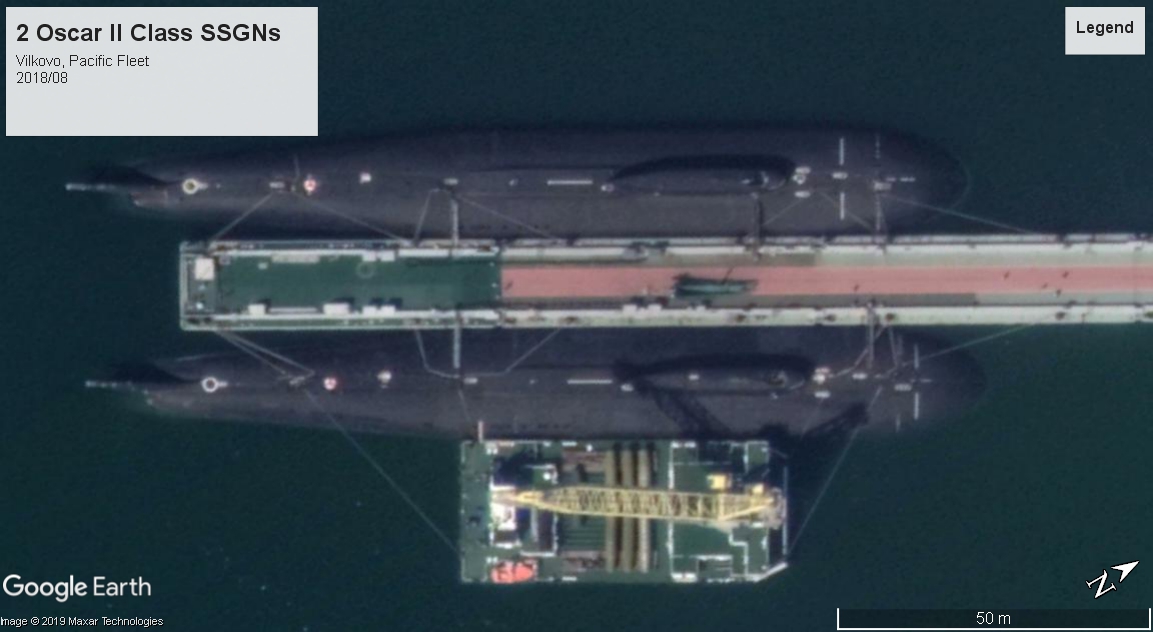
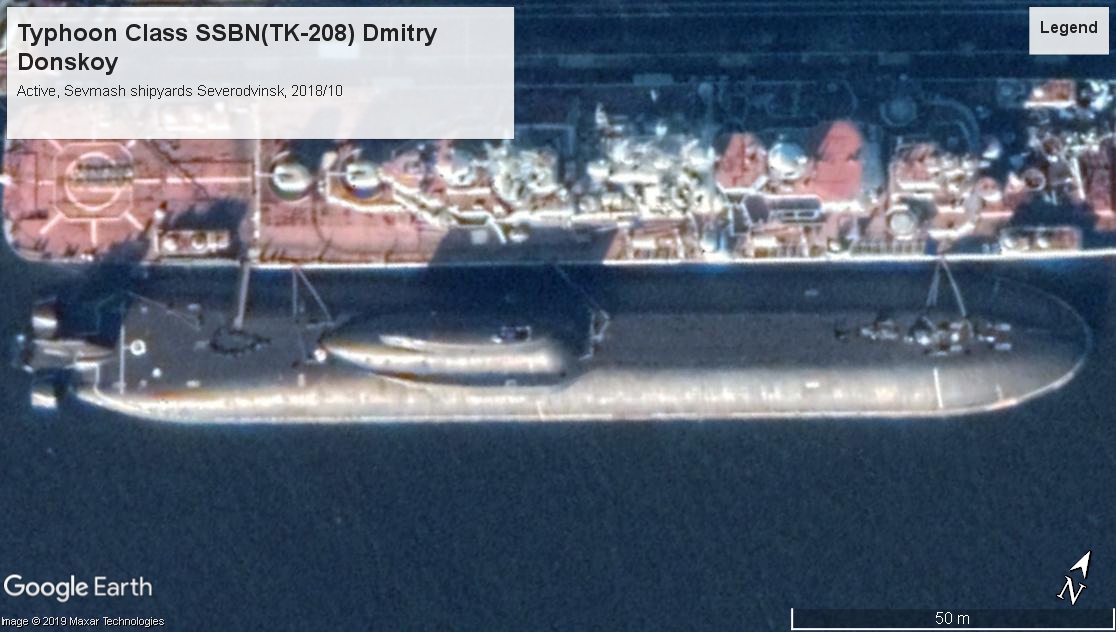
Shipsearcher staff have been busy looking into the inlets around Murmansk and Vladivostok for large Russian submarines. We’ve found some nice satellite captures of boats to share in a new page on Russian submarines.
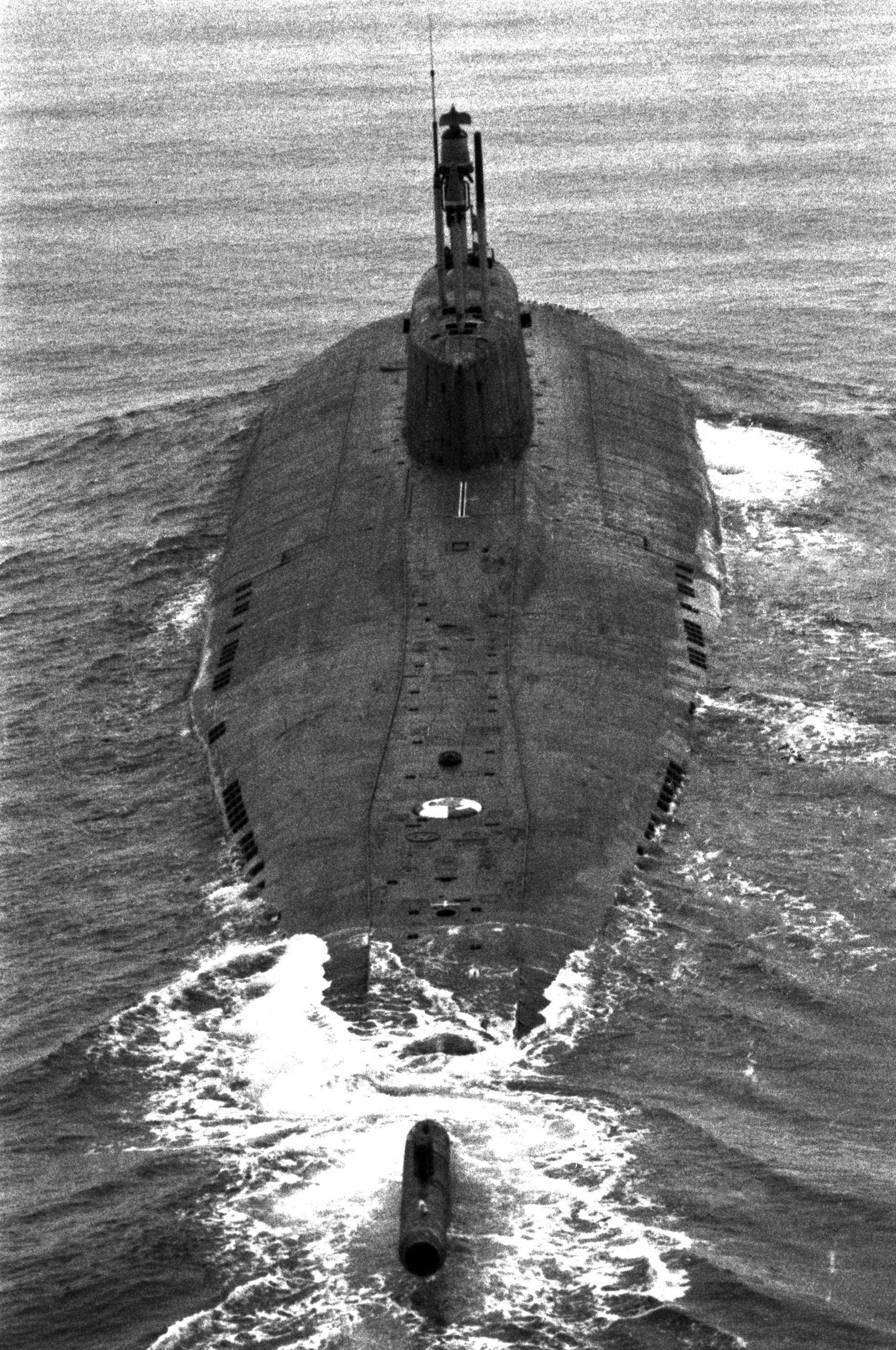
Oscar II class submarine, showing the wide breadth, 1994 NARA: 330-CFD-DN-SN-96-00408
Many, like the enormous Typhoon Class of Hunt for Red October fame, are resurrected dinosaurs of the Cold War, while some are new and terrifying breeds.
Featured in the page are nuclear boats that have been the subject of media speculation, such as the World’s longest submarine, the special mission heavily modified Oscar II class Belgorod, and the Losharik deep submergence mini-sub. These are some of the biggest and scariest subs active today. We hope you enjoy these views, just remember, in Soviet Russia, submarine submerges YOU!!







 Introducing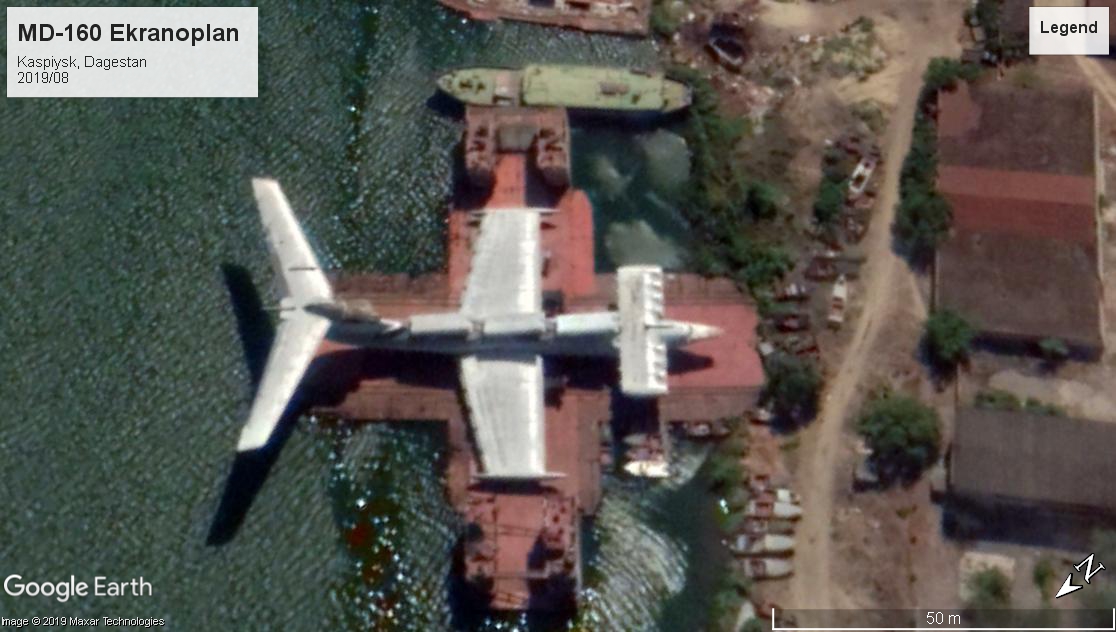
 The Searchers