HMS Terror (1916-1941)-Queen of Bombardments

24 February 1941 – HMS Terror, a veteran warrior, slipped beneath the waves of the Mediterranean Sea, off the Libyan coast.
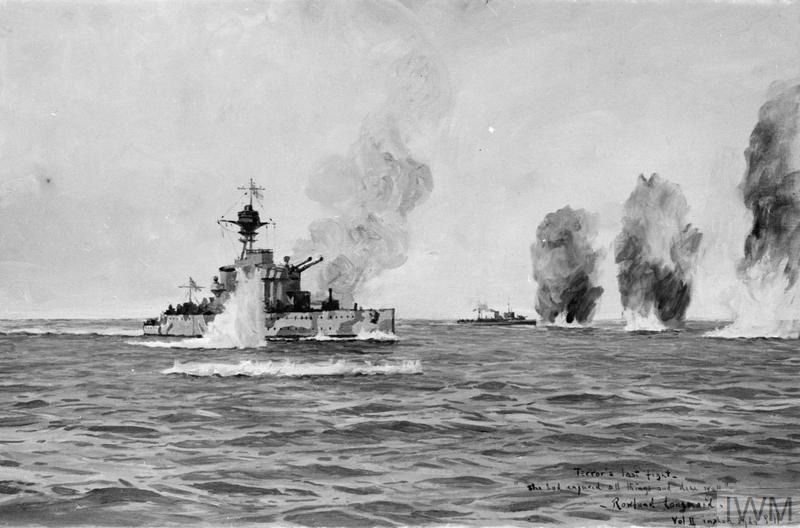
Terror’s Last Fight. Photograph by Lt. E.E. Allen of a painting by Lt. Cmdr. Rowland Langmaid, Official Fleet Artist depicting the 23 February 1941 air attacks by German JU-88 bombers that contributed to Terror’s abandonment the next day. © IWM A 13648

This site has posted on topics related to the wreck of HMS Terror (1813-1849ish), Sir John Franklin’s second ship on the doomed 1845 Expedition to chart a Northwest Passage at the top of North America. That long-lost wreck, which began life more than three decades earlier as a bomb-vessel, was discovered September 2016 in a bay at King William Island, Nunavut. There have been several other commissioned Royal Navy ships named Terror, and at least one of these is also wrecked on the seabed today. This later British warship has not been explored, or even located, in the very different waters of the Mediterranean Sea north of the Libyan coast.1 This namesake should not be forgotten: She upheld the reputation of her famous predecessor as an incredibly tough warship. A fierce combatant in two global conflicts, she was scuttled eighty-three years ago today.

Terror, an Erebus class monitor, was built by the firm Harland & Wolff (known as the builders of several White Star liners, including RMS Titanic), at Belfast and completed in mid-1916. A monitor performed the traditional function a bomb vessel did during the age of sail –shore bombardment–albeit with a level of destructiveness that would have been barely imaginable when the 1813 Terror first tasted water. Of all twentieth-century monitors, the Erebus sisters were the only ones to continue the historic lineage of bomb vessel names. They also paid tribute to the memory of the specific Franklin ships. The lead ship, HMS Erebus, remained in commission until 1946.
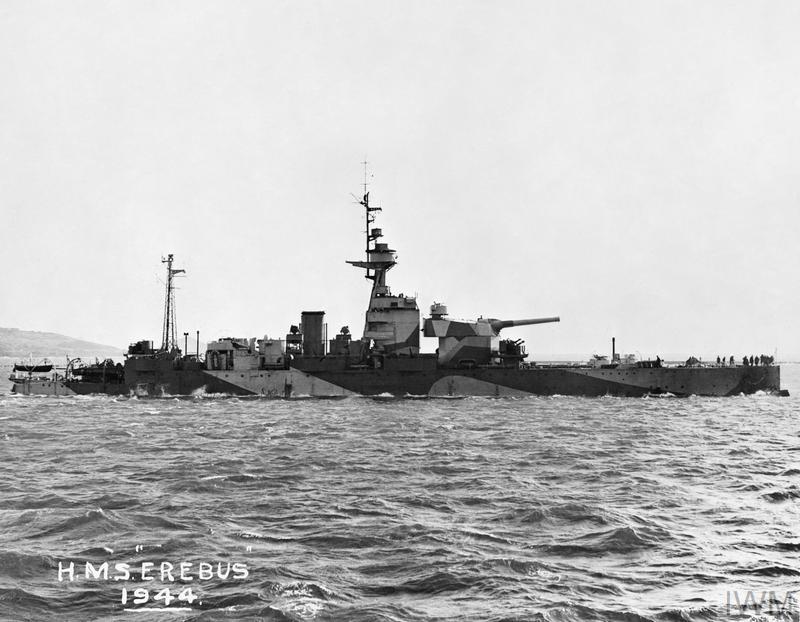
HMS Erebus (FL 693) At a buoy in Plymouth Sound, 1944, around the time of her participation in bombarding targets during the D-day landings. Copyright: © IWM. Original Source: http://www.iwm.org.uk/collections/item/object/205120082

A brief comparison of the 1813 and 1916-built Terrors: where the 1813 wooden sailing vessel was armed with two heavy mortars—a 13” and a 10” variety – and some light cannon, the 1916 armoured monitor was fitted with two 15” rifled battleship guns that fired a variety of explosive and armour-piercing ammunition. Secondary armament included anti-aircraft guns. Length: 1813- 100’ on deck, 1916-405’. Breadth: 1813-30’; 1916- 88’. Displacement 1813-330 tons; 1916-8,450 tons, (larger by the Second World War). 1813-wood, later reinforced for Arctic service with a heavy wood ice chock encircling the hull. 1916-High tensile steel armour up to 13” thick on the turret, with a large anti-torpedo bulge encircling the hull. Lastly, the installed power: HMS Terror (1813) was fitted with a single steam locomotive boiler in 1845, generating 25 horsepower for one retractable two-bladed screw – 4 knots maximum speed while under steam. 1916-four large oil-fired boilers generating 6,000 horsepower for the twin screws – 12 knots maximum speed.

The monitors were a novel way of fitting the 15″ guns of a more conventional design of British battleships, such as the Queen Elizabeth (1912) class – with four turrets and eight 15″ guns – to a smaller, lighter, shallower hull. Brassey’s Naval Annual, 1923 edition, artist not identified, Public domain, via Wikimedia Commons

Early in the First World War, a new design evolved for monitors. With Belgium in enemy hands, there was a role for heavy coastal bombardment of land targets. Battleships, with their deep draughts, could not work close enough inshore to strike deep into occupied territory with their 12′ or larger guns. A boxy, very wide, shallow hull was required to accommodate a rotating turret with what – to most observers – would look like absurdly oversized guns.
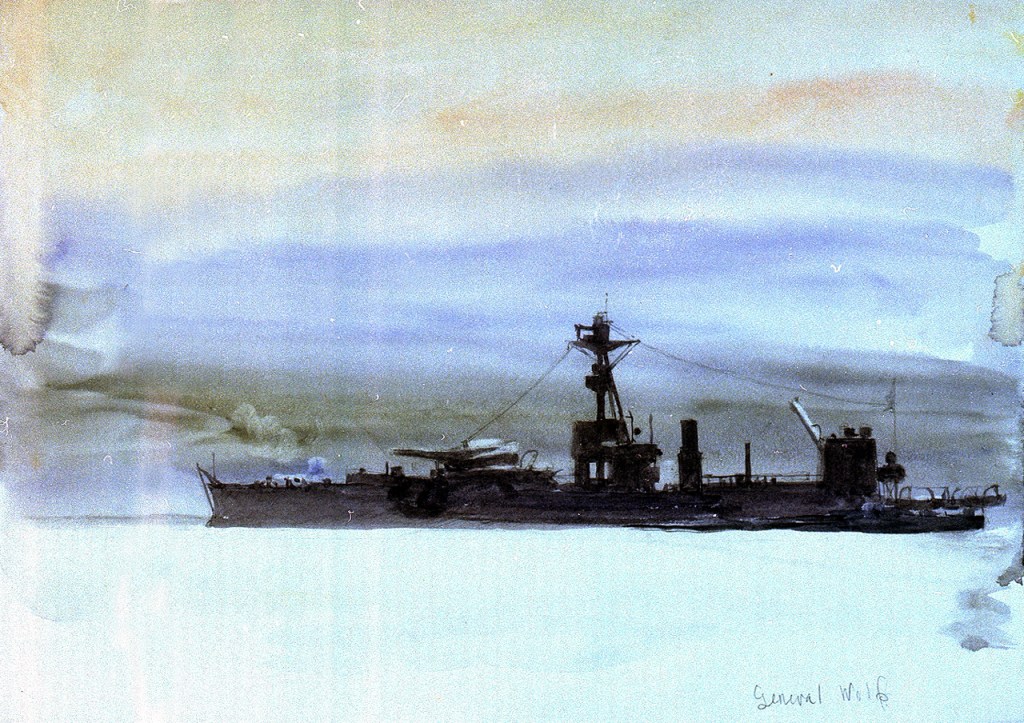
HMS General Wolfe, an earlier Lord Clive class monitor. In addition to the regular forward turret armed with twin 12″ guns, she was one of only two monitors to receive a single 18″ gun, the largest fitted to a warship until the Second World War Japanese Yamato battleships. This massive gun was fitted aft, in a fixed structure pointing off to starboard. Wolfe achieved the longest accurate bombardment in Royal Navy history: A target at Snaeskerke, Belgium, 32.2 km distant. Credit: William Lionel Wyllie, Royal Museums Greenwich PAE2675

As monitors went, the Erebus class pair of ships were enormous. They were a significant improvement on the preceding Marshal Ney class, and the design remedied shortcoming of all previous British monitors with heavy guns.2 Their length of 405′ was similar to the battleships of the 1890s that were still serving in the fleet. Their breadth (width) was proportionally even greater – on par with newest dreadnought battleships. This ensured the ships were stable firing platforms for their formidable armament: a rotating turret armed with twin 15” BL MkI guns with 42 caliber barrel lengths. These were the premier Royal Navy capital ship armament, and equipped generations of the Grand Fleet’s battlewagons, from 1915 to 1959. Where the 1813 Terror could lob a 13”, 200-pound explosive or incendiary shell about 3.8 kilometers, the 15” gun could fire a 1,940 pound shell out to about 24 km.
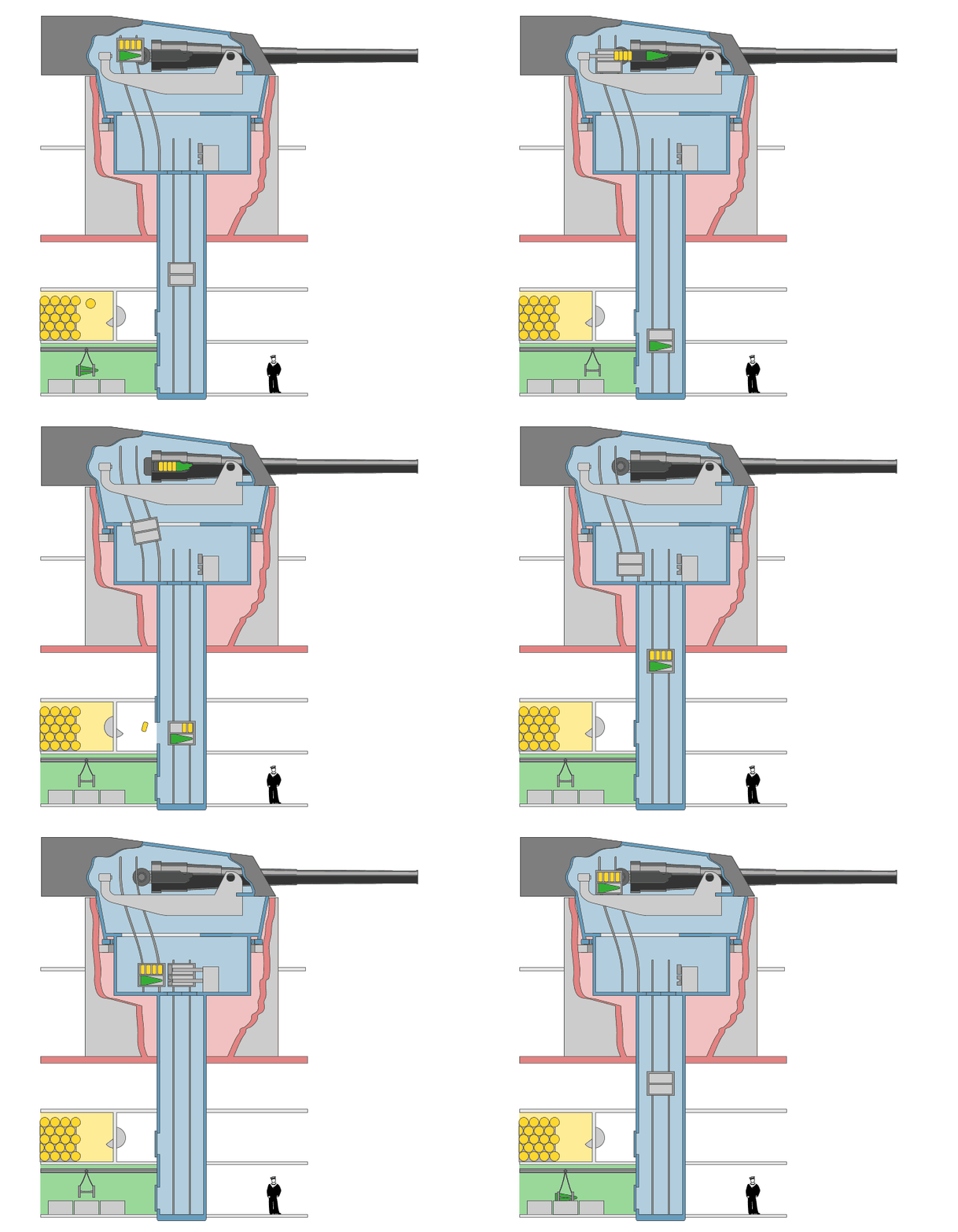
Animation of loading process of a 15” BL MK1 gun. This model of gun delivered one of the longest hits in battleship history when HMS Warspite struck the Italian battleship Guilio Cesare 23.8 km away in July 1940. Via wikimedia commons CC-BY SA

During their First World War service, the Erebus sisters bombarded targets in German-occupied Belgium, as units of the Dover Patrol, and assisted the Allied land armies in bombardments during the Fifth Battle of Ypres (28 Sep-2 Oct. 1918). On October 19, 1917, while operating off Dunkirk, against several German torpedo boats, Terror was torpedoed three times, and was severely damaged, with much of the bows blown off. After an agonizingly-slow tow from Dover to Portsmouth – with some of it backwards to try and keep the forward bulkheads from giving way – the ship was rebuilt. Back to the Dover Patrol to participate in famous April 1918 Raid on Zeebrugge, the Erebus sisters and Marshal Soult – another monitor – bombarded targets. Following the November 1918 Armistice, many of the monitors were decommissioned, laid up in reserve, converted to other purposes, or scrapped. Terror continued in commission on various peacetime assignments, and was assigned to HMS Excellent, the gunnery school at Whale Island near Portsmouth. She was used as a testbed for different artillery, firing on targets which included worn-out battleships.

With the outbreak of the Second World War, the sisters were again required for the bombardment of enemy fortifications and positions. Terror was under long refit in Singapore. Her anti-aircraft defences were upgraded-they would become vitally important to Terror’s survival. Returning to Europe in 1940 by way of the Mediterranean, the monitor became implicated in defending Malta, under siege from Italian air and naval forces. She endured aerial attacks, helping to defend the beleaguered garrison from Italian bombing. Her massive guns bulked up the Island’s coastal batteries. After a stint in Greece, her next assignment was to proceed to the North African coast in early 1941 to assist in the opening of the Libyan campaign against occupied North Africa.
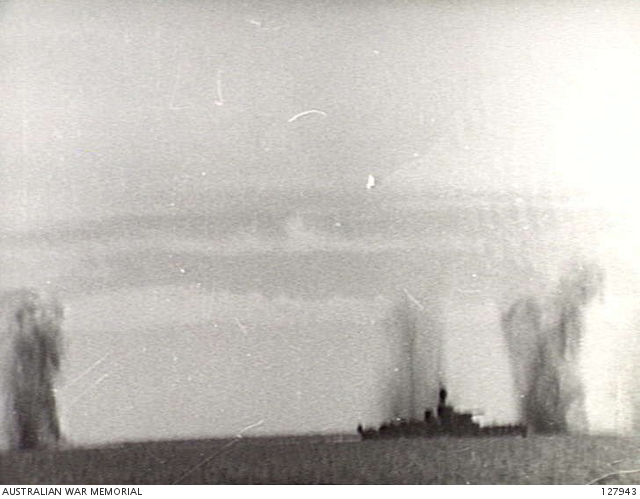
HMS Terror under aerial attack 2 January 1941 off Bardia, Libya, in the lead up to the Australian assault on Italian fortifications: Operation Compass. Terror’s accurate bombardment caused the partial collapse of a cliff, which took Italian short fortifications and artillery positions with it. Credit: Damien Peter Parer, Australian War Memorial 127943

During mid-February the vessel was at Benghazi. On the 22nd, while leaving the port, Terror was damaged by two nearby mine explosions. The damage was not significant enough to delay the departure. The next day, off the African coast, a lone Hurricane fighter covering the embattled monitor had to turn back to refuel. Terror was soon under air attack from three German Junkers JU-88 bombers. Though there had been no single decisive hit, flooding from the accumulated damage was becoming uncontrollable. Though destroyers were coming to Terror’s aid, the help did not come soon enough to save the vessel. Lt- Cmdr John Kellar made the difficult decision to scuttle the ship.3 The entire crew of 300 were evacuated to nearby escorts and Terror sank at position 32.04N 24.05E. A careful perusal of the Commonwealth War Graves Commission’s site reveals that this Terror remained a lucky vessel: in both World Wars, despite torpedoing, air attacks, and mine damage, almost no one died while serving in Terror.4

We have not heard of any effort to locate and survey this wreck. Nor, happily, is there evidence it has been quietly found and salvaged for the significant metal content. The amount of information about the search for and exploration of HMS Terror (1813) effectively hampers research into this topic! The Terror (1916) wreck would be an outstanding example of an unusual type of warship. She had an important record of service with substantive contributions to First and Second World War campaigns. As we eagerly follow the archaeological study of the earlier ship, it is worth sparing a thought for this other Terror shipwreck.
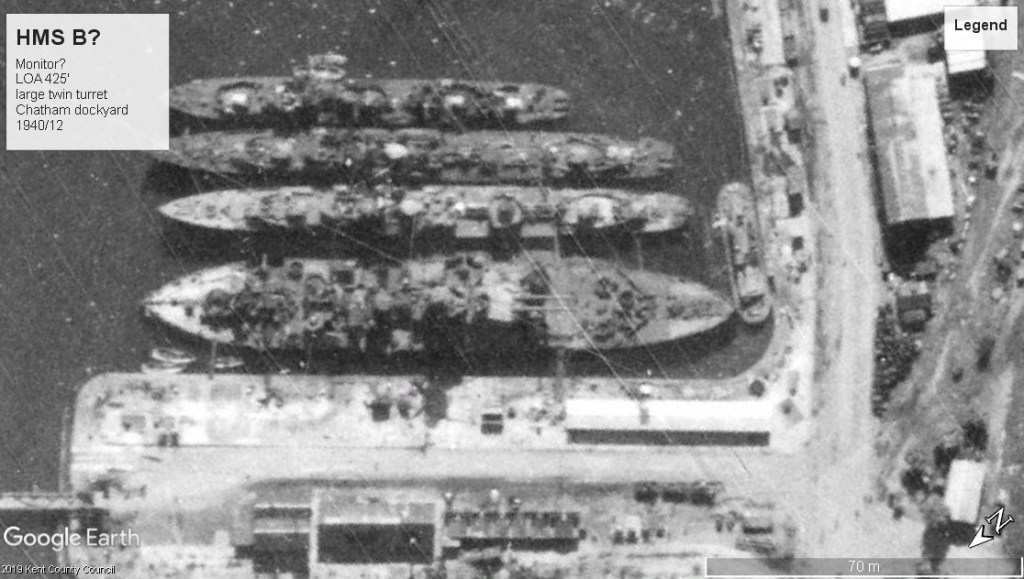
A monitor at Chatham dockyard during the Second World War that we titled “target B”. The elevated large turret can be seen just to the right of midships, while the circular features show the powerful secondary and AA armament. This is one of the oldest captures in Google Earth catalogue. From identifying features, this is Erebus.

  1. We have been unable to locate any sources suggesting the wreck location has been surveyed, or the wreck has been visited. Please let us know if it has! ↩︎
  2. Though the primary role of a monitor at this time was to fit large guns for shore bombardment, there were several more balanced designs that were armed with 9.2″ or 6″ guns. One monitor of this type, HMS M-33 is preserved at Portsmouth. ↩︎
  3. Naval History.net entry with additional information about scuttling: https://www.naval-history.net/xGM-Chrono-03Mon-HMS_Terror.htm ↩︎
  4. This Commonwealth War Graves Commission website search show the incredibly low fatal casualties of Terror’s crew while serving in two World Wars. ↩︎
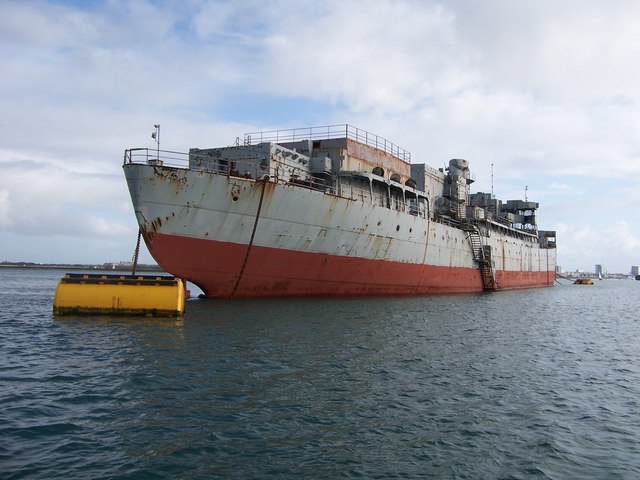
The Last of a Great Fleet of Ships: HMS Rame Head

On the 76th anniversary of her commissioning, we profile the career and end of HMS Rame Head, the last of any version of the vital wartime built Canadian Park and Fort class merchant ships known to exist.

The Shipsearcher Identification Section (SIS) go to great lengths trying to locate views of the “last” member of whole classes of ships, because it helps us add a broad range of ship types to our listings, and because the staff naval historian feels that locating views of these last ships is a worthwhile “history exercise” HISTEX.1 Recently, we stumbled across views of what looked like a US Liberty ship being scrapped near Ghent, Belgium. It took some digging, but we eventually traced the story to the last of the Canadian built Park/Fort wartime merchant ships. Today marks the 76th anniversary of her commissioning into the Royal Navy.

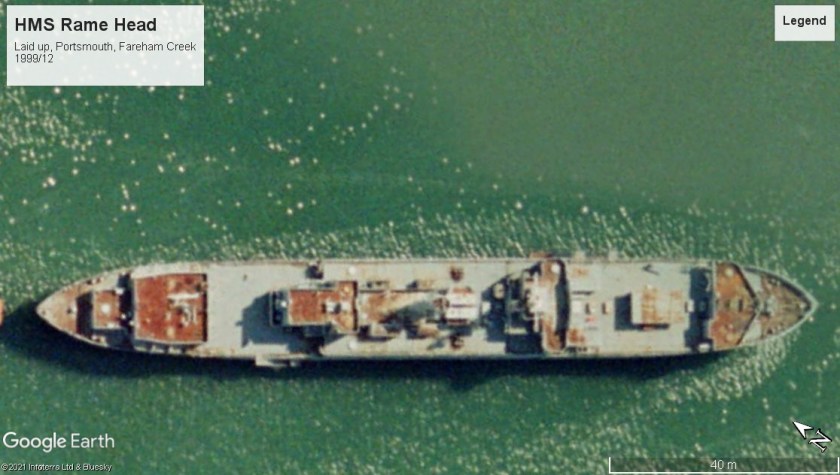
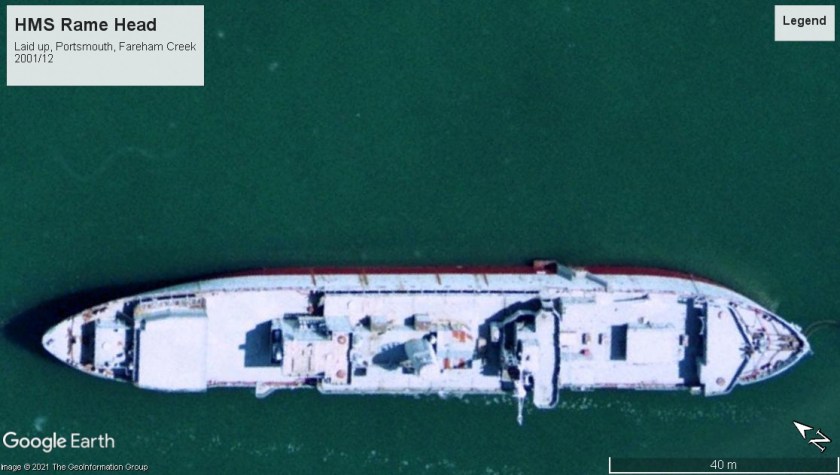
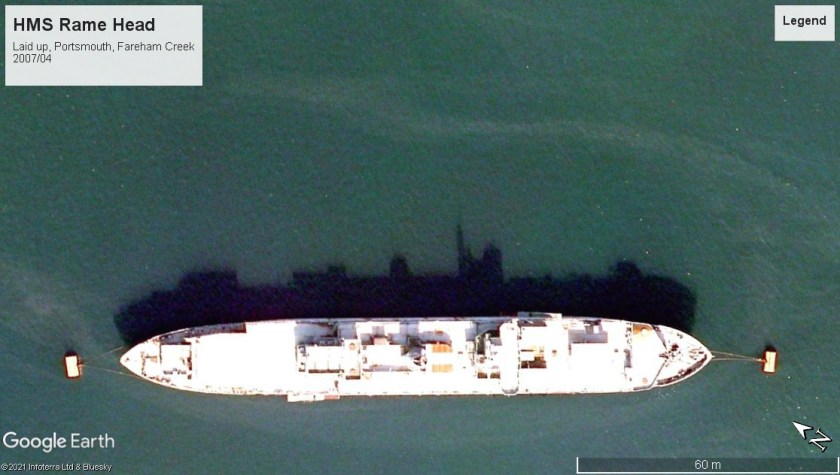
Rame Head laid up outside of Portsmouth, ca. 2008. Credit: Colin Babb / Derelict Ship – Portsmouth Harbour

During the Second World War’s longest battle, the Battle of the Atlantic, Canada built more than 320 large merchant ships, as one contribution to the Allied war effort against the Axis powers. Every cargo that got through the U-boat-infested waters mattered, and replacing lost merchant ships with Canadian-built hulls helped get new equipment, munitions, and other war supplies to Europe. For a small country with few shipyards, the wartime expansion of naval and merchant shipbuilding capacity, on both Atlantic and Pacific coasts, was spectacular.

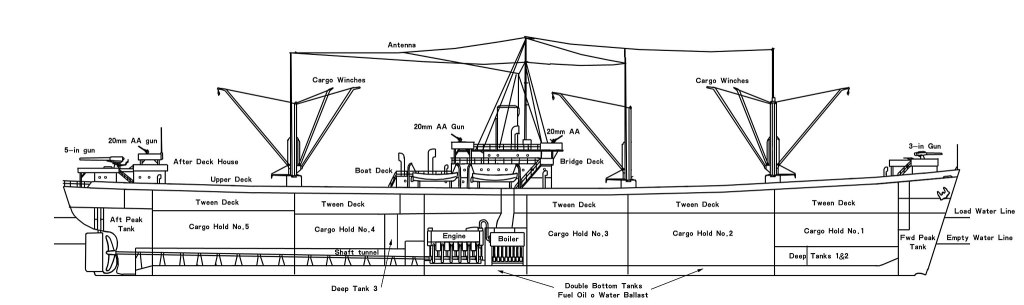
Many of these ships originated out of the same basic British “North Sands” design (basically a standard Tramp steamer). The British government, desperately in need of merchant ships, had contracted American yards to build sixty “Ocean ships” in 1940. They were simple to build, with a large amount of cargo space.

A line drawing of a US-built Liberty Ship, which was very similar to both Ocean and Park designs. Credit: Kallgan, CC BY-SA 3.0 https://creativecommons.org/licenses/by-sa/3.0, via Wikimedia Commons

The Canadian government quickly agreed to build similar ships, and set to the task in 1941. Some were built with rivetted hulls (North Sands ships), many were welded (Canadian and Victory ships). At 442’ overall and about 14,400 tons displacement, these vessels were not built for grace or speed.2 The ships retained for Canada’s merchant fleet were given names of famous Canadian parks, while the ships destined for the British were named after forts.

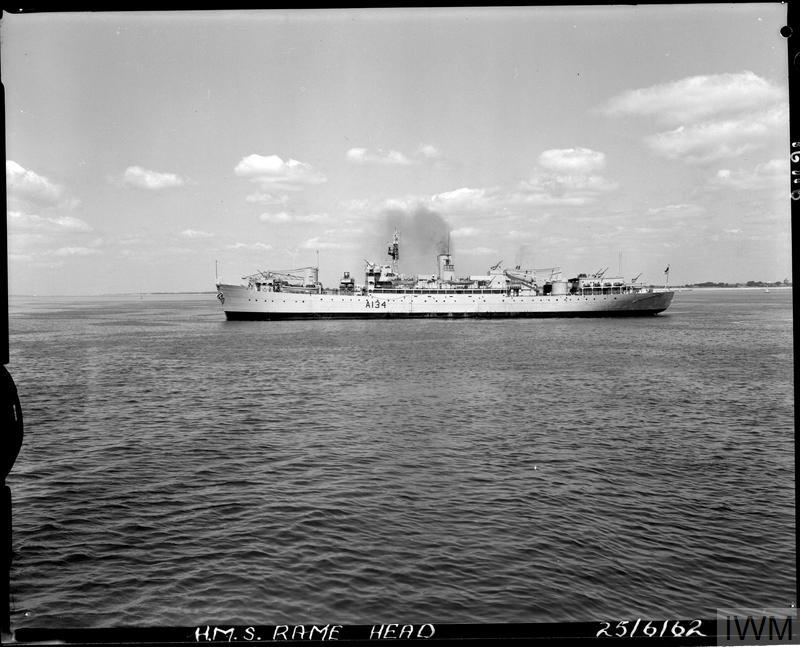
HMS Rame Head ca. 1962 © IWM FL 17891.

HMS Rame Head was a member of the 21 ship “Beachey Head” class, which was a naval modification of the basic Fort/Park merchant ships. They were built as depot, maintenance and repair ships for the Royal Navy. The hull was launched in late November 1944 from North Vancouver Shipyards, Vancouver, BC, and Rame Head was commissioned 18 August, 1945, days after the War ended in the Pacific.

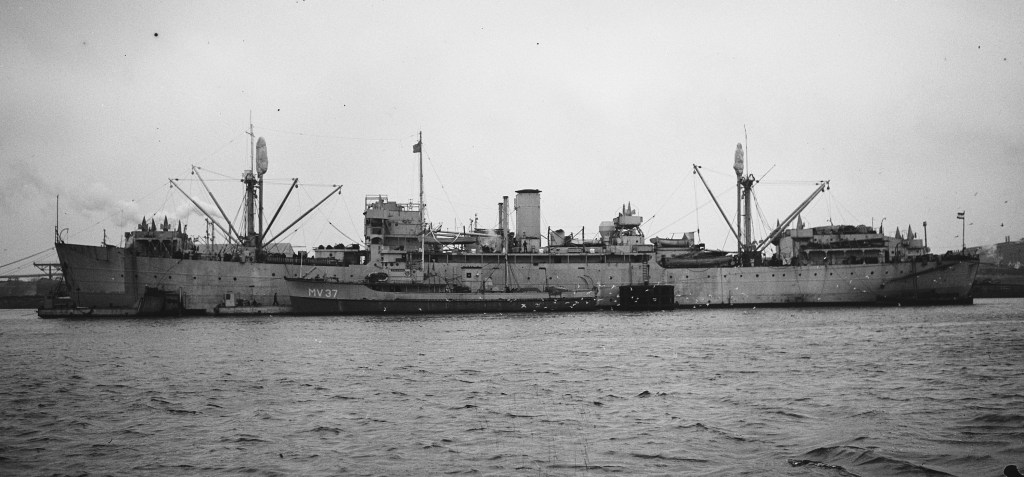
HNLMS Vulkaan, ca. 1948. built as HMS Beachy Head, before transfer to the Dutch Navy. She would later be transferred to the Canadian Navy as HMCS Cape Scott [cropped]. Credit: Nationaal Archief (Dutch National Archives) 902-5597 Snikkers / Anefo, CC0, via Wikimedia Commons

During the postwar era, she was updated several times. Starting out as an escort maintenance ship, she then served as an accommodation ship from 1972. She is most remembered for her time attached to the the naval establishment HMS Excellent, at Whale Island, near Portsmouth, berthed in the same location later occupied by HMS Bristol. She then spent many years laid up near Fareham, and was occasionally used by the Special Boat Service for assault training. With the 2001 sinking of the former HMCS Cape Breton (a very similar ex-RN repair ship originally named HMS Flamborough Head) to make a reef, Rame Head became the last Fort/Park class merchant ship in existence. By contrast, there are still three of the more numerous US-built Liberty ships (2 of which are museums), and one slightly larger Victory ship.

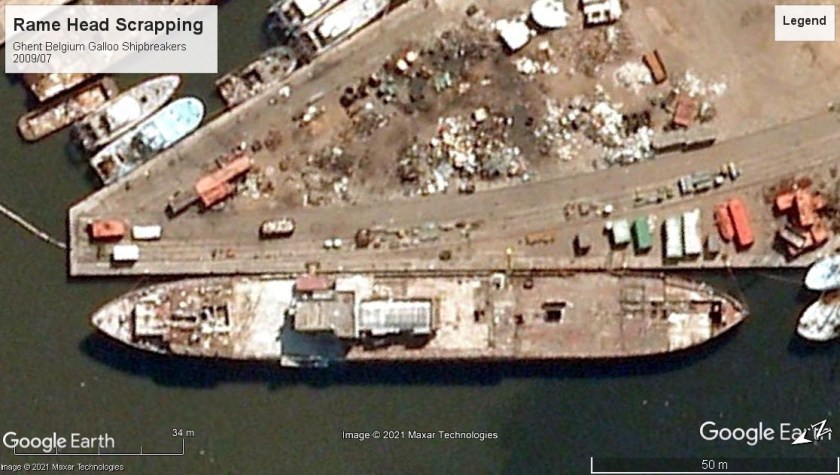
In early 2009, following a whole program of scrapping of retired Royal Navy ships, Rame Head was sold off to the Galloo shipbreaking group (Van Heyghen Recycling). The old hull was towed to Ghent, Belgium. A report by the Ministry of Defence outlines the major steps and challenges encountered during the dismantling of this old ship – more asbestos and more concrete ballast had to be carefully removed than was originally estimated. The report notes that only one group had put forward a proposal to save the ship. Dismantling proceeded swiftly. So went the last of the great and vital fleet of wartime Park and Fort ships.

  1. The title of this post was inspired by S.C. Heal’s book A great fleet of ships: The Canadian forts & parks ↩︎
  2. The same British J.L. Thompson & Sons design would later be used for the Liberty ships. ↩︎

SS America / USS West Point shipwreck

SS America NHHC L45-304.03.02
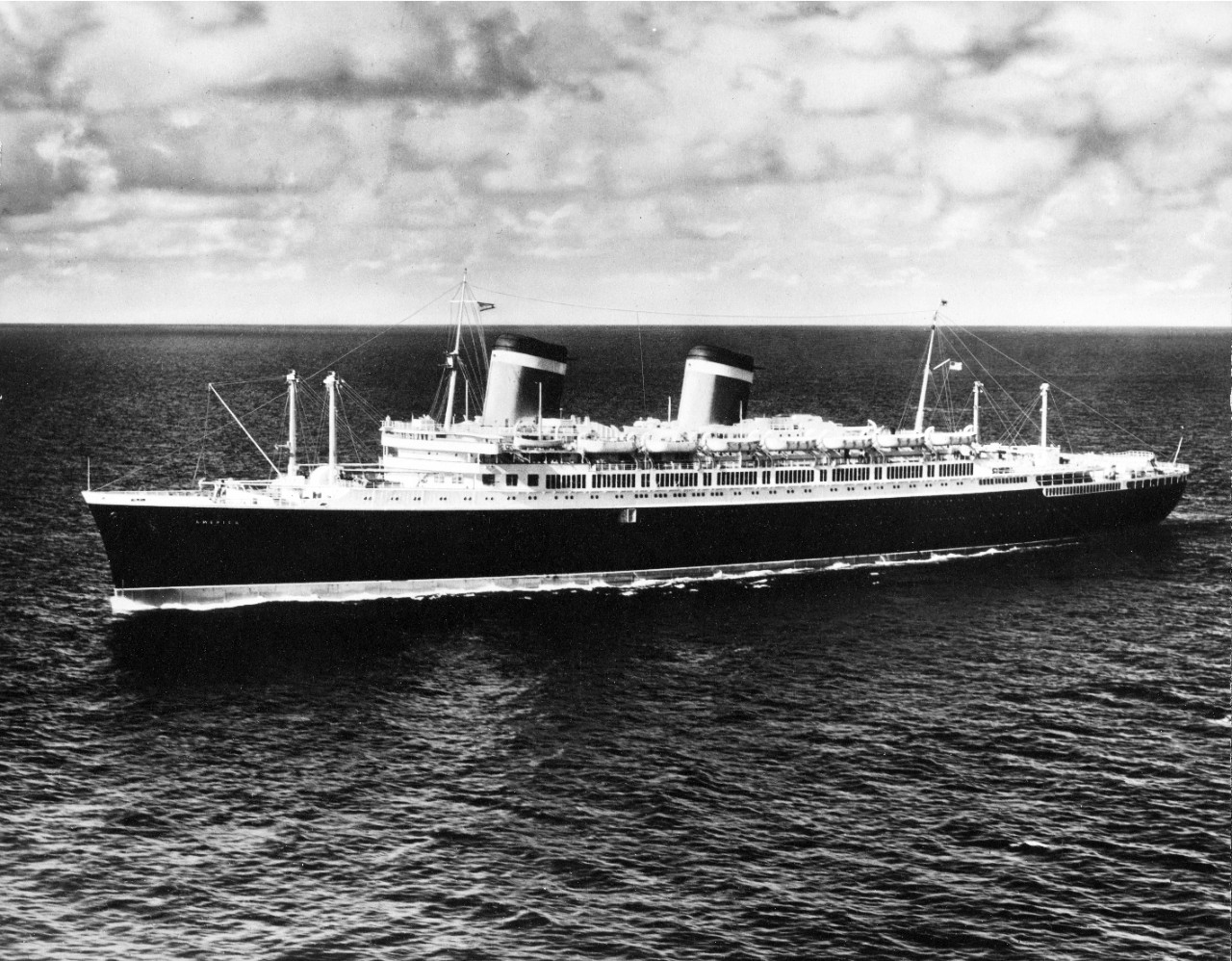
SS America before the US entry into the War. L45-304.03.02. Courtesy of the Naval History and Heritage Command.

The SS America, completed in 1939 for the United States Lines, was a beautiful ocean liner. Graceful sweeping curves and two flared funnels with small winged caps gave her an art-deco styling, like other great liners of the era. Until the construction of the SS United States, in the early 1950s, she was the biggest and best of US domestically-built liners, at 723-feet long and 35,400 tons displacement.

SS America NHHC 19-N-24561
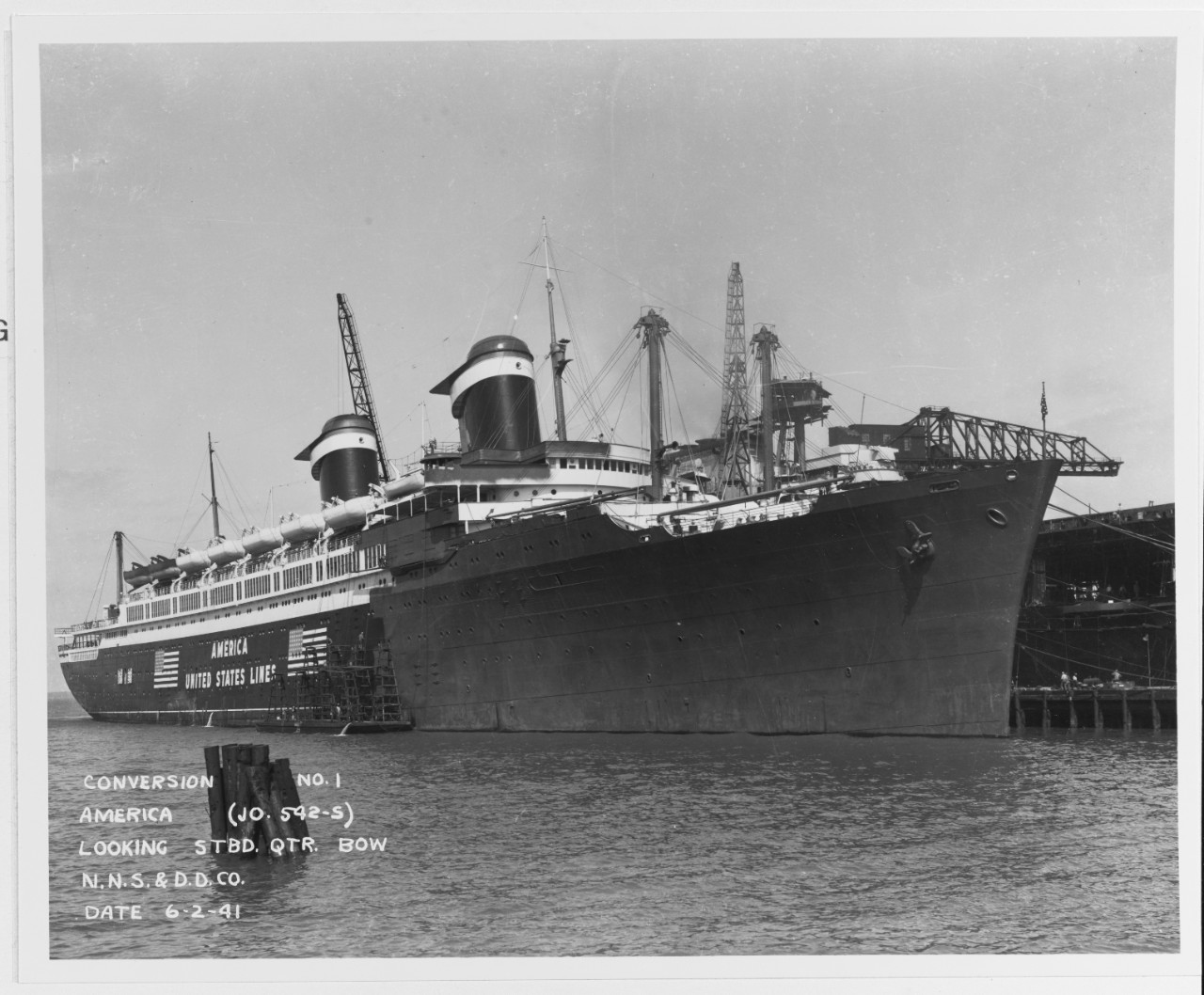
SS America undergoing conversion to a troopship-USS West Point AP-23- in June 1941. The United States Lines livery and neutrality markings are being painted over by wartime grey. 19-N-24561 Courtesy of the Naval History and Heritage Center.

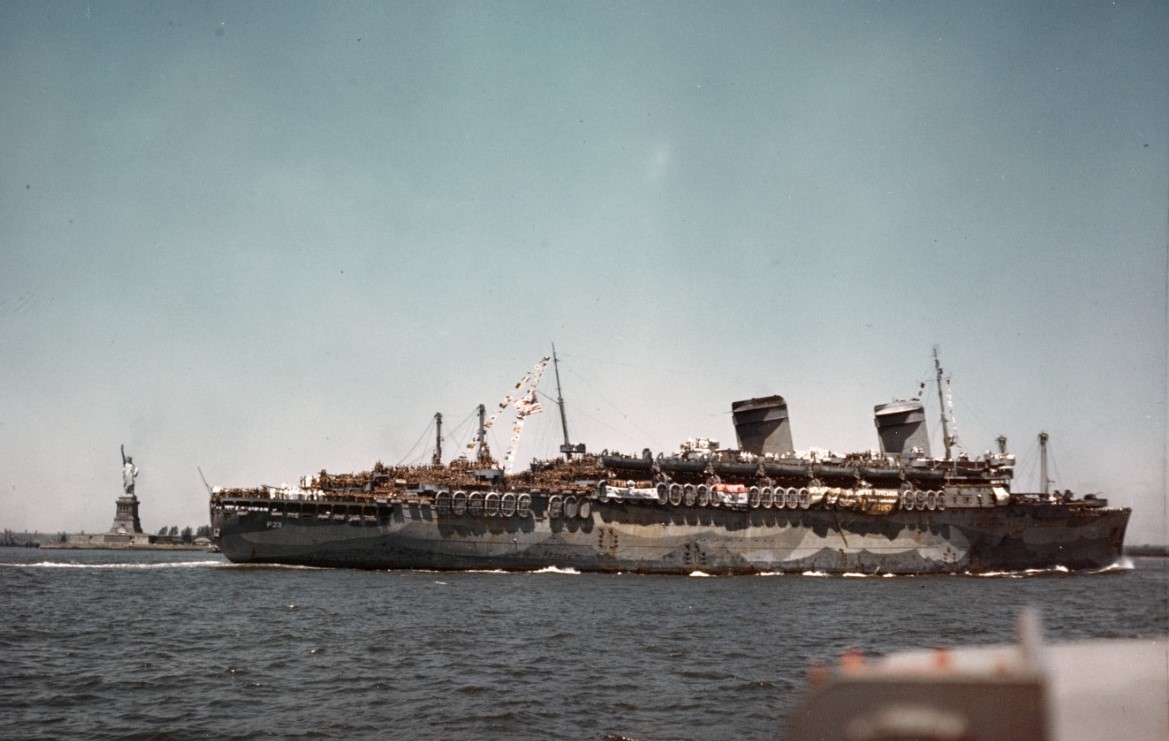
Requisitioned as a troop ship from 1941-1946, named USS West Point AP-23, she was reconfigured to take as many as 7,600 troops at a time. Over the course of her military service, she transported 350,000 soldiers, marines, sailors, airmen, and other passengers to and from service overseas.*

USS Westpoint - SS America NHHC detail 80-G-K-5783-A
USS Westpoint with returning soldiers, New York City July 1945 [Detail of]. 80-G-K-5783-A Courtesy of the Naval History and Heritage Command.
In 1946, she was refitted for transatlantic passenger crossings and ran a glamorous service. Her long career followed the ebbs and flows of the last great age of the liners. The transatlantic crossings became uneconomical as travelers opted for air travel, and she was sold in 1964 to Chandris Group, renamed Australis and moved to the Southampton – Australia route. There were numerous attempts to modernize or convert the ship to some other use, including cruising, as a floating hotel, and even a plan to convert her to a prison ship.

This slideshow requires JavaScript.

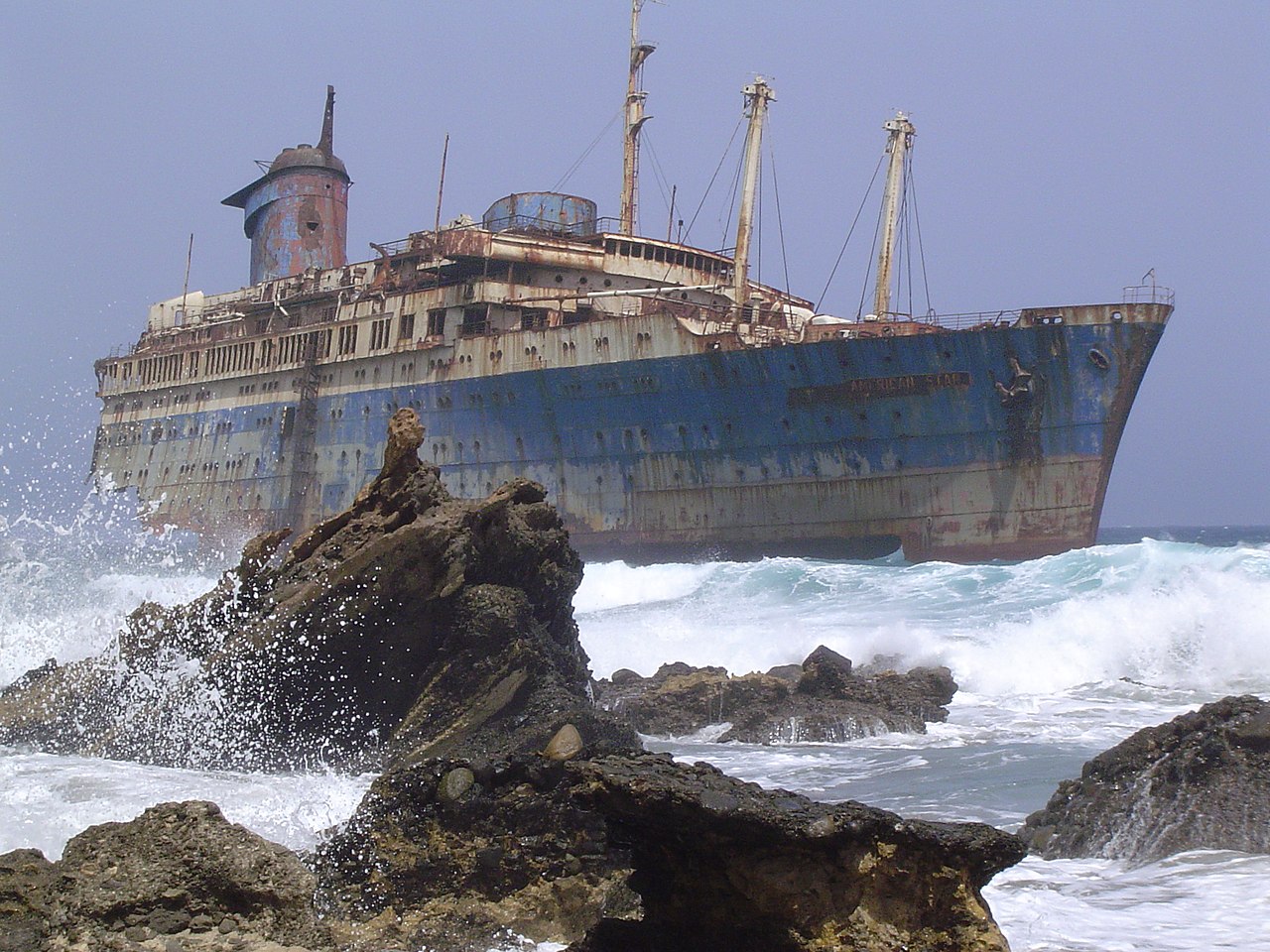
A scheme to convert her to a hotel in Thailand led to an attempt to tow the old ship, now named American Star, from Greece, during late 1993. In January 1994, the ship broke free of the tow in heavy weather, and eventually grounded on the coast of Fuerteventura, Canary Islands. Days later the vessel’s keel broke amidships and she was declared a total loss. She became a popular and much photographed shipwreck. The separated stern section quickly fell away and sank out of view by the mid 1990s. As for the bow section, from 1994 to 2007, the 380 foot section from bows to remaining aft funnel only gradually deteriorated. Views of the wreck from the nearby shores show the sublime and spectacular quality to the American Star’s end.

1280px-Shipwreck_of_the_SS_American_Star_on_the_shore_of_Fuerteventura
The wreck of the American Star as it looked in 2004. The stern quickly sank away in the mid-1990s. The missing section near the waterline hints at the deterioration of the whole bow structure, after many years of relative stability. The forward funnel had been removed years before, and replaced by a lower cap. Wollex / CC BY-SA

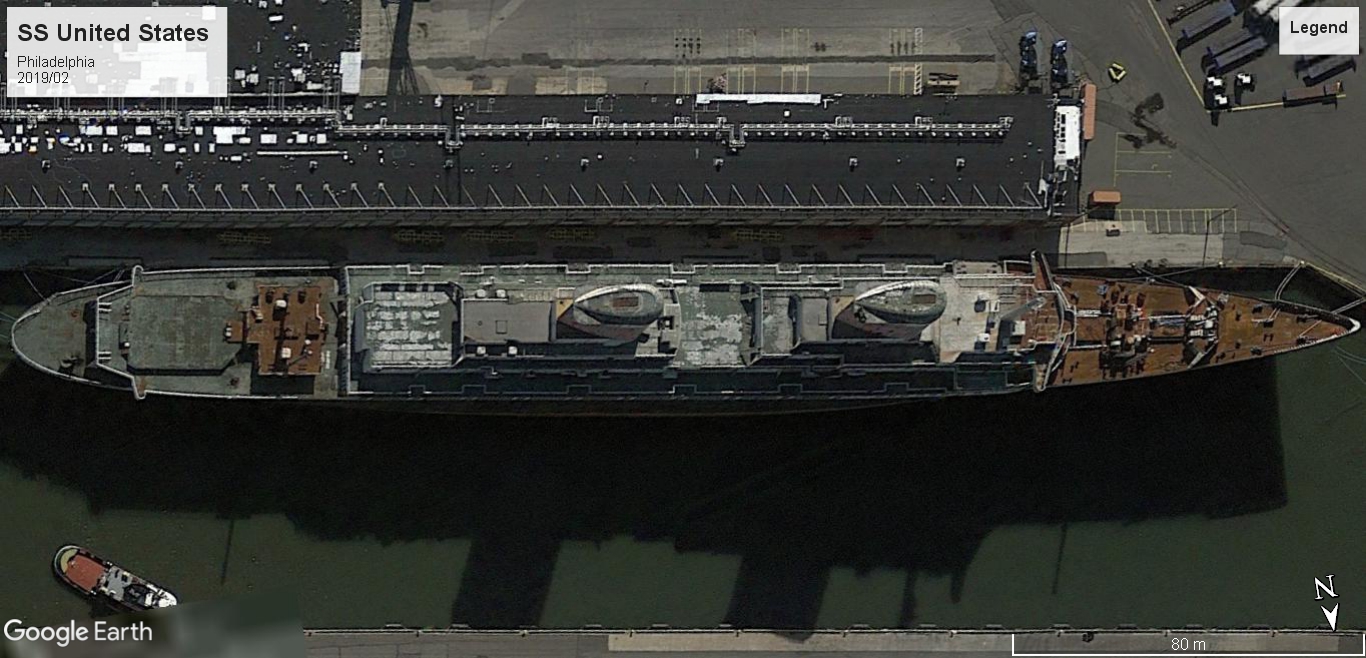
Although the America is now mostly gone, the SS United States, which is still in existence, shares many similarities with America. Both were designed by naval architect William Francis Gibbs. The significantly larger United States, designed more than a decade later, repeated the clean lines, twin funnels with caps, king posts for lifting cargo to the hold in the bows, and general massing of the superstructure of the America. USS West Point and other wartime transports can be found at the page for US Navy Retired Auxiliaries and Other Ships.SS United States Philidephia 2019

*For additional history of the ship during military and civilian careers, see http://united-states-lines.org/u-s-s-west-point/


Navies Down Under!

Two new pages explore the past and present surface warships of the Royal Australian Navy (RAN) and the Royal New Zealand Navy (RNZN). For shipsearcher staff, it was particularly challenging to locate imagery of these vessels, as they were all loaded upside down (we hope you enjoyed that truly elevated piece of imagery-related humour)!

img_1113
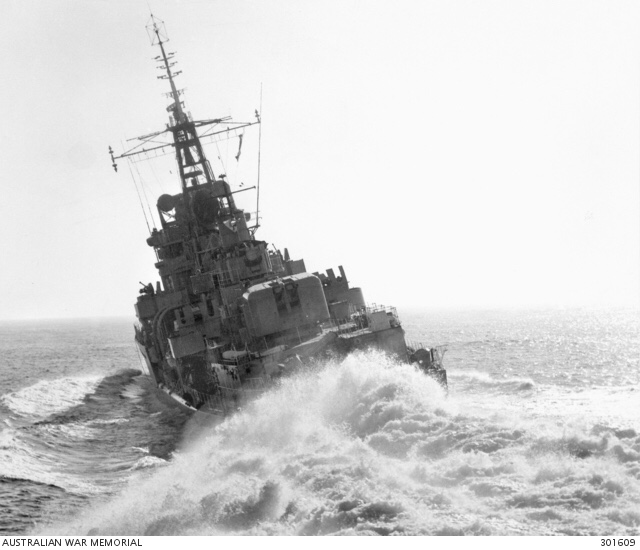
HMAS Vampire D-11 ca. 1959 © Australian War Memorial 301609 https://creativecommons.org/licenses/by-nc/3.0/au/

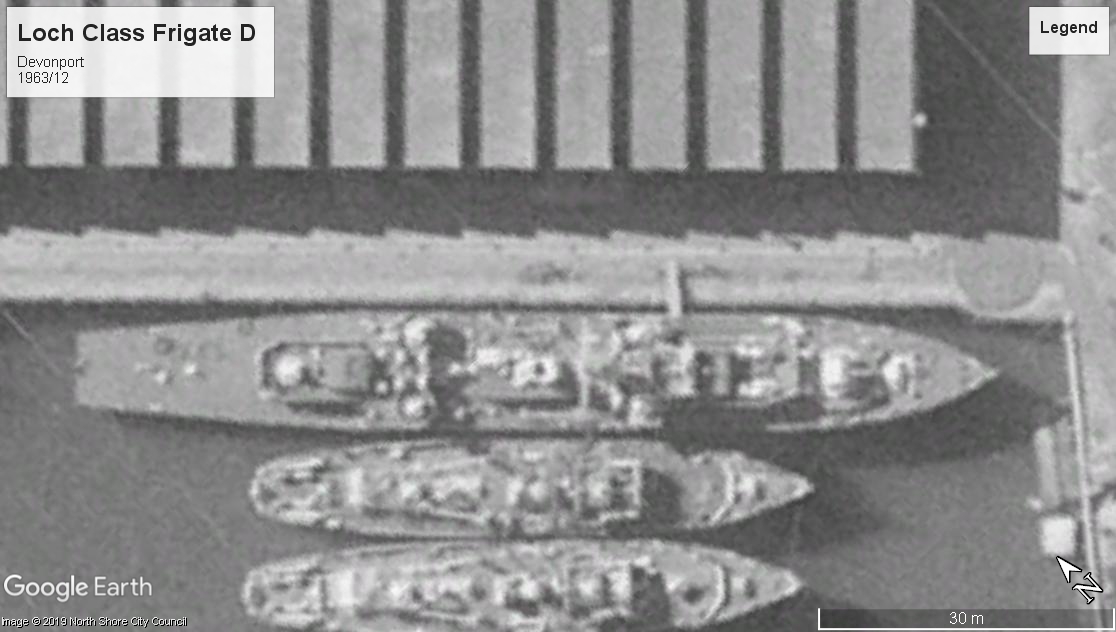
Some of the more interesting features of these pages include the RNZN 1963 views of Devonport Naval Base, Auckland’s major naval facility. The aerial views make identification of early Cold War and long-service Second World War-built warships possible. As for the RAN, the range of ship classes depicted speaks to a diversified, potent force capable of undertaking a range of missions. As always, we have taken pains to track down long out of service or preserved warships.

Loch Class D Devonport 1963
Loch Class frigate and Bathurst Class corvettes, 1963 view of Devonport near Auckland, NZ

These posts complement pages on some of the other Commonwealth navies: Royal Navy and Royal Canadian Navy

Royal Navy Shipsearcher page now up!

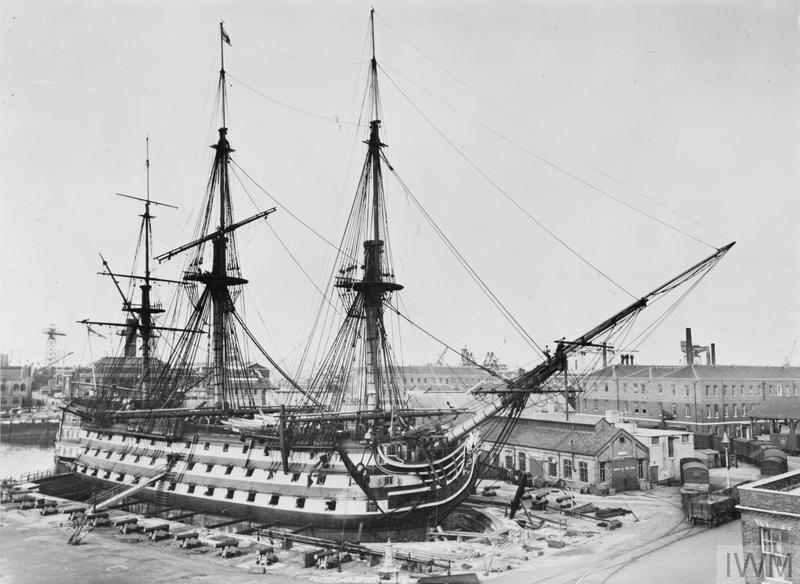
“Heart of Oak are our ships, jolly tars are our men, we are always ready; Steady, boys, steady, We’ll fight and we’ll conquer again and again”…so goes the chorus of Heart of Oak, the official march of the Royal Navy, Royal Marines, and several Commonwealth navies [Youtube rendition here]. The oldest ship on this new shipsearcher page – Royal Navy Surface Units – Current and Retired – is HMS Victory.

HMS Victory portsmouth 1945
HMS Victory, raising the yards in August 1945 © IWM (A 30810)

This first-rate line of battle ship was being built when Heart of Oak first appeared on the London scene to commemorate the victories of 1759. Our Royal Navy page starts with Victory and spans 260 years to the newly commissioned and largest-ever British carrier, HMS Queen Elizabeth.

HMS Queen Elizabeth R08 Halifax 2019
HMS Queen Elizabeth R-08 in Halifax NS, Sep. 2019

Another unique feature of this page is the use of the Kent County Council Archives historical aerial mosaic photos (provided to Google Earth), which allow for Second World War-era captures of ships in Chatham Royal Dockyard. These views make ship identification of famous RN ship classes, such as County Class Cruisers, and aircraft carriers possible. For the first time, we also have a category for monitors, which during the first half of the twentieth century were tubby, short vessels that mounted a few battleship-sized guns! As always, we hope you appreciate the listing, and would be happy to hear about issues with any identification: help us identify our views of unknown ships!HM Monitor Chatham Kent SWW

The Strangest Wreck on Sable Island?

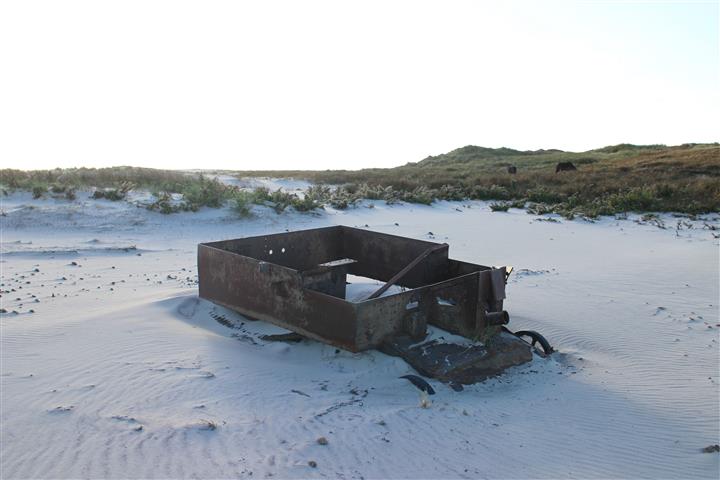
A lifesaving Bren Gun carrier wrecked on Sable Island?!

Sable Island is frequently called “the Graveyard of the Atlantic,” because of centuries of shipwrecks that have piled up on its shoals. This island, a remote sliver of dunes and scrub far off the Nova Scotian coast, is Canada’s newest national park. Recently I became aware of a curious relic on the island, close to the West Light.

Sable Island UC from AT2
“Lifesaving” Universal Carrier, Sable Island. (courtesy of A. Taylor) note inventive “barrel” some wag has stuck in the front armoured plate where the Bren Light Machine Gun would have been fitted!

Familiar with Second World War vehicles, the photo, sent to me by a relative currently on the Island, clearly showed the low silhouette of a Universal Carrier, a light tracked-vehicle used for many roles by the Canadian Army from the early years of the War until the mid-1960s. My first reaction was astonishment, but there was an image or two online of the wreck, and a “Motor Museum” enthusiastic online article about building a miniature of this vehicle which explains:

Our model represents a Universal carrier which was used to tow lifeboats, a job previously been done by horses, up and down the coast to launching positions suitable for the crisis at hand. Little is known about it but it is our tribute to the brave souls who saved countless lives and to a weapon of war that ended it’s days saving lives not taking them.”

A fan of Sable Island lore, I decided to see what I could find out at Library and Archives Canada. At least some of the story comes out in 1946-1952 Department of Transportation reports about the equipment on the Island.  Shortly after the War, the DOT, then responsible for the facilities on the Island, was evaluating new lifeboats for the Humane Establishment, the lifesaving and shore patrol facilities.  Up to this point, horses or oxen had been used to help haul the boats (on a wheeled cradle) out from the station boathouses to launching sites. The file details tests of US Coast Guard designs for modern lifeboats. An idea was put forward that mechanical transport would be preferable to animals, and using surplus carriers seemed an inexpensive solution.

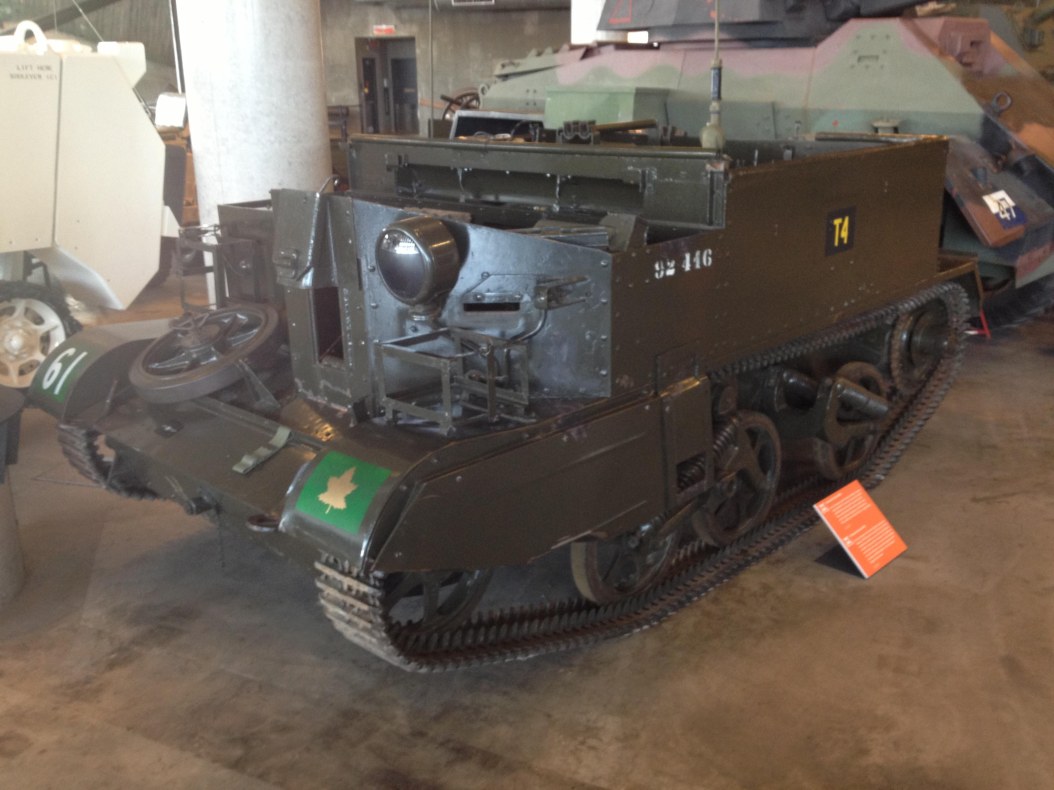
CWM_Universal Carrier no.2MkII
One of the Canadian War Museum’s carriers, painted with markings for the Lincoln and Welland Regiment, Royal Canadian Armoured Corps  (author’s photo)

There were mixed opinions of the suitability of a carrier, with some parties (including the Chief of Aids to Navigation) thinking it would soon be immobilized in the sandy dunes. Attempts at procuring a test vehicle were frustrated when a vehicle offered up from War Assets stocks in Debert, N.S., was found to have over 2,000 miles on it (DND ordnance personnel had advised the transportation officials this was too much to guarantee reliability). The eventual 1942 Ford carrier was shipped all the way from Longue Pointe Ordnance Depot, near Montreal, to Dartmouth, N.S., and sent out to the island in the usual steamer resupply on Canadian Government Ship LADY LAURIER, accompanied by a Willys MB Jeep (I have no idea what happened to this). After a lot of casting about online, I located this tweet and image:

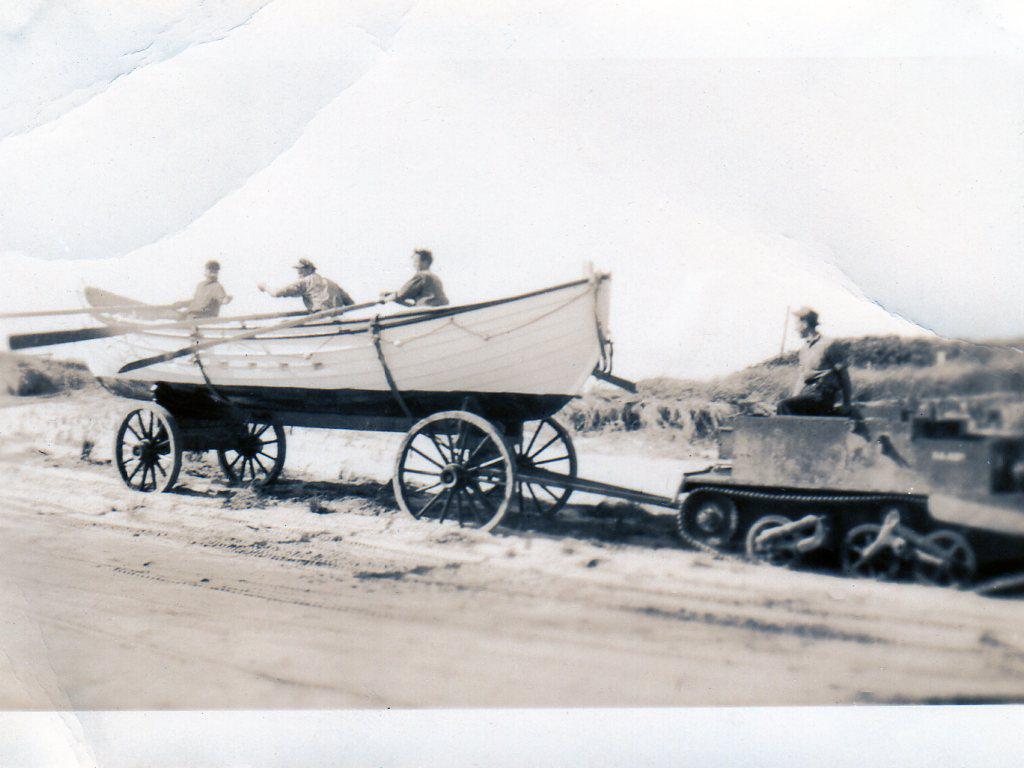
Using the carrier to tow a trailer and boat-crew, early 1950s. You’d think pneumatic tires may have helped! (photo credit: Ernest O’Hara, permission graciously granted by Our Sable Island Home)

Whatever the trials and tribulations of this carrier on the Island, the era of modern navigation made shipwrecks (mostly) a thing of the past, and the stations were all abandoned in 1958. The carrier, like much else, became derelict. Today, it is a conspicuous wreck from the last phase of the Humane Establishment’s Century-and-a-half of life-preserving efforts.

This remains one of our most popular posts, please leave us a comment!