If you have ever had questions about how the World’s largest warships are dismantled, this new page may help answer some of these: Scrapping the Supercarrier. Shipsearcher staff have gone into more detail than the world navies pages, and we hope you’ll find this interesting!
Category: Uncategorized
2020 – The Next Navy in our Sights!
 A powerful fleet is emerging from the mists of the South China Sea. Led by a pair of carriers, in line ahead, cruisers, destroyers, frigates, amphibious assault ships, landing ships and other units are being systematically identified and logged in the Shipsearcher Database by Ship Identification Directorate (SID) staff.

The last of the large shipsearcher pages will be the People’s Liberation Army Navy (PLAN). The PRC fleet was once viewed as an out-dated adjunct to the massive land forces. These days, the furious pace of naval construction is setting China on a path to become the World’s penultimate naval force, second only to the USN. In the meantime, please check out any of the other 13 navies on the site!
Navies Down Under!
Two new pages explore the past and present surface warships of the Royal Australian Navy (RAN) and the Royal New Zealand Navy (RNZN). For shipsearcher staff, it was particularly challenging to locate imagery of these vessels, as they were all loaded upside down (we hope you enjoyed that truly elevated piece of imagery-related humour)!

Some of the more interesting features of these pages include the RNZN 1963 views of Devonport Naval Base, Auckland’s major naval facility. The aerial views make identification of early Cold War and long-service Second World War-built warships possible. As for the RAN, the range of ship classes depicted speaks to a diversified, potent force capable of undertaking a range of missions. As always, we have taken pains to track down long out of service or preserved warships.

These posts complement pages on some of the other Commonwealth navies: Royal Navy and Royal Canadian Navy.
Royal Navy Shipsearcher page now up!
“Heart of Oak are our ships, jolly tars are our men, we are always ready; Steady, boys, steady, We’ll fight and we’ll conquer again and again”…so goes the chorus of Heart of Oak, the official march of the Royal Navy, Royal Marines, and several Commonwealth navies [Youtube rendition here]. The oldest ship on this new shipsearcher page – Royal Navy Surface Units – Current and Retired – is HMS Victory.

This first-rate line of battle ship was being built when Heart of Oak first appeared on the London scene to commemorate the victories of 1759. Our Royal Navy page starts with Victory and spans 260 years to the newly commissioned and largest-ever British carrier, HMS Queen Elizabeth.

Another unique feature of this page is the use of the Kent County Council Archives historical aerial mosaic photos (provided to Google Earth), which allow for Second World War-era captures of ships in Chatham Royal Dockyard. These views make ship identification of famous RN ship classes, such as County Class Cruisers, and aircraft carriers possible. For the first time, we also have a category for monitors, which during the first half of the twentieth century were tubby, short vessels that mounted a few battleship-sized guns! As always, we hope you appreciate the listing, and would be happy to hear about issues with any identification: help us identify our views of unknown ships!
Shipsearcher launches!
Find the warships!

The first pages of Shipsearcher have now been released. This summer, a break-away faction of Warsearcher staff began honing their ship identification skills. It started as background research for our R & D programs, but it quickly snow-balled to absorb resources from war trophies research and postcard collecting sections.

Could the new Ship Identification Directorate (SID) identify warships from various captures of satellite imagery? With the amount of contextual information and photographs proliferating online, we believe the current pages, and those to come, are an interesting, original record of warships. As of October, 2019, there are pages up for US Navy current surface units, US Navy retired/historic, Royal Canadian Navy. The imagery in this post is a sneak peak at some that will appear in pages still building. We also have a page up about sources and the ID process.
Updated Lozenge Camouflage fabric on CASM Fokker DVII
New lozenge camo on FWW German Fokker DVII!
With Spring comes the budding out of blossoms, and bright hues to succeed the drabness of a long Ottawa winter. At the Canadian Aviation and Space Museum, the German First World War Fokker DVII biplane is wearing a new motley coat of distinctive camouflage.

To revisit some relevant posts, the only other complete Fokker DVII in Canada is at the Brome County Historical Society in Knowlton QC. That aircraft is in 4-colour lozenge camo, (called “Knowlton” pattern or Vierfarbiger), while this Fokker wears a 5-colour (“Canberra” or Fünffarbiger) scheme. The CASM now has the AEG German bomber in night lozenge camouflage, this Fokker in daytime lozenge, and the Junkers J1 in junky lozenge!
(editor’s note – the contributing author of this piece thought a lozenge camo joke was appropriate here, despite the editorial board’s recommendation otherwise)
Private G.L. Price, Last Combat Death – 11 November 1918

Pvt. George Price, “A” Company, 28th Canadian Infantry Battalion (Northwest) is reported as the last CEF soldier to die before the 11AM Armistice that ended the First World War. Units of the Canadian Expeditionary Force had been ordered to resume the advance, and keep pushing German forces beyond Mons, Belgium. By mid-morning most soldiers knew of the Armistice coming into effect at 11. The 28th Battalions “A” and “B” Companies were pursuing a retreating enemy East of Mons, through the woods and village of Havré. George Price, a 25 year old originally from Kings County, NS, who had been working in Saskatchewan, had just crossed the canal into Ville-sur-Haine.

While other units were standing-to, his small team were working their way into the village, with Germans units withdrawing to the North-East. Pvt. Price was struck in the chest by a rifle or machine-gun bullet. Help from his comrades and Belgian civilians could not save him. At his death, church bells in Mons and the surrounding villages were ringing out in celebration of the end of hostilities.

The Commonwealth War Graves Commission’s site shows that, although Price was the only CEF soldier killed-in-action advancing in Belgium that day, 38 others, and one soldier from the Dominion of Newfoundland, died at various locations in France, Britain and Canada, on this last day of the Great War. Here is a small selection of documents that help tell the story of Price and the events of a hundred years ago:


Lest we Forget.
Lost War Trophies of Canada – 8 August 1918 – Amiens to Richmond QC
The history of German 15cm Howitzer no.813, captured 100 years ago this morning, during the great advance.
On this centenary of the first day of the Amiens Offensive (8-12 August 1918), I focus on 15 cm Howitzer no. 813, captured by the 43rd Canadian Infantry Battalion (Cameron Highlanders of Canada) a hundred years ago this morning. Canadian units made astonishing gains this day, and captured thousands of enemy prisoners and a whole range of German weapons.

Early on the morning of the 8th, the 43rd Battalion, 9th Infantry Brigade, was making progress south-eastwards having just cleared out Dodo Wood, along the Amiens – Roye Road, south of Demuin. “C” Company was tasked with taking Hollan Wood on the right. Mk V heavy tanks of “A” Company, 5th Battalion, Tank Corps (British), lumbered alongside Canadians, providing support and attacking fortified defences.

At 07:30 “D” Company pushed on over open ground towards Vignette Wood, with a major objective being the elimination of a battery of guns that were known to be sited there.

On the southern boundary of the wood, four “5.9s” (15cm howitzers) and another nearby battery of “Whiz-bangs” (77mm field guns) opened up on the advancing units. In short order the guns knocked out the British tanks. “D” company, led by Capt. J.D. Verner, M.C., managed to advance along a cut in the road, and brought the battery under accurate enfilading fire, with the gun crews promptly surrendering and the guns captured intact. The Battalion rested in Vignette Wood as the 7th Battalion came up and continued the advance.


The Lost War Trophies of Canada – From Vimy to East Angus QC
In this exciting new thread, we restore information about lost war trophy cannon.
This is the much-anticipated debut of a new series of posts! The extensive Warsearcher postcard archive has been mined to restore a visual record of military artifacts that have been lost from communities across Canada. Why? Because we can’t let the non-existence of an artifact hamper our interpretation of it!

German 15 cm Howitzer no. 249 was captured by the 29th Canadian Infantry Battalion, at Station Wood, near Vimy. This gun was likely one of the four “5.9 inch” howitzers (the British name for these guns) captured by Lt. E.C. Corbett (service file hyperlinked) and a patrol of D company late in the day of 9 April 1917. This action, and accurate map references, appear in the War Diary.

29th Canadian Infantry Battalion War Diary entry for 9 April 1917. Library and Archives Canada RG9-III-D-3 Vol. 4936.


One of a vast collection of captured German trophies sent by the government to Canada, It was shipped to East Angus via Grand Trunk Railways 10 December 1920;

Here is a late 1950s postcard view of the East Angus Post Office and War Memorial, which shows what looks like the 15cm schwere Feldhaubitze model 13:

Though it seems to have survived the scrap drives of the Second World War, its later fate is unknown. Any readers with information on this trophy are welcome to comment!

Update to Hill 70 post below, from today’s ceremony to mark the Battle at the Hill 70 Memorial in Mountain, ON. A moving ceremony, with representatives of local military units, Legion and Lions Club Branches (who both contributed to restoring this memorial) and many others. A 6-pounder anti-tank gun from the Swords & Ploughshares Museum marked the moment of silence.

Battle of Hill 70 – August 15th-25th, 1917
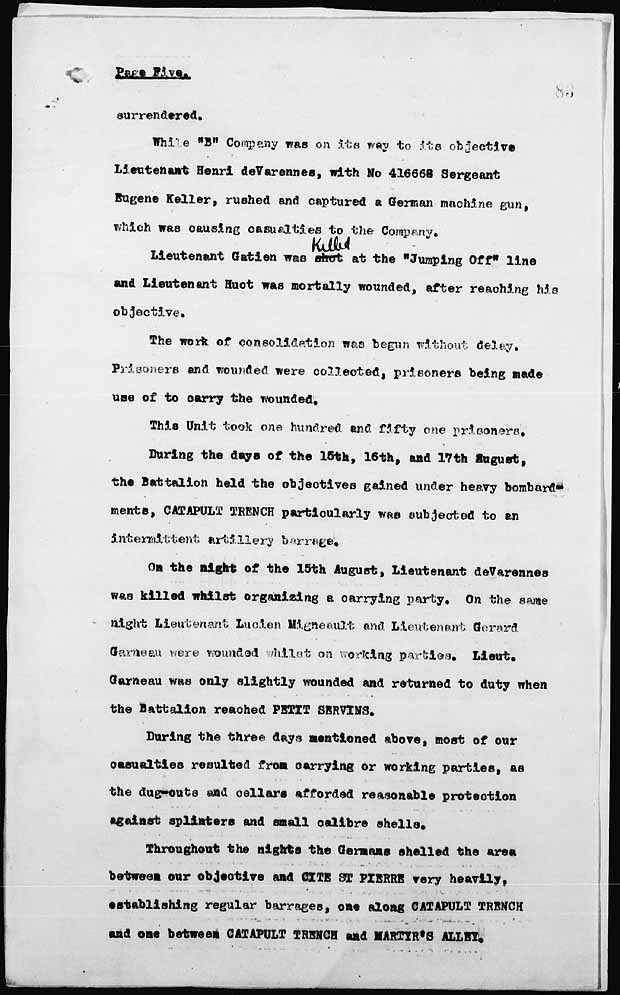
A century ago, soldiers of the Canadian Expeditionary Force (CEF) were into their second day holding newly-won positions on Hill 70, near Lens, France. Counter-attacks by German units, desperate to regain this strategic position, were increasing. At 4:25 AM the previous morning, on August 15th, 1917, they had left their jumping-off positions to advance on this important high-point near the industrial city of Lens, France. The intent of the operation was to force German military planners to divert forces away from the Passchendaele operations, by mounting an attack on Lens. Sir Arthur Currie, recently promoted to command the Canadian Corps, reconnoitered the positions and crafted a plan to seize the heights to the North of city, after first convincing his superiors to modify the main objectives. Lens was to be attacked next.


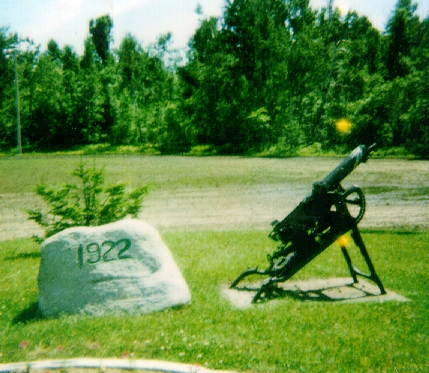

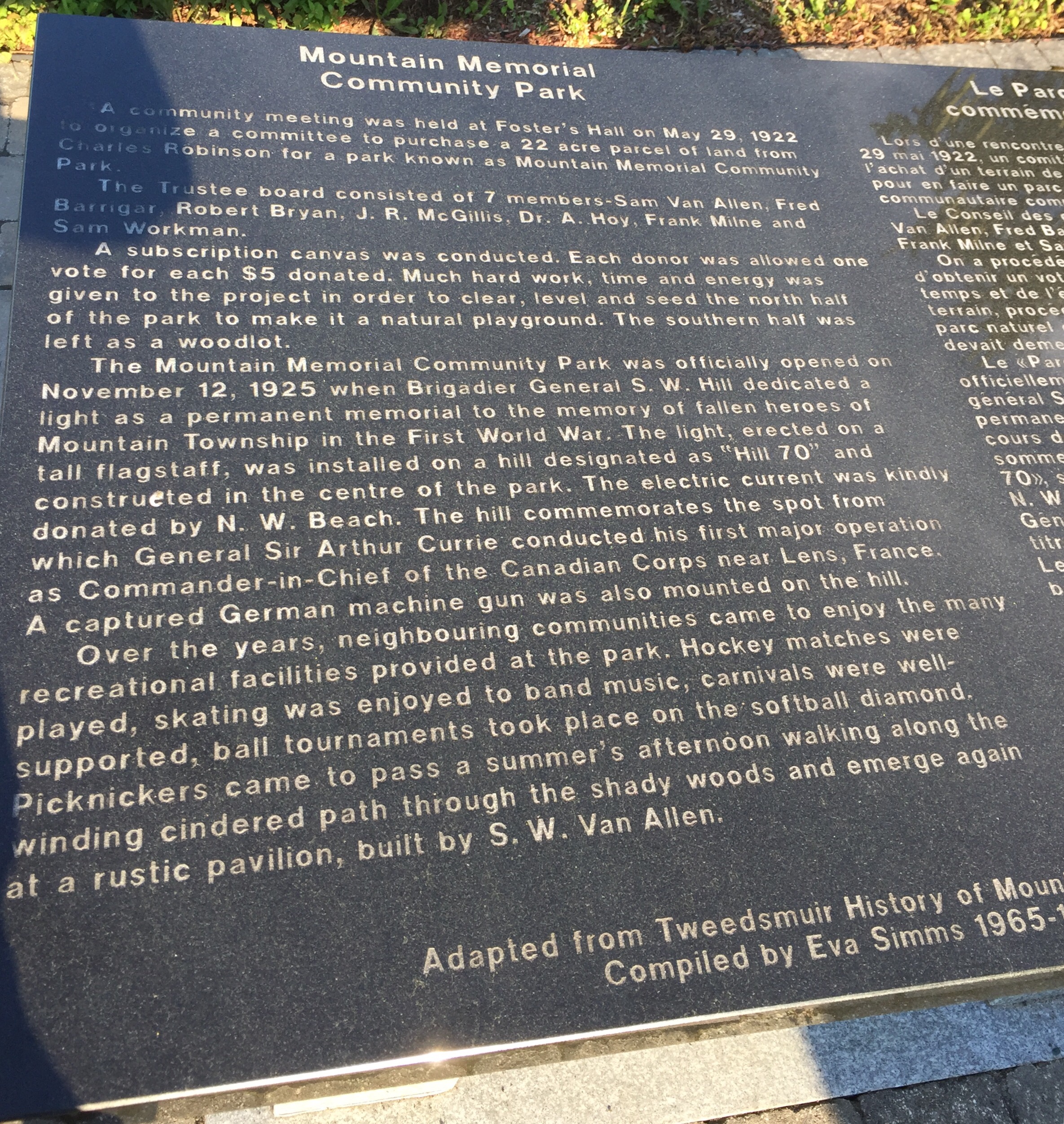

For many reasons, Hill 70 has not been accorded the same attention as other CEF operations that Canadians are familiar with. In contrast to the range of captured relics that remain from the Vimy operations (which I recently posted on) this gun, and a 75mm Trench Mortar in the collection of the Brome County Historical Society in Knowlton, Quebec, may be the only monuments that remain of this important Canadian operation.
Vimy Ridge: 100 years later, the relics of the Canadian Corps’ advance are spread across Canada


The symbolic and public relations potential of these captured items was quickly appreciated by the Allied command. Large trophies wound up prominently displayed in Paris and London. They were conspicuous evidence that, with the right preparations, logistical support, aerial reconnaissance, innovative tactics, and a paralyzing bombardment, crack German troops could be pushed off formidable defensive positions. The human cost of Vimy was considerable, with more than three-and-a-half thousand fatal casualties to Canadian units, and many more wounded.

A large trench mortar captured by the 31st (Alberta) Canadian Infantry Battalion is at the Imperial War Museum. This is representative of the many Canadian trophies that may have wound up elsewhere:


Tavistock, ON also has a 25cm heavy minenwerfer, with the same 102nd Infantry Battalion provenance. This is in front of Royal Canadian Legion Branch 518. This mortar is much more intact.

Kingston, ON has an unusual 7.7cm FK 96 field gun, that was captured by the 21st Infantry Battalion at the Les Tilleuls crossroads. The barrel assembly was later repurposed by the British and installed on a pedestal mount.

Vimy was important in part because of these hard-won trophies. The Canadian Corps gained valuable territory: a prominent geographic feature. The German withdrawal was no orderly evacuation. Here, they gave up strategic, elevated, and heavily fortified positions, and evidence of their rout includes their abandonment of batteries of artillery. The events of April 1917 might seem long ago and far away to many, but artifacts of this victory have been with us for a very long time.
The Strangest Wreck on Sable Island?
A lifesaving Bren Gun carrier wrecked on Sable Island?!
Sable Island is frequently called “the Graveyard of the Atlantic,” because of centuries of shipwrecks that have piled up on its shoals. This island, a remote sliver of dunes and scrub far off the Nova Scotian coast, is Canada’s newest national park. Recently I became aware of a curious relic on the island, close to the West Light.
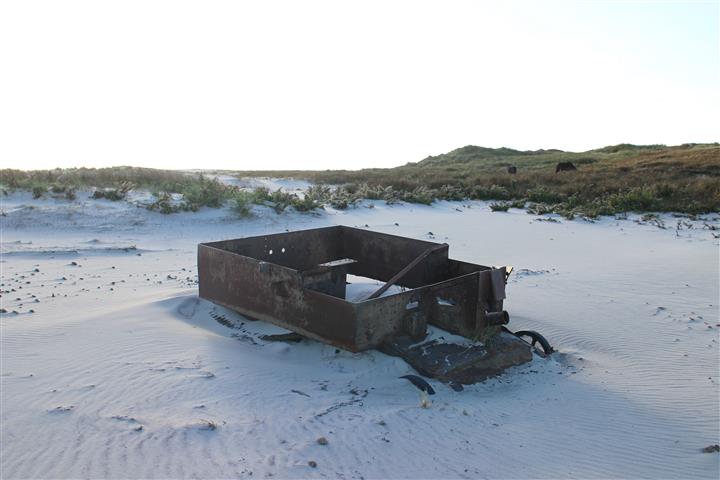
Familiar with Second World War vehicles, the photo, sent to me by a relative currently on the Island, clearly showed the low silhouette of a Universal Carrier, a light tracked-vehicle used for many roles by the Canadian Army from the early years of the War until the mid-1960s. My first reaction was astonishment, but there was an image or two online of the wreck, and a “Motor Museum” enthusiastic online article about building a miniature of this vehicle which explains:
“Our model represents a Universal carrier which was used to tow lifeboats, a job previously been done by horses, up and down the coast to launching positions suitable for the crisis at hand. Little is known about it but it is our tribute to the brave souls who saved countless lives and to a weapon of war that ended it’s days saving lives not taking them.”
A fan of Sable Island lore, I decided to see what I could find out at Library and Archives Canada. At least some of the story comes out in 1946-1952 Department of Transportation reports about the equipment on the Island. Shortly after the War, the DOT, then responsible for the facilities on the Island, was evaluating new lifeboats for the Humane Establishment, the lifesaving and shore patrol facilities. Up to this point, horses or oxen had been used to help haul the boats (on a wheeled cradle) out from the station boathouses to launching sites. The file details tests of US Coast Guard designs for modern lifeboats. An idea was put forward that mechanical transport would be preferable to animals, and using surplus carriers seemed an inexpensive solution.
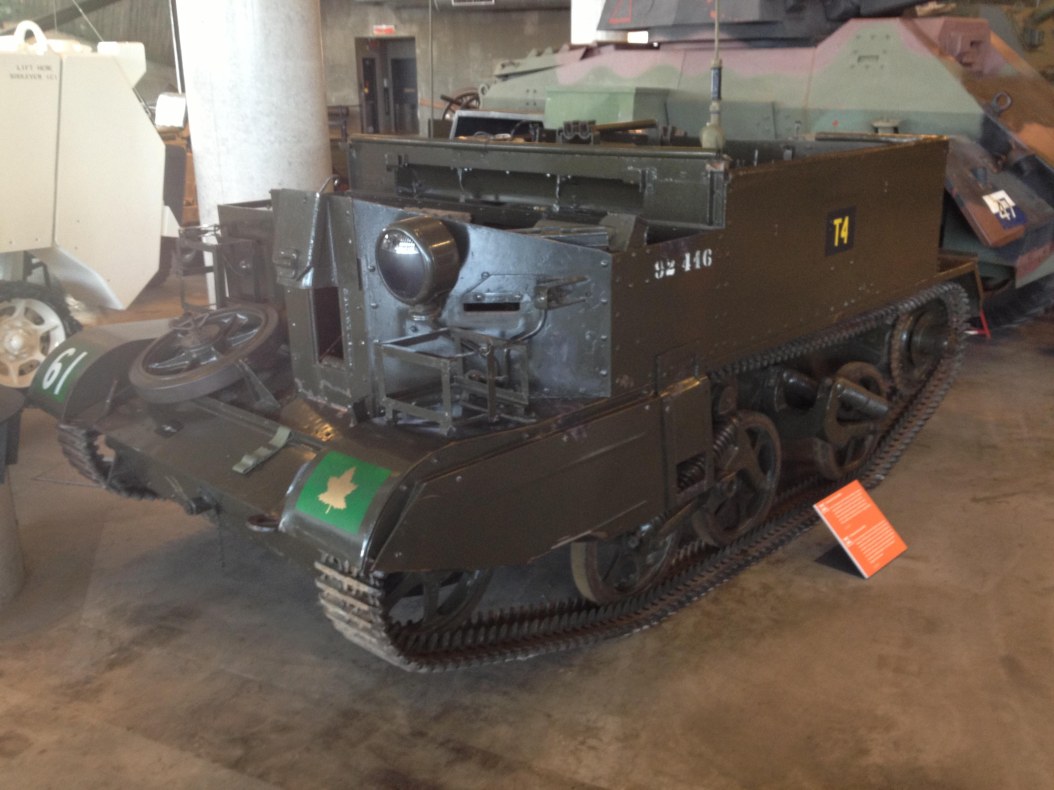
There were mixed opinions of the suitability of a carrier, with some parties (including the Chief of Aids to Navigation) thinking it would soon be immobilized in the sandy dunes. Attempts at procuring a test vehicle were frustrated when a vehicle offered up from War Assets stocks in Debert, N.S., was found to have over 2,000 miles on it (DND ordnance personnel had advised the transportation officials this was too much to guarantee reliability). The eventual 1942 Ford carrier was shipped all the way from Longue Pointe Ordnance Depot, near Montreal, to Dartmouth, N.S., and sent out to the island in the usual steamer resupply on Canadian Government Ship LADY LAURIER, accompanied by a Willys MB Jeep (I have no idea what happened to this). After a lot of casting about online, I located this tweet and image:
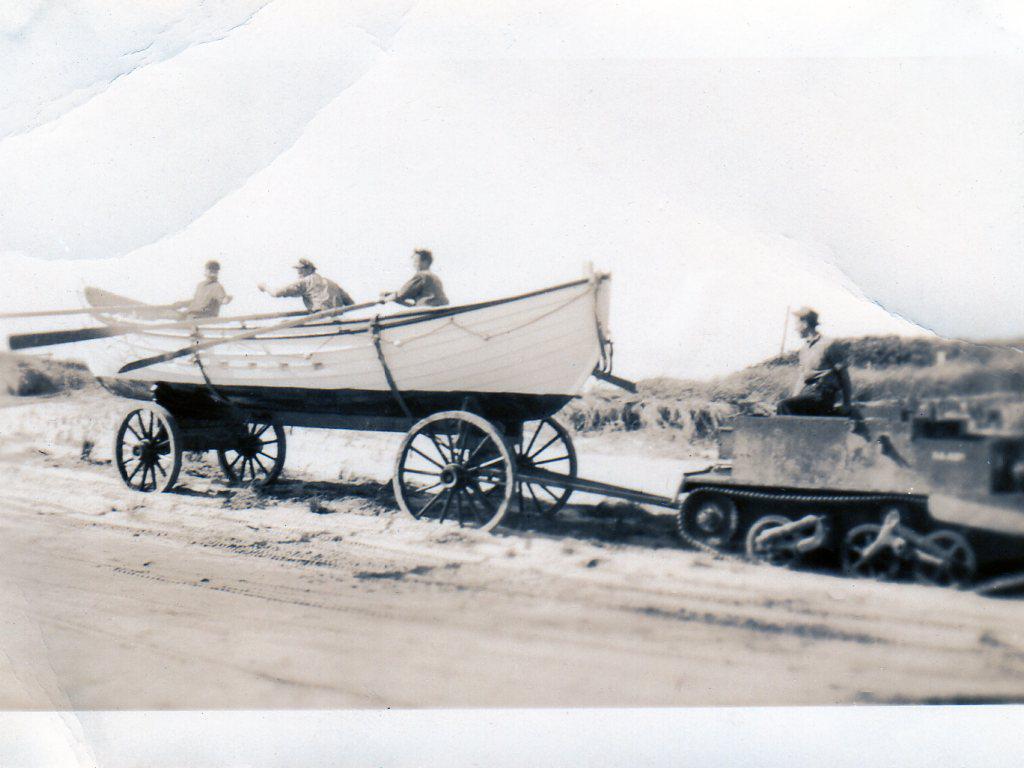
Whatever the trials and tribulations of this carrier on the Island, the era of modern navigation made shipwrecks (mostly) a thing of the past, and the stations were all abandoned in 1958. The carrier, like much else, became derelict. Today, it is a conspicuous wreck from the last phase of the Humane Establishment’s Century-and-a-half of life-preserving efforts.
This remains one of our most popular posts, please leave us a comment!
Lozenge Camouflage off a Trophy War Bird!
Recently, I took some photos of original First World War German lozenge camouflage, the original fabric “skin” of a war trophy plane I have already featured on this site. Hopefully, the photographs will help a friend complete an impressive scale model of the CASM’s German AEG bomber.

The original “night lozenge” pattern fabric has been carefully preserved by the staff of the Canada Aviation and Space Museum at a nearby facility. In contrast, below is an elevated view of the original Fokker DVII fighter in the Brome County Historical Society’s museum in Knowlton, Quebec (more about this unique aircraft here). The pastel-like day lozenge camouflage on this aircraft is so significant to understanding First World War German aircraft colours, that today, this 4-colour pattern is known as “Knowlton lozenge.” I don’t pretend to be a specialist in aircraft, but I do know that the trophy aircraft, like the captured artillery, today reveal the strength of First World War artifacts in Canada.

Latest upgrades to War Trophies Listing!
In preparation for my presentation at the 2015 Canadian Military History Colloquium, at the Laurier Centre for Military Strategic and Disarmament Studies, Wilfred Laurier University, I have released an upgraded listing of War Trophies. The table has gone beyond its original source, the War Trophies Commission’s shipping ledger, to include details from War Diaries of CEF units, notations about surviving artifacts, condition reports, and in some cases provenance and historical details about relics that did not survive the Second World War scrapping drives.

Once again, the table now also includes Newfoundland trophies. Significant projects for 2015 will include cypher encryption, an aerial photography interpretation section, sound locating, Forward Observation Officers, the construction of a larger Zeppelin shed, and smarter uniforms for all members.
Captured First World War Searchlight update
This 120cm Siemens-Schuckert German Searchlight, captured by Australian units near Roy, Belgium was on display at the Canadian War Museum under the Voodoo jet, in Lebreton Gallery through late 2014. I previously posted about its history. It had been stored on a rack in the Transportation and Artillery vault, with the rear facing out. It is nice to see how intact it is, and that staff did a great job of reassembling the lens and components. No other similar unit has been found amongst the trophies brought back to Canada. I hope this impressive artifact finds a permanent home on display to visitors to the museum!

2014 in review: The Advance rolls on! Cannon found, Cannon lost, Cannon yet to be found!
The WordPress.com stats helper monkeys prepared a 2014 annual report for this blog.

Here’s an excerpt:
This blog was viewed about 3,800 times in 2014. If every visitor to this blog found themselves in the Canadian Expeditionary Force, we would have about enough fighting strength for one infantry brigade.
Brome County Historical Society’s top collection of War Trophies
Today, the Brome County Historical Society, in Knowlton, Quebec, has one of the strongest collections of First World War military artifacts in Canada.
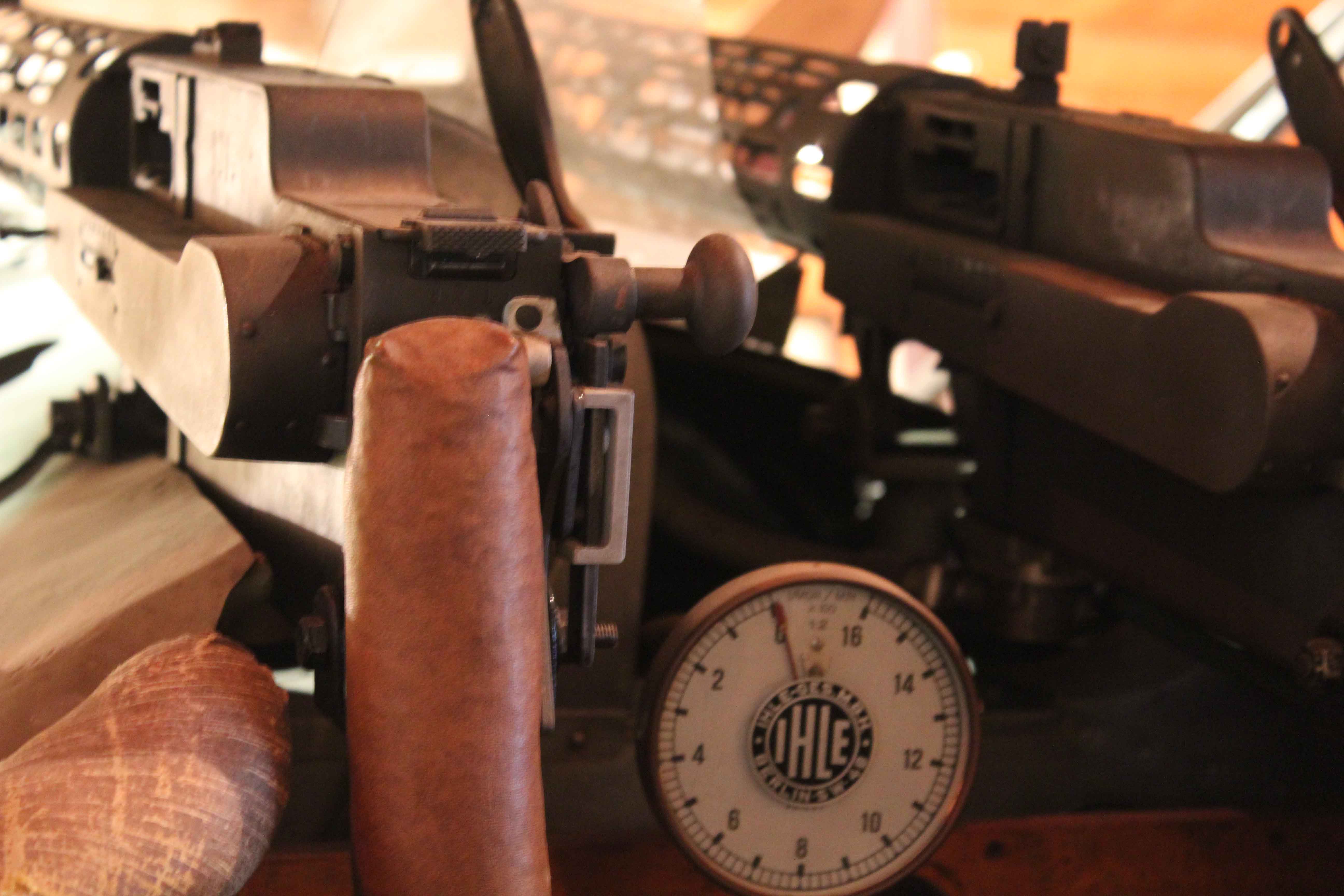
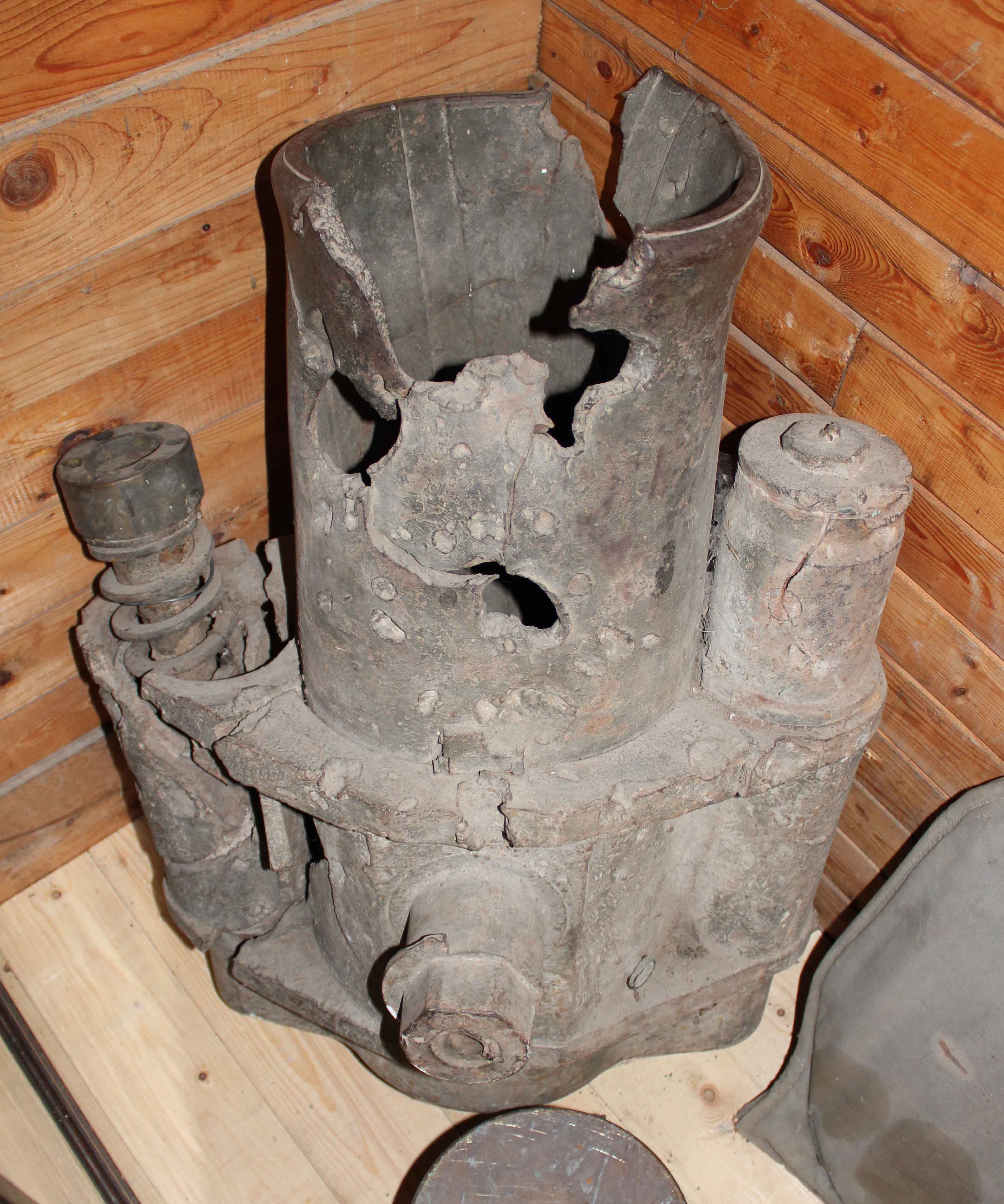
This is largely due to the efforts of Senator George Foster, who petitioned the Dominion Archivist and Comptroller of War Trophies Arthur Doughty for a quality collection. In addition to the spectacular Fokker DVII German biplane with original fabric covering including camouflage (with a good write up about it by a BCHS member here), the BCHS has a diverse collection of German trench mortars and a range of German machine-guns. Since Sep. 2013, work with Ross Jones, the museum’s militaria specialist, has established the battlefield provenance of many of these items using the War Trophies Commission records at Library and Archives Canada. We have poked around pieces, trying to discern key numbers, and any matches have added to the number of surviving pieces in my database. Some of the trophies also have capture info painted on by hand. The range of items, from machine-gun belt fillers (which look like a pasta grinder) to trench periscopes, to aerial bombs, gives a good idea of the variety of small trophies that once accompanied many of the larger artifacts out to sites across Canada. A very significant find was had when Ross managed to man-handle the destroyed barrel of a 25cm heavy Minenwerfer trench mortar around to discover the serial number. The 102nd Canadian Infantry Battalion captured mortar no. 1524 (along with 119 German prisoners) on Vimy Ridge, April 9th, 1917. The barrel, bearing heavy shrapnel pitting and shell damage, is a powerful relic of the Vimy victory. This is only a small sample of the varied collection of the BCHS, a small museum worth a visit!
Help restore an important trophy gun today!
When your grandchildren ask you what you did during the 4+ years of the centenary of the First World War, you can tell them that you helped restore a century-old artifact captured by Canadian troops at the Battle of Vimy Ridge!

The town of Hopewell Cape, New Brunswick, has some rare war trophies that I recently visited. The Albert County Museum is raising funds to help restore these cannon. They also hope to repaint them in German disruptive camouflage…which should make them real eye-catchers (FWW camo-was often not exactly inconspicuous!). They also plan to replace the rotted wheels, and enhance other aspects of the site and interpretation. Unlike many cannon, these trophies were not forgotten, and indeed the history of the 10.5 cm Kanone 14 no. 590 is well-researched by museum members and detailed at their website here. This gun was a unique capture, with a phenomenal story, and the relevant war diary report on operations during Vimy has a section on it. The exact position it was captured is even indicated by map coordinates! Today, the gun appears to have battle damage, likely from its capture near Thelus, during the Battle of Vimy Ridge, by the 27th Battalion (City of Winnipeg).

According to the Report for April 9th, 1917, as extracted on the Museum’s website “On the right, the German gunners of one company of heavy guns opened fire at point-blank range with muzzle bursts. The battalion charged the last 50 yards with a cheer and leaped into the gun pits, where the gunners put up a stout fight. Our line led by Captain Lane seized the guns, put out of action those of the crew who resisted and took the remainder prisoners, and prevented the guns from being dismantled.” According to the War Diary entry of the 27th, at Library and Archives Canada, Lane and Sgt. Hodgson, of “A” company, prevented the Germans from disabling the guns, which allowed them to be used against the retreating enemy, two days later, by the 6th Canadian Artillery Brigade. LAC also digitized the handwritten account of this action by Major Taunton, Officer Commanding “A” co., here. This artifact was later awarded to the people of Albert County, NB, for raising significantly more money than expected in the 1919 Victory Loans competition. Today, the museum also displays the very rare Prince of Wales Honour Flag that the selected communities received along with the trophy gun.

The museum has done a nice job researching its history, but they need our help to fund the restoration project. Please visit their site to find out more about the guns, what the money will be used for, and how to easily click to donate to the campaign.
Quebec City heavies!

Two of Canada’s trio of captured First World War German 21cm Mörser siege howitzers are both located in historic Quebec City, on display in the Citadel, and under some trees in the Plains of Abraham battlefield park. These, along with one in Ottawa (featured elsewhere on this site along with an in depth analysis of this type of canon), are all that is left of the more than two dozen of these monsters that were brought back by the Canadian government. Quebec also boasts a nice sample of lighter German FWW canon, amongst the hundred or so British and French canon, mortars, and carronades. Both pieces have nice provenance from “Canada’s hundred days” advances of 1918.