What Sir John Franklin’s High Arctic Cenotaph is Made of – A Whaler of a Tale!

A cenotaph to lost Royal Navy personnel – a National Historic Site of Canada – and archival records that show that it is made from an American shipwreck! Readers may recall the very origins of this website were to help explore and add provenance to relics and artifacts connected to Canadian military cenotaphs. So in a sense, after interpreting the history and shipwrecks connected to the lost 1845 Sir John Franklin Expedition in search of a Northwest Passage, we’ve come home!

We recently posted about the history of the “Franklin Cenotaph” at Beechey Island, Nunavut. This isolated monument is an incredibly rare memorial to the crews of the lost 1845 Sir John Franklin Expedition and the searchers who died looking for them. It is identified by Parks Canada as a “character-defining element” of the Beechey Island Sites National Historic Site of Canada. It is important to understand what the cenotaph is and what components combine to create it.
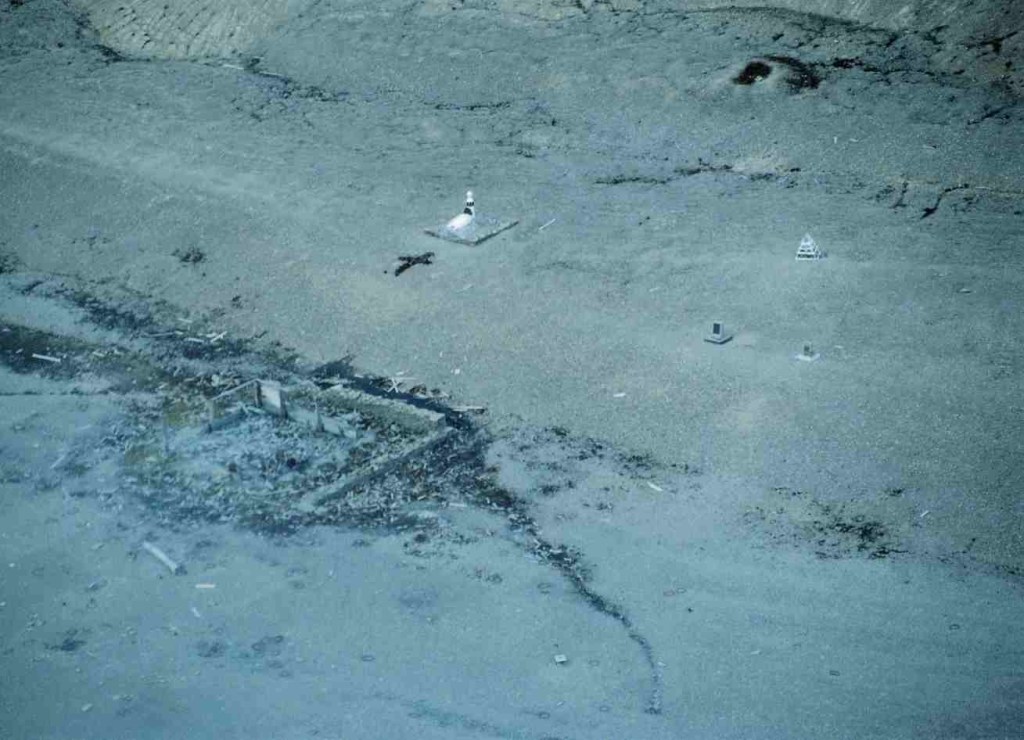
Beechey Island sites, photographed from the air in 1997. This shows the Franklin Cenotaph at the top center above the crucifix made out of empty tins. The ruins of Northumberland House (the supply depot) are down towards the beach, while other memorials are located at right. Credit: Ansgar Walk, CC BY-SA 3.0 http://creativecommons.org/licenses/by-sa/3.0/, via Wikimedia Commons

The column itself, built in the arctic summer of 1854, under the direction of Captain W.J.S. Pullen, HMS North Star, is thought to be made out of the machinery of a lost American whaling ship, the McLellan. This little-known detail further solidifies the Anglo-American character of the commemorative program of the monument.1 We ended our earlier post with a series of questions we hoped could be answered about the column’s origins. We also wondered if it really could have been made out of the capstan of the McLellan, as has been reported.2 A capstan, as defined by wikipedia is “a vertical-axled rotating machine developed for use on sailing ships to multiply the pulling force of seamen when hauling ropes, cables, and hawsers.”

An image of the “Franklin Cenotaph” and surroundings (left) compared to a capstan located at Whitby, England. One origin story of the Franklin monument is that the central “Belcher Column” is made from the capstan of the American whaling ship McLellan. The model of capstan at right exposes the octagonal spindle, which more often formed the core, surrounded by a substantial drum. Credit: (left) NWT Archives/Stuart M. Hodgson fonds/N-2017-008: 0918 / (right) Neil Reed / Capstan, Whitby East Pier, 2009 via wikimedia commons.

McLellan was a 366-ton barque-rigged wooden ship which had served as a general merchant in the 1830s, but had been purchased by the firm Perkins & Smith for the bowhead whaling industry in 1846. It was homeported out of New London, Connecticut, under the command of Captain William Quayle.3 We recently had an opportunity to closely examine a work at Library and Archives Canada which depicts the July 1852 loss of this ship:
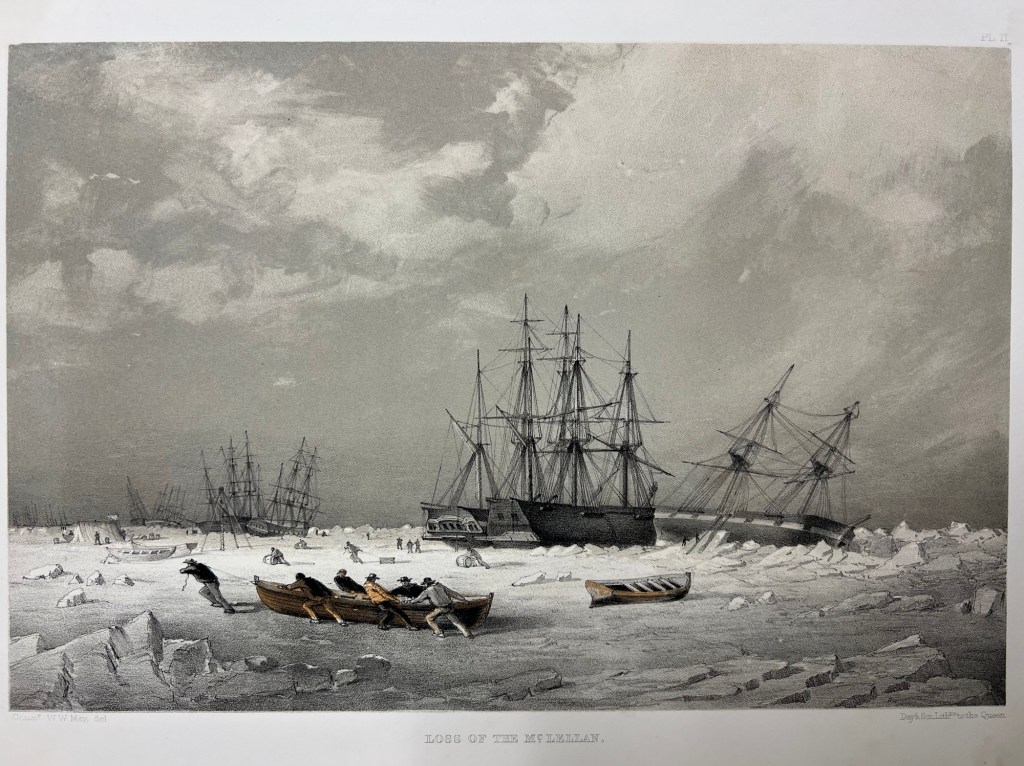
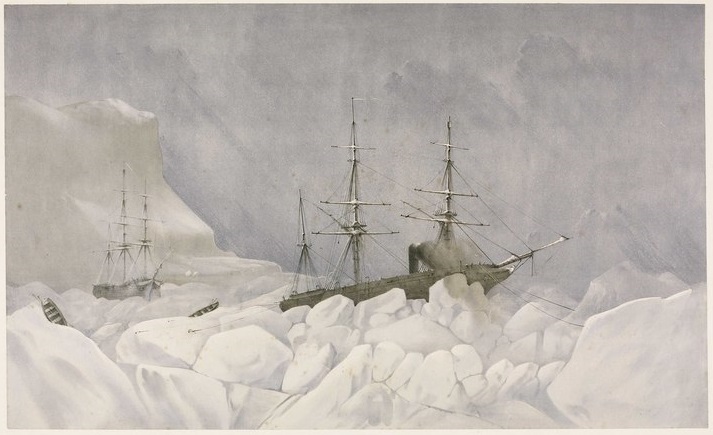
Cmdr. Walter W. May (1855) “Loss of the McLellan” (Engr. J. Needham) Credit: Library and Archives Canada, Acc. No. R9266-2137 Peter Winkworth Collection of Canadiana.

The engraving, made from a sketch by Cmdr. Walter W. May – who witnessed the events –includes many interesting details of whaling ships beset in ice near each other, and Royal Navy vessels. It also shows crew members salvaging items from a visibly-damaged ship.
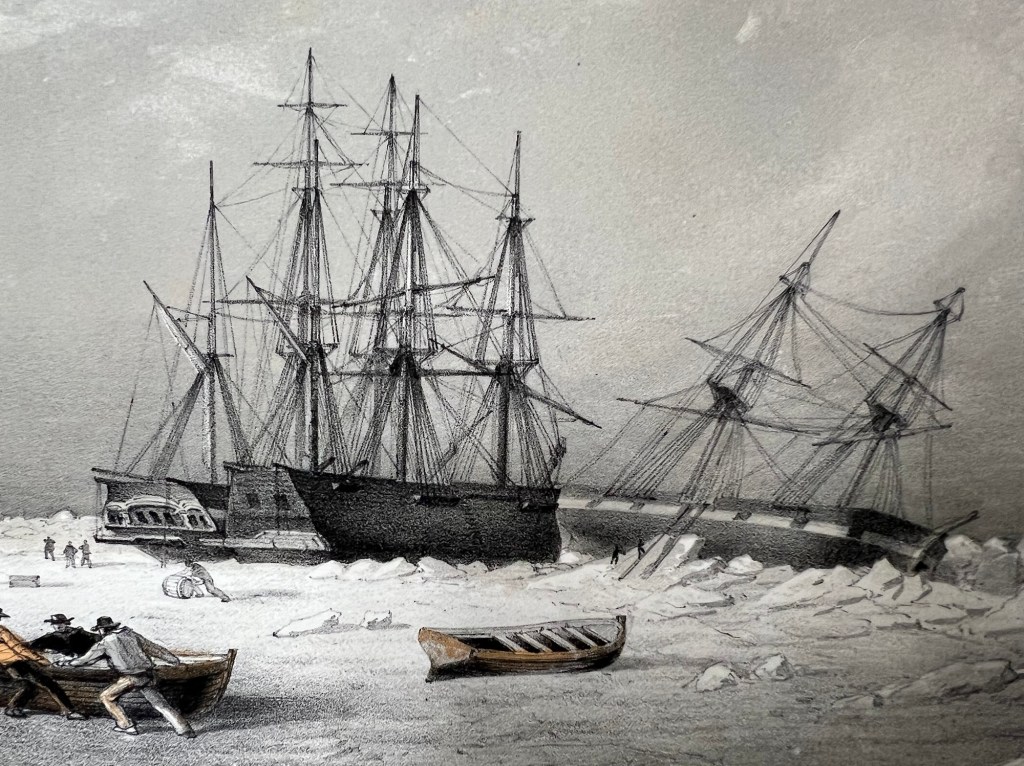
Walter W. May was a gifted artist and an officer serving on HMS Assistance. This most likely depicts HMS North Star, which was nipped, but repaired, Alexander, a whaling ship, and McLellan at the far right being salvaged. [detail of op. cit.]

During the 1851 season, McLellan had been involved in a milestone in the development of the American whaling industry. Quayle had landed a shore party, led by mate Sydney O. Budington, at Nimegen Island, Cumberland Sound. This small group built a stout structure there and hunkered down to overwinter. With the assistance of local Inuit families, crew were able to live in relative comfort into 1852, trading for items and swapping their clothes for warmer furs.4

The plan was for the group to begin whaling far earlier than any ship-based crew could gain access to the area. It was a bold plan and it worked – they were able to land a huge catch of seventeen bowheads. They also became the first commercial interest to overwinter in the Canadian Arctic since the 16th Century voyages of Martin Frobisher. This shore party stayed on until September of 1852, and would eventually have to be taken off by another whaling ship.
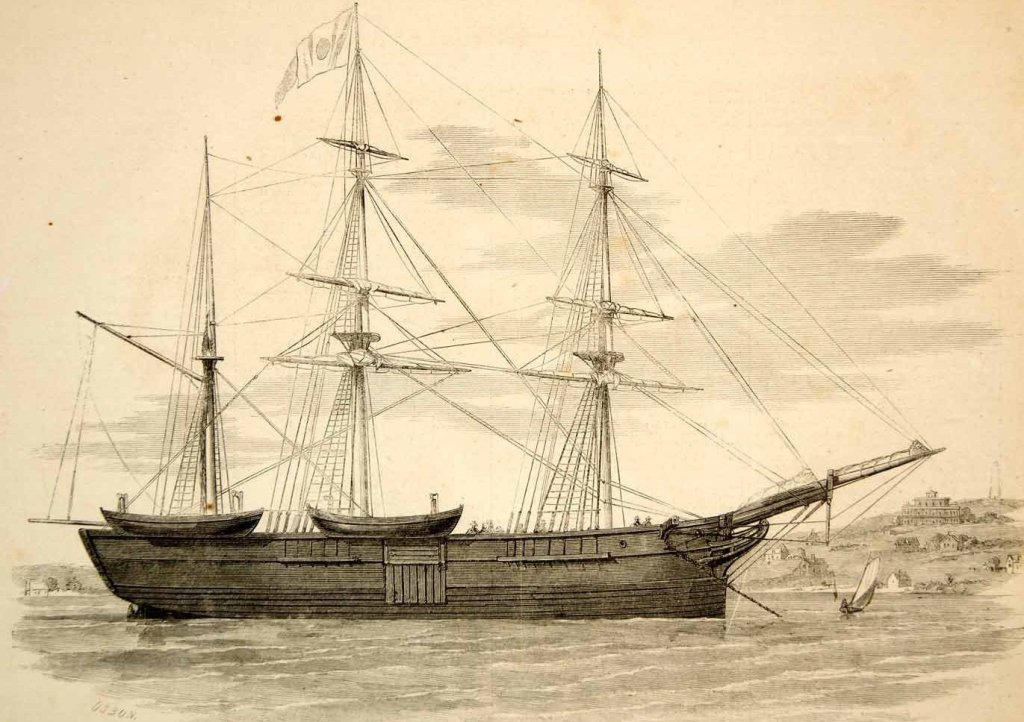
The George Henry (1841) whaling ship. This ship was similar to McLellan, and was later commanded by both Sydney O. Budington and his uncle James Buddington. James would stumble across the abandoned Franklin search ship HMS Resolute in 1855. The prominent boarded-up port amidships is for the “cutting stage,” a relatively recent development to flense whales. Credit: Sherard Osborn, Public domain, via Wikimedia Commons

At the beginning of the 1852 season, McLellan, on the return voyage to the whaling grounds and to pick up Budington’s party, was one of a group of whaling ships that were beset in ice in the Davis Strait near Melville Bay. The ships were in a perilous position, between the land ice and the shifting sea floes.  Sir Edward Belcher’s Arctic Squadron, comprising HM Ships North Star, Assistance, Resolute, Pioneer, and Intrepid, were on their way up to Lancaster Sound to launch a sustained effort to locate Sir John Franklin and the crews of HMS Erebus and Terror (by this time missing for seven years). On June 20th, just as the naval squadron was coming up with the group of whalers, the veteran Kirkaldy whaling ship Regalia was crushed by ice. What followed seems unusual nowadays, but was apparently the accepted practice: The ship was quickly stripped of valuables, crew set out to find another whaler to serve in, something of a party broke out on the ice, and the hulk was burned to ensure it would not menace other ships.

In early July, McLellan ran afoul of North Star, the depot ship of the Expedition, and the Alexander, a Dundee whaler. It damaged the cathead of the North Star, and the bowprit of the Alexander. The mizzen mast of McLellan had to be cut away to avoid further damage. The American whaler was severely nipped by the encroaching ice. The crew were preparing to abandon ship and the whalers in the area looked forward to commencing the usual “sacking and burning.” Instead, Belcher purchased the damaged vessel from Captain Quayle. The Royal Navy crews set about repairing the whaler. The repairs held until the ship was nipped more forcibly on 8 July. McLellan was gradually crushed over the next week. Naval crews salvaged spars, stout timbers, fittings, machinery, and cargo from their newly-purchased hulk. Valuable items were shifted over to North Star and the search ships.
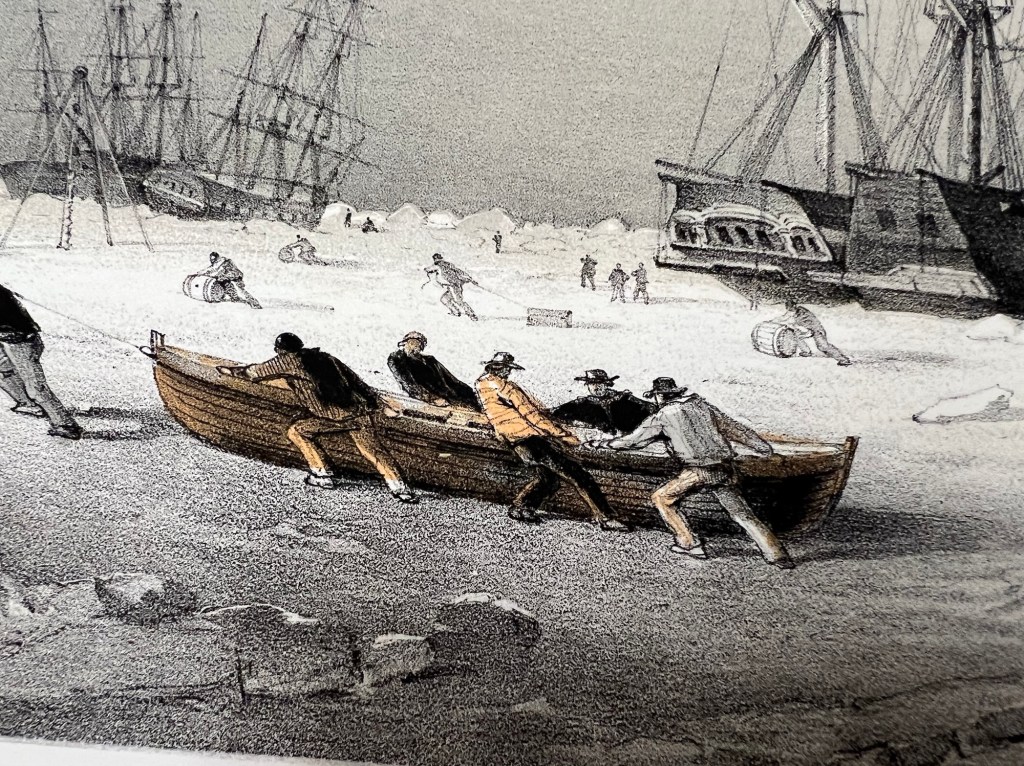
Crew members salvage boats, casks, and other items as McLellan is destroyed. [detail of op. cit.]

Two years later, these parts were a ready source of materials for the program of construction and “beautification” that Belcher and W.J.S. Pullen organized at Beechey Island, the site of the Expedition’s depot. We originally believed that the (interior) spindle of McLellan’s capstan had been transformed into the central element to the Franklin Cenotaph. At the time of our earlier post, we were concerned about one issue: not all whaling ships had capstans. For example, the most similar ship to McLellan remaining in existence, the Charles W. Morgan, isn’t fitted out with this prominent piece of machinery. To effectively operate a capstan, a ship required a large crew. Many merchant ships favoured the use of their windlasses, which could be operated with their smaller crews. A windlass, normally situated near the bows, forward or immediately aft of the foremast, is “ A mechanism operating on the same principle as the capstan, but on a horizontal axis, used on board merchant ships, and some smaller vessels of the royal Navy, for weighing the anchor, hoisting and hauling.”5

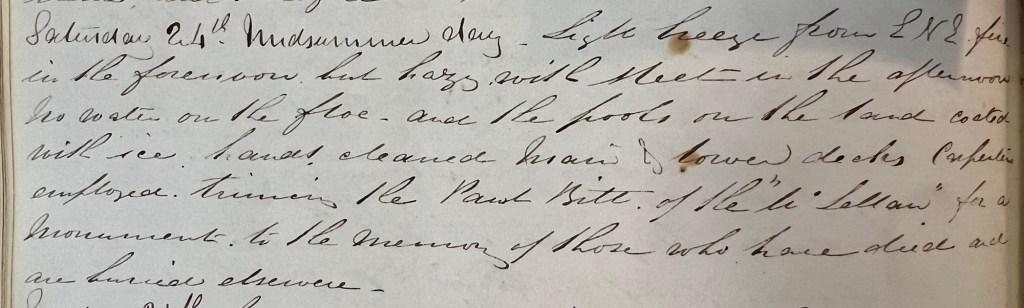
Resolute’s apprentice carpenter, William T. Mumford, the subject of our recent post, was an active participant both in the July 1852 salvage of McLellan, and in building the cenotaph during June 1854. He had just arrived back to Beechey after the mid-May abandonment of Resolute off Dealey Island. Mumford’s information, from his records at Library and Archives Canada, has helped us update the provenance of this important memorial. He wrote in his diary on Saturday, June 24th, 1854: “Midsummer Day, Light breeze from the E-N-E full in the forenoon but hazy with sleet in the afternoon. No water on the floe, and the pools on the land coated with ice. Hands cleaned main & lower decks carpenters employed trimming the Pawl Bitt of the McLellan for a monument to the memory of those who died and are buried elsewhere.

“The Pawl Bitt of the ‘McLellan'” – WT Mumford Diary entry 24 June 1854 (not paginated). Credit: Library and Archives Canada W.T. Mumford Fonds, 1986-018 PIC.

More than almost any other member of the Belcher expedition, Mumford’s occupation and prior experiences make him the expert on the origins of the central monument at Beechey. The “Pawl Bitt” was a strong timber, normally square, that was an important part of a ship’s windlass in the era of wooden sailing ships. It supported the “pawl”, a strong ratchet that ensured that leverage gained by the rotation of the windlass barrel was not lost. The pawl bitt was a substantial structural timber that usually connected straight down to the lower deck. It also usually supported the ornamental bracket the ship’s bell was hung off. This made it an important ceremonial and commemorative site. In this case, the Belcher Expedition carpenters’ efforts at “trimming” seems to have involved carefully working the square timber into an octagonal column, creating a finial ball to surmount the column, carving out or adapting some cavity to house the idiosyncratic “postal office” plaque now located at the rear of the column, and installing the original eight dedicatory plaques to memorialize lost crew members (which are individually identified in a note in our earlier post).
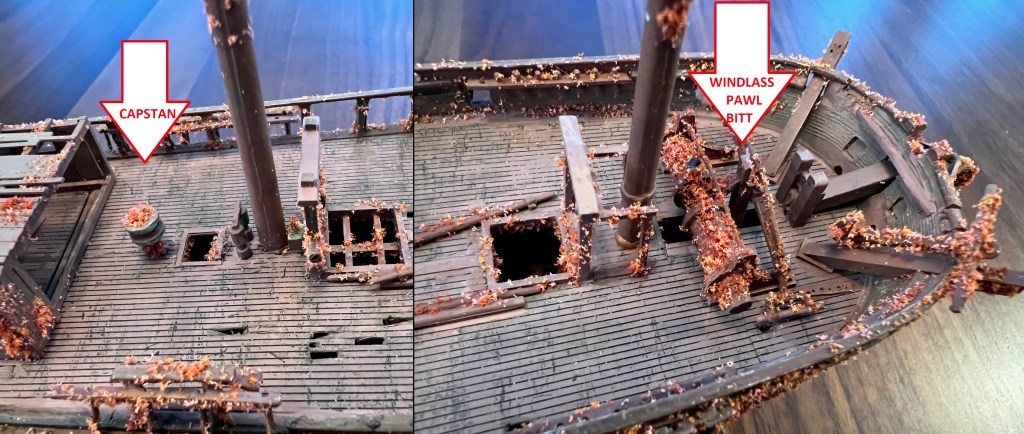
As it happens, there are contemporary examples of both a capstan and a windlass less than three kilometers away from the Cenotaph, on the seafloor of the Barrow Strait! Breadalbane, whose well preserved-wreck is also part of the National Historic Site at Beechey Island, was equipped with both a capstan and a windlass, including a pawl bitt. The pawl bitt is the stout post just forward of the horizontal windlass drum, with the ratchet-like pawl angling down. There was usually a brass ship’s bell sited atop this bitt. This is our scale model interpretation of the wreck. Credit: http://www.warsearcher.com

As we hope we have shown with both posts about the “Franklin Cenotaph,” this memorial is a powerful site of memory of a great era of polar exploration history. As a very early example of a military cenotaph, it has much in common with First World War battlefield memorials. It was constructed from relics and materials on hand, by comrades who knew the lost and the missing. Ship’s Carpenter William Mumford’s diary has helped enrich the provenance of this important monument by linking it to an identified feature of the wrecked American whaling ship McLellan. We hope that visitors to Beechey Island, Nunavut, who stand in contemplation before the cenotaph can better appreciate this remarkable artifact. To paraphrase a oft-repeated inscription from other memorials: HERE SEARCHED BRAVE SAILORS – YOU WHO TREAD THEIR FOOTSTEPS REMEMBER THEIR GLORY.

  1. An inscription added later recognizes Anglo-American cooperation in the search efforts over the High Arctic. The United States participated in search efforts such as the two Grinnell expeditions, and Elisha Kent Kane’s later searches. The 1858 addition to the monument of Lady Franklin’s marble (eventually brought up by Captain Leopold McClintock) expresses the shared Anglo-American concern for establishing the fate of the Franklin crews. ↩︎
  2. The link between the Belcher column and McLellan is noted in Barr and Stein’s January 2017 article “Frederick J. Krabbé, last man to see HMS Investigator afloat, May 1854” Journal of the Hakluyt Society. (P27) The authors appear to have consulted Mumford’s diary, but mention the source of the column is McLellan’s capstan drum. ↩︎
  3. This description of McLellan’s wrecking draws extensively from information in Philip Goldring’s Jan-Feb. 1986 Beaver Magazine article “The Last Voyage of the McLellan” PP39-44. The issue is currently accessible at the Canada’s History Magazine archive: https://www.canadashistoryarchive.ca/canadas-history/canadas-history-feb-mar-2019/flipbook/1/ Captain (later Colonel) William Quayle had a remarkable life, before and after his four years with McLellan, with many notable events outlined in a 20 June 1901 Moberly Weekly Monitor profile of him: https://www.newspapers.com/article/moberly-weekly-monitor-william-quayle/66609/ that article also gives Quayle’s description of McLellan as having been a barque of 110 feet overall length, 27 feet 7 inches wide, 14 feet nine inches deep, of about 326 tons. ↩︎
  4. McLellan and the other American whalers had more diverse crews than mid-Victorian Royal Navy ships. It would be interesting to know if Budington’s shore party had brought Black whalers directly into contact with Inuit families. ↩︎
  5. “Windlass” A Sea of Words ; A Lexicon and companion for Patrick O’Brian’s Seafaring Tales (New York: Owl Books 1997) P.458. ↩︎
A Lonely Cenotaph to Lost Searchers

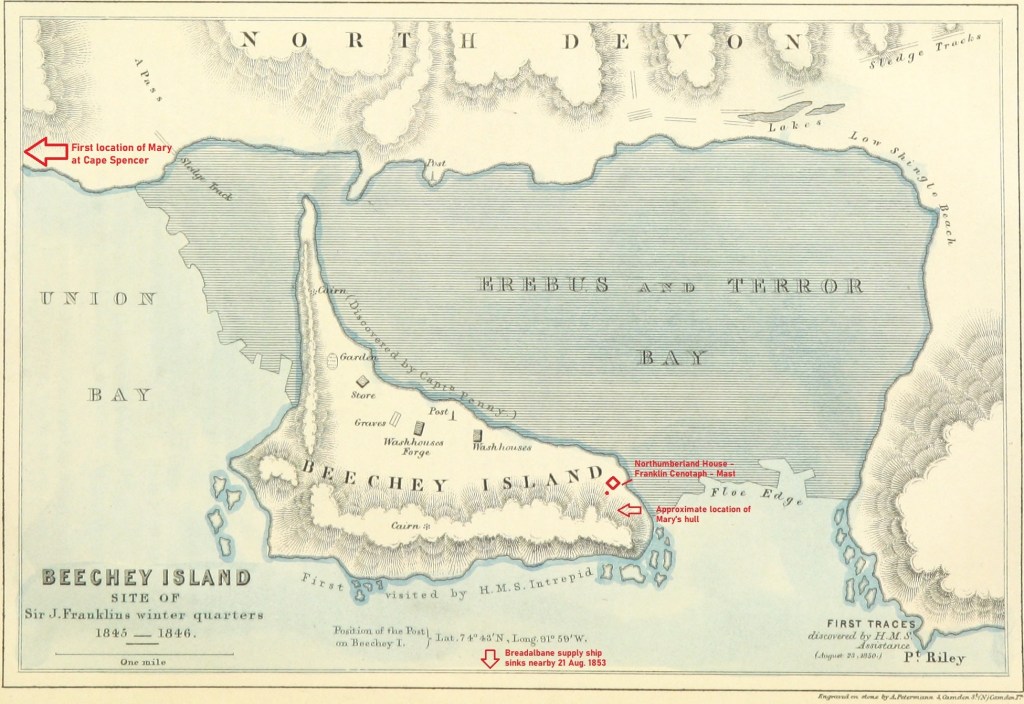
One of the remarkable monuments at Beechey Island, connected with the searches for the Sir John Franklin 1845 expedition, is the “Franklin Cenotaph.” It may be the oldest cenotaph – an incredibly early example of a memorial that commemorates sailors individually by name – in Canada. This distinctive monument is located inland of the ruins of Northumberland House and the fallen mast of Sir John Ross’s yacht Mary. Beechey Island is an isolated, barren place, just off the southwest coast of Devon Island, in the High Arctic, in present-day Nunavut. It had been the site of the Franklin Expedition’s first winter encampment, when HM ships Erebus and Terror had sought shelter here in 1845 and been frozen-in. In 1846, before the ice released the ships, three members of the Expedition were buried just up the beach. The area later became prominent as a staging base/supply depot in the expeditions sent to try and ascertain the fate of Franklin and his crews. Today, this incredibly remote 170-year old cenotaph serves as a lasting memorial to the human cost of these efforts.

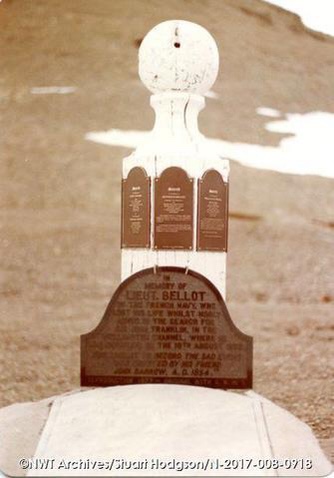
The monument, ca. 1978. Credit: NWT Archives/Stuart M. Hodgson fonds/N-2017-008: 0918

A brief description of the monument could be: A column now white but sometimes black, in the form of an octagonal piece of ships’ machinery, affixed with plaques, with a larger one predominating, surmounted by a large finial (ball), the column approached by a marble slab on a concrete base, with the whole raised on a small platform of cemented limestone. The Belcher column and Bellot’s monument AND Lady Franklin’s memorial plaque have a unique history, like many other relics, ruins, graves, and wrecks at Beechey. This composite monument, often simplified to “the Franklin Cenotaph,” was begun in June 1854 by the crew of HMS North Star, under the command of W.J.S. Pullen. Its original intent was to honour sailors who had perished in the great efforts to locate the crews of Franklin’s vanished ships. North Star was serving as a depot and stores vessel for the larger Royal Navy search effort, Sir Edward Belcher, commanding.

Map of the 1845-46 Franklin Expedition sites, and a record of their discovery[annotated with approximate locations of some sites mentioned in this post, including the cenotaph, located just behind the square Northumberland House] The British Library, “Papers and Despatches relating to the Arctic Searching Expeditions of 1850-51. Together with a few remarks as to the probable course pursued by Sir John Franklin, etc. [Compiled by James Mangles. With maps.(London: 1851)] No restrictions, via Wikimedia Commons

This new “Belcher column” adhered to the classical definition of a cenotaph: It memorialized the dead without being a burial site. By commemorating enlisted personnel – sailors and marines – it was also incredibly rare for its time.1 Small plaques on each face of the column identify 13 deceased members of HM ships Investigator, Resolute, Assistance, Intrepid, whose remains were buried elsewhere.2 These men are not all commemorated in the same manner; some entries are descriptive, some employ religious passages, some are brief.

The column was reportedly made out of the interior section (the spindle) of the capstan of the American whaling ship McLellan. McLellan had been lost two years previously, on 8 July 1852 on the way to Arctic whaling grounds, in Melville Sound, when it and a fleet of British whaling ships had been frozen in pack ice, alongside Belcher’s small Royal Navy squadron, then journeying up to begin the search. McLellan had run afoul of North Star. It was then crushed by fast moving ice. The vessel must have remained on the surface or pinned to the ice for some time, as much seems to have been salvaged. McLellan’s spars would also be a source of timbers used to construct Northumberland House, the large storehouse constructed soon after the ships got to Beechey.3

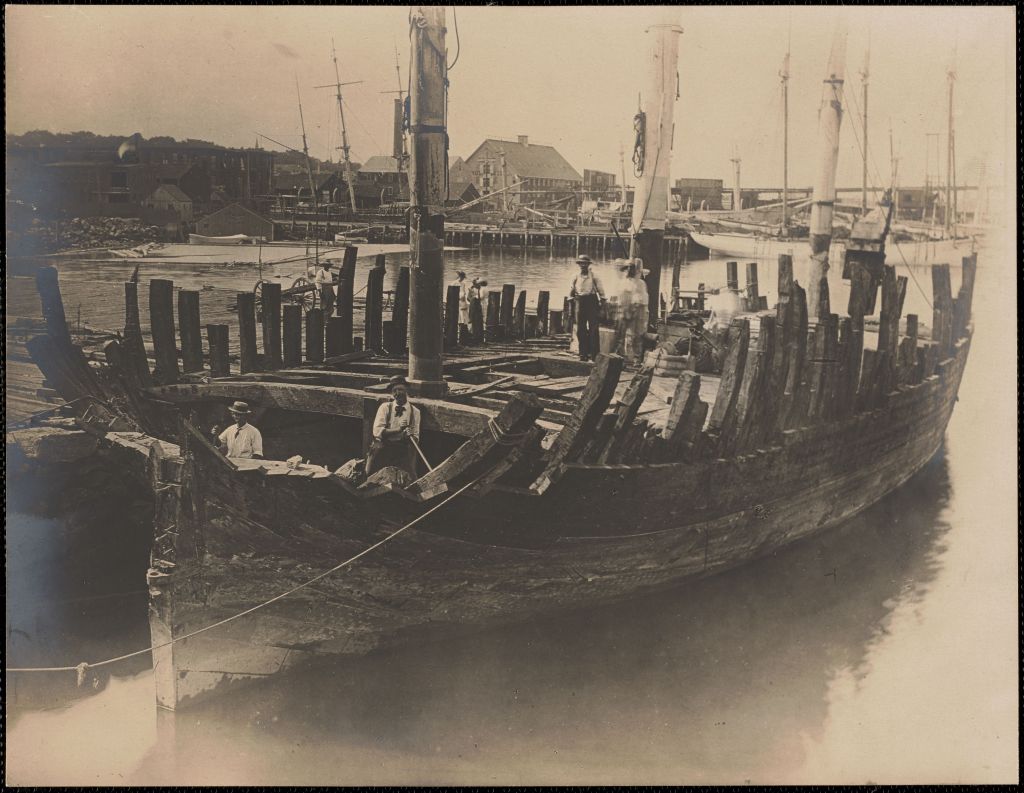
Dismantling the very old whaling ship Rousseau at New Bedford MA, ca. 1893. This shows many of the spars, masts, timbers, and other materials that would have been sourced from the similar ship McLellan, that were used in Beechey Island construction projects. note the crews are down to the level of the lower deck, and the vessel is still afloat with intact coppering! Credit: Joseph G. Tirrell 2012.008.0055, Digital Commonwealth (CC BY-NC-ND)

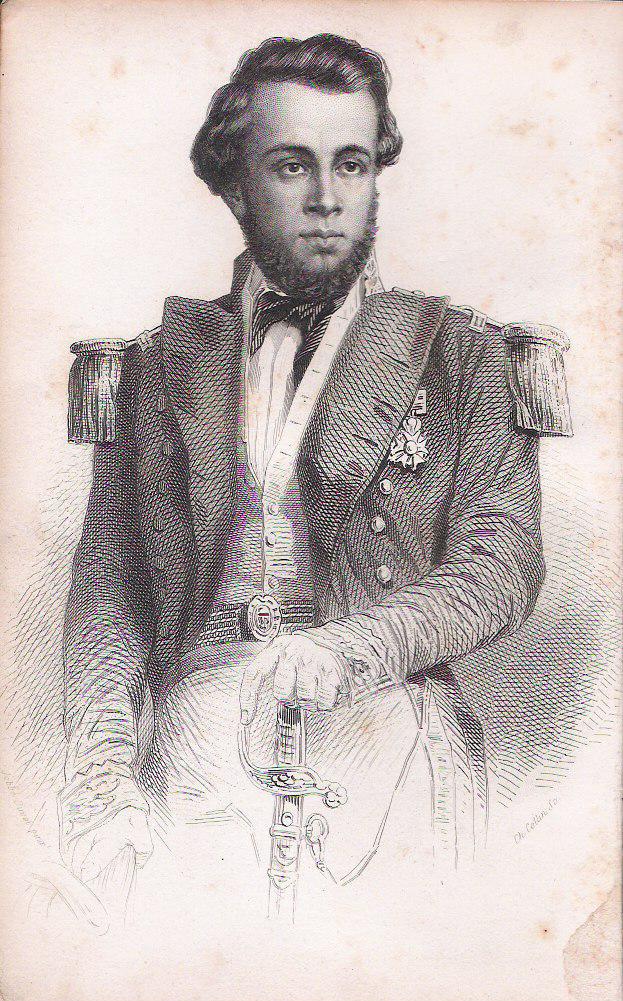
The second major component of the monument was added later that summer to memorialize Lt. Joseph-René Bellot. Bellot, an officer of the French Navy, had accompanied Captain Edward Augustus Inglefield, commanding HMS Phoenix, on the same 1853 journey to resupply Belcher’s ships that resulted in the loss of the Breadalbane supply ship nearby.

Portrait gravé sur acier de l’explorateur français Joseph-René Bellot (1826-1853), en tête de son ouvrage Journal d’un voyage aux mers polaires à la recherche de Sir John Franklin, introduction de Paul Boiteau, Paris, Perrotin, 1866.Credit: Wikinade, CC0, via Wikimedia Commons

Bellot was a seasoned Arctic explorer who had already been out as second in command on the 1851 William Kennedy expedition. He was respected and admired by his comrades. As Phoenix and Breadalbane were driven away from Beechey, in a gale, he had volunteered to brave the ice and elements to carry despatches north to Wellington Channel, to deliver them to Belcher. Bellot disappeared 18 August, when the ice suddenly opened around him. This loss was felt deeply by the searchers in the Arctic.

HMS Phoenix, with Breadalbane supply ship behind on 18 Aug. 1853, in the same perilous conditions that Bellot, transporting despatches, was lost in. Credit: Admiral Sir Edward Augustus Inglefield, Public domain, via Wikimedia Commons

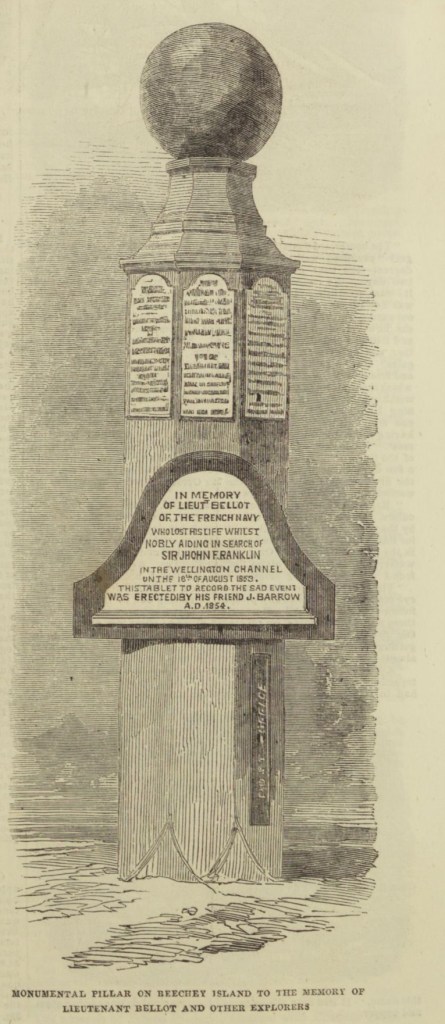
In August 1854, when Inglefield returned to the Arctic on the next resupply effort, he brought up a plaque dedicated to the memory of Bellot to be added to the Belcher column. The plaque had been commissioned by an important friend, Sir John Barrow, (Second Secretary at the Admiralty and the second Barrow heavily involved in polar exploration) and was cast in a headstone-like shape.

The monument as it appeared soon after construction, with the Bellot plaque, whose text is legible here, mounted low on the front face. The Illustrated London News, 28 October 1854[detail of] Unidentified engraver, Public domain, via Wikimedia Commons

Francis Leopold McClintock’s search expedition of 1858 brought up the last major addition to the monument: A large marble slab commissioned by Lady Jane Franklin, Sir John Franklin’s widow. The marble was inscribed with text dedicating it “To the Memory of Franklin, Crozier, Fitzjames, and all their gallant brother officers and faithful companions…” This, aptly, concluded the memorialization program on the monument by incorporating the lost explorers into the monument to the lost searchers of those explorers. The marble was to have been brought north in 1855 by an American expedition looking for Dr. Kane, commanded by Lt. Henry J. Hartstene. That expedition turned back when they located Kane, so the plaque waited at Disko, Greenland, for three years. McClintock’s expedition routed it on up (with an additional small plaque added to reference this) and deposited the marble flat on the ground in front of the column.

One of the original oddities of the monument is the metal “Post Office” letterbox panel affixed to a rear surface. Despite the prevalence of seances in Victorian England, this was not intended as a correspondence box to the lost, to communicate with the spirit world. According to an October 1854 London Illustrated News article, which featured a sketch of the monument, this letterbox was actually functional, intended for future visitors to leave letters as a receipt of having visited the Island.

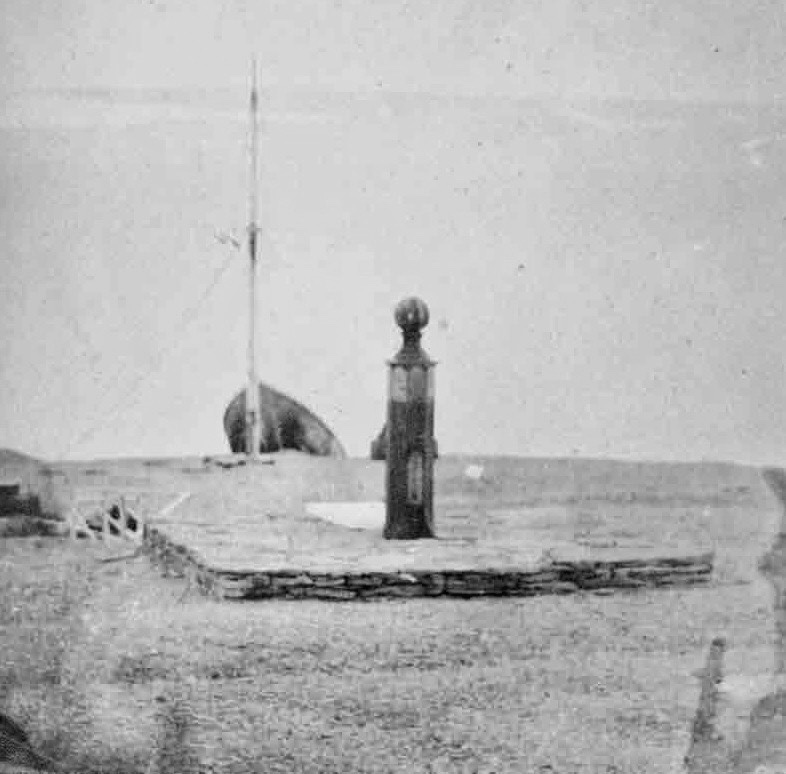
Lt. Allen Young’s 1876 photograph of the monument, looking towards the beach at Beechey, with Lady Franklin’s marble on the ground and the post office plaque on the lower rear face. Credit: Allen Young “Cruise of the Pandora” (London, 1876) Page 43. Public domain via Library and Archives Canada 1984-109 NPC

In 1876, Allen Young, in HMS Pandora, revisited Beechey’s lonely shores. He had last been there while serving as Navigator on Fox, McClintock’s ship. He took a valuable photographic record of the site that was incorporated into his published journal.4 At this time the monument was painted black. Young described opening the letterbox on the monument to retrieve a single document. Pen pals were in short supply at Beechey, and the only contents were a memo left by Belcher more than two decades before.

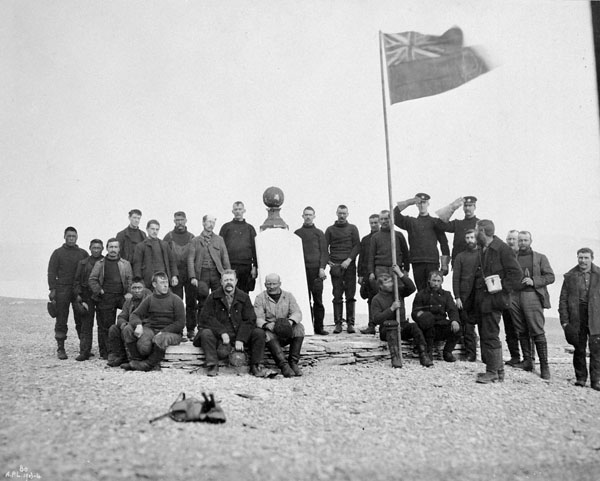
The cenotaph, like so many other relics, wrecks, and remains at Beechey, seems to have mostly escaped the ravages of time. A half-century after its installation, in August 1904, the Canadian ship DGS Neptune visited Beechey, as part of the Dominion Government Expedition, A.P. Low commanding. This visit saw expedition members raise the marble plaque for a photograph and then reorient it to face upwards (Low’s interesting description of Beechey and the cenotaph is in this 1906 report). At this time a flagpole may have been installed at the rear or very near the monument.

The Dominion Government expedition’s visit to the memorial, 15 August 1904. A.P. Low describes how they found a note from the previous year in a sealed case attached to the rear of the cenotaph, left by Roald Amundsen, whose ship Gjoa was unlocated at this time. The note was forwarded to the Norwegian government. Credit: Albert Peter Low / Library and Archives Canada / PA-053580

During the 1922-23 visit to the monument, on one of Captain J.E. Bernier’s yearly voyages/sovereignty patrols north in CGS Arctic, the marble appears to have been set into a more secure and aesthetically pleasing angled concrete base. The head of the marble now rested just under the Bellot plaque. Other than the removal of the flagpole, and the application of white paint, the memorial has remained substantially unaltered since then. It continues to stand tall in a lonely vigil at Beechey, down through the decades. Today, the Franklin Cenotaph is a powerful site of memory connected with the search for the Northwest Passage, and an important tribute to the men who died far from home looking for lost comrades.

Capt. Bernier, CGS Arctic, with other crew at the Franklin Cenotaph, 1923. Credit: Library and Archives Canada R216, Vol. 14946, p54.

Please see our 2024/03 update to this story, where we used an archival source, William Mumford’s diary, to determine more accurate provenance of the column to a different part id the McLellan whaling ship. We still have many questions about the monument, including what dates sections of the monument were altered or rebuilt, why the small plaques were sometimes missing from archival photos, and the subsequent history of archaeology at the monument. There are many discrepancies in the sources, and we know there are folks out there who know more than us, so we are happy to stand corrected! We also hope this post spurs greater study of this important memorial. If you’ve visited Beechey Island, we’d love to see your photos!

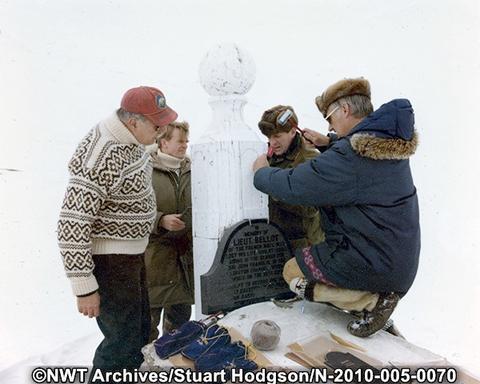
Northwest Territories Commissioner Stuart Hodgson (at left – the creator of the Franklin Probe, a maritime historian and a Canadian naval veteran) and others help replace the Cenotaph plaques with replicas during a July 1978 visit.

  1. This cenotaph may even be unique on Canada. We have never heard of one that commemorates not just senior officers but the regular sailors and marines of military ships, erected before the 20th century. A hundred years earlier, the terrible loss of more than a thousand officers and enlisted men, when HMS Victory (1737-1744) sank in the English Channel, had resulted in the kind of traditional commemoration to the leader, Admiral Sir John Balchen, at Westminster Abbey. The oldest naval monument now located in Canada is Montreal’s Lord Horatio Nelson column (constructed 1809). ↩︎
  2. Thomas Morgan of HMS Investigator, who died 1854-05-22 onboard North Star, is buried nearby with the three original Franklin crewmembers. Aside from Morgan and Bellot (who is commemorated twice on this monument), the other members of search crews memorialized on the column (with their ships and dates of death) are: William Cutbush HMS Assistance 1853-02-27; Isaac Barnett HMS Assistance 1854-01-28; George Harris HMS Assistance 1854-01-09, John Ames, HMS Investigator 1853-04-11; John Boyle HMS Investigator 1853-04-05; H.H. Sainsbury HMS Investigator 1853-11-14; Thomas Mobley HMS Resolute 1852-10-19; George Drover HMS Intrepid 1852-12-12; John Coombs HMS Intrepid 1853-05-12; Thomas Hood HMS Intrepid 1854-01-02; John Kerr HMS Investigator 1853-04-13; James Wilkie HMS Intrepid 1854-02-2. These names can be verified at Maritime Memorials at RMG. ↩︎
  3. Brian D. Powell Polar Record 42 Issue 4 provides a detailed summary of the construction of this and other monuments at Beechey, and there is still more work to do on the commemorative intent of the various monuments. Other evidence for the source of the Belcher column, the whaling ship McLellan, is found in Barr and Stein’s January 2017 article “Frederick J. Krabbé, last man to see HMS Investigator afloat, May 1854” Journal of the Hakluyt Society. We have usually encountered spindles with ten or more sides as part of naval capstans. ↩︎
  4. Young had been sent in HMS Pandora to aid the 1875-76 British Arctic Expedition, which encountered many difficulties. Young’s ship, a reinforced gunboat, would be acquired as USS Jeanette for the Grealy expedition, which ended in more shipwreck and tragedy. His account The Two Voyages of the Pandora ; 1875-76 has a chapter (pp. 43-46) about Beechey with a brief description of the letter box, Northumberland House, the Mary yacht left by Sir John Ross, and other boats on the site: https://archive.org/embed/cu31924091208565 ↩︎

Private G.L. Price, Last Combat Death – 11 November 1918

GL_Price_CWGC
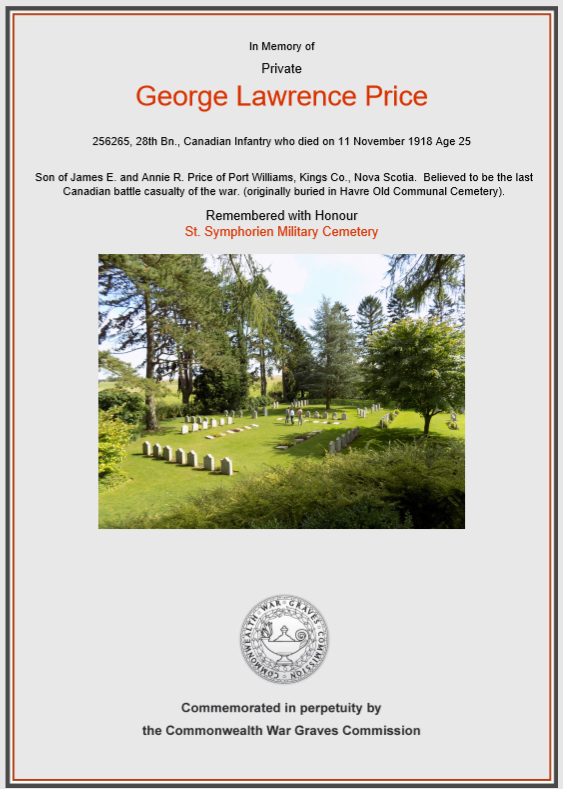
Commonwealth War Graves Commission commemorative certificate for Pvt. G.L. Price.

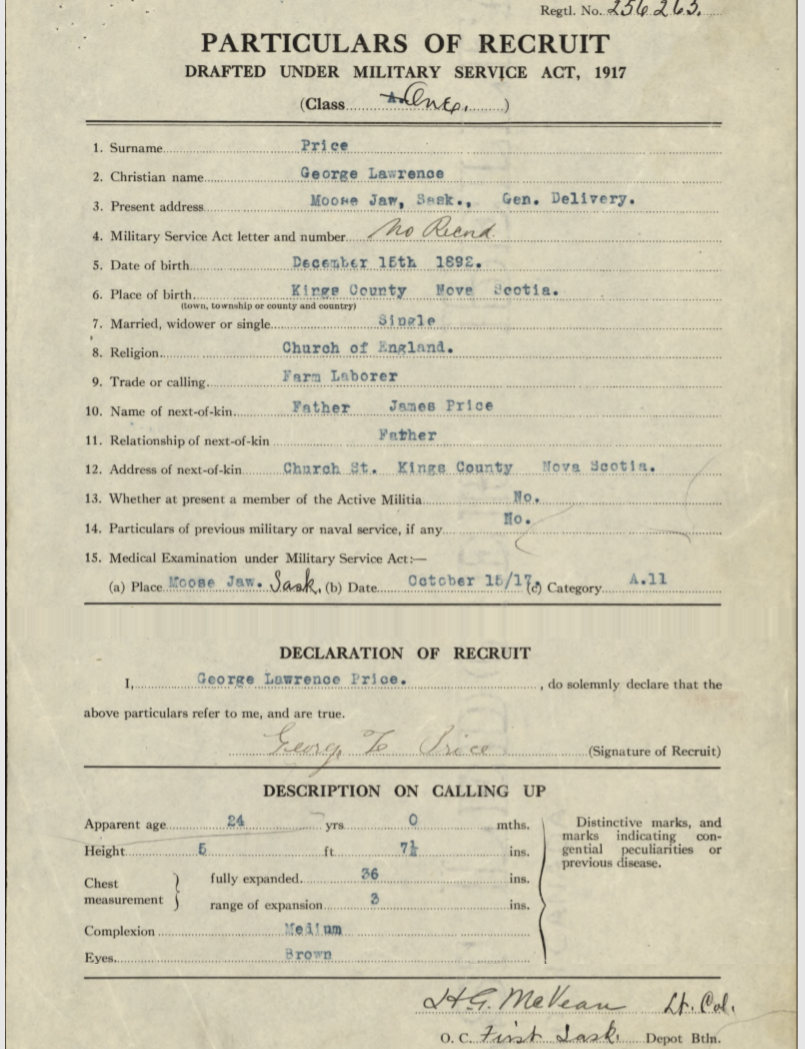
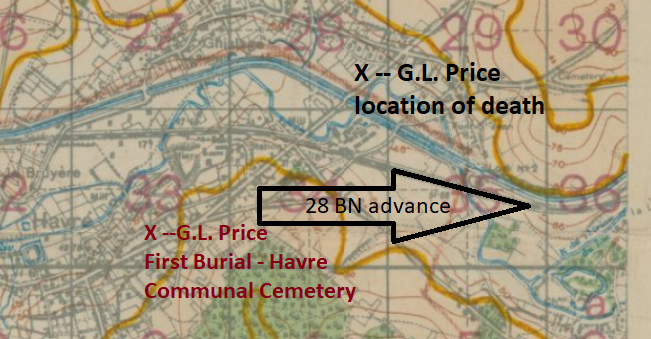
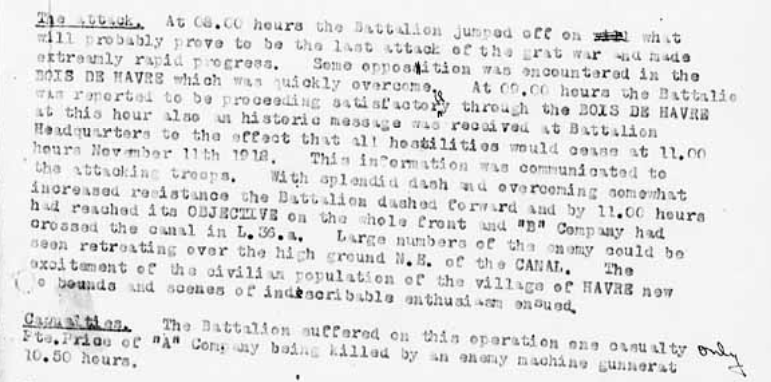
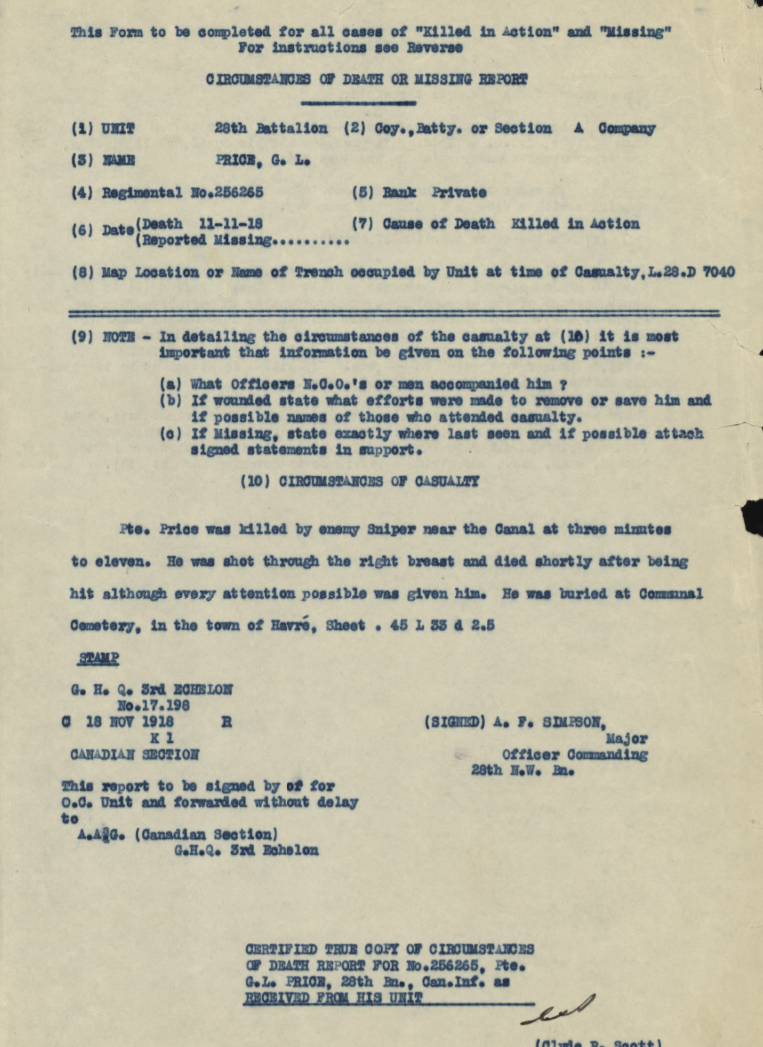
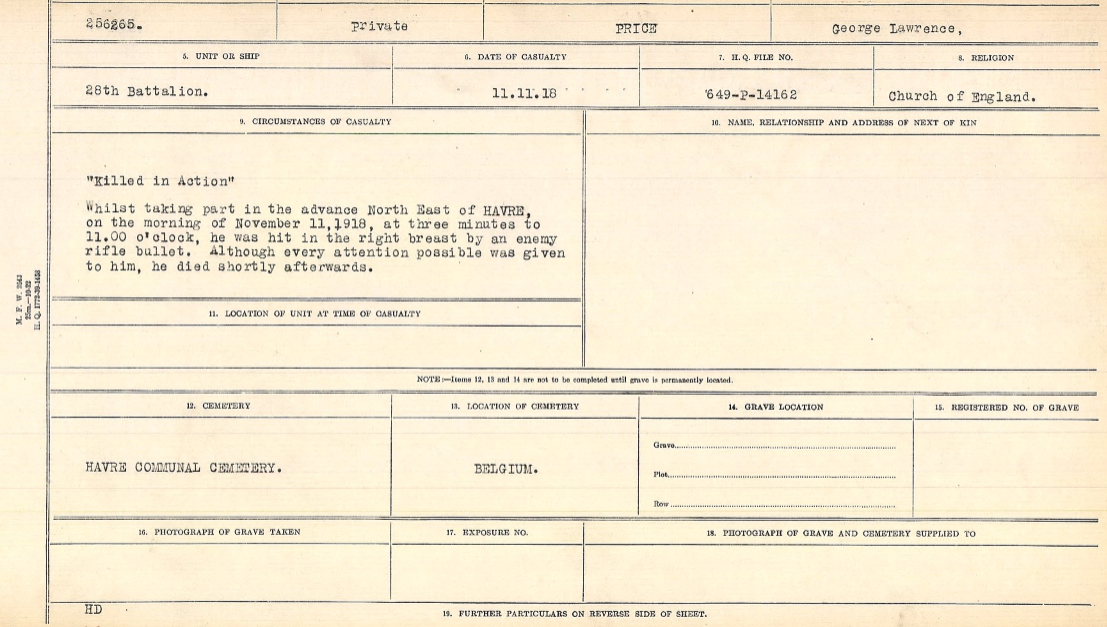
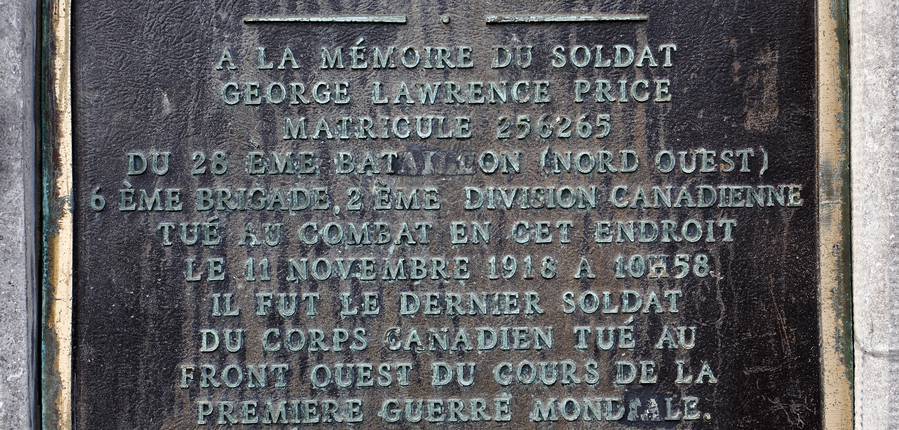
Pvt. George Price, “A” Company, 28th Canadian Infantry Battalion (Northwest) is reported as the last CEF soldier to die before the 11AM Armistice that ended the First World War. Units of the Canadian Expeditionary Force had been ordered to resume the advance, and keep pushing German forces beyond Mons, Belgium. By mid-morning most soldiers knew of the Armistice coming into effect at 11. The 28th Battalions “A” and “B” Companies were pursuing a retreating enemy East of Mons, through the woods and village of Havré. George Price, a 25 year old originally from Kings County, NS, who had been working in Saskatchewan, had just crossed the canal into Ville-sur-Haine.

ATT_GL_Price_
G.L. Price draft form, conscripted under the 1917 Military Service Act. Library and Archives Canada CEF Service File, RG 150 1992-93/166, Box 7974.

While other units were standing-to, his small team were working their way into the village, with Germans units withdrawing to the North-East. Pvt. Price was struck in the chest by a rifle or machine-gun bullet. Help from his comrades and Belgian civilians could not save him. At his death, church bells in Mons and the surrounding villages were ringing out in celebration of the end of hostilities.

GL price McMaster Trench
Modified detail of Sheet 45, Edition3. Series: GSGS 2743. H.B. Stuart Collection, McMaster University. This shows rough locations, as referenced in records below. The location stated for his death accurately maps to the location of a plaque at Ville-sur-Haine.

The Commonwealth War Graves Commission’s site shows that, although Price was the only CEF soldier killed-in-action advancing in Belgium that day, 38 others, and one soldier from the Dominion of Newfoundland, died at various locations in France, Britain and Canada, on this last day of the Great War. Here is a small selection of documents that help tell the story of Price and the events of a hundred years ago:

Detail_report on ops 28 CIB NOv 1918
Library and Archives Canada 28 CIB War Diary Report on Operations Nov. 1918 RG9-III-D-3. Volume/box number: 4936.

CIRCPERSFILE_GL_Price_
G.L. Price Circumstances of Death form on his CEF file. Library and Archives Canada CEF Service File, RG 150 1992-93/166, Box 7974.
GL_Price_CircofDeath
G.L. Price Circumstances of Death register entry. Library and Archives Canada RG150, 1992-93/314, Vol. 230.
ville-sur-haine01
Plaque marking the place Price fell at Ville-sur-Haine, courtesy of http://www.visitmons.co.uk.

Lest we Forget.

The Lost War Trophies of Canada – From Vimy to East Angus QC

In this exciting new thread, we restore information about lost war trophy cannon.

This is the much-anticipated debut of a new series of posts! The extensive Warsearcher postcard archive has been mined to restore a visual record of military artifacts that have been lost from communities across Canada. Why? Because we can’t let the non-existence of an artifact hamper our interpretation of it!

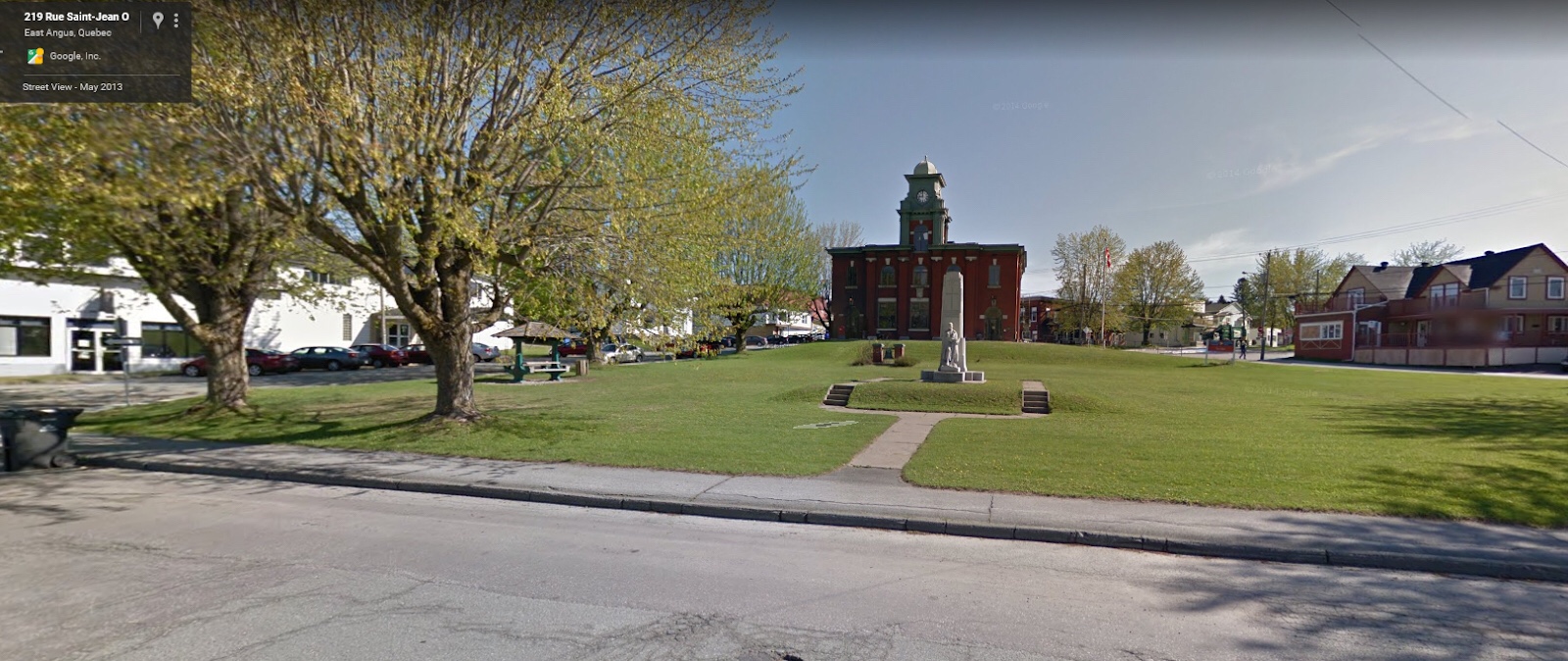
Detail of postcard, East Angus QC Post Office and War Memorial. Warsearcher postcard collection

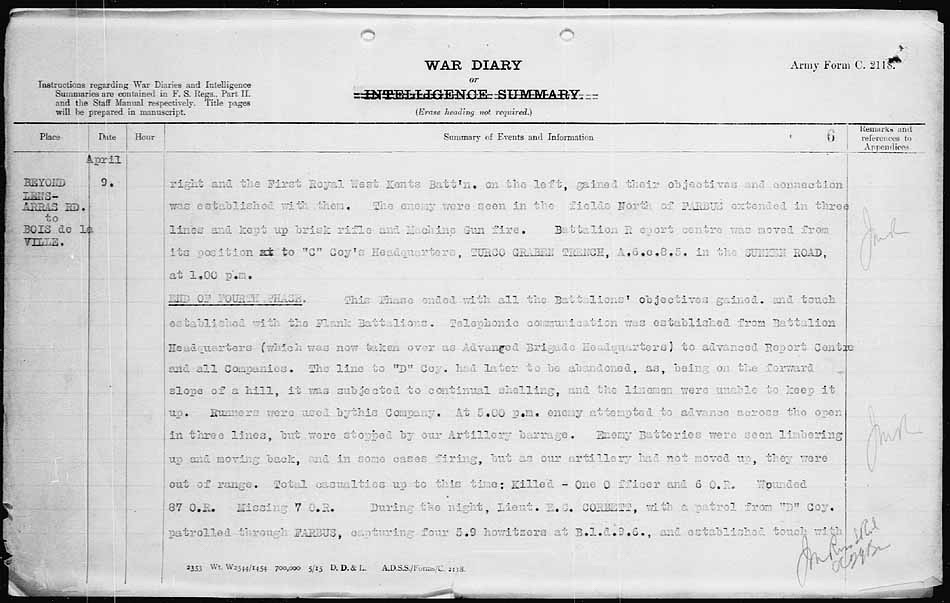
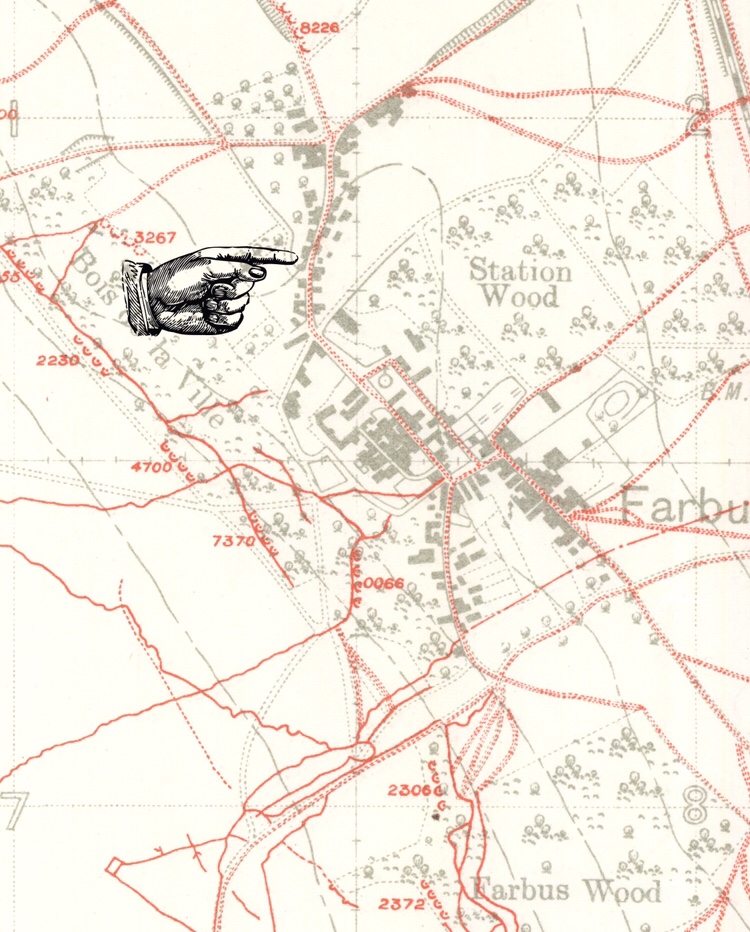
German 15 cm Howitzer no. 249 was captured by the 29th Canadian Infantry Battalion, at Station Wood, near Vimy. This gun was likely one of the four “5.9 inch” howitzers (the British name for these guns) captured by Lt. E.C. Corbett (service file hyperlinked) and a patrol of D company late in the day of 9 April 1917. This action, and accurate map references, appear in the War Diary.

29th Canadian Infantry Battalion War Diary entry for 9 April 1917. Library and Archives Canada RG9-III-D-3 Vol. 4936.

29th Canadian Infantry Battalion War Diary entry for 9 April 1917. Library and Archives Canada RG9-III-D-3 Vol. 4936.

Detail from sheet 51B 1:10,000 scale, McMaster University Trench Map collection. Map reference 51B.1.d.9.6., near Station Wood, Farbus, France, indicated.

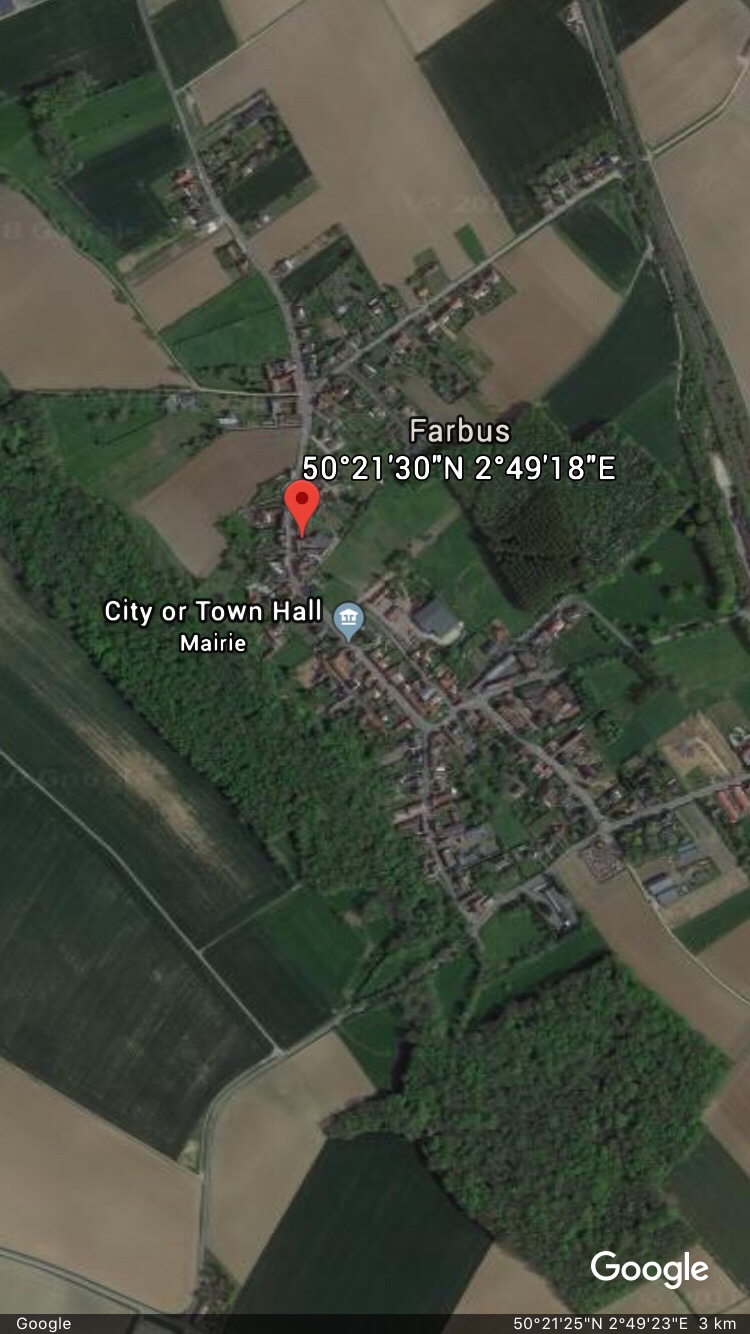
Rough location using Google maps.

One of a vast collection of captured German trophies sent by the government to Canada, It was shipped to East Angus via Grand Trunk Railways 10 December 1920;

Extract of War Trophies Allocation Ledger, War Trophis Commission, Library and Archives Canada, RG37D vol.388

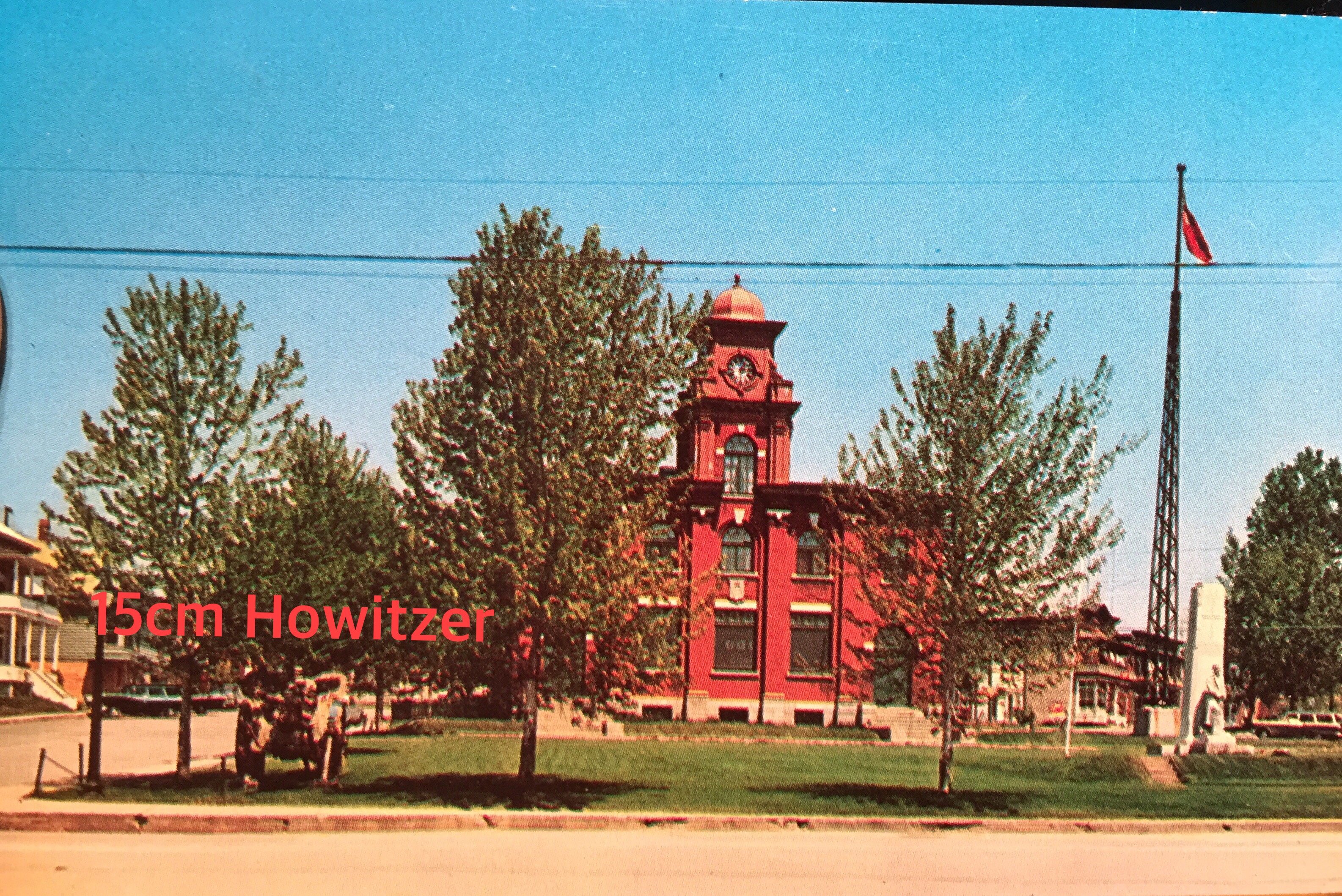
Here is a late 1950s postcard view of the East Angus Post Office and War Memorial, which shows what looks like the 15cm schwere Feldhaubitze model 13:

Warsearcher postcard collection

Though it seems to have survived the scrap drives of the Second World War, its later fate is unknown. Any readers with information on this trophy are welcome to comment!

2018 Google street view of same location.

Battle of Hill 70 – August 15th-25th, 1917

A century ago, soldiers of the Canadian Expeditionary Force (CEF) were into their second day holding newly-won positions on Hill 70, near Lens, France. Counter-attacks by German units, desperate to regain this strategic position, were increasing. At 4:25 AM the previous morning, on August 15th, 1917, they had left their jumping-off positions to advance on this important high-point near the industrial city of Lens, France. The intent of the operation was to force German military planners to divert forces away from the Passchendaele operations, by mounting an attack on Lens. Sir Arthur Currie, recently promoted to command the Canadian Corps, reconnoitered the positions and crafted a plan to seize the heights to the North of city, after first convincing his superiors to modify the main objectives. Lens was to be attacked next.

Map of the training grounds, battlefield models and recreations of the territory around Hill 70 helped familiarize troops with major objectives before the assault. (from an appendix to the 22nd Battalion War Diary, August, 1917, Library and Archives Canada)
Meticulous planning built on recent successes, such as the Vimy Ridge operations. A massive preparatory bombardment presaged the attack. Special batteries of artillery under the command of A.G.L. McNaughton were employed in counter-battery fire, and managed to silence many German guns before the infantry went in.

A Canadian 18-pounder field gun camouflaged and in a reinforced position amidst the ruined houses and industrial buildings of Lens. Camouflaging positions was essential to protect batteries from enemy observation and counter-battery fire (Library and Archives Canada CWRO O-1889, Mikan 3395293)
Initially, the attack was a success, with rapid advances. Clearing up entrenched defenders in the Chalk Pit, and in the ruins of Lens’ suburbs, was no easy task, and positions changed hands several times. The operation dragged on for 10 days, and beleaguered and exhausted troops had to drive off relentless enemy counter-attacks. Accurate and prompt artillery support was instrumental in breaking up German concentrations of troops and keeping the Canadians from a general withdrawal. From 15 August until the 25th, Roughly 8,700 CEF soldiers became casualties with almost two-thousand killed, while estimates of German losses run much higher. The planned operation to capture Lens was eventually called off.

Hill70_CWRO_O-1752
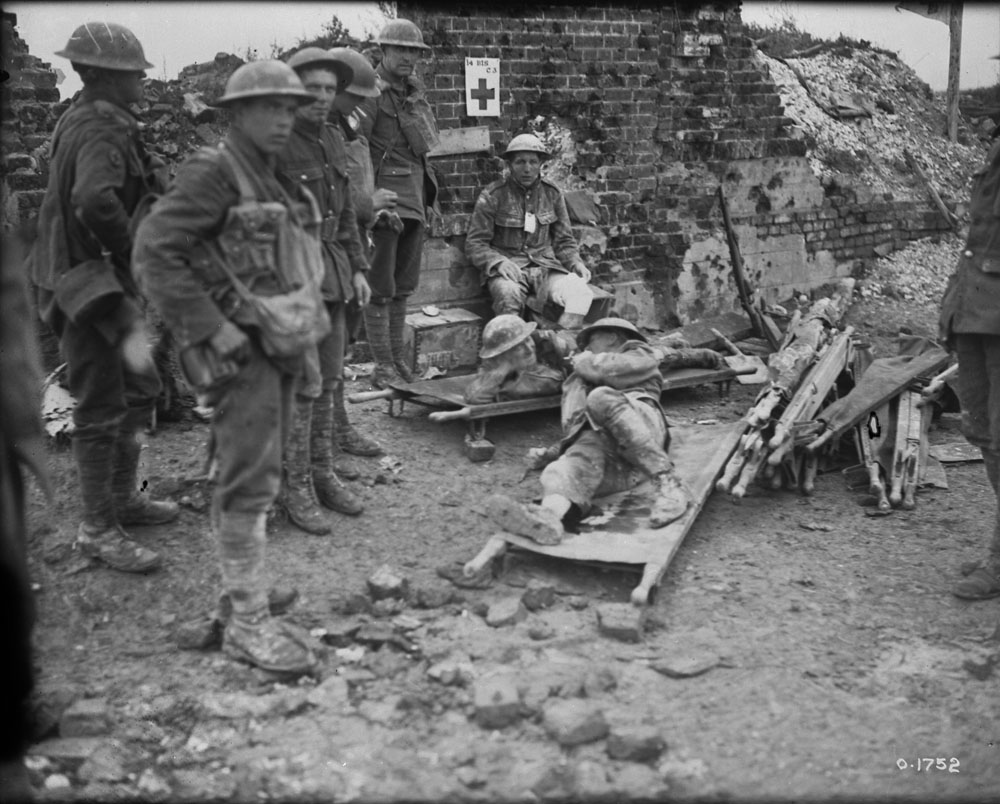
A badly wounded Canadian giving another wounded soldier a light during the recent push to Hill 70.(Library and Archives Canada CWRO O-1752, Mikan 3397017)
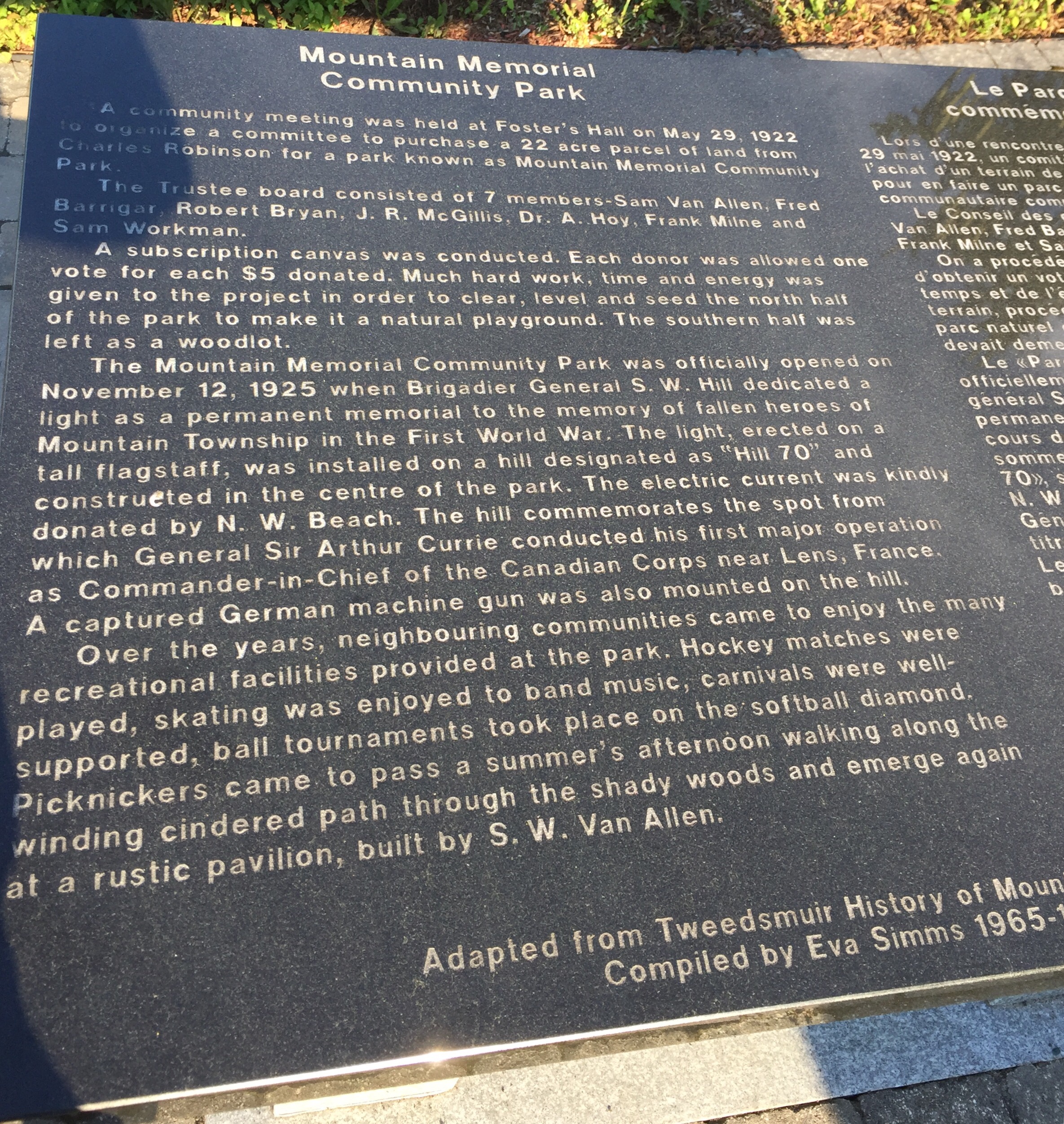
Somewhat surprisingly, until the recent opening of the new Battle of Hill 70 Memorial Park in France, the only memorial that focused on commemorating Hill 70 was located in Mountain Ontario, a small community South of Ottawa. This memorial was originally built during the height of memorial construction in the 1920s.

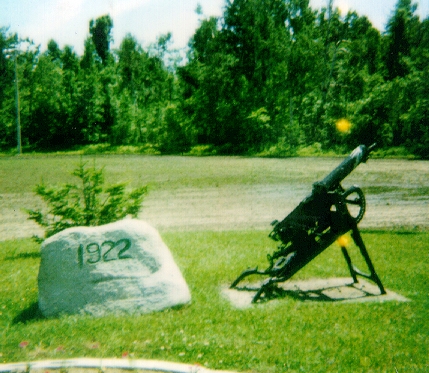
The pre-2011 Mountain Memorial to the Battle of Hill 70. Originally, an electric lamp on a tall flagstaff was also an important element (source “War Monuments in Canada” site: https://www.cdli.ca/monuments/on/hill70.htm)
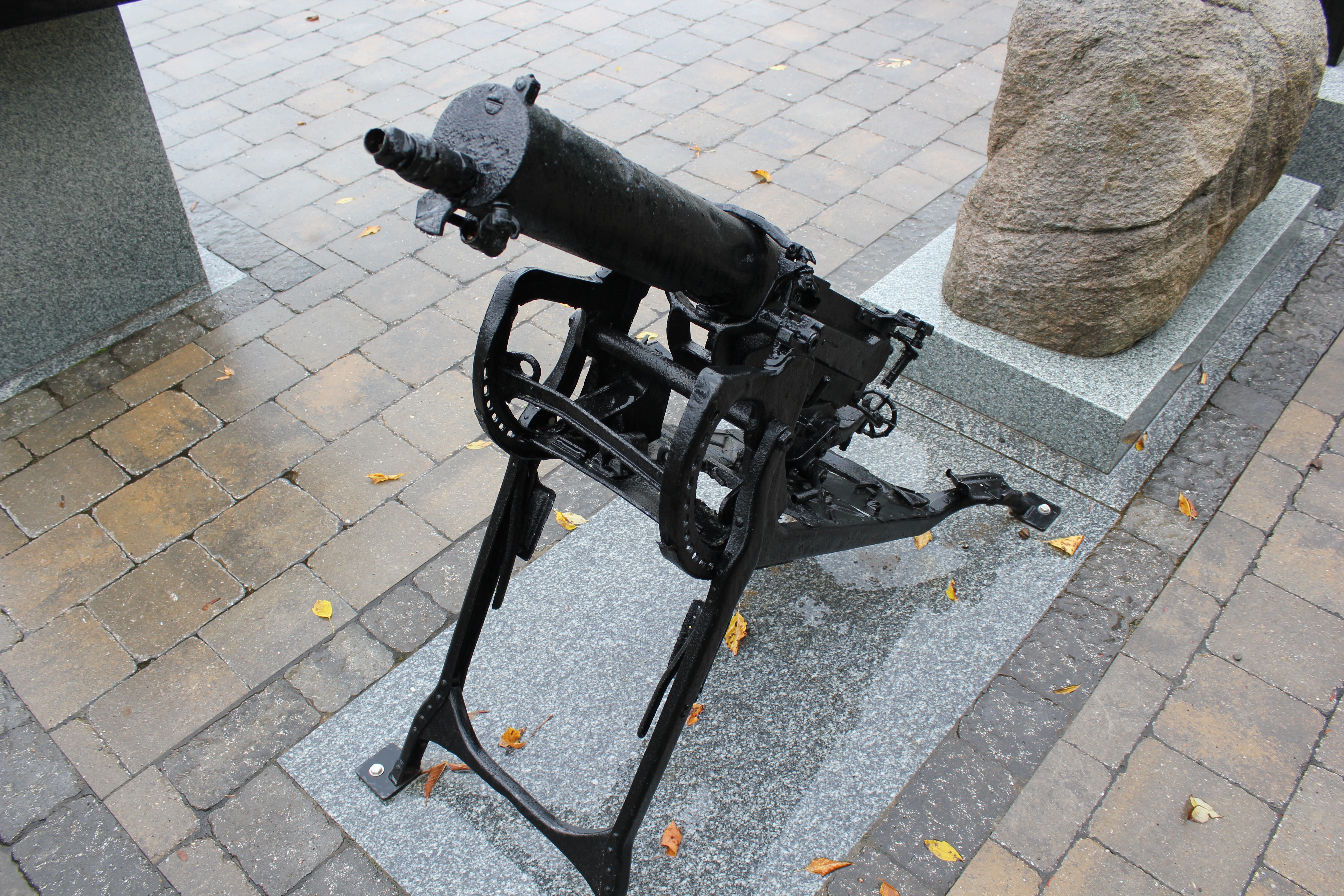
For the 2011 work on the memorial, local groups struggled with what to do with the rusted machine gun, that had been a feature of the original 1920s layout. Some wanted to scrap it. A recent Globe and Mail article explores the various proposals. A local resident who was heavily involved in the rehabilitation project, Mr. Johnston, is quoted as saying “I struggled with the gun. Why would we want a German machine gun that was used to kill these boys?” This sentiment has been expressed many times over the years about trophies, and ties in with evolving public memory on the meaning of the First World War. In the 1930s and Second World War-era many pieces were indeed destroyed because of similar community sentiments. For the purposes of this project I am relieved to say that the gun remains a focal point of the memorial.

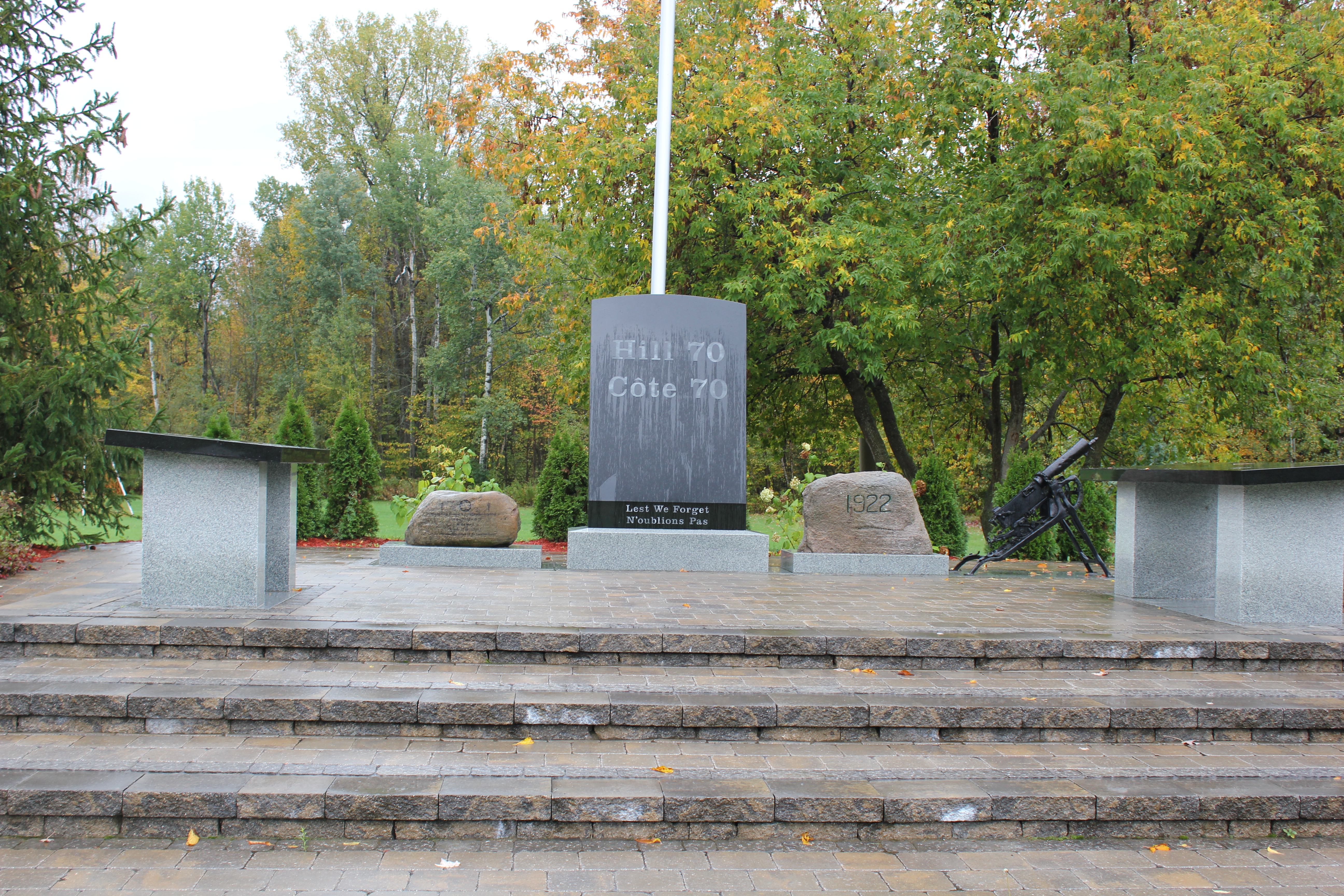
Mountain ON. Battle of Hill 70 Memorial site (author’s photo)
 

One of the tablets of the Hill 70 memorial explains the unique origins of this commemoration in Mountain, ON. (author’s photo)
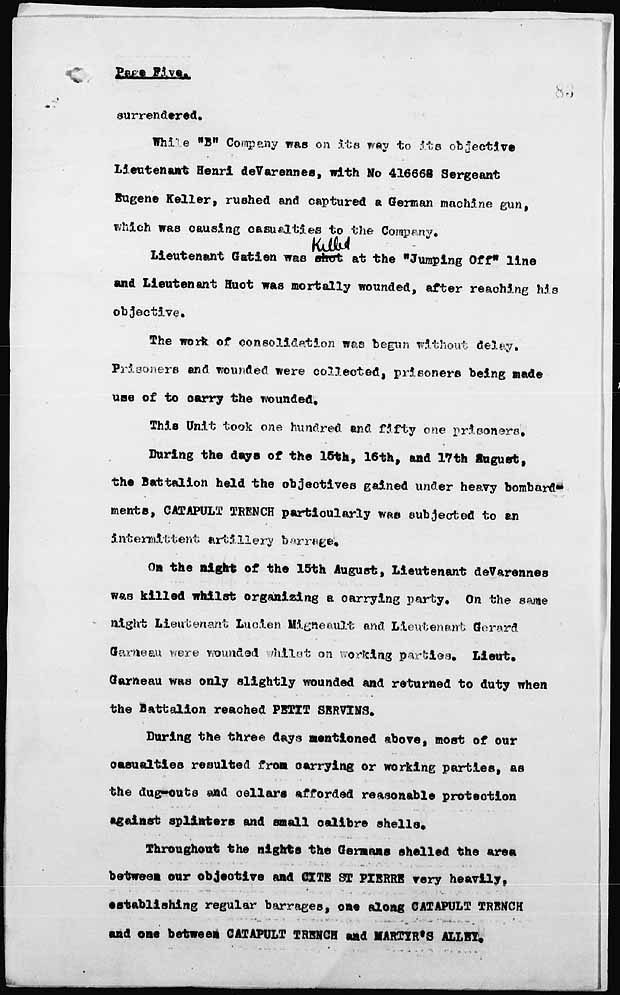
According to War Trophy Commission records at Library and Archives Canada, two captured German guns were shipped to Mountain in September 1920 via Canadian Pacific Railways. The captured German machine gun now at the memorial is most likely MG08 no. 2946b (the serial numbers have substantial corrosion), seized by the 22nd Battalion at Catapult Trench, Hill 70, 15 August 1917. This gun would have been used against Canadian soldiers in the initial assault.

IMG_5676
Captured war trophy MG08 German machine gun, Battle of Hill 70 Memorial, Mountain ON.(author’s photo)
The 22nd Battalion’s War Diary “Report on Operations” notes that 4 similar guns were captured. Particular mention is given to the capture of one by Lt. Henri de Varennes (who was killed early in the morning on 16 August) and Sgt. Eugene Keller, who would later receive the Distinguished Conduct Medal for this action (The First World War service files of Keller and de Varennes are available digitized from LAC). Interestingly, recent talks with local residents have indicated they are convinced this is indeed a gun captured by the 22nd Battalion at Hill 70.

For many reasons, Hill 70 has not been accorded the same attention as other CEF operations that Canadians are familiar with. In contrast to the range of captured relics that remain from the Vimy operations (which I recently posted on) this gun, and a 75mm Trench Mortar in the collection of the Brome County Historical Society in Knowlton, Quebec, may be the only monuments that remain of this important Canadian operation.