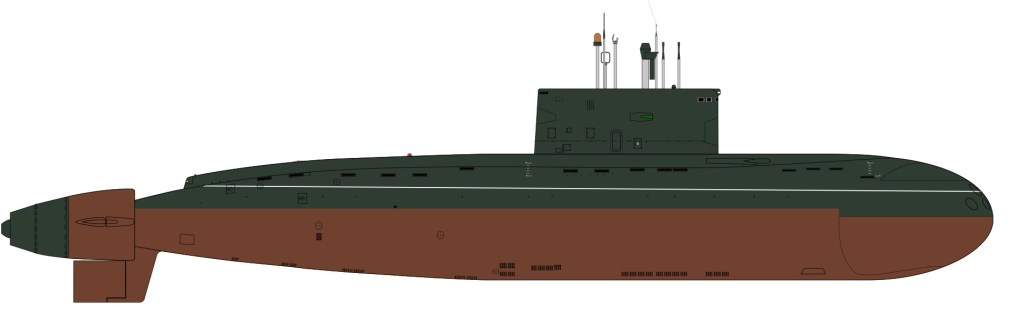
B-871, a Kilo class submarine, has an interesting history. This continues our series of unusual Soviet/Russian submarines. Following on from many classes of Soviet attack boats, the Kilo design (NATO designation for these) was a leap forward in capability, with the first boat commissioned in 1980. Kilos had a very different overall hull shape from earlier diesel-electric boats, such as the Tango and Foxtrot classes. With the same armament of six 533mm torpedo tubes and naval mines, they were smaller and harder to detect than Tangos, and were clad in the same sound-absorbing anechoic rubber tiles. More than forty original Project 877 Paltus (the Russian designation) boats were built at five shipyards. Several units were exported to India, China, Iran, Romania, Poland, and Myanmar. Thirty more boats of the “Improved Kilo” or Project 636 Varshavyanka class have also joined the fleets of Russia, Algeria, China, and Vietnam, with more updated boats still under construction.
The Iranian Navy’s second Russian-built Kilo class attack submarine en route delivery, 1993. NARA: USN Official 330-CFD-DN-SC-94-00800
B-871, built at Gorky shipyard, transited the Volga and Don River/canal systems to its new homeport of Sevastopol, the headquarters of the Black Sea Fleet (BSF), to be commissioned Dec. 1990. It has spent most of its career in Sevastopol, and has now served three navies: The Navy of the Soviet Union, the Ukrainian Navy, and the Russian Navy.
Upon the dissolution of the USSR, in late December 1991, the crew in Sevastopol voted to join the newly-independent Ukraine, in a process we described in our post on the Ukrainian Navy: The Only Easy Day was Never. This new attack boat would have been one of the most able of a small force of mostly abysmal submarines handed over to Ukraine. It would have been a good running mate to the other functional boat, the older foxtrot class submarine Zaporizhzhia.
Zaporizhya UA-01 Foxtrot class submarine, ca. 2012. Credit: Credit: Pavlo1 at Ukrainian Wikipedia, CC BY-SA 3.0, via Wikimedia Commons
The Russian official version of this is different, with a crew uprising reported as suppressed immediately and no acknowledgement of Ukrainian Naval service. The submarine was frequently non-operational during the mid-1990s, as the Ukrainian Navy did not have the inventory of parts or the spare batteries to safely operate the sub.
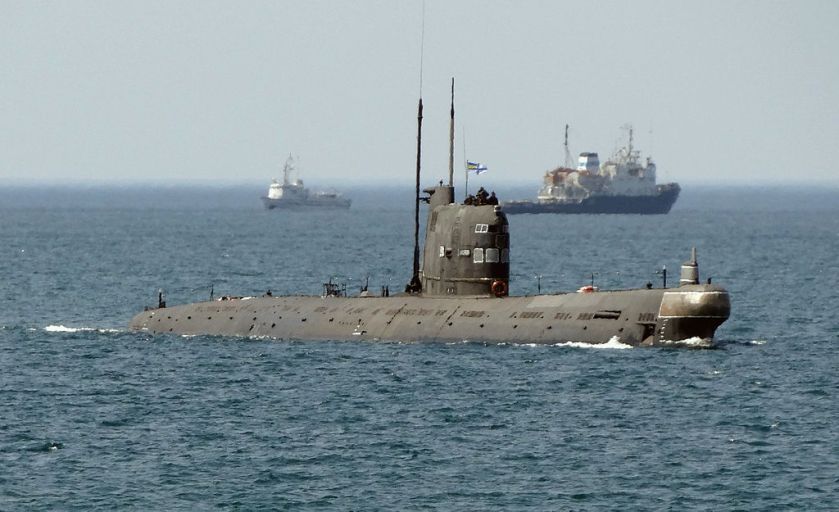
B-871 was back in Russian service by 1997. According to the contemporary edition of Jane’s Fighting Ships, it was extensively modified during 1998. It was fitted with an enormous pump-jet propulsor in place of the usual screw, and received the unique Russian designation of Project 877V. At the time, this was cutting-edge technology for a Russian military submarine. Western powers, such as Britain, had built pump-jet propelled submarines. Adapting the proven Kilo design was a sensible way to trial the technology. Sometime during the early millennium the sub was named “Alrosa,” reflecting its’ sponsorship by this group of diamond-mining corporations.
B-871 Alrosa showing the enormous pump-jet propulsor aft, which is the distinctive feature of this kilo class boat. Credit: Mike1979 Russia, CC BY-SA 3.0 https://creativecommons.org/licenses/by-sa/3.0, via Wikimedia Commons
By the 2010s, after years of uneventful service, Alrosa was supposed to have left Sevastopol to join the Baltic Fleet (though the boat should be close to retirement). The BSF was to upgrade to all improved Kilo type boats. This has not happened, and the current Russian War in Ukraine ensures the boat will not leave the Black Sea. Alrosa was in very lengthy refit which had just finished when Russia invaded Ukraine. The refit also has reportedly involved an enormous upgrade to the lethality of the submarine – launch tubes to be able to operate Kalibr cruise missiles.
A brief visual survey of Russian Black Sea Fleet warship losses – reality vs. false reporting
Adapted from official Ukraine 2022 postage stamp, designed by Boris Groh. via wikimedia commons.
The war losses the Russian Black Sea Fleet (BSF) has suffered during the current Invasion of Ukraine are historically significant. At the time of writing, they are the most severe losses sustained by a major naval service since 1945.1 In the Black Sea’s confined area of operations, the loss of a few major units is significant. Since the Bosporus and Dardanelles Straits are closed to warships from warring navies, Russia can’t reinforce the BSF with the numerous units now present in the Mediterranean or elsewhere.2 The rest of its navy- the third largest by most measurements-is effectively sidelined.3
For information about the Ukrainian Navy units lost during both the 2014 Russian Annexation of Crimea and now the 2022 Russian Invasion, please see our recent post “The Ukrainian Navy’s Fighting Ships – The only easy day was Never.” We also have more detailed ship listings for Ukraine and Russia. All satellite imagery below shows actual units of the BSF, home-ported at the main naval ports of Sevastopol or Novorossiysk. This post was updated as of March 2024. We removed a section of this post which featured units erroneously reported as destroyed, as these became increasingly irrelevant to track based on the confirmed totals of damaged and destroyed Russian warships.
The 2022-2024 BSF casualties: 11-12 vessels, ca. 34,170 tons destroyed; 2-3 vessels, 8,800 tons damaged:
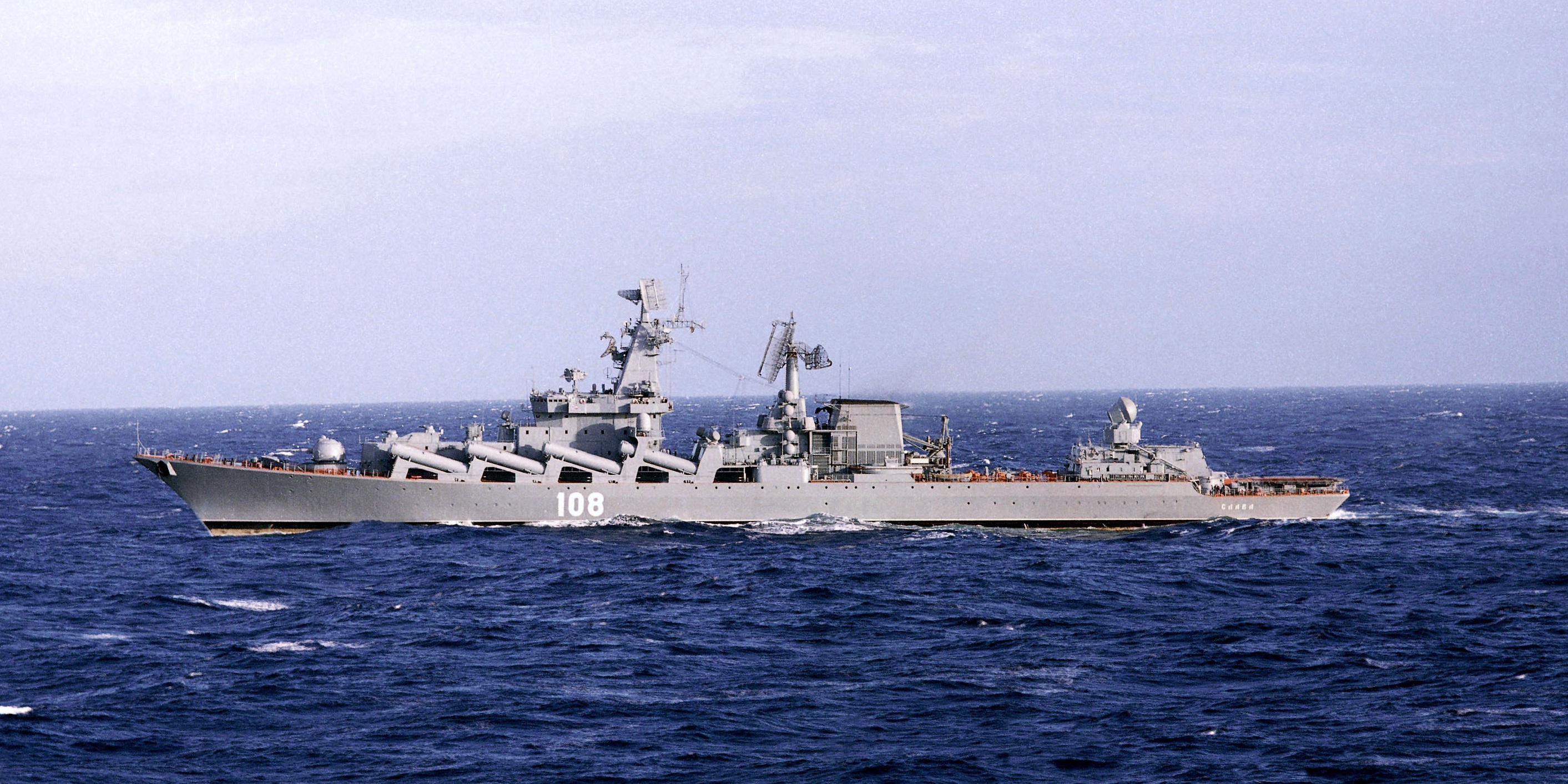
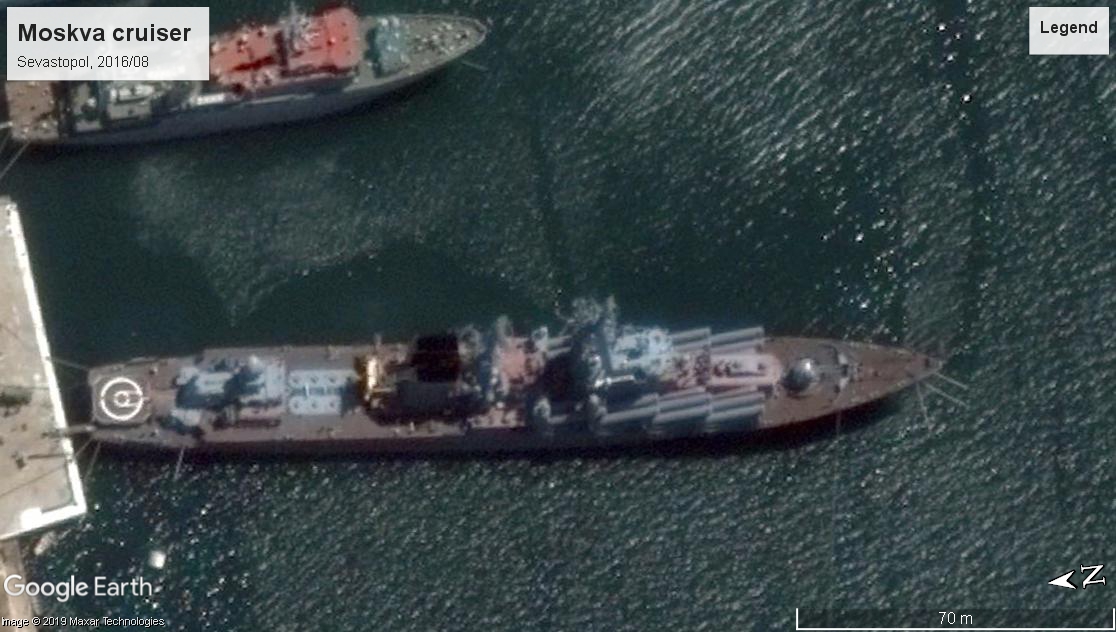
Moskva, Slava class/project 1164 Atlant missile cruiser (1983-14 April 2022). LOA 612’/186.5m TDISP 11,500 tons. Formerly the Soviet Navy’s Slava, built at Mykolaiv. Slava and the other units of the class were updates to a series of missile cruisers armed with so-called “carrier killing” anti-ship missiles. They were intended as an economical alternative to the massive nuclear-powered Kirov class. Slava, renamed Moskva after the Soviet collapse, served as the longtime flagship of the Black Sea Fleet. It was engaged in blockading the Southern Naval Base of the Ukrainian Navy at Lake Donuzlav, during the 2014 Annexation of Crimea. At the beginning of the Russian Invasion of 2022, it conspicuously participated in the attack/seizure of Snake Island on 24 February 2022. Extensively damaged by two Ukrainian Neptune Anti-ship missiles 13 April 2022, it sank the next day while efforts were underway to tow it back to Sevastopol. This is the first flagship of a major fleet lost since the Second World War, and the largest warship lost in combat since at least the Admiral Belgrano (Argentinian Navy), a veteran former USN cruiser which was sunk during the 1982 Falklands War. During late April, the Kommuna, the elderly salvage vessel, was sent to the wreck to recover equipment or human remains.
Soviet guided missile cruiser Slava underway in the Mediterranean Sea. [detail of], 1986. Credit NARA, USN official 330-CFD-DN-SC-86-03642 (PH1 Paul D. Goodrich)
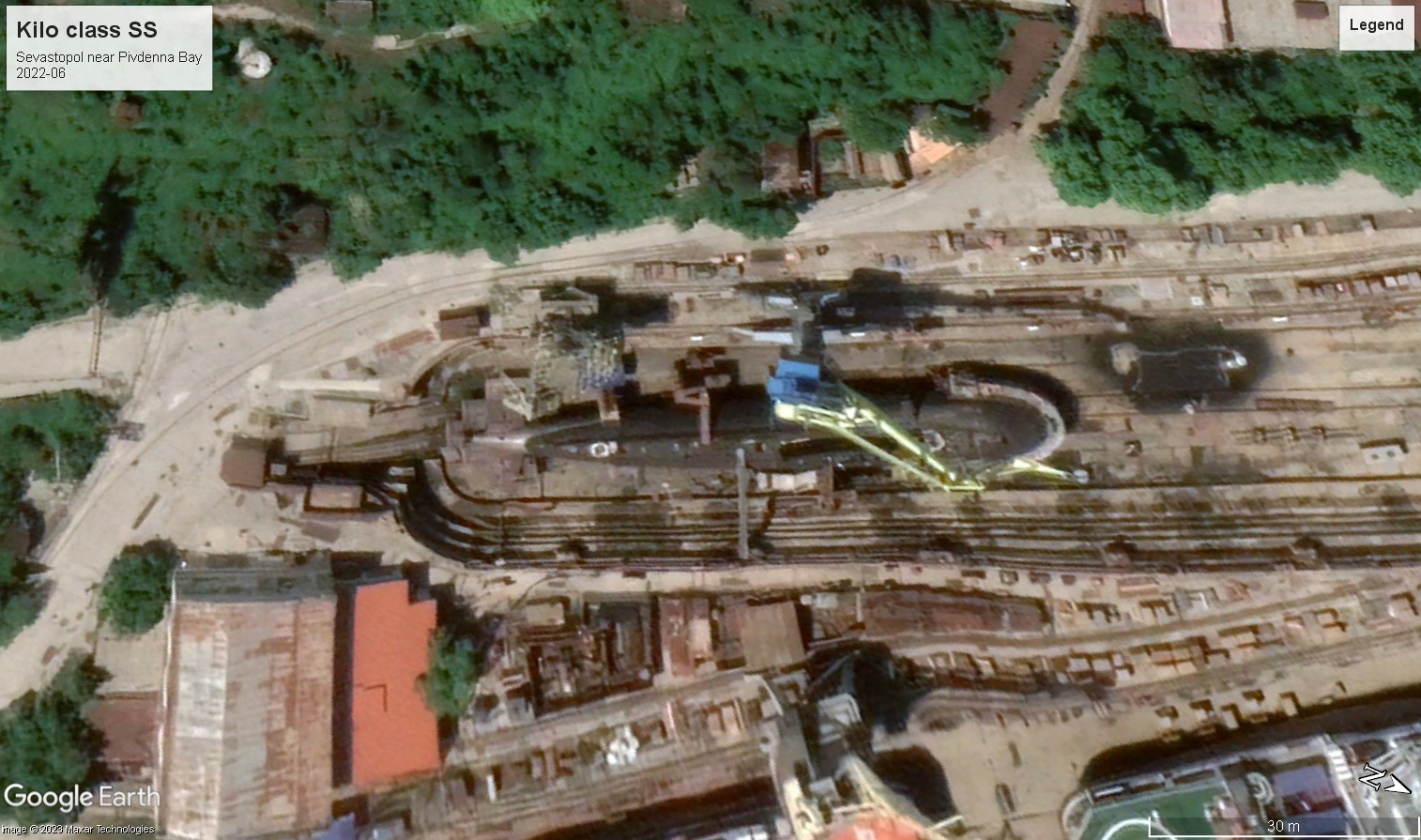
Rostov na Donu / Rostov-on-Don B-237 Kilo Class (2014) diesel-electric submarine LOA 230-242′ / 70.1-73.8 m TDISP 3,900 tons. Destroyed or severely damaged 13 Sept. 2023 during a Ukrainian drone attack on Russian units in drydock in Sevastopol.
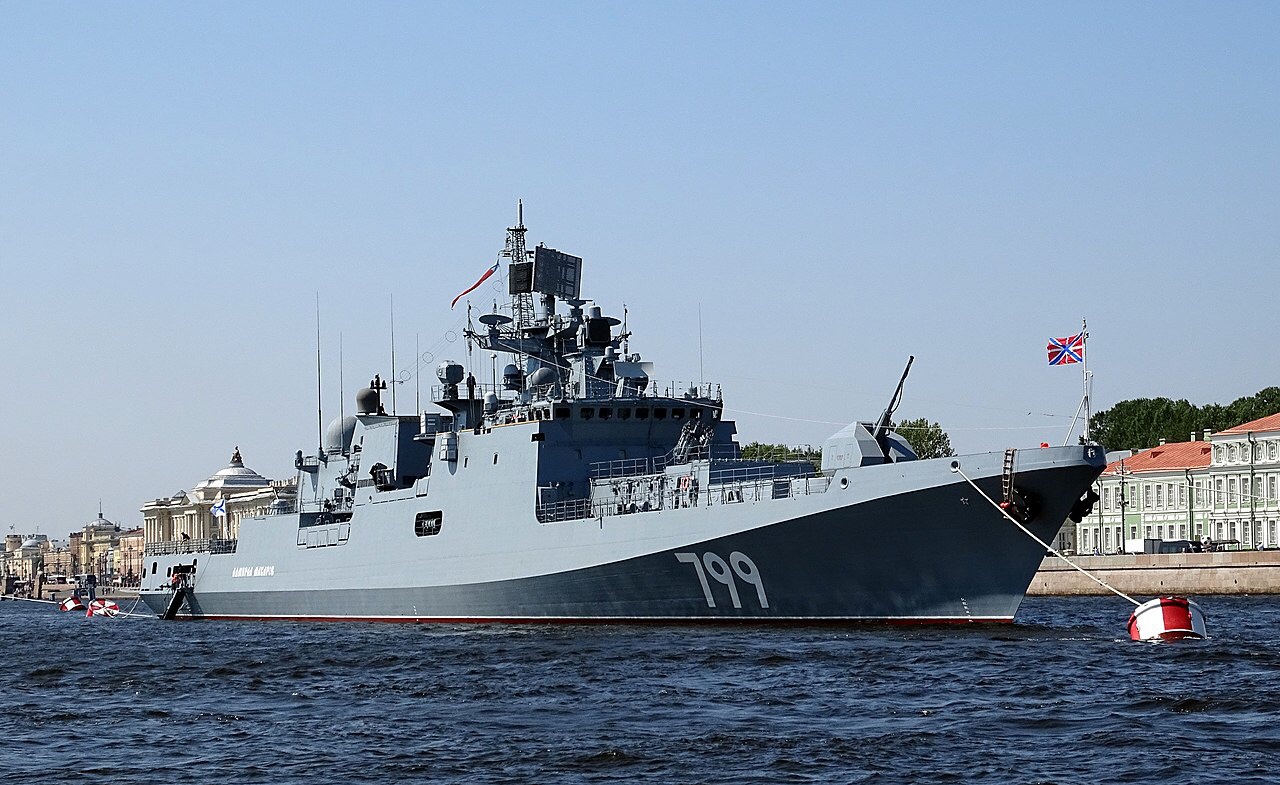
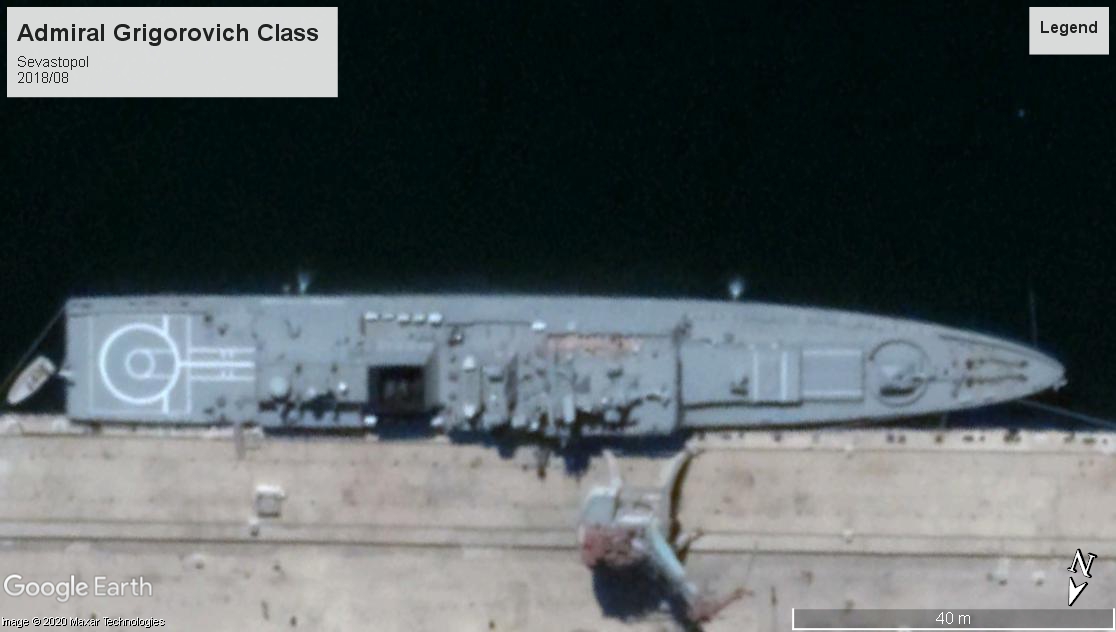
Admiral Makarov, Admiral Grigorovich class Frigate (2017). LOA 409’/124.7m TDISP 4,000 tons. Reportedly this frigate, the BSF flagship after the destruction of Moskva, was damaged during the 29 October 2022 attack by USVs and UAVs (surface and air drones). Earlier reports of damage sustained on 6 May 2022 appear to have not been accurate.
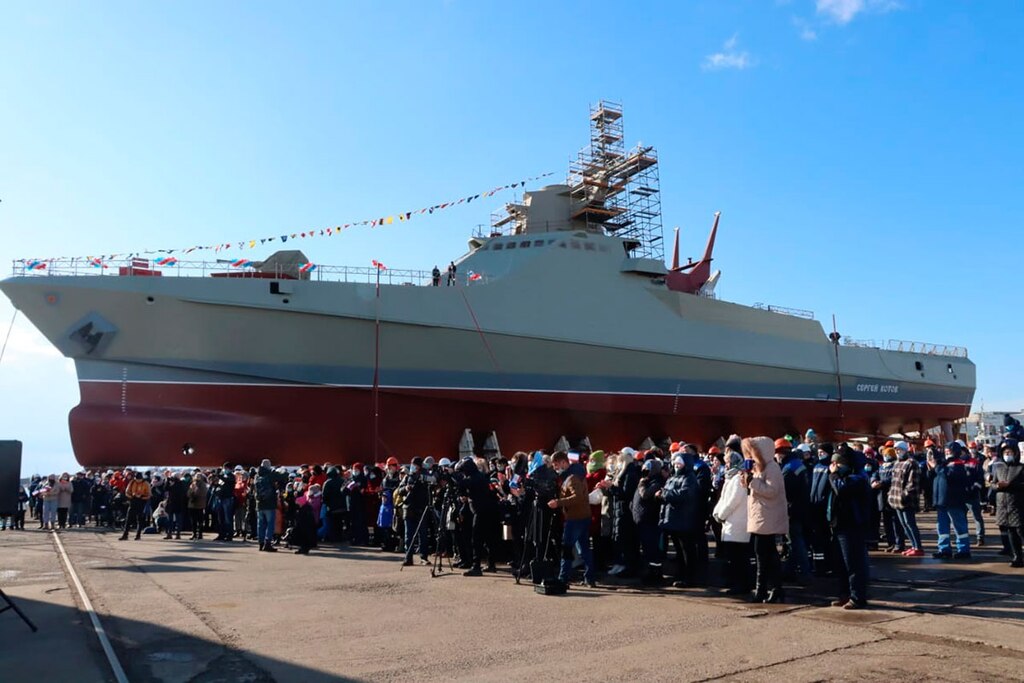
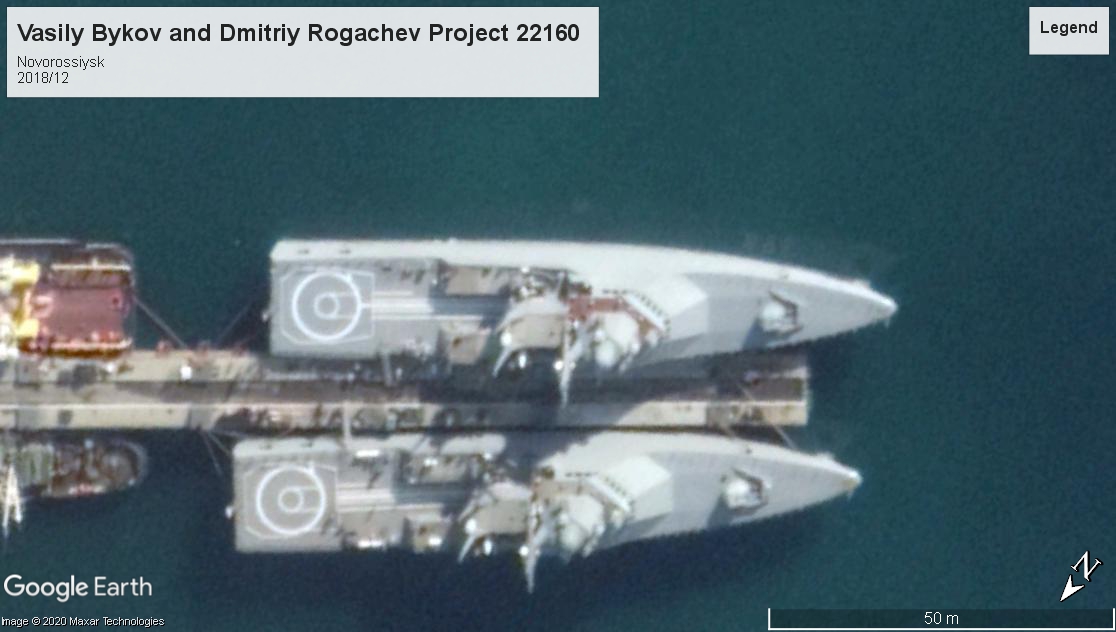
Sergei Kotov / Project 22160 Large Patrol Boat (2021). LOA 308’/93.9m TDISP 1,500 tons. New member of BSF fleer. Reported as destroyed 5 March 2024 near Kerch Strait by multiple Ukrainian USV strikes.
Sergei Kotov being Launched, 2021-01. Credit: Mil.ru, CC BY 4.0 , via Wikimedia Commons
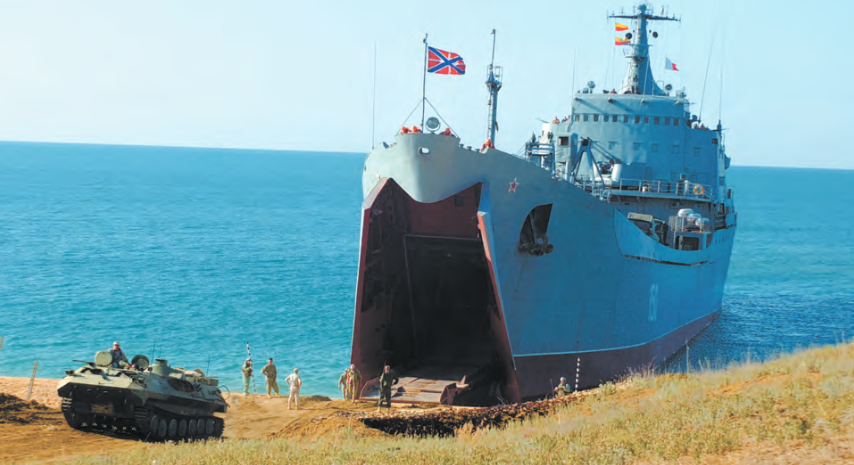
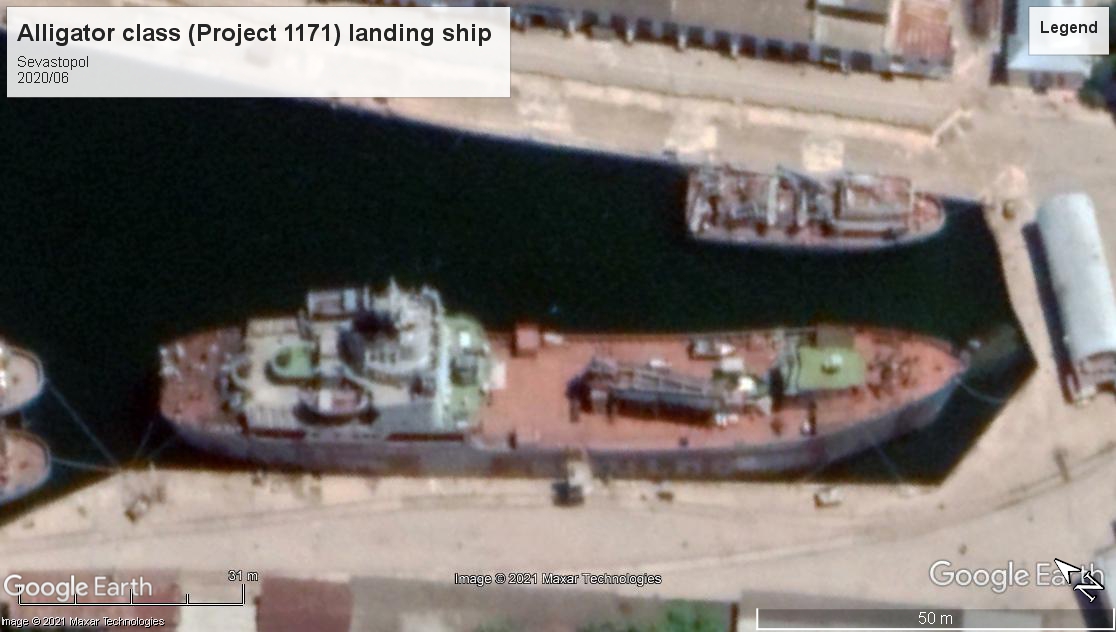
Saratov BDK-65 pennant 150 Alligator class/ Project 1171 Tapir Landing Ship (1966-24 March 2022). LOA 370’/112.8m TDISP 4,600 tons. Sunk at the port of Berdiansk, when hit by a tactical ballistic missile. Later it appeared to have been raised and salvaged, transported to Kerch. Two Ropucha II class landing ships escaped the harbour with some damage.
Saratov landing an infantry fighting vehicle on exercises, Oct. 2021. Credit: Mil.ru, CC BY 4.0 , via Wikimedia Commons
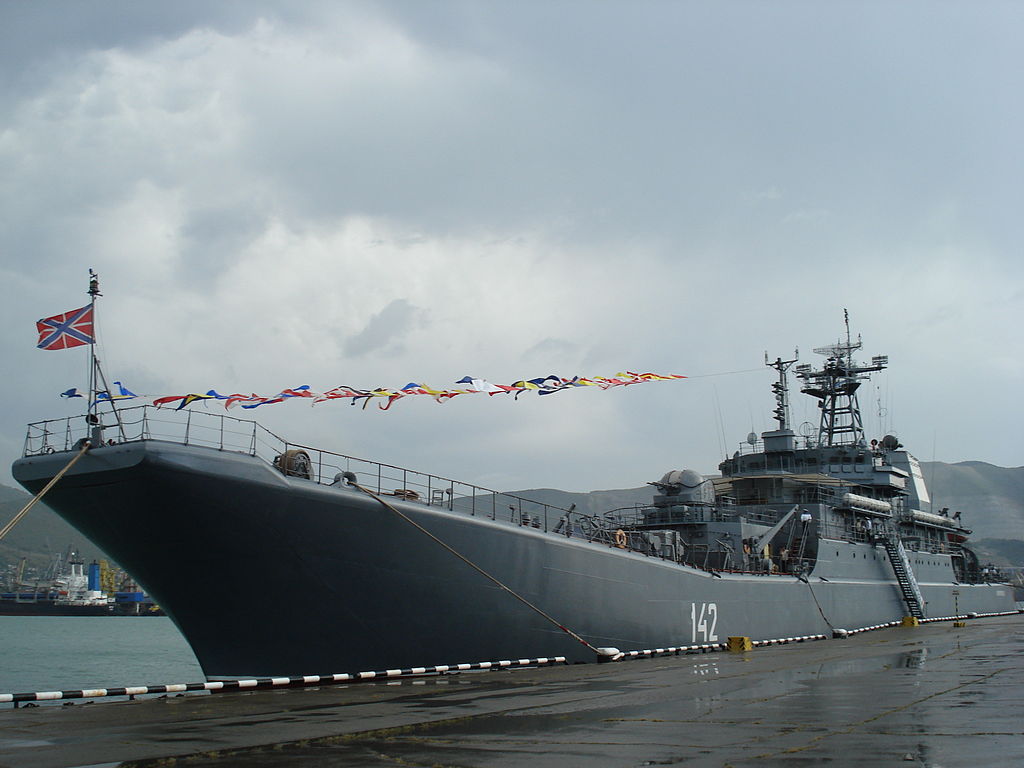
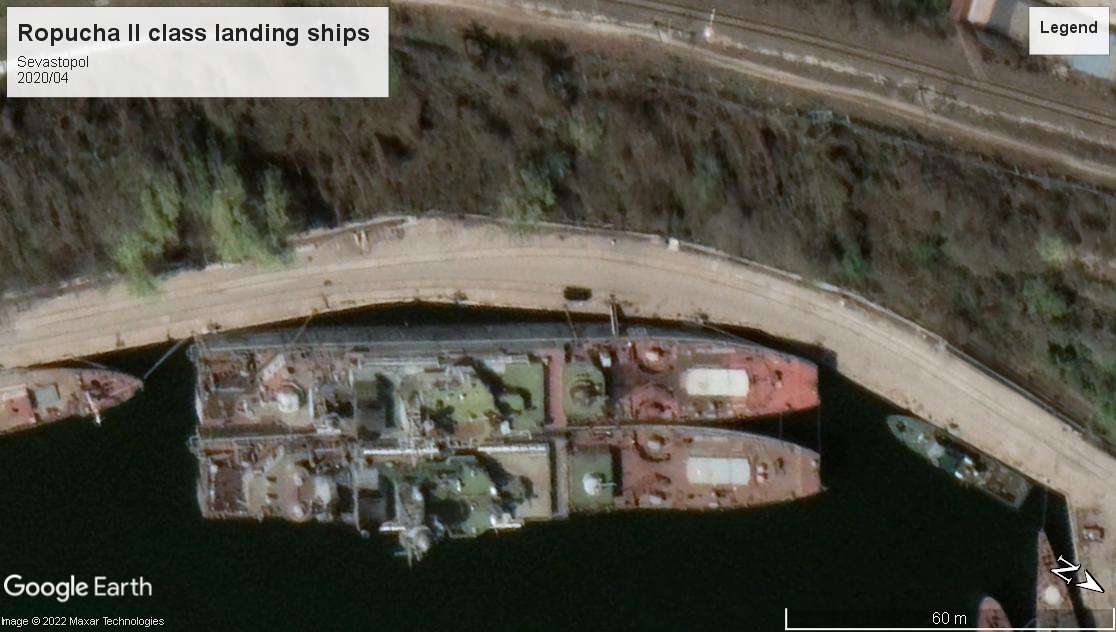
Ropucha II / Project 775M class landing ships LOA 369’/112.5m TDISP 4,000 tons. (4 destroyed or severely damaged)
NovocherkasskAug. 2010. Credit: Александр Вепрёв, CC BY-SA 3.0 , via Wikimedia Commons
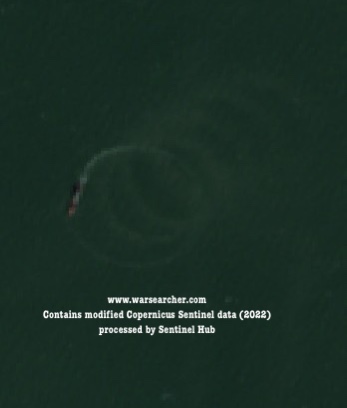
Caesar Kunikov (1986) destroyed 13 February 2024 by multiple USV attacks off the Crimean coast at Alupka. It was already been damaged 24 March 2022 at Berdyansk when Saratov landing ship was destroyed. This ship’s captain was killed and the foredeck was observed to be on fire. When the Ropuchas fled the burning port facilities, one ship circled, seemingly out of control and “Bismarking” South of the port.
24 March 2022 sentinel image of a Ropucha class circling out of control SW of Berdyansk.
Novocherkassk (1987) reported heavily damaged or destroyed 26 December 2023 at Feodosiia by cruise missiles launched by Ukrainian air force jets. It may have already been damaged 24 March 2022 at Berdyansk when Saratov landing ship was destroyed. When the Ropuchas fled the burning port facilities, one ship circled, seemingly out of control and “Bismarcking” South of the port.
The inboard ship appears to be Caesar Kunikov, based on the visible portions of the pennant number.
Minsk (1983) destroyed or severely damaged in drydock in Sevastopol 13 Sept. 2023, during a Ukrainian drone attack on Russian units in drydock.
Olenegorsky Gornyak (1976) severely damaged August 4th 2023 by a Ukrainian USV near Novorrosiysk.
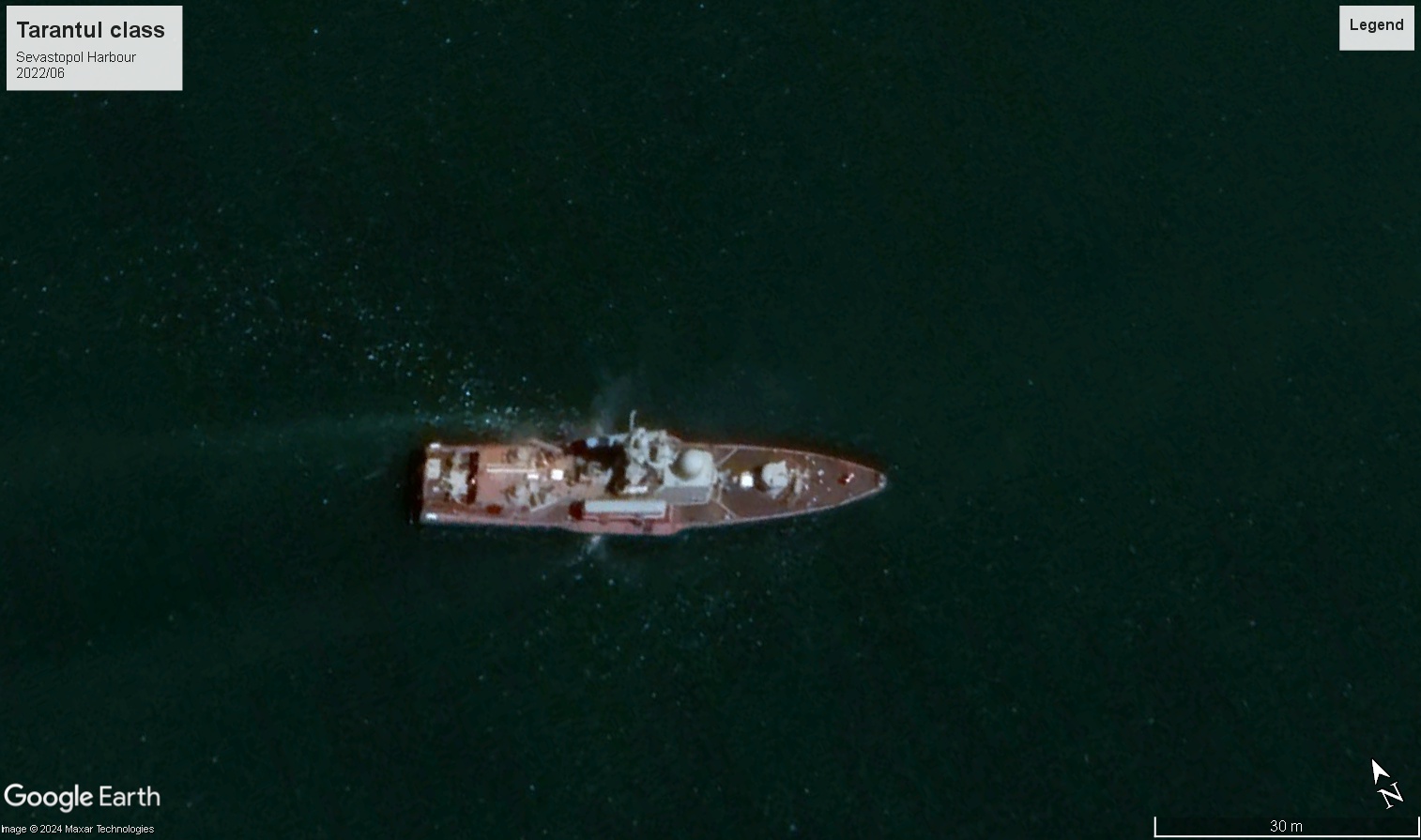
Ivanovets (1989) Tarantul III class missile corvette. LOA 184’/ 56.1 m TDISP 540 tons. Reportedly destroyed on Lake Donuzlav by Ukrainian uncrewed surface drones, 31 January 2024.
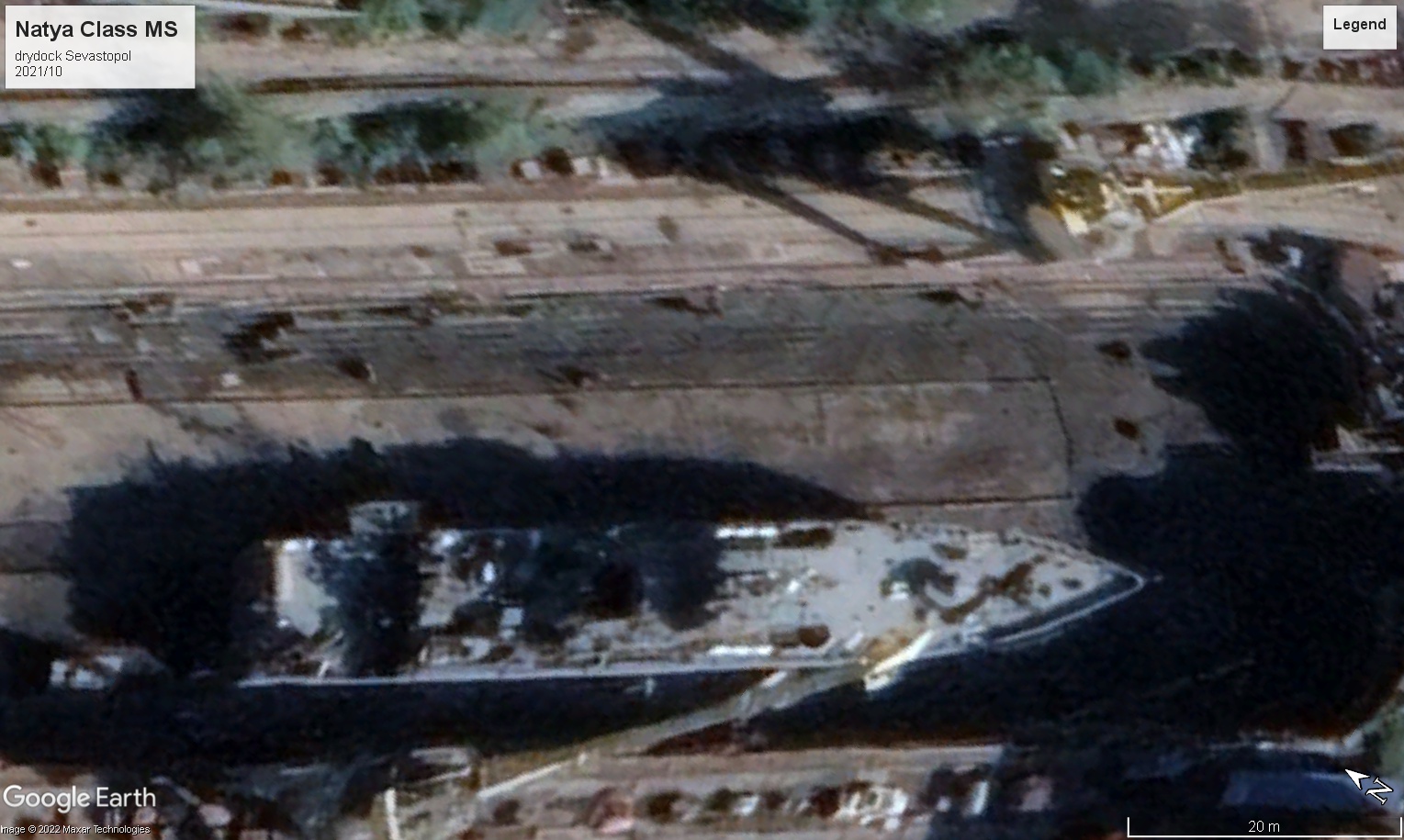
Ivan Golubets (1973) Natya class / Project 266M minesweeper . LOA 200’/61m TDISP 870 tons. Damaged during unmanned surface drone attack on Sevastopol port, 29 Oct. 2022.
Serna class/Project 11770 landing craft (6 May 2022). LOA 85’/25.7m TDISP 61 tons. Destroyed by a Bayraktar TB-2 drone while offloading supplies at Snake Island.
Serna class Landing Craft at Astrakhan, Caspian Sea Flotilla, 2015. Credit: Mil.ru, CC BY 4.0 , via Wikimedia Commons
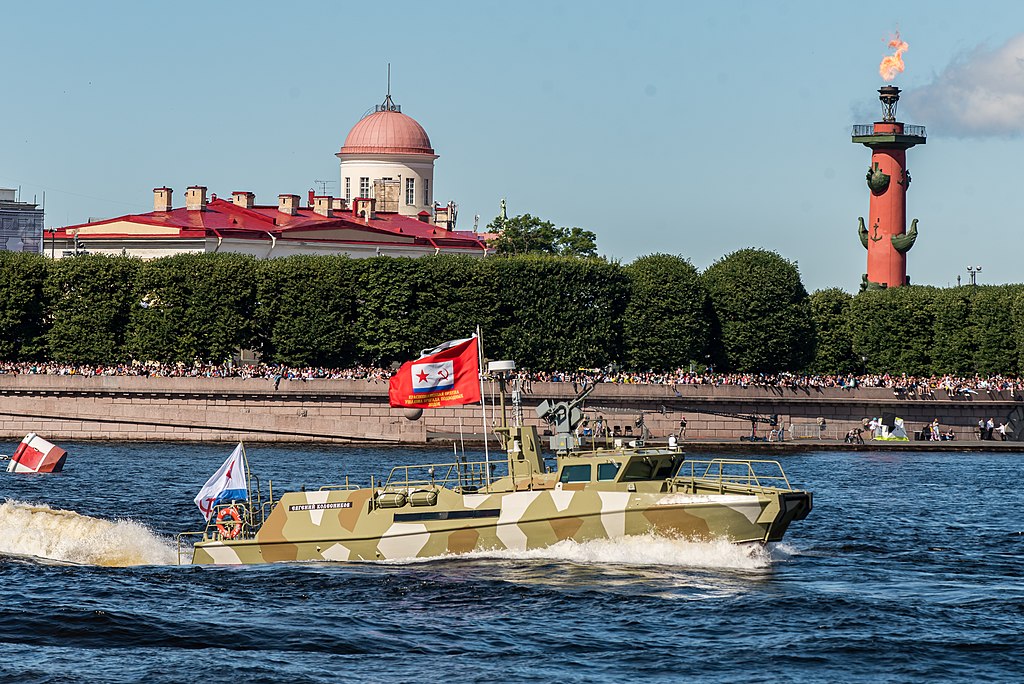
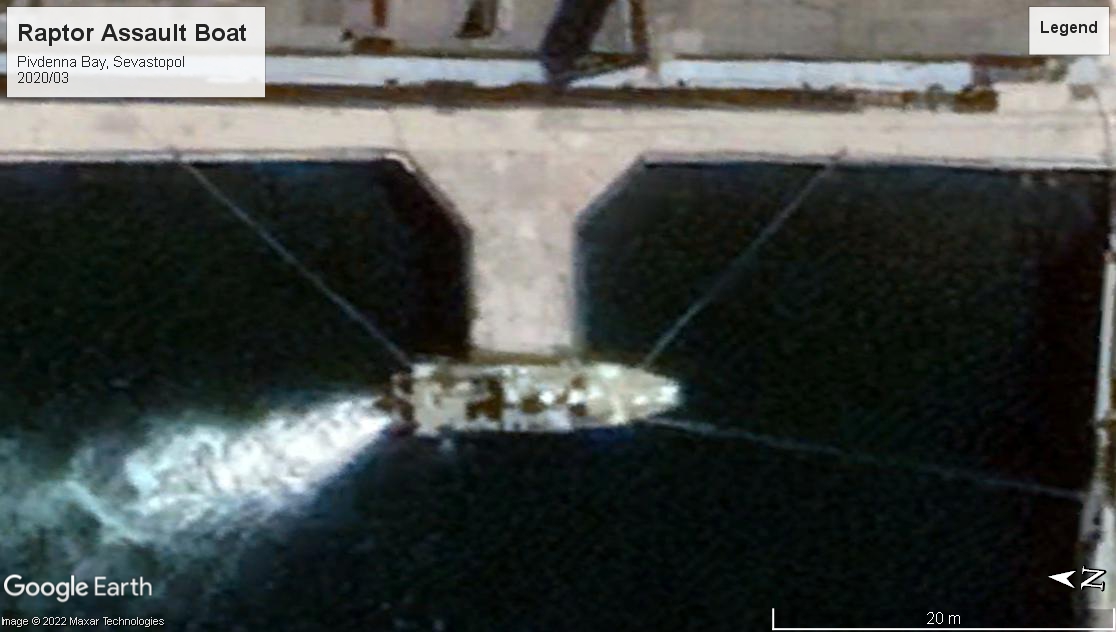
Raptor class / Project 03160 Assault Boat (2 or 3 lost 21 March 2022 AND 2 May 2022). LOA 55’/16.9m TDISP 23 tons. Entered service around 2015. One unit destroyed or damaged by a soldier with a rocket launcher at Mariupol on 21 March, two units destroyed 2 May at Snake Island by a Bayraktar TB-2 drone.
Raptor Assault Boat, ca. Credit: Okras, CC BY-SA 4.0 , via Wikimedia Commons
During the Falklands War, the next most significant naval actions of the postwar era, the Royal Navy lost two destroyers, two frigates, a landing ship, and a landing craft, which total to around 22,100 tons, not counting the SS Atlantic Conveyor, which was a large merchant ship engaged in military activities. ↩︎
The terms of the 1936 Montreux Convention that limits access to the Black Sea are more complicated than this, however, the result is that Russia cannot reinforce its Black Sea Fleet. ↩︎
Reports indicate some of the Caspian Sea Flotilla ships have been involved in a limited way, firing Kalibr missiles at Ukrainian targets. ↩︎





 The Searchers