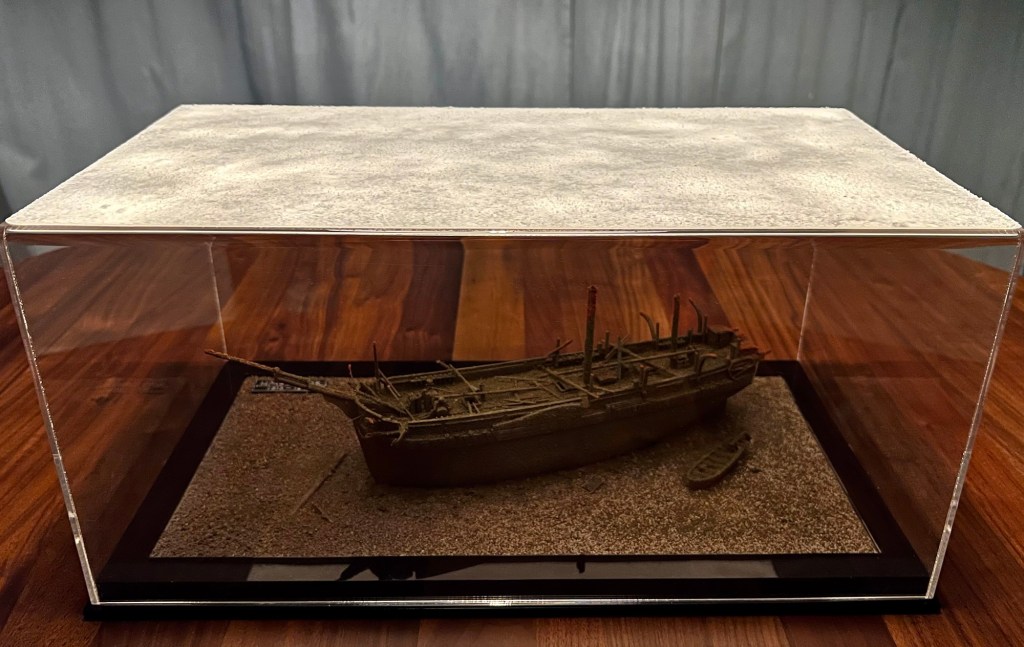
A basic principle of model shipwreck archaeology is that – in contrast to their full-size brethren – model shipwrecks do not necessarily deteriorate. In this post we explore updates to our miniature interpretation of HMS Terror’s wreck. The Terror mini-site has witnessed substantial improvement since 2022!
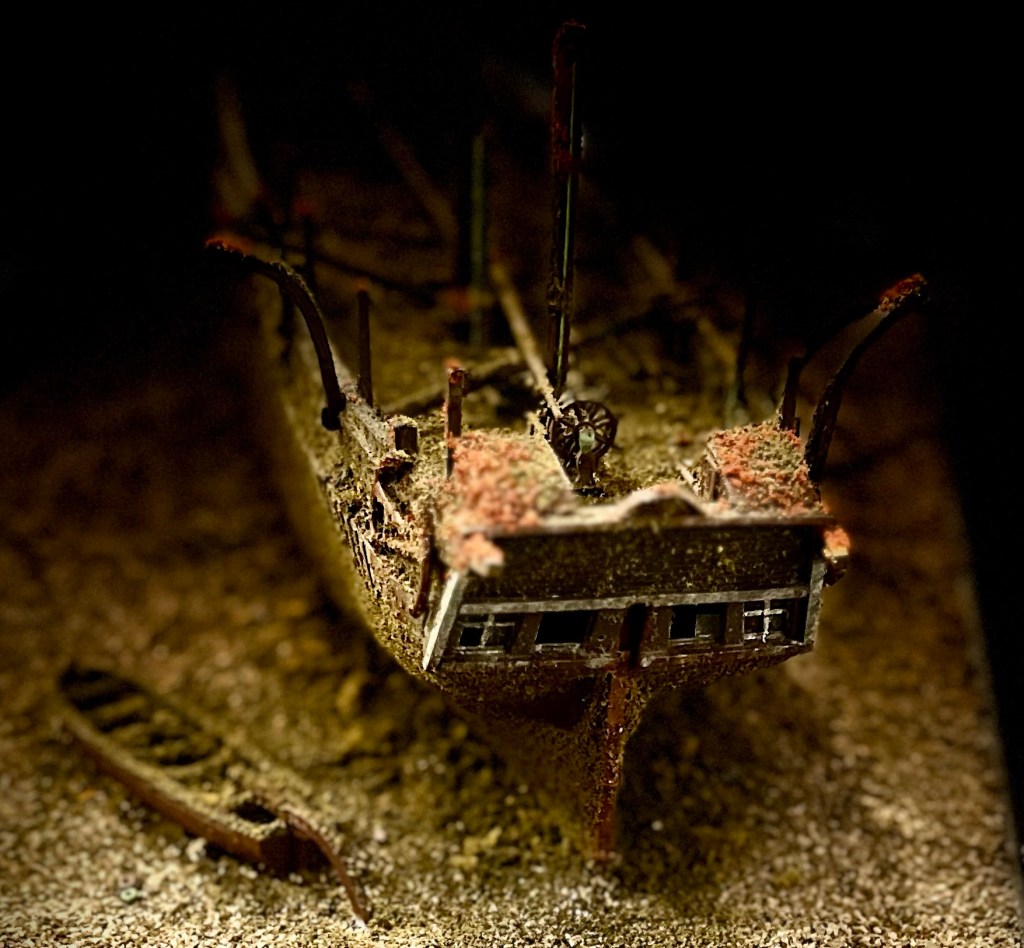
An earlier post “Wrecking the Terror: Recreating an Epic Tale of Old Loss and New Discovery” summarized what we know about the actual wreck of HMS Terror located in Terror Bay, Nunavut, and my 2022 project to build a small diorama of the wreck site. Terror, an astonishingly well-preserved time capsule of the last Franklin Expedition, continues to captivate Franklin scholars and enthusiasts, archaeologists, naval historians, ship lovers, and the expanding fandom community who continue to enjoy the fictionalized drama of AMC’s “The Terror”(season 1).
Turning now to the reduced-scale World, Terror was my first wreck diorama, and was followed by Breadalbane High Arctic shipwreck and HMS Ontario.
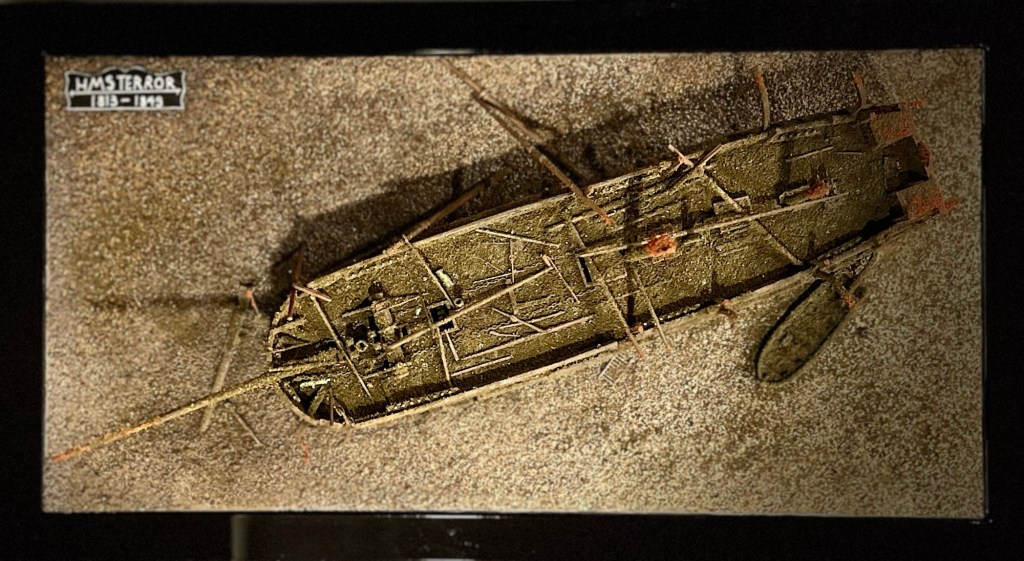
Two years after I thought the diorama was complete, I decided it was time to open the case up and revise some features. A sketch I had worked up independent of this project also helped motivate me to rebuild the Terror.
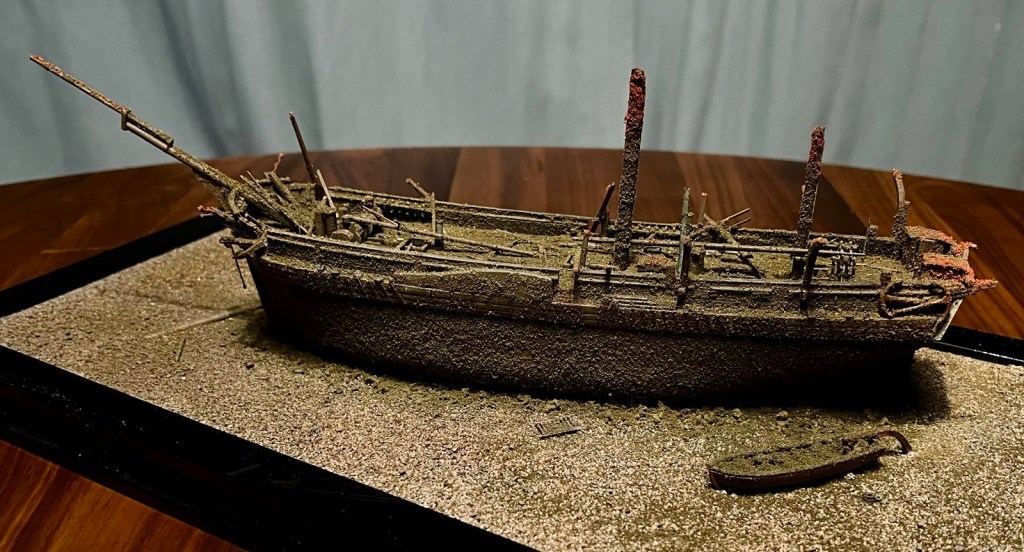
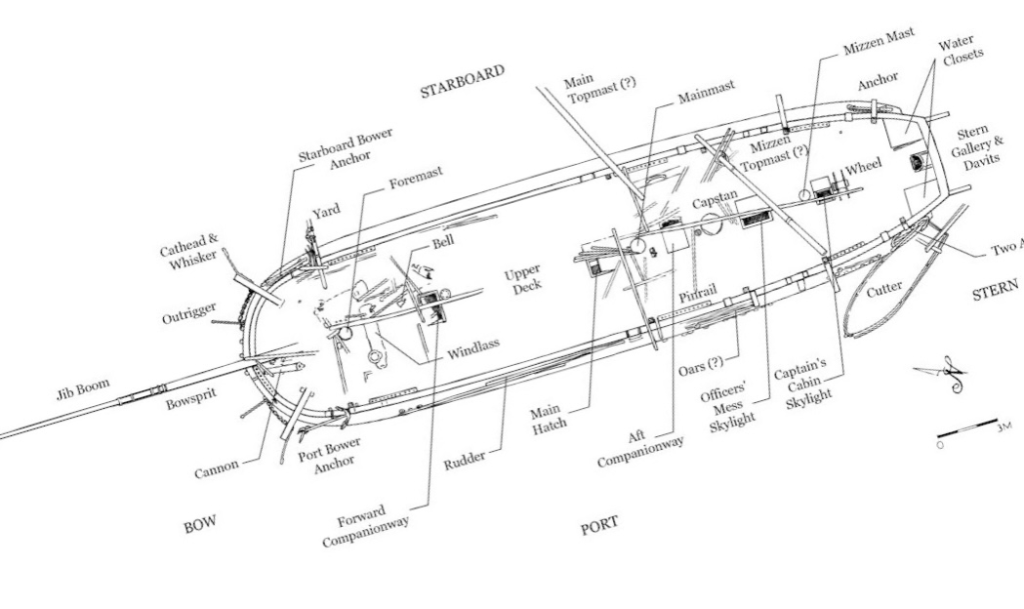
So what changes has the miniature site undergone? The entire lower hull was reshaped to better highlight the turn of Terror’s bilge, the overall body lines, and the broader aft quarters. The wreck was also placed at a more pronounced list to starboard. I added more detail to the debris of fallen masts and yards now located on the upper deck, which better interprets the complexity of the three-masted barque-rig and the chaotic event of the sinking. This “top-hamper” – and what appears to be the ridge poles of winter awnings – would have showered the deck and areas immediately adjacent to the hull with the types of debris we see in the site plan released by Parks Canada, and imagery released by their Underwater Archaeology Team.
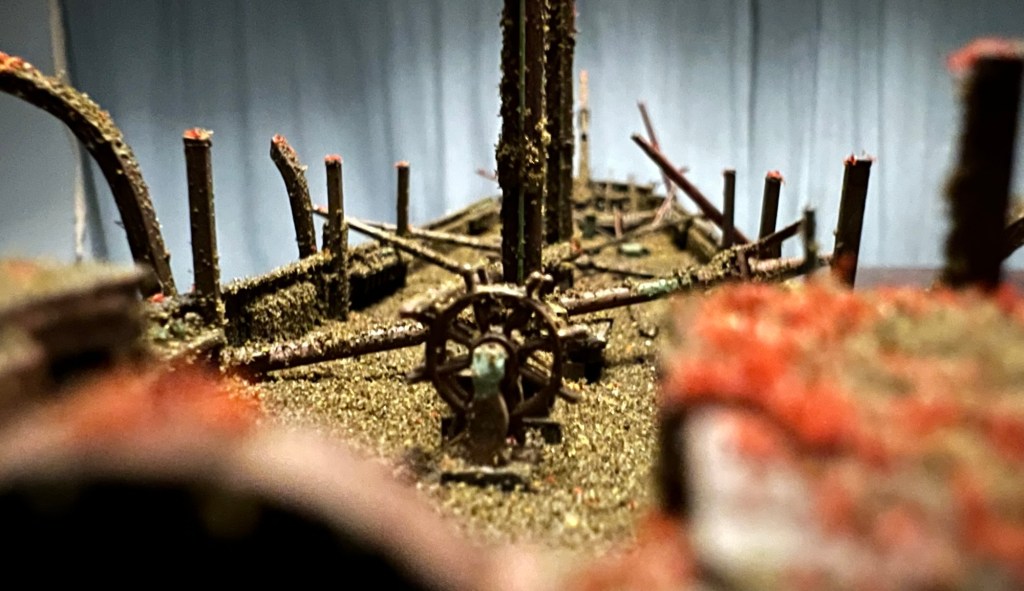
Under all the accumulated silt and growth, there is likely to be a bewildering variety of artifacts, which my interpretation can only begin to hint at. The ship’s boat off the port quarter of the wreck was given a modest update: A more accurate fallen davit resting across the stern.
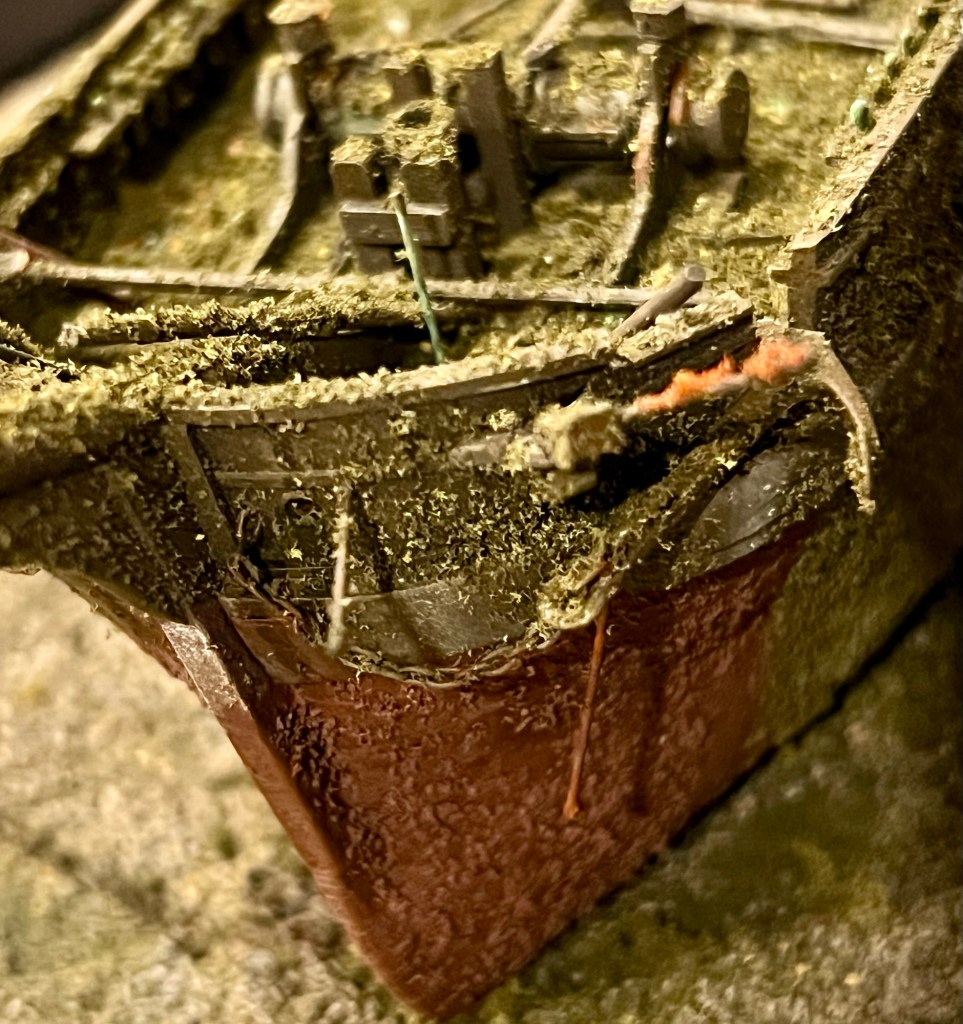
The water-closet structures at the stern were completely rebuilt with lower roofs and sliding doors opening to the sides. They still have detailed “privy” interiors. A small cavity at the aft end of the starboard closet shows where the flag locker was located.
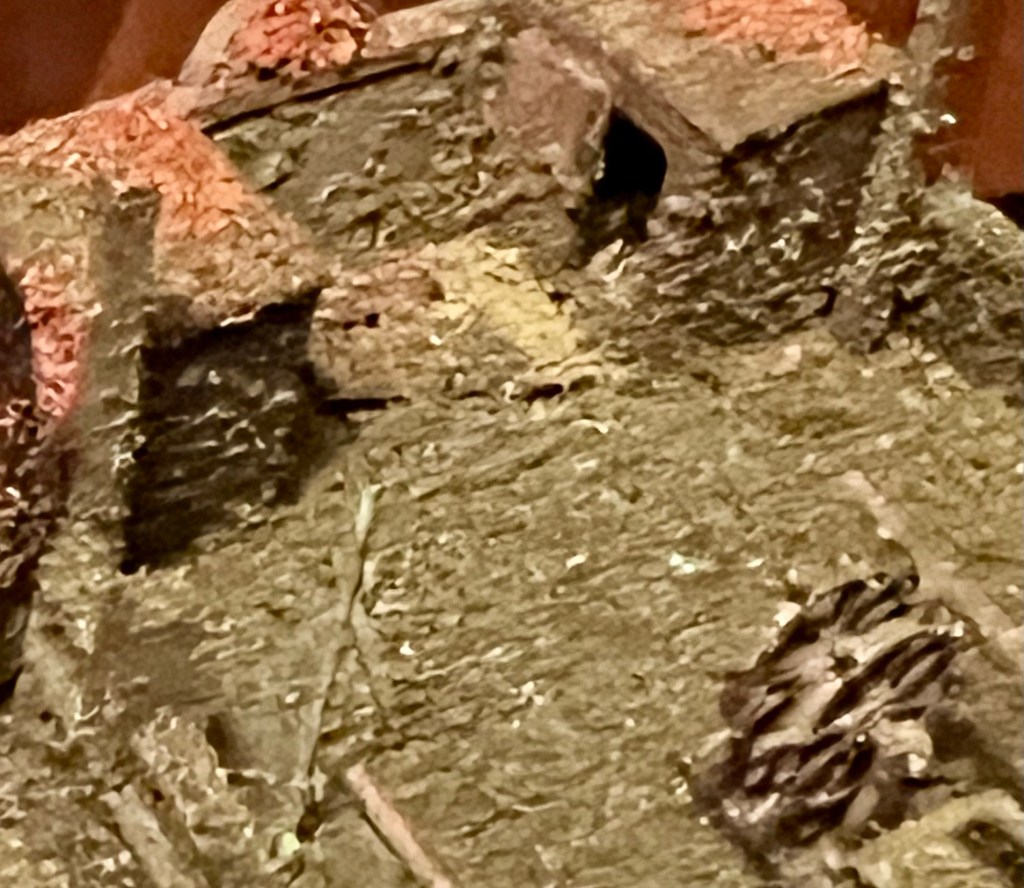
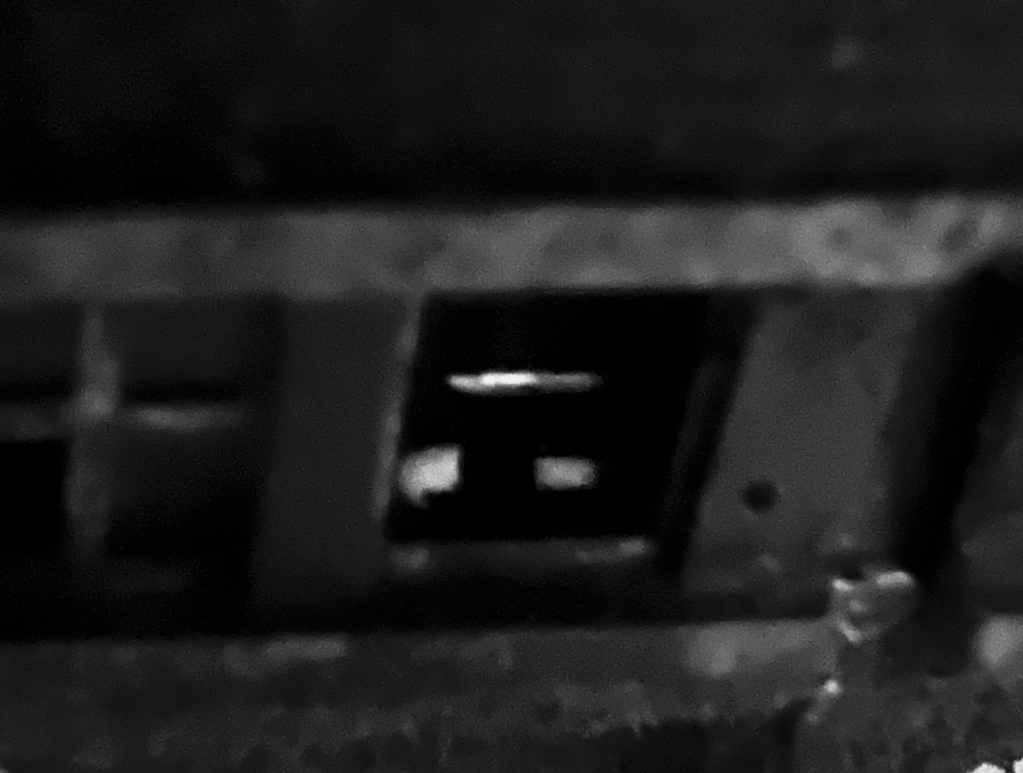
The interior of the wreck diorama remains practically inaccessible, and no substantial work was done belowdecks during our “great repair.” I do hope that, in a future season of modelling work, a more fulsome recording of the detailed interior spaces of the model could be attempted. For now, we had a quick examination of Capt. Crozier’s miniature great cabin through the stern windows; his captain’s desk remains in place, but the drawers are still modelled tightly shut. No miniature records have yet been recovered.
Those with keen eyes will note that the team of scuba-diving archaeologists have not been reinstalled in their customary positions. The site is currently under ice and snow, and they will not return to their program of scale archaeology until the next dive season commences in August, 2025. Could I contemplate a scenario where new information would compel me to get back to work revising the Terror diorama? You bet your sextant I could!
 The Searchers