The Ontario Wreck Diorama – Yours to Discover!

There is an incredible ship, frozen in time down in the depths of Lake Ontario. HMS Ontario was a wooden warship that sank in a storm October 31st, 1780. This tragedy claimed the lives of as many as 129 sailors, soldiers, Indigenous warriors, American prisoners, women and children. All these decades later she is still down there, astonishingly intact. This ghostly Revolutionary War relic appears almost as if she is sailing west across the lakebed. After months of work, we have completed a model diorama to help interpret the history of this archaeological marvel.1
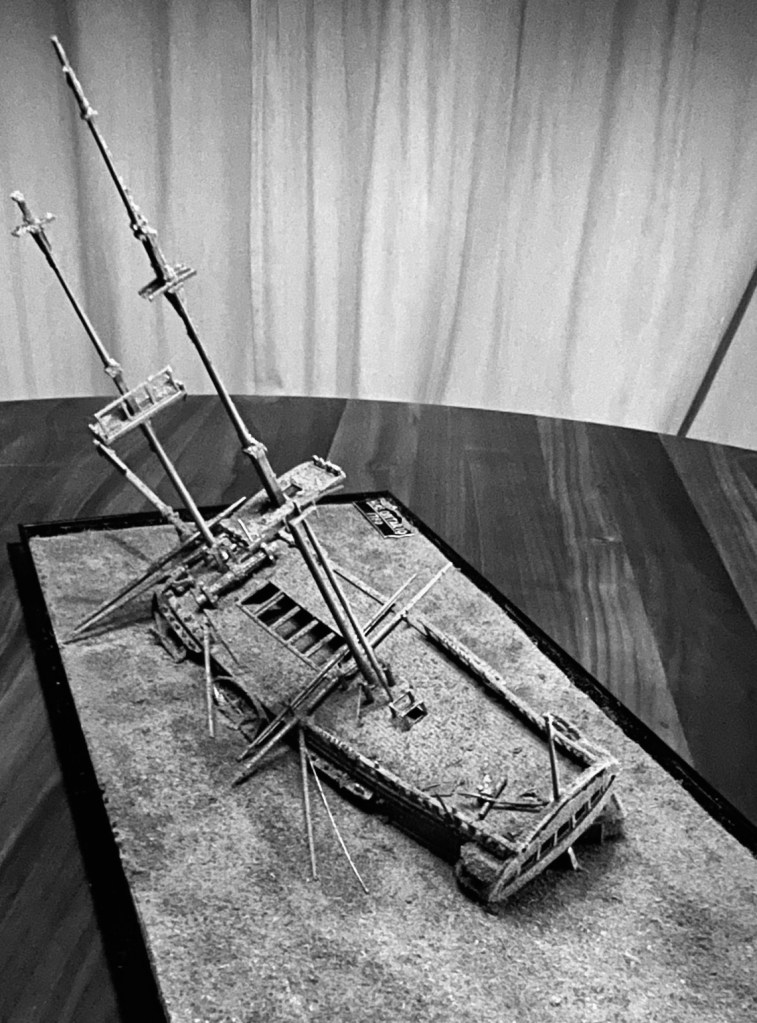
The wreck diorama Credit: http://www.warshearcher.com

Early in 1779, with the American Revolutionary War raging along the Lower Great Lakes watershed, Master Shipwright Jonathan Coleman designed a British warship for service on Lake Ontario. He drafted out a scaled-down version of his Royal George, already active on Lake Champlain.

British vessels active on nearby Lake Champlain early in the Revolutionary War. These types are similar to those on Lake Ontario. The ship-rigged Inflexible (near left) was a similar size to Ontario, but had been taken apart at Quebec City and rebuilt. Lake Champlain was a more contested body of water, and many of these ships would fight an American flotilla at the Battle of Valcour Island, in 1776. Charles Randle Credit: Library and Archives Canada, Acc. No. 1996-82-1

This new vessel, to be named Ontario, had a pleasing sheer, a full underbody, and elegant decoration at the stern.2 The bows were adorned with a simple scroll. This impressive inland warship was built at Carleton Island (the dockyard facilities of the British on Lake Ontario near present-day Kingston). She was launched 10 May 1780, and when completed that summer, her twenty-two cannon made her the most powerful warship operating on the Lake.

The original plans for Ontario, ca. 1780,signed by Jonathan Coleman ZAZ4725 Credit:
© Crown copyright. National Maritime Museum, Greenwich, London

The gundeck was 80’/24.4m long, the ship displaced about 220 tons and the two masts were set up as a snow (similar to a brig-rig but with a small pole mast running from deck up to the level of the maintop, which normally carried a loose-footed gaff sail). She was a beamy 25’/7.6m wide, and had a capacious hold, appropriate to her main role of military transport. Her armament consisted of sixteen six-pounder cannon, mostly disposed on the gundeck, and lighter pieces on the quarterdeck and focs’l. Her hull was somewhat shallower than an ocean-going vessel of this length.
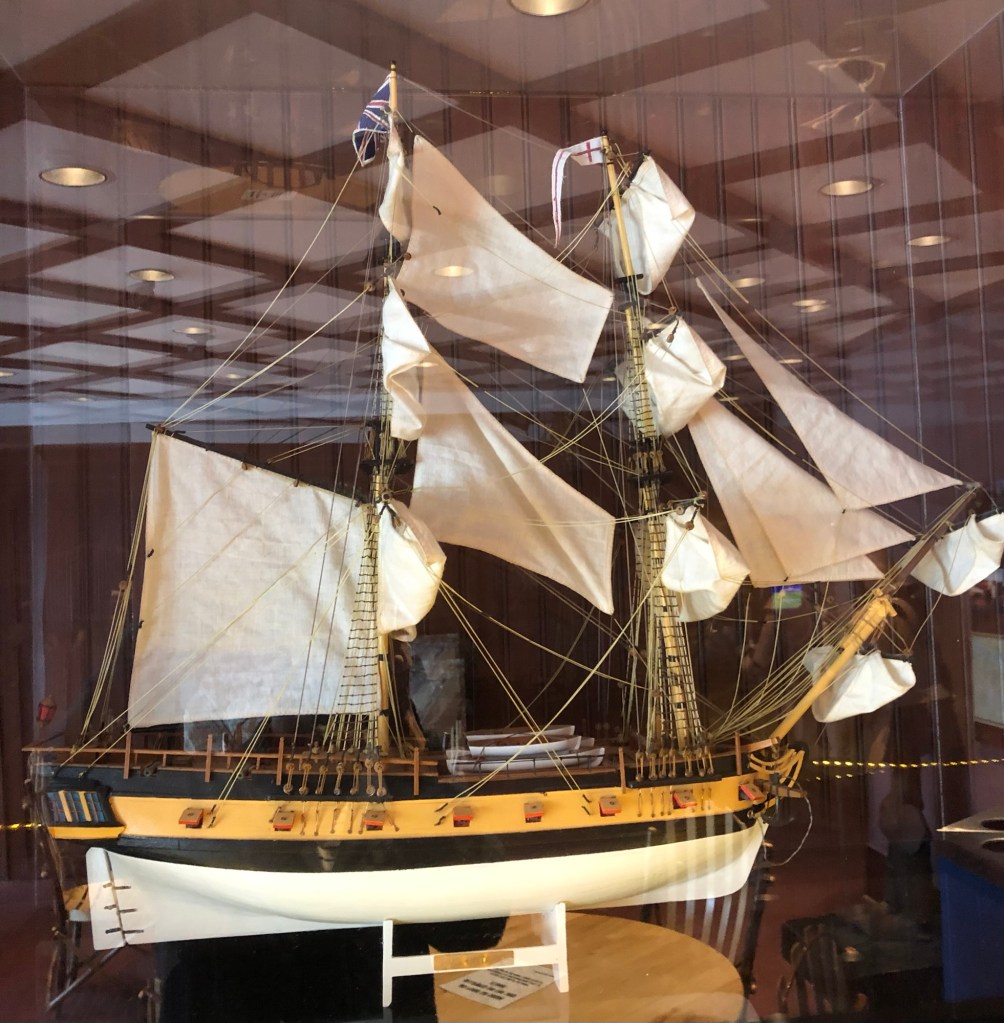
A model of Ontario on display at the Aquatarium, Brockville ON (modeller unknown). From details, the model appears to have been completed before the discovery. The bowsprit has been forced up in the case. Credit:www.warsearcher.com

The careers of warships on the Great Lakes during the 18th and early 19th centuries were generally brief, as hulls were often hastily-constructed of green wood and wore-out quickly over the harsh winters. Even so, Ontario had a woefully short existence: a few months of ferrying troops and supplies. Under the command of Captain James Andrews, she supported the continuing “Burning of the Valleys” campaigns, helping to supply John Butler and Mohawk leader Thayendanegea (Joseph Brant)’s forces and other Indigenous allies fighting as part of the Haudenosaunee / Iroquois confederacy. On 26 October 1780, she departed Niagara bound for either Oswego or Carleton Island. Lt. Colonel Mason Bolton, Commanding Officer of the 8th King’s Regiment at Fort Niagara, was taking passage to England to convalesce. The crowded ship was sailing along the southern shore of the Lake.
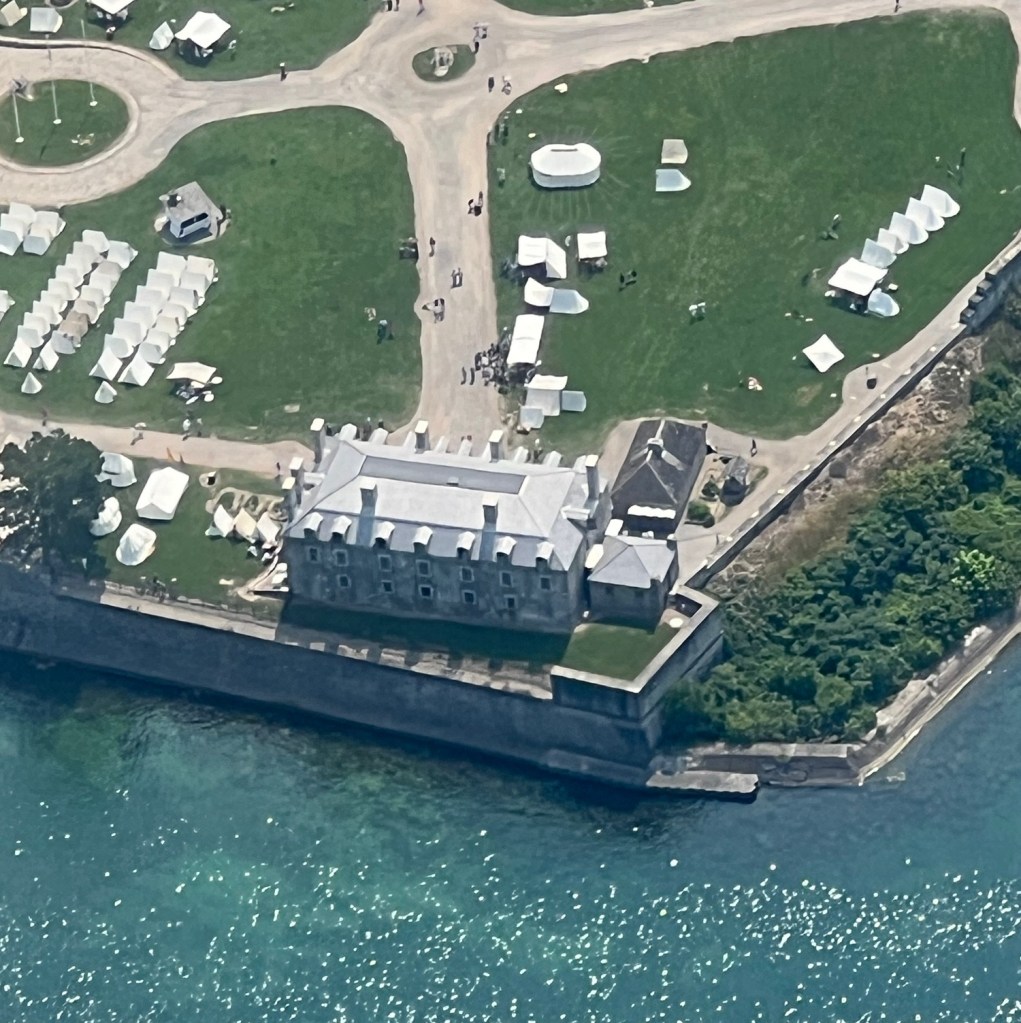
Fort Niagara, now located in New York. This is the original French fort HMS Ontario departed from. Taken from a PBY Canso aircraft belonging to the Canadian Warplane Heritage Museum 2024/07/27. Credit: http://www.warsearcher.com

A violent storm swept from northeast to southwest across the Lake on 31 October. The crew were likely caught by surprise late at night, as a sudden squall overcame the ship in the darkness and laid her over on to her beam ends. Andrews, Bolton, and more than a hundred other unfortunates disappeared into the Lake.3 The next day, debris was found near Golden Hill by a party of Butler’s Rangers and others who were returning to Niagara from Oswego. Boats, hatch coamings, sails, hats (including Andrews’ own tricorn), the binnacle cabinet, and some sections of quarter lights (windows) had washed up. Much later, in July 1781, a macabre reminder of the loss surfaced–six bodies floated ashore. These victims had been trapped at some intermediate depth until the lake waters released them. No other discoveries would provide context to the loss. The War and life in the (warring) colonies moved on. Ontario’s place in the squadron was taken by a new sistership, Limnade, and the story faded from memory.
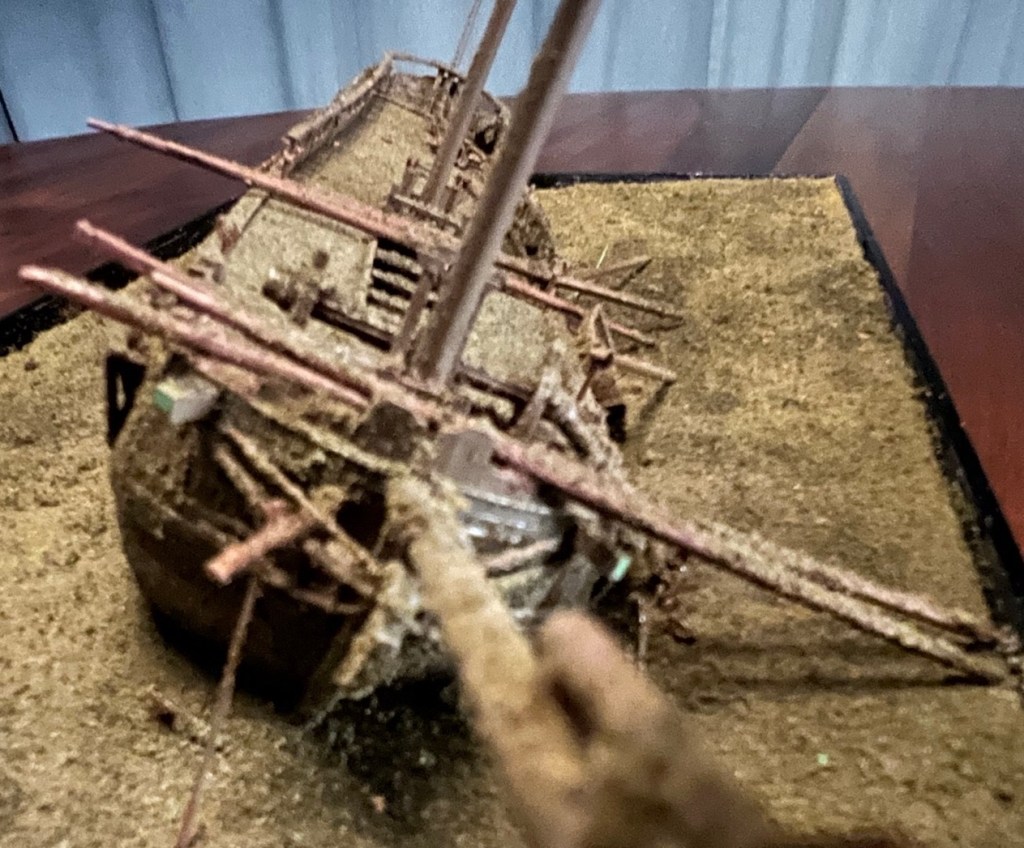
The bows of the wreck, showing fallen spars. Credit: http://www.warsearcher.com

Historians of the frontier campaigns of 1780, maritime scholars, and history buffs did not forget about Ontario. Of the many ships that have come to grief in the Lake, her story remained unique. When new technologies were developed that allowed amateur shipwreck hunters to search in deeper areas (which had been the preserve of well-funded professional expeditions employing incredibly expensive specialist equipment), enthusiastic searchers set out on the Lake to find the resting place. There were several claims over the years announcing that Ontario had been located, and many other lost ships were discovered.

Jim Kennard, of Fairport, NY, had an interest in Ontario that stretched back to the 1970s. After retirement, he returned to searching and built his own sonar outfit. He partnered up with Dan Scoville, a recreational diver from Rochester who had experience building ROVs (Remote Operated Vehicles). On 24 May 2008 – after three years of dedicated searching – a promising target appeared on side-scan sonar images onboard their search boat. In common with almost every discovery story we have ever heard, they were packing up and turning for home when the target appeared! The find was confirmed two weeks later by footage from Dan’s ROV. The rich documentary record revealed a shocking sight 500’/152m down: During the twenty-two decades the ship had awaited discovery, she had barely decayed!4
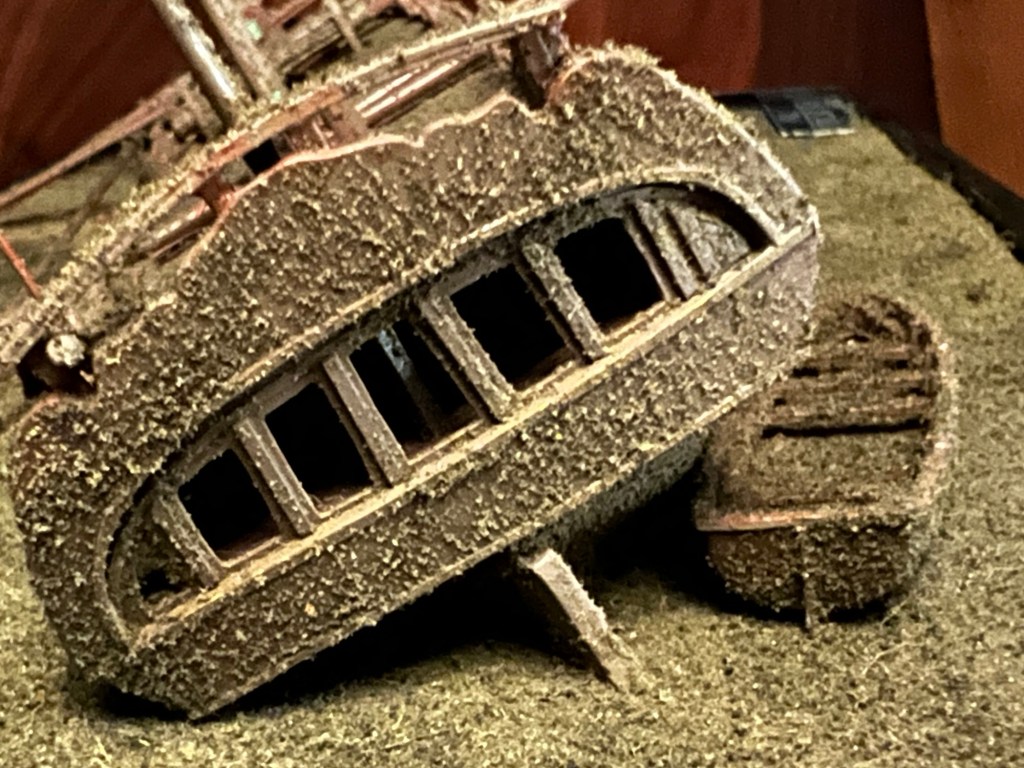
Ontario’s decorative stern gallery, with the large ship’s launch sitting on the lake tucked against the starboard quarter. The rudder post is visible in the central stern light, climbing to the hard-over tiller on deck. There is a single stern-chaser cannon still poking through the carvings over the damaged port quarter-gallery.

The ship is deeply embedded in lake sediment, with a pronounced list to port. The two masts still tower over the site. The mainmast is fully intact to its topgallant mast cap. It is unusual for a wooden wreck to be leaning so steeply to one side, and may speak to a fatal shifting of ballast or guns under the onslaught of the storm. The bowsprit and decorative scroll points west, back towards Fort Niagara.

The foremast top rises above the bows, and bowsprit. Credit: http://www.warsearcher.com

A large ship’s boat rests just off the starboard quarter above the sediment. The loss of lights from quarter and stern galleries opens up tantalizing views of the interior of the great cabin. On deck the tiller bar leans over hard, continuing the angle of the rudder tucked under the counter. It is as if the ship went down while the crew tried desperately to steer the vessel to starboard. Two cannon carriages appear to be wedged underneath it. There is very little visible damage, and few missing elements. On the whole, it is difficult to credit that an 18th Century ship could have survived into the 21st Century in this condition. The Ontario site endures as a lovely wreck of a beautiful ship. We hope the diorama helps interpret this site, and that the Ontario resting place is protected from harm.
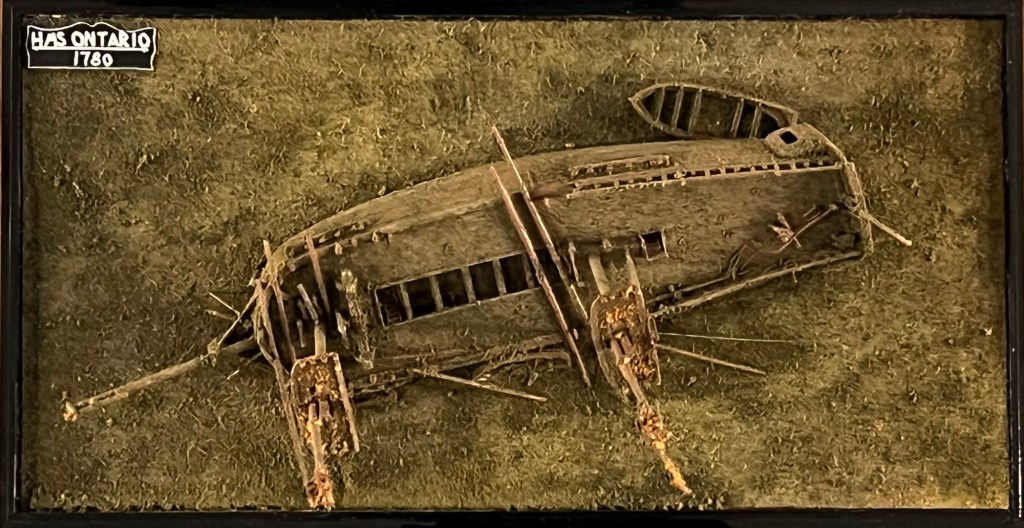
Site overview of the diorama. Credit: http://www.warsearcher.com

For more information about the model and the sources consulted, read more in the Dossier! (next page)

Continue reading “The Ontario Wreck Diorama – Yours to Discover!”
Frigates for Finding Franklin!

“Franklin Search Frigates!” What?! The three ships we are profiling today were involved in an important but unglamorous role: sustaining the search efforts for the missing sailors of the 1845 Sir John Franklin Expedition ships HMS Erebus and Terror. They helped support the search missions by caching supplies along the Alaska coast to provision the crews that were exploring the Canadian Arctic. This was important work, but is rarely mentioned in the literature about the lost Expedition or the many searches.

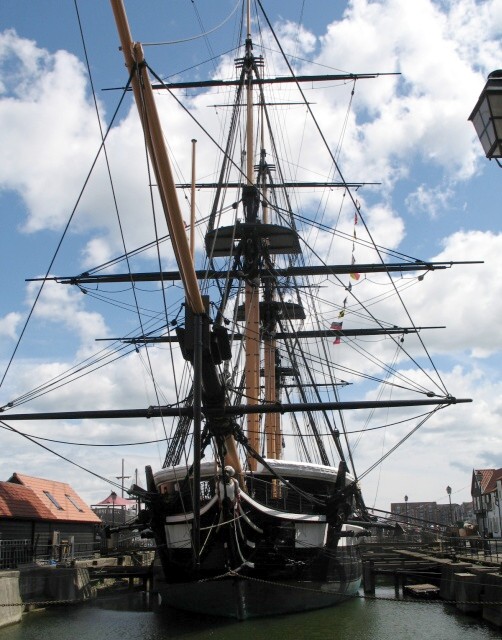
The last of the Franklin adjacent ships! HMS Trincomalee at Hartlepool Maritime Experience, 2009. Credit: Ian Petticrew, CC BY-SA 2.0 https://creativecommons.org/licenses/by-sa/2.0, via Wikimedia Commons

The Leda class frigates HMS Daedalus, Amphitrite, and Trincomalee were the largest ships that we are aware of that were involved in supporting the Franklin search efforts.1 The service of these three powerful vessels, from 1851 to 1854, involved supply missions to sustain the western Arctic searches (and especially the ongoing searches of HMS Plover under captains T. E. L. Moore and then Maguire). These efforts complement the Atholl class corvettes’ similar work, which we explored in more detail in a recent post.

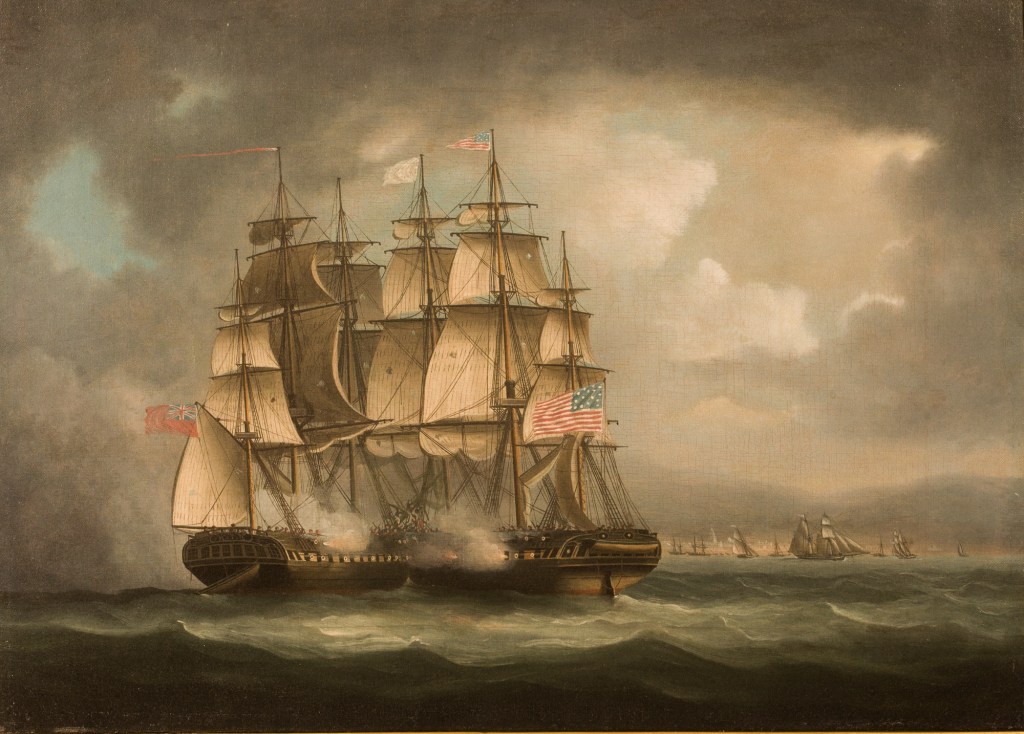
The Ledas were a highly successful group of forty-seven frigates based originally on the lines of a French Hébé, which had been captured back in 1782. Copying French ships was a fine tradition in the Royal Navy.2 The design was adapted to Royal Naval requirements. These were large frigates, that displaced more than a thousand tons – twice the size of the Atholl class supply ships also assisting in the searches and three times the size of Franklin’s two missing exploration vessels. They were originally armed with thirty-eight or more heavy cannon – the main armament on the expansive 150’ gundeck consisted of twenty-eight 18-pounders. During the War of 1812, a member of the class, HMS Shannon, had captured USS Chesapeake in an incredible duel off Boston.

HMS Shannon boards USS Chesapeake on the afternoon of 1 June 1813 off Boston, by Thomas Buttersworth via wikimedia commons. Shannon (left) displays the original fine lines and traditional galleries of the first Leda frigates.

Since units were under construction for almost thirty years, the design was modified many times. “Improved” members of the class eventually boasted updated diagonal framing and circular sterns. The early Victorian sailing navy was serving through an innovative period of technical experimentation, and Ledas underwent some quite radical transformations in their long careers. Today, astonishingly, two members of the class, HMS Trincomalee and Unicorn, are preserved and show different eras of the design.

A 1968 view of HMS Unicorn showing small masts stepped, and the innovative “round stern” design that allowed more cannon to be trained aft, to defend the vulnerable stern. Unicorn and Daedalus were nearly identical. Courtesy of National History Ships UK http://www.nationalhistoricships.org

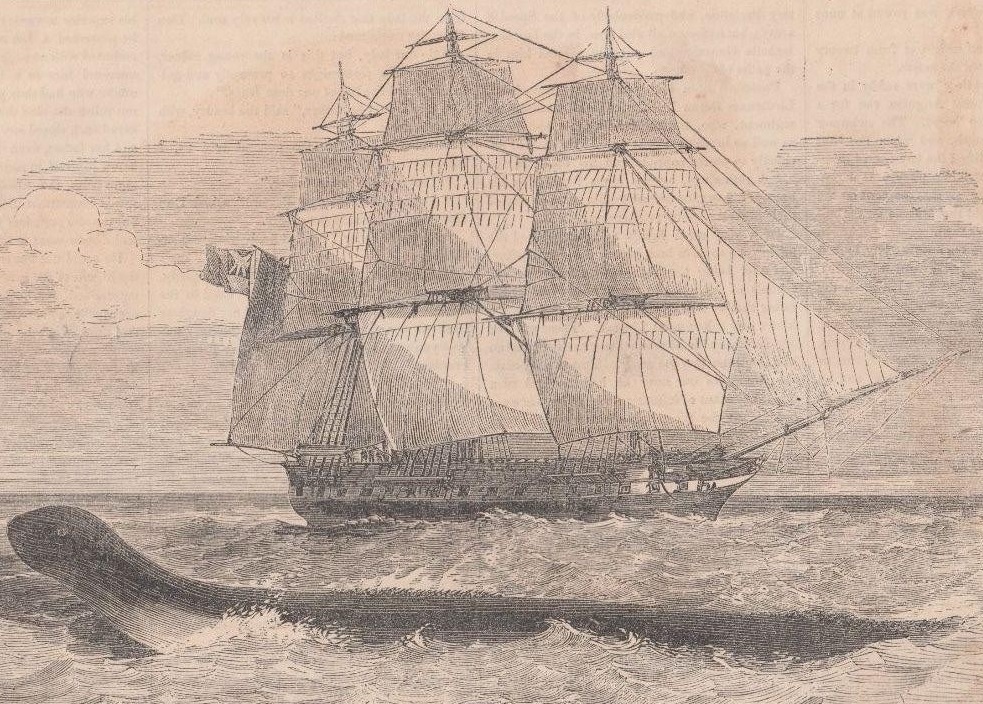
Daedalus was launched in 1824 just prior to the similar Unicorn, which survives today as a museum ship. Both ships featured the then-revolutionary “circular stern” design. Like Unicorn, she was left in reserve status for decades. The design was cut-down or razéed and converted to a steam-powered screw-propelled 19-gun corvette in 1844, with the stern galleries omitted. Given the odd numbering of cannon, she likely had a single rotating gun over the stern. She famously “tangled” with an enormous sea serpent near the Cape of Good Hope in 1848. Under the command of Captain George Wellesley, Daedalus was sent in 1851 to support the searches of HMS Plover. Daedalus survived as a naval reserve drill ship until 1911 when she was dismantled at Bristol.

“Sea Serpent Sighted by HBMS Daedalus,” from Gleason’s Pictorial 3 July 1852. [Detail of]. This is a nice depiction of Daedalus refitted to a corvette, though we can’t speak to the accuracy of the sea serpent. Uploader Andrewelston inston, CC BY-SA 4.0 https://creativecommons.org/licenses/by-sa/4.0, via Wikimedia Commons

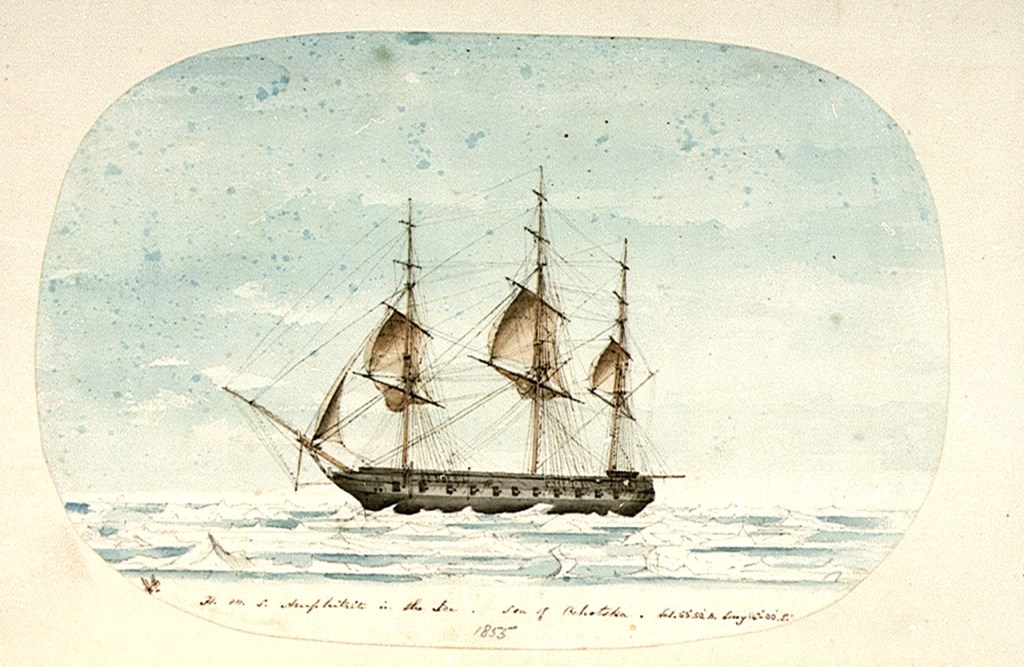
Amphitrite was built in Mumbai of teak, a durable hardwood that proved as resilient as the traditional English oak. She was launched in 1816. While serving as a unit of the Pacific Squadron, under the command of Captain Charles Frederick, she was used on supply missions in 1852 and again in 1853. From the illustrations used in this post, she appears to be the only ship of the three that had not been substantially rebuilt to the lighter specifications of a corvette by the 1850s. Amphitrite was eventually broken up in 1875.

“HMS Amphitrite in the Ice, Sea of Ochotska. Lat. 53o 50′.n. Lony.142o OO’.E” Watercolour by Henry Hand. Credit: National Maritime Museum, Greenwich, London.
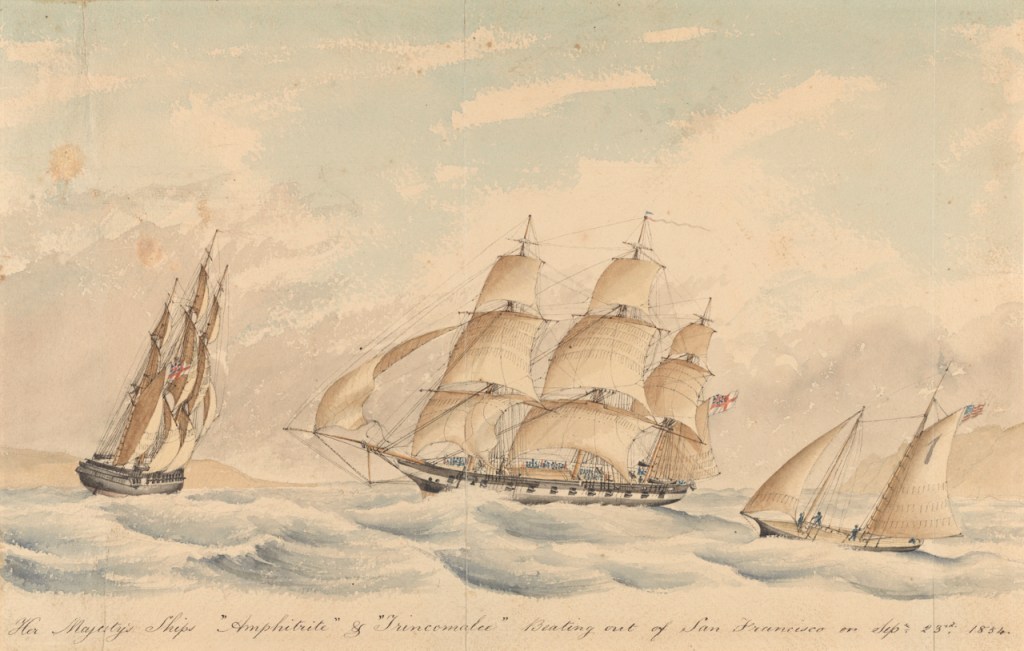
Her Majesty’s Ships Amphitrite & Trincomalee leaving San Francisco, 1854. Amphitrite (left) displays the elements of the Leda class design, whereas Trincomalee (centre) had been refitted as a corvette. Watercolour by Henry Hand, PAH0799 Credit: National Maritime Museum, Greenwich, London.

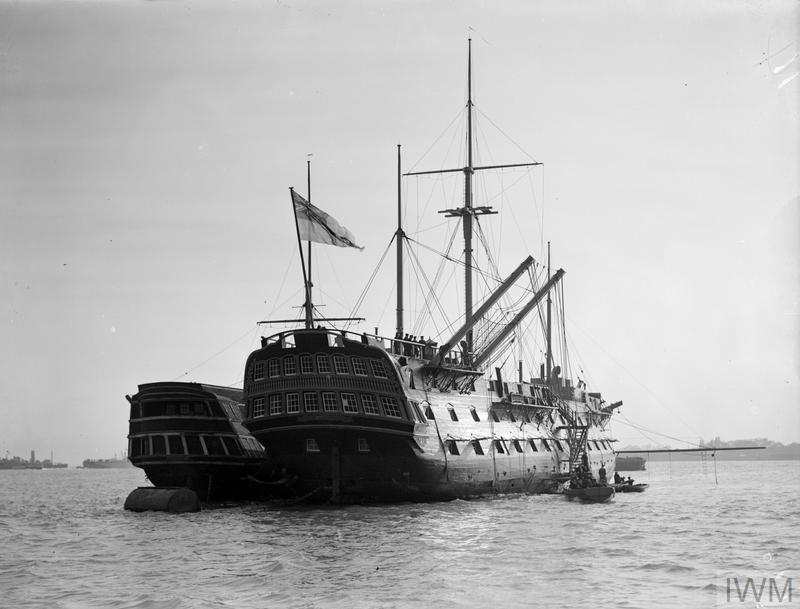
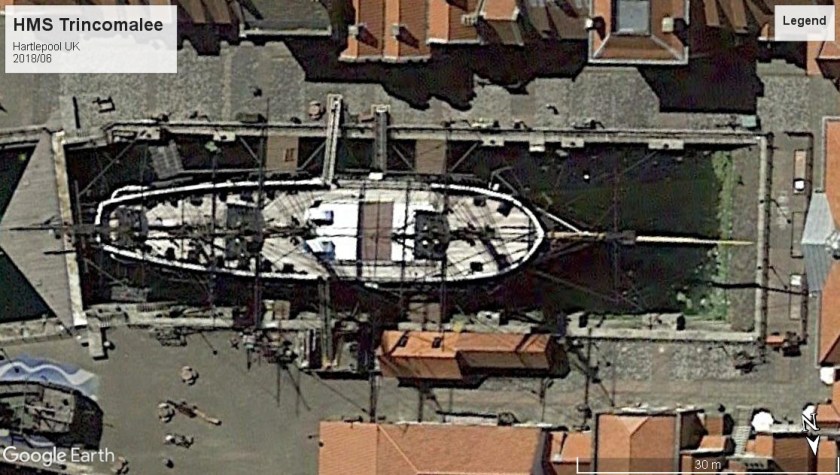
Trincomalee was also a teak-built frigate built in Mumbai. She was launched in 1817 and had to transit to England for completion. Soon after arrival, she was placed in reserve status and remained that way until 1845. The ship was under refit at the same time as Franklin’s ships, Erebus and Terror, and was modified with a new elliptical stern and down-rated as a corvette. Interestingly, this stern is actually a later style than the circular sterns of Daedalus and Unicorn, but fits aesthetically more with the traditional lineage of elaborate Georgian-era galleries. Trincomalee, a unit of the Pacific Squadron, was sent up to Alaska in 1854, under the command of Captain Wallace Houston, and met HMS Rattlesnake. Serving for more than a century as a tender, and a training ship, TS Foudroyant – the companion of the venerable Trafalgar prize Implacable – she was preserved as a museum ship during the 1990s.

Training Ships Foudroyant (left) and Implacable. Foudroyant was and would be renamed Trincomalee, while Implacable, scuttled in 1949, was originally the French prize Duguay-Trouin, captured at the Battle of Trafalgar, 1805. © IWM (A 25960)

Today this lovely frigate, restored to her 19th Century appearance, exists as the last non-wrecked vessel that participated in any way in the Franklin searches.

  1. The author is again basing this off the list of participating ships found in W. Gillies Ross’s “The Type and Number of Expeditions in the Franklin Search 1847–1859,” ARCTIC Vol. 55, No. 1 (MARCH 2002) 57–69 https://pubs.aina.ucalgary.ca/arctic/Arctic55-1-57.pdf ↩︎
  2. The origins of the whole frigate category were from French vessels captured during the War of the Austrian Succession (1740-48). The same is arguably true of the move from inferior third rate line-of-battle ships to proper 74-gunners in the mid-18th Century. ↩︎

The Atholl Corvettes: Supporting the Franklin Searches in Style

One class of Royal Navy vessel is connected to the search for the missing Sir John Franklin Expedition of 1845, and you’ve likely never heard of it! The Atholl class of corvettes were built two decades before Franklin’s Northwest Passage Expedition sailed, at the same time as HMS Erebus, Franklin’s lead ship. Four members of the class, HMS Rattlesnake, Herald, Talbot, and North Star participated in search efforts for the missing crews. In this post we explore the design of these ships and the Arctic service of three members of the class. A future post will reconstruct HMS North Star’s unique refitting and summarize her important career.

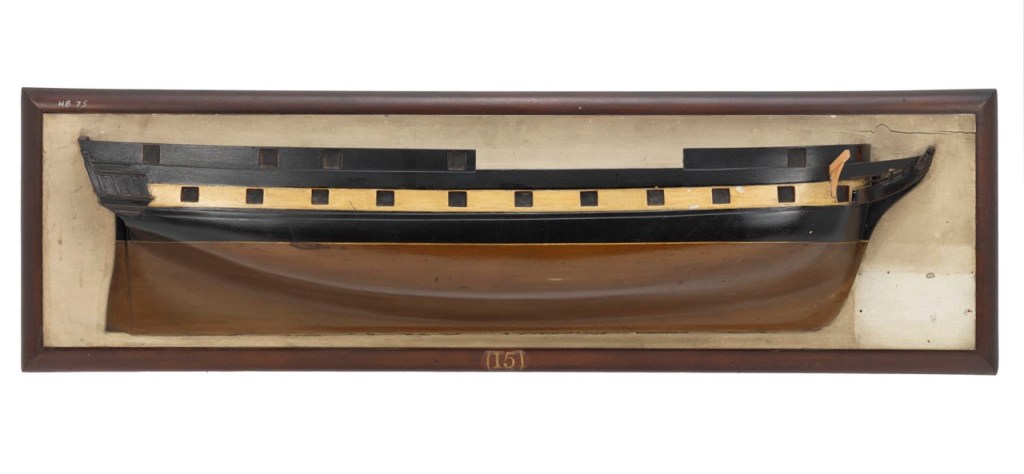
A half-hull model of Atholl class HMS Rainbow (1823) SLR0706 Credit: National Maritime Museum, Greenwich, London.

What is so special about these ships? Arctic and Antarctic exploration vessels were heavily-adapted to survive difficult conditions at the high latitudes. Exploration ships were under a different type of attack these warships had been designed for. Hulls required strengthening and fortification to serve in a chaotic environment characterized by ice floes; icebergs; bergy bits; growlers; land ice and pack ice. A ship overwintering–frozen-in to the pack–was subjected to prolonged pressures, or sharp, intense “nipping,” as the ice shifted. Exploration/discovery vessels in this period were about 100-120’ long on deck and displaced 500 tons or less. The Atholl class fits these general parameters, but its design lineage was not from the stout hulls of the bomb vessels, like HMS Terror, Hecla, Fury and Erebus. With the disappearance of these “bombs”, the Admiralty moved to searching for the lost Franklin crews with heavily converted merchant hulls: HMS Enterprise, Investigator, Assistance, Resolute.

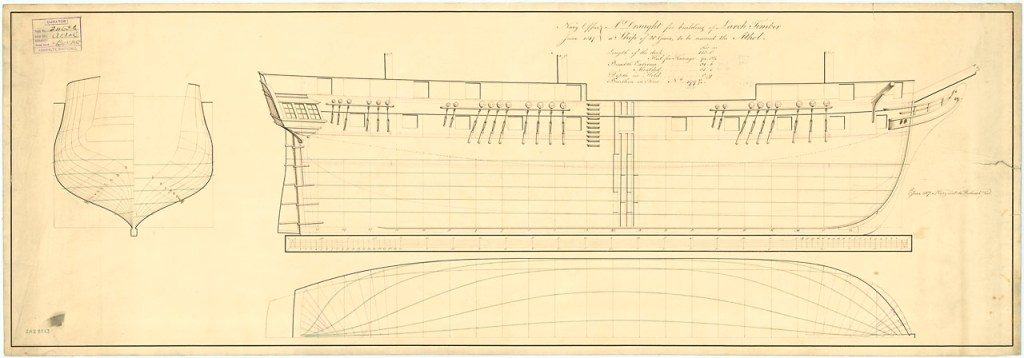
The handsome lines of the original Atholl class design from 1817 © Crown copyright. National Maritime Museum, Greenwich, London ZAZ3213

The Atholls were a different species altogether. Their full gundecks speak to their intended role: general-purpose warships. These 28-gun corvettes were designed just after the Napoleonic Wars had concluded. They fit into a category often called “donkey frigates” – corvettes that took on some of the duties of the more expensive to operate frigates – but they would have been considered light frigates in an earlier era. The original plans for the lead ship, Atholl, were co-signed by an important design team: Surveyors of the Navy Henry Peake, Joseph Turner, and Robert Seppings. Peake had designed the Vesuvius and Hecla class bomb vessels (HMS Terror and Erebus), while Seppings was implementing wide-ranging changes to the designs of all classes of ships. In contrast to the full bilges, rounded tumblehome, and sweeping sheer of 18th Century ships, Atholls had steeply rising floors (a “V-shaped lower hull), a distinctive flat rise at the waterline, and almost flat sheer along the length of the decks. In the early years of the 19th century, these were state-of-the-art design features. Above the deck, three towering masts supported the spars, cordage, and canvas of a three-masted, fully-rigged ship.

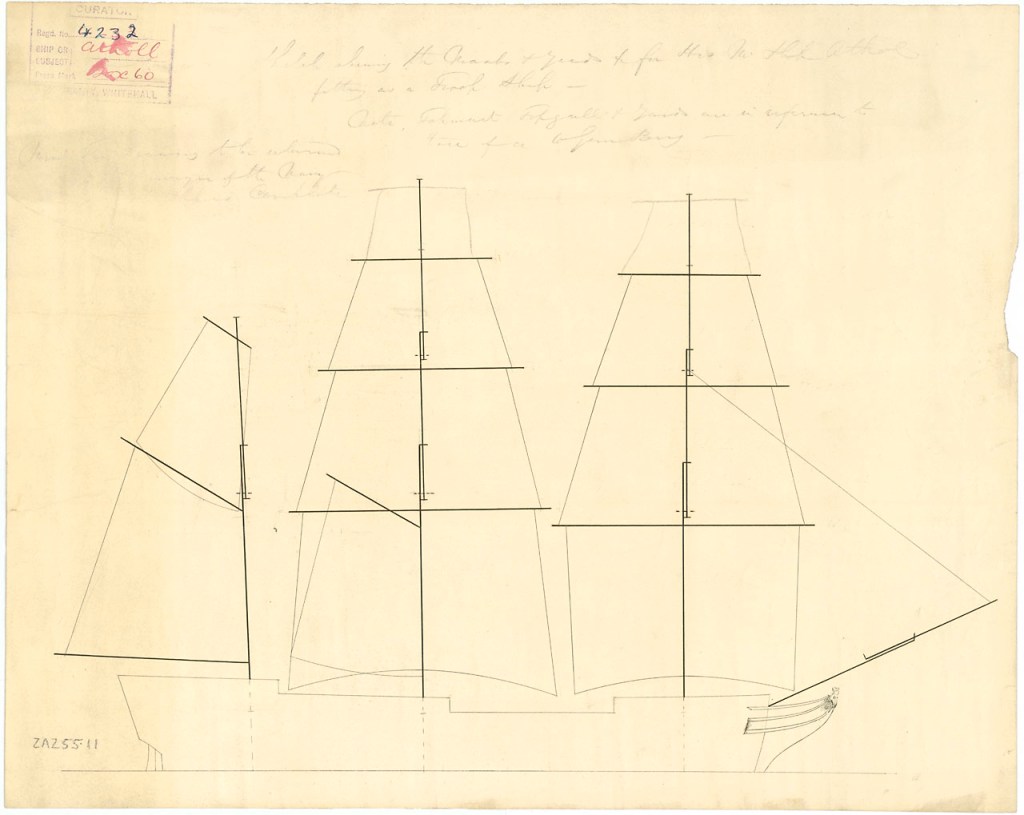
A rare rigging plan of an Atholl class dated 1844, from the collection of the National Maritime Museum. This unnamed ship was being converted to a troop ship, and shows the simplified rig of a barque, likely to have been used on many of the converted ships. In comparison to the earlier plan, the outline of the hull shows the building up of stern and bows. ZAZ5511© Crown copyright. National Maritime Museum, Greenwich, London

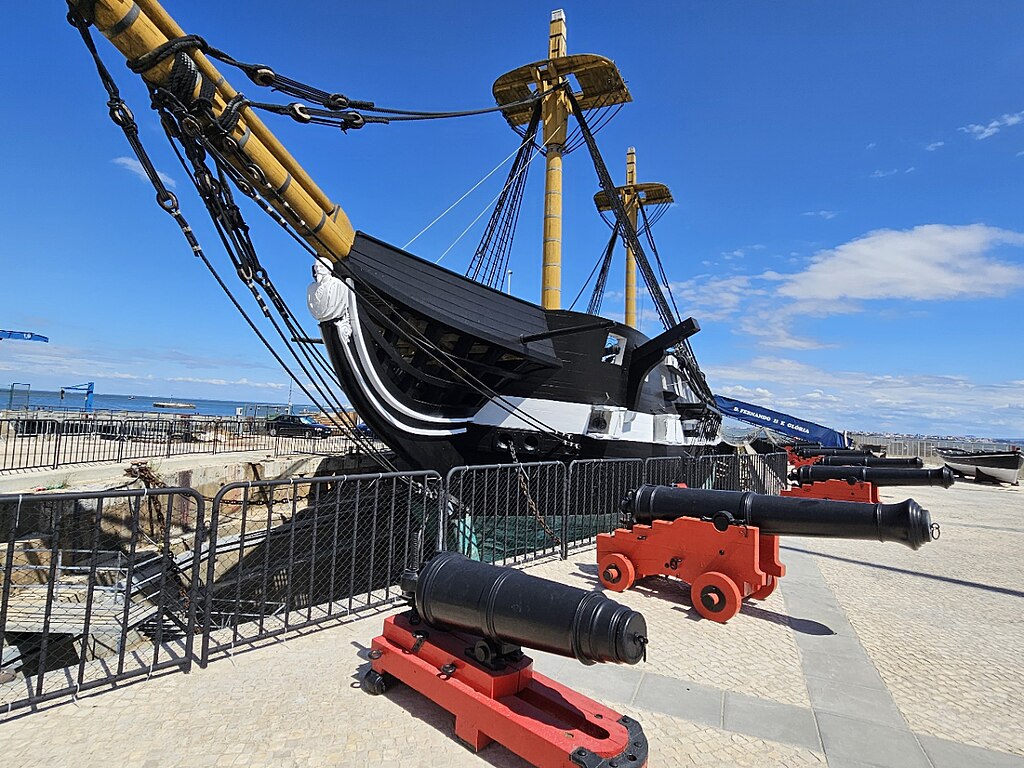
For their main armament, they were fitted with a modern, versatile battery of guns. Their gundeck was fitted with twenty heavy “smashers”: 32-pound carronades. This gave the class an outsized weight of broadside.1 Compared to the older “long guns” – traditional cannon – carronades were lighter and took less crew to work, but did not have the same range to strike more distant targets. The ships also had 9-pounder bow-chaser cannon and lighter carronades on the quarterdeck. While the bomb-vessels had been built to withstand the strain of firing their two massive mortars at land targets, the Atholls were designed to withstand the firing strain of broadsides of 32 and 18-pounder carronades.

A useful contrast between a carronade (near) and a cannon. These guns are located at the Dom Fernando II e Glória (1845) Portuguese frigate at Lisbon. Credit: GualdimG, CC BY-SA 4.0 https://creativecommons.org/licenses/by-sa/4.0, via Wikimedia Commons

Fourteen ships were built in the period 1821-1828. Some of the class had been constructed in the East Indies, with design changes based on the availability of exotic timber and a shortage of iron knees.2 Three of these – Rattlesnake, Samarang, and Crocodile – appear to have had a second row of stern galleries (windows), at the level of the quarterdeck. At a time when decoration was being simplified or removed altogether, this odd arrangement for a warship made them appear similar to East India Company merchant ships.

Rattlesnake June 1849 watercolor by her captain, Owen Stanley, Public domain, Voyage of H.M.S. Rattlesnake Album: Vol. I, Old Collection of David Scott Mitchell (1836-1907), p. 84 (imag. 487084) Mitchell LibraryState Library of New South Wales (PXC 281, IE 3174589), Australia. via Wikimedia Commons

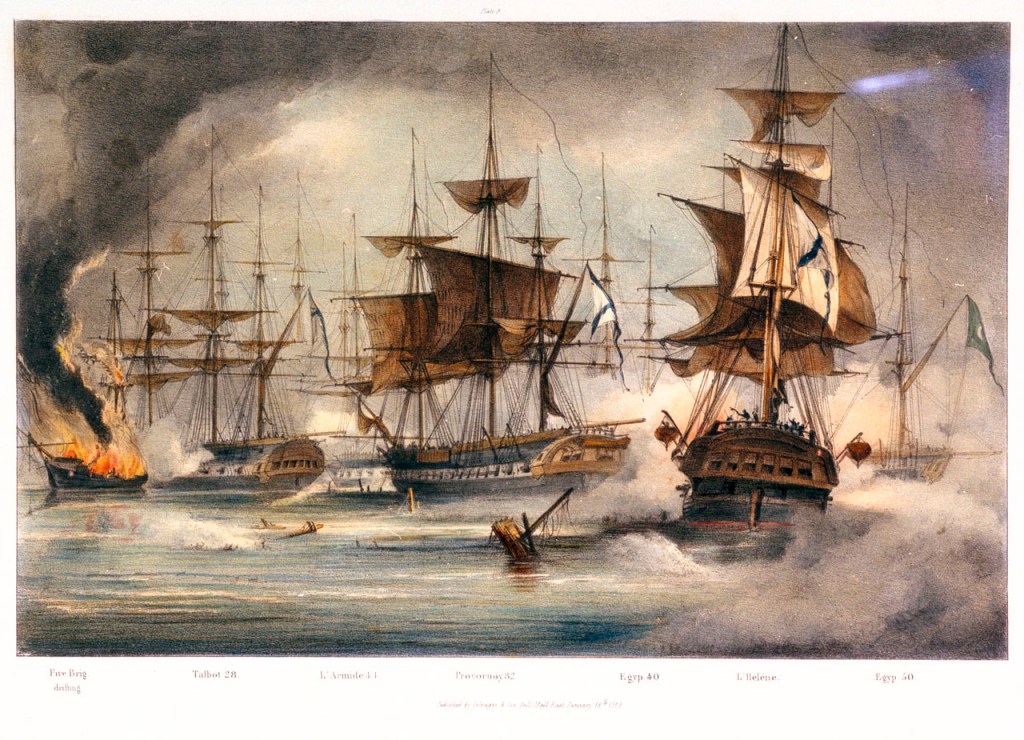
The Atholls served in some notable actions. HMS Talbot played an important role at the last great battle under sail, Navarino (1827), during the Greek War of Independence, and was also present at the 1840 Bombardment of Acre. North Star and Herald served in the First Anglo-Chinese or “Opium” War. In 1845-46, North Star was operating at New Zealand during the Flagstaff War at the same time the Franklin ships were overwintering at Beechey Island.

The Allied fleet at Navarino, 20 Oct. 1827. Reinagle, George Philip; P. & D. Colnaghi & Co Ltd; Plate 9. HMS Talbot is the ship firing at left near a burning hulk. Note the characteristic built-up look to the stern of the Atholl ships. Credit: National Maritime Museum, Greenwich, London PAF4856

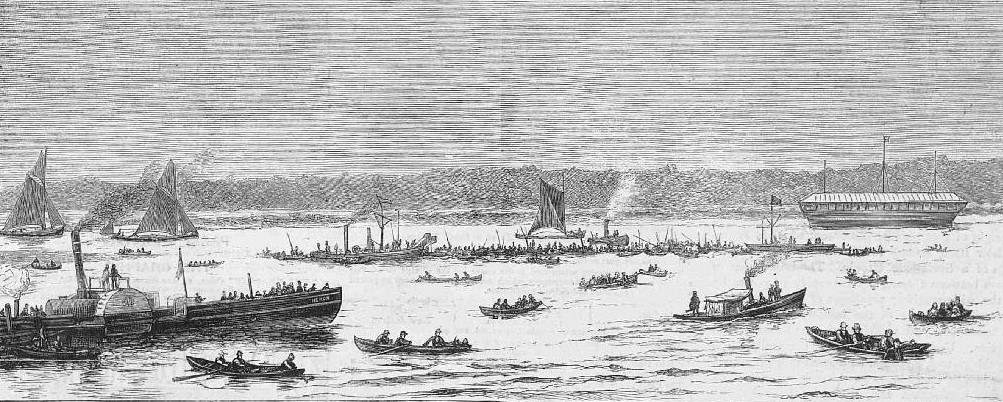
During their long careers, these ships proved to be very adaptable to new roles. They could be provisioned to serve out of distant posts of the British Empire, and could be quickly converted to carry troops. Units of the class got a new lease on life when many were converted to survey or depot/supply ships. Some common modifications appear from the 1830s on. Decoration at the bows and stern was minimized, and most of the armament was removed. The spaces of the old weather-deck were enclosed to form new focs’l and quarterdeck accommodation. The officer’s cabins and wardroom were extended, and the captain’s great cabin was moved up a deck to the newly-enclosed area aft. In some cases this building-up and decking-over created what in essence is a pint-sized two-decker. Later still, the ships were converted to a variety of rolls, such as receiving ships, supply ships, storehouses, or storage hulks. HMS Talbot’s final service, as a gunpowder hulk, is visually documented because of her proximity to the site of the tragic 1878 Princess Alice sinking. The last of the class known to exist was the former HMS Nimrod, scrapped in 1908.

Recovering victims of the Princess Alice disaster. Talbot in use as a gunpowder storage hulk at right (in other views the hulk has enormous “GUNPOWDER” lettering). Unlike other views, this shows the powder hulk still having a clearly defined bow and stern. The Collision on the Thames, 14 September 1878, The Graphic, Page 4 JR Brown, Public domain, via Wikimedia Commons

Let’s briefly explore the Franklin search-related efforts of three of the class:3

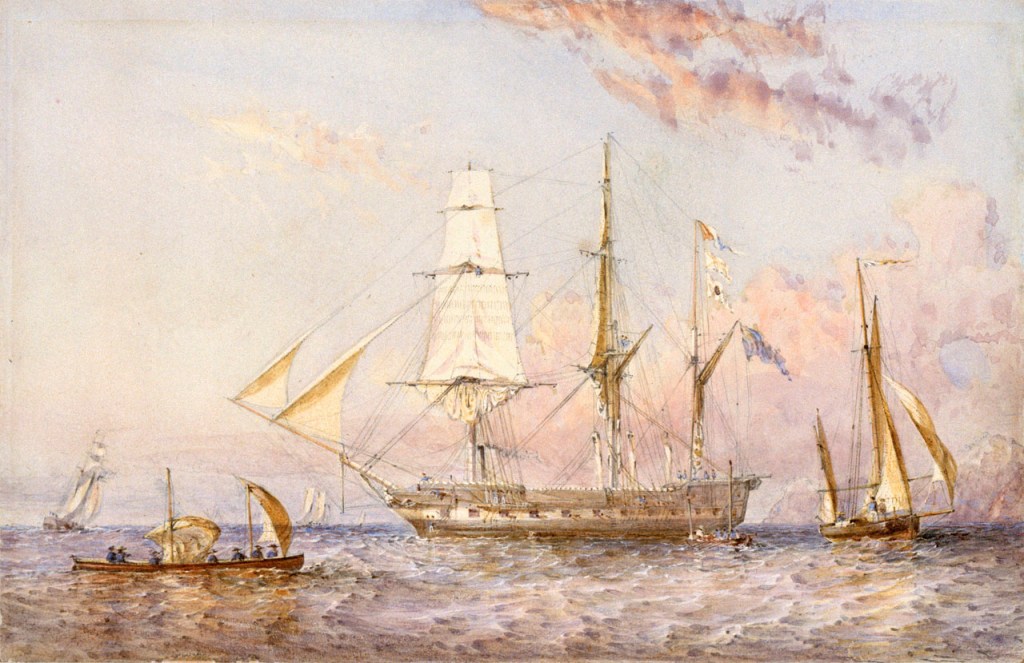
HMS Rattlesnake (1822): Rattlesnake played a minor role in the Franklin search efforts. She was commissioned on 28 December 1852 by Commander Henry Trollope (with a compliment of 80) for conveying relief supplies to the (western) Arctic ships employed in the search for Sir John Franklin’s expedition: HMS Enterprise (Richard Collinson) and HMS Investigator (Robert McClure). Rattlesnake’s captain between 1845 and 1850 had been Owen Stanley, who had served on Terror during the 1836 George Back expedition, and had accompanied her and Erebus north in 1845.

“HMS Rattlesnake” by acclaimed artist Oswald Walters Brierly, who was onboard in 1848 when Rattlesnake was under the command of Owen Stanley. Credit: National Maritime Museum, Greenwich, London PAF5620

HMS Herald (1824): Captain Henry Kellett was involved in several of the western Arctic searches for the Franklin crews, from 1848 to 1850. He explored the Bering Strait (the early Admiralty assumption was that the Franklin ships may have been caught much further west along the Passage), discovered Herald Island, and in 1849 encountered HMS Investigator (Robert McClure). In the early period of searching, Kellett’s exploration complemented the searches of HMS Enterprise (James Clark Ross and later Richard Collinson) and Investigator. Herald was frequently used to resupply HMS Plover (T. E. L. Moore and then Maguire), during Plover’s six year vigil in the Pacific. In between Herald’s three forays up north, a succession of crews completed very important surveying along the Pacific coast.

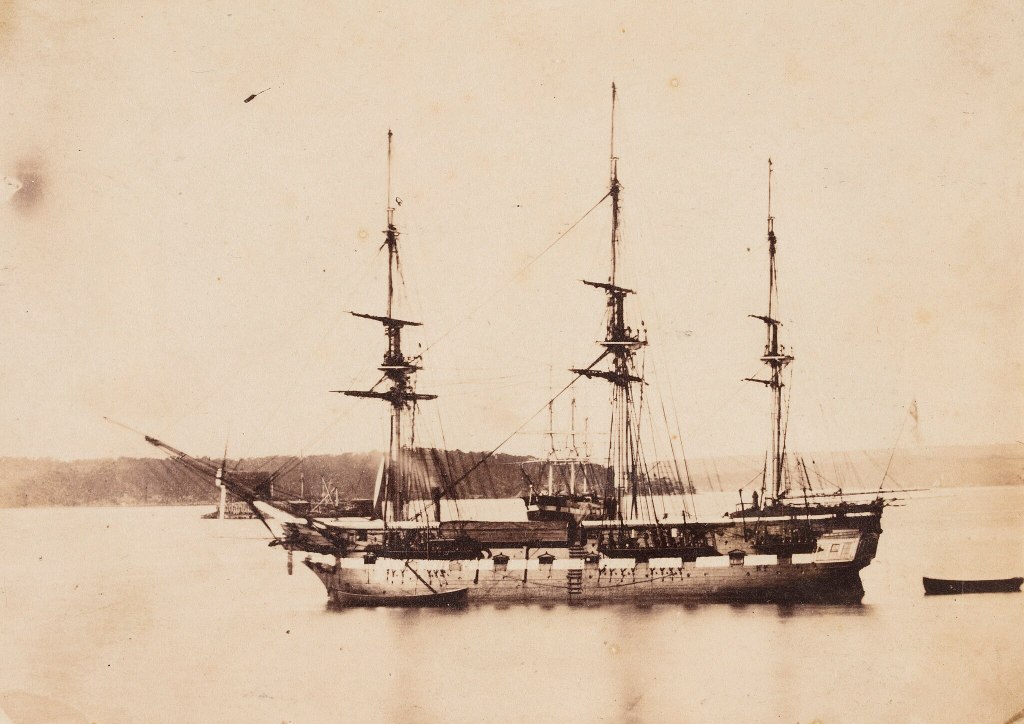
This incredible 1857 photograph of HMS Herald at Sydney Harbour shows she retains her original corvette lines, full rig, and bow and stern decoration. The quarterdeck has been enclosed or decked over, as evident by the windows above the mizzen channels. She has been updated with iron davits and rails enclosing the new poop deck. The large stove pipe aft of the Foremast is evident on many plans. 79(b). H.M.S. Herald Sydney Harbour 1857, Album of views, illustrations and Macarthur family photographs, 1857-1879, PXA 4358/Vol. 1, https://collection.sl.nsw.gov.au/record/nM7lp5AY/B4xQpbaW72Xey

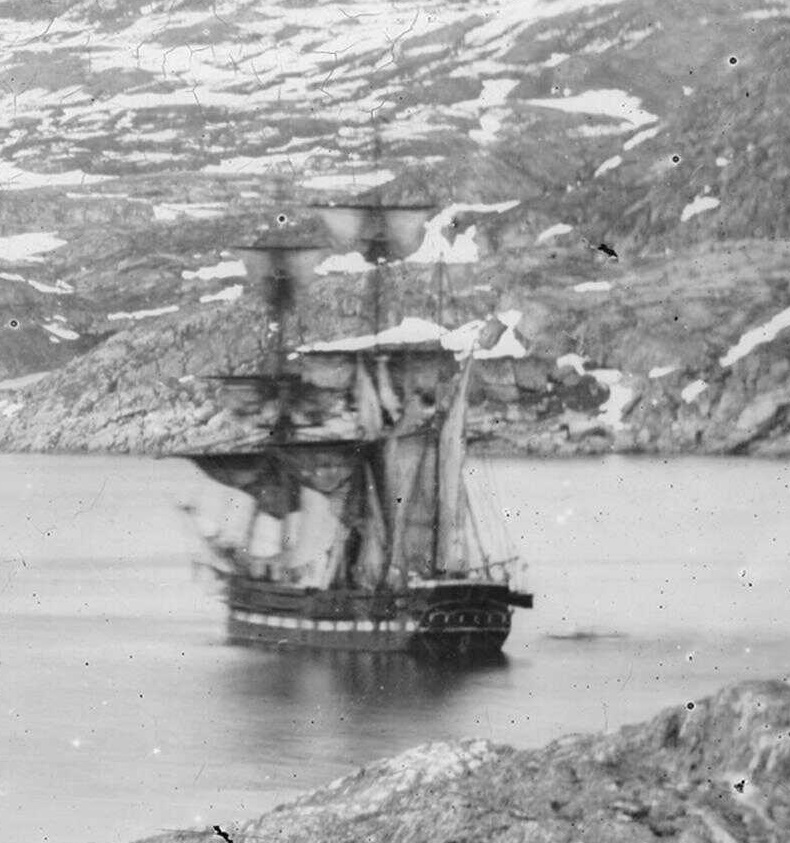
HMS Talbot (1824): After an active career, this veteran was converted to a storeship, to accompany Edward Augustus Inglefield’s 1854 provisioning mission to the Belcher Expedition at Beechey Island, in a similar way as Barretto Junior had helped provision the Franklin Ships in 1845.4 Unlike that ship, Talbot and Diligence (the other member of the squadron) continued on to Beechey, and were on hand to assist Inglefield’s command, HMS Phoenix, and North Star, to transport the crews of Belcher’s abandoned ships home. We are fortunate today to have a fine daguerreotype image of what Talbot looked like at this time on Inglefield’s stopover in Greenland. Talbot retains the trim appearance of a sixth-rate warship, with the characteristic updated variant of the “Nelson Chequer” of a white band picked out with black gunport lids. The transom shows some simplification, as the quarter galleries are not in evidence and the transom has been abbreviated to only five lights (windows). As with Herald above, there appears to be a building-up of the aft section to enclose new officers’ quarters.

HMS Talbot, June 1854 looking NW from Holsteinborg, Greenland. HMS Phoenix and the store ship Diligence were also depicted (cropped out from left). Phoenix’s captain, Edward Augustus Inglefield, is credited as the photographer[detail of] Credit: Captain Edward Augustus Inglefield, Public domain, via Wikimedia Commons source is National Maritime Museum, Royal Museums Greenwich G4254

Please watch for our upcoming post that will explore Atholl class HMS North Star’s incredible history and design features!

  1. In an age of fighting sailing ships, whose main armament was disposed over either Port or Starboard batteries of cannon, this is the weight of broadside or “striking power” based on the notional weight of cannon balls fired from all guns in a single broadside fired from either side. Carronades gave small ships a “smashing” broadside. Atholls broadside added up to 383 pounds: (10X32lbs+3X18lbs+1X9lbs). For comparison, a roughly equivalent ship of the previous era, HMS Surprise, of Patrick O’Brien novels’ fame, had an armament of 9-pounder cannon and a total weight of broadside of 164 lbs. ↩︎
  2. See for example National Maritime Museum midships sectional drawing ZAZ3436 of Termagant (which became Herald), Samarang, Alligator which describes some differences in these East Indies built ships. An aborted plan of the 1830s would have even cut down the design to create 20-gun ships. ↩︎
  3. For an excellent primer on the bewildering number of vessels involved in various search efforts, including the ships above, please see W. Gillies Ross’s “The Type and Number of Expeditions in the Franklin Search 1847–1859,” ARCTIC Vol. 55, No. 1 (MARCH 2002) 57–69 https://pubs.aina.ucalgary.ca/arctic/Arctic55-1-57.pdf ↩︎
  4. The previous year, Inglefield had gone up accompanied by the Breadalbane store ship, which was destroyed by ice in August 1853. ↩︎