July 3rd 1970 – 50 years ago today, HMCS Bonaventure, Canada’s aircraft carrier, was decommissioned, in a move that surprised many. “Bonnie,” the largest and most powerful warship the Royal Canadian Navy (RCN) has ever operated, had just undergone a major “mid-life” refurbishment.
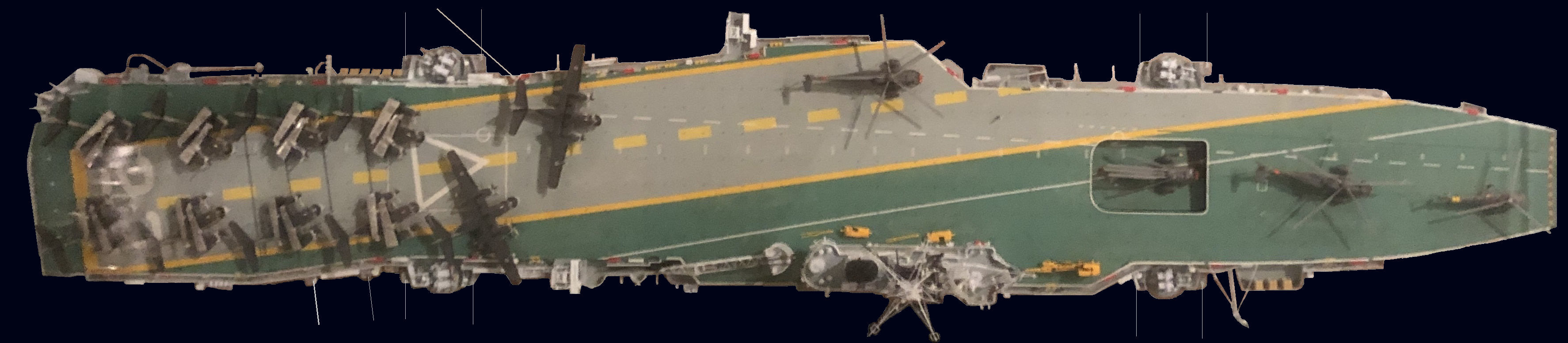
A few years before this, an official history of Canadian naval aviation produced by the Naval Historical Section, Department on National Defence, had concluded a section on Bonaventure with: “At the time of writing Bonaventure has been in commission over five and a half years, with the prospect of many more to come. Canada being deeply committed to the North Atlantic Treaty Organization for the defence of the Free World, the carrier will, no doubt, in the future, as in the past, be frequently working with the warships of her allies.”1 In fact, Bonaventure, and all carrier-based RCN operations, had little time left. The lengthy refit proved costlier than anticipated. The government of Prime Minister Pierre Trudeau decided to dispose of the ship, as a cost-cutting exercise, in the fall of 1969. This controversial decision removed fixed wing aircraft from Canadian naval aviation and limited it to helicopters attached to destroyers and frigates.
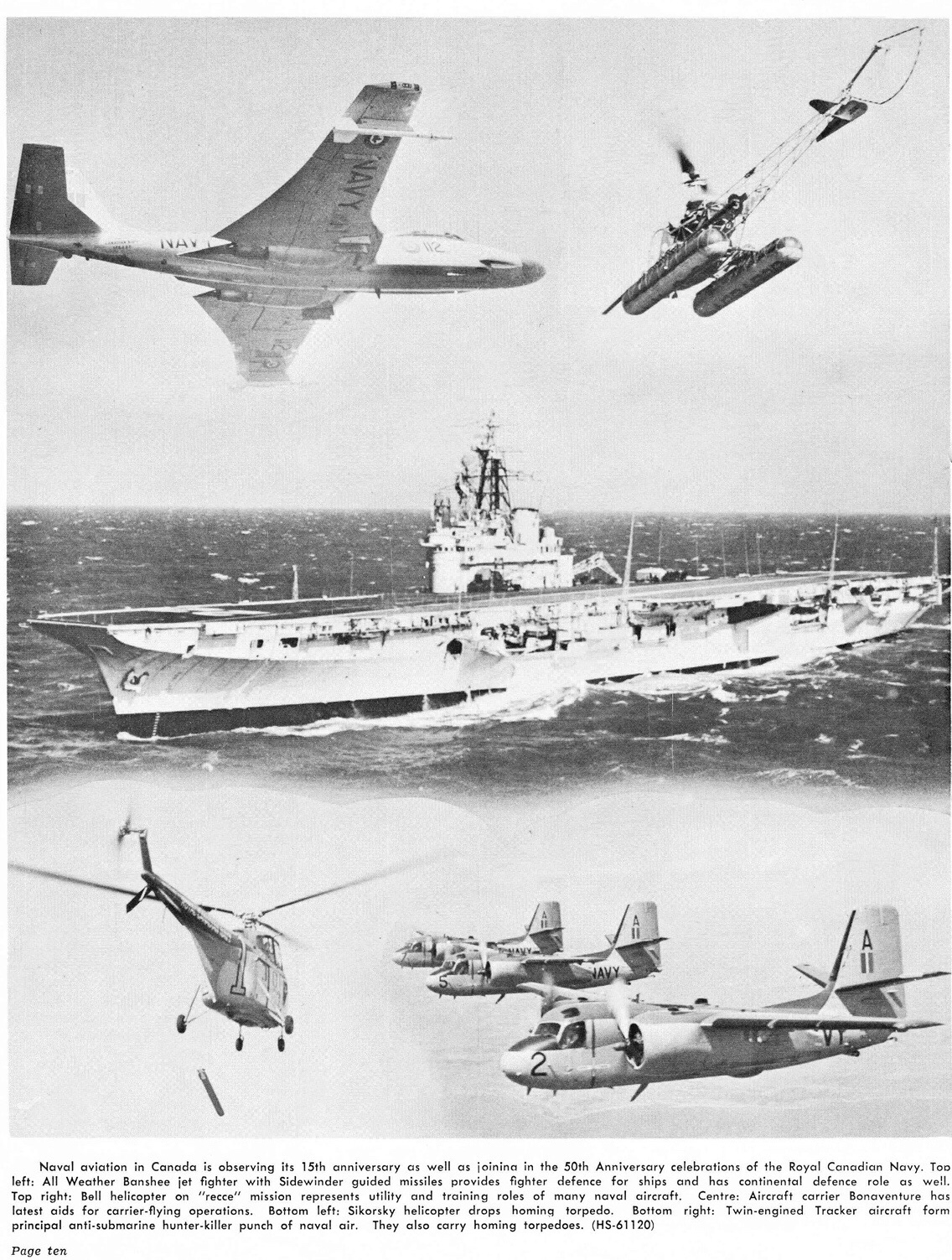
Bonaventure was a Majestic class variant of the British 1942 Light Fleet Carrier design. The concept was born out of wartime necessity. By mid-1942 the Royal Navy (RN) had lost a total of five fleet carriers, and two escort carriers, to enemy action. The vast sphere of operations, and expanding duties carriers and their aircraft could perform, meant that more “flat-tops” were needed, and they had to be produced faster. The plan for 16 ships was intended to fill the gap between large, expensive, and difficult to produce fleet carriers, and smaller escort carriers, whose roles were more limited. Light Fleet Carriers were also suitable for construction in civilian shipyards, freeing up naval yards for other priority work. They were certainly not intended to be an enduring cornerstone of any fleet. And yet, after the Second World War, of the 15 ships completed under two sub-classes, 10 of them wound up serving for decades in other navies.2 For mid-sized navies, including Canada’s, these ships represented an excellent entry-level carrier to build a naval aviation service around.

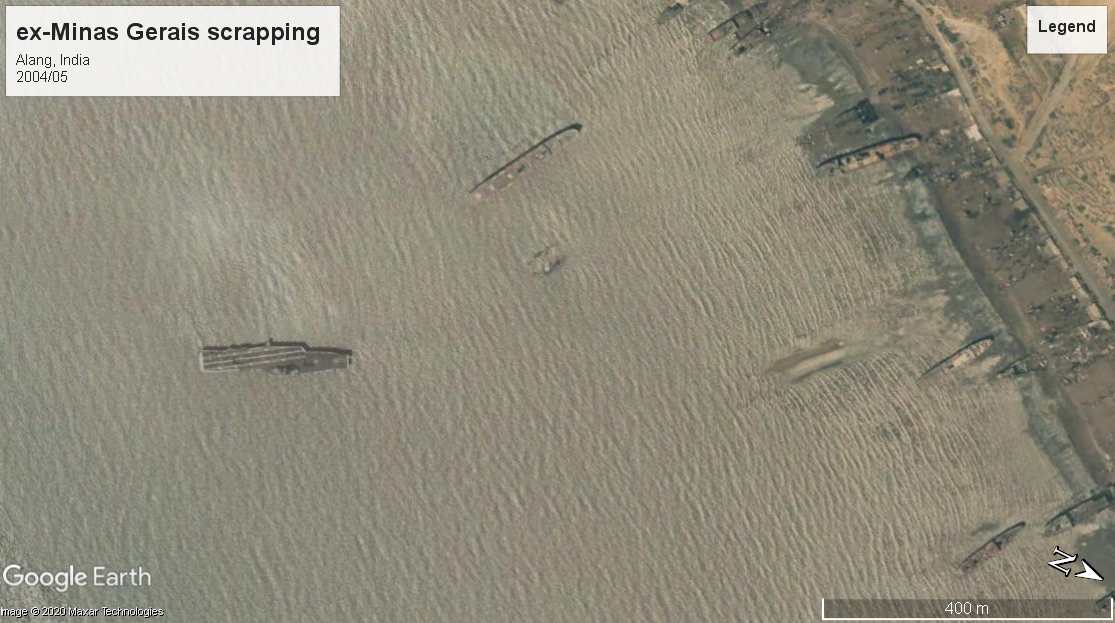
The careers of some of Bonaventure’s sister-ships are worth mentioning. The aptly-named HMS Venerable entered service early in 1945. During her 52-year career, she served in the Royal Netherlands Navy as HNMLS Karel Doorman, before being transferred to Argentina, as ARA Veinticinco de Mayo. During the 1982 Falklands War, she participated in some limited operations against the Royal Navy, and was also high on the list of targets for RN submarines. By the late 1980s she was inoperable, and became a source of spare parts for her sister-ship NAel Minas Gerais. This ship, also commissioned early in 1945, was originally HMS Vengeance. Vengeance also served in three navies (the Royal Navy, Royal Australian Navy, and the Brazilian Navy). As NAeL Minas Gerais, she became the last of the class in service, decommissioning in 2001, after an incredible 56 years!** This may well be the World’s second longest serving carrier.3 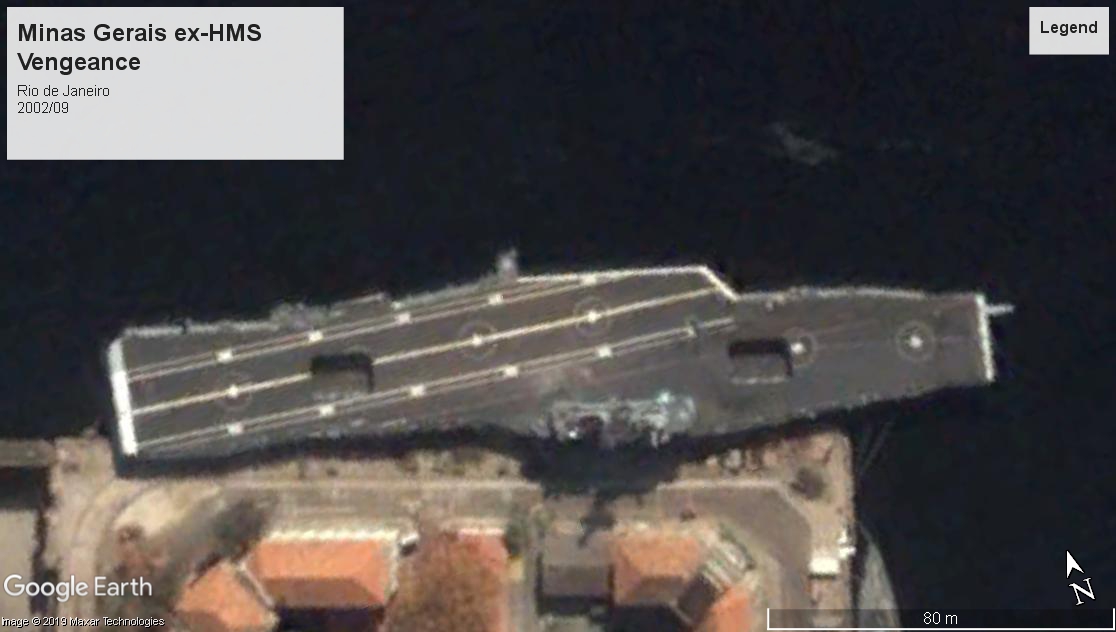
Another sister-ship, the Indian Navy’s INS Vikrant, was decommissioned in 1997. It survived as a museum ship in Mumbai dockyards until 2014. Vikrant’s history is further explored in a recent post about her scrapping and the page for Indian Navy carriers.

The Royal Canadian Navy built its postwar naval aviation service around three of these light fleet carriers, which served Canada successively as HMCS Warrior (1946-1948), HMCS Magnificent (1948-1957), and HMCS Bonaventure (1957-1970). Bonaventure, at 704′ overall length and 20,000 tons full-load displacement, was conspicuous at her usual berth at the Naval Dockyard, Halifax, NS.
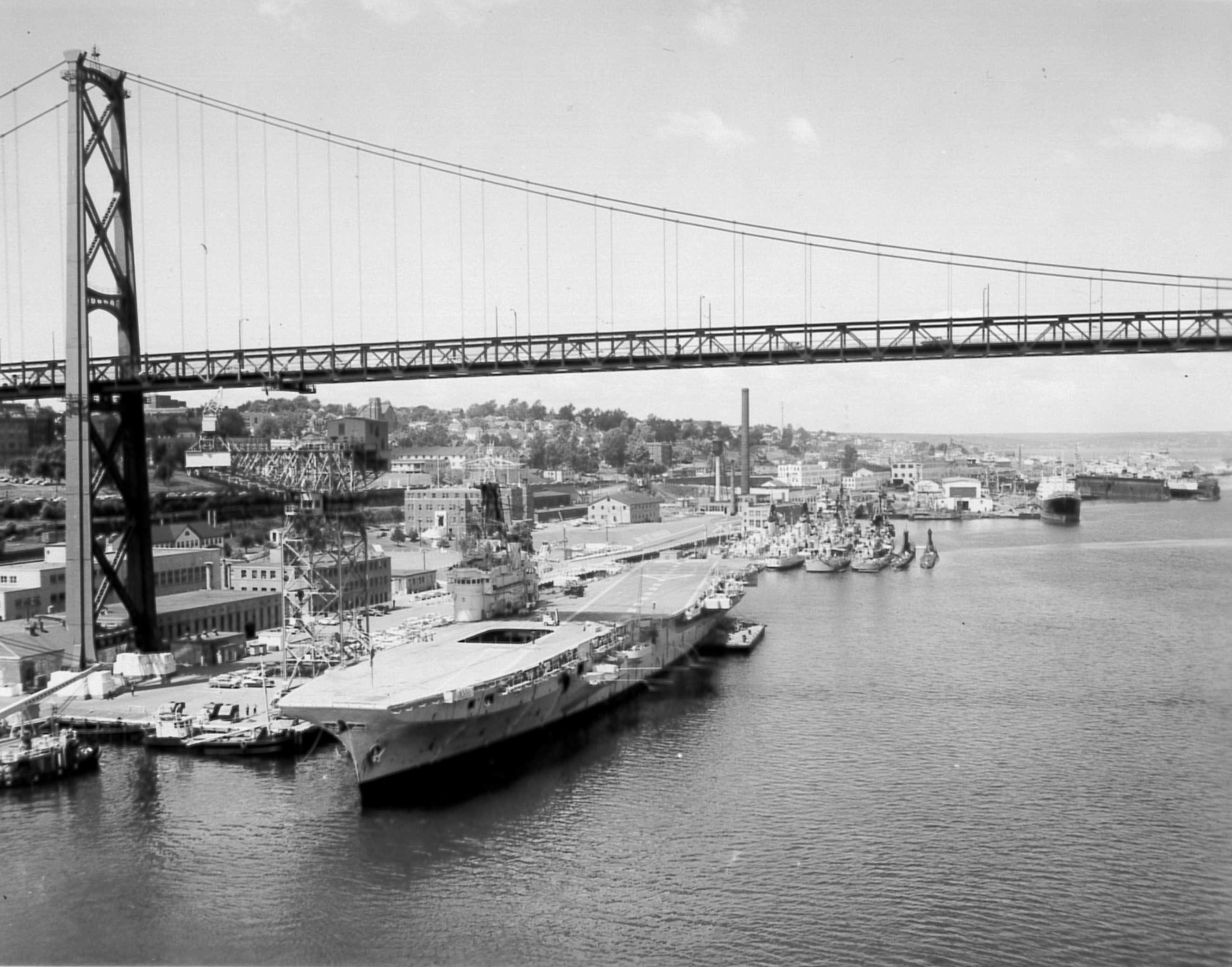
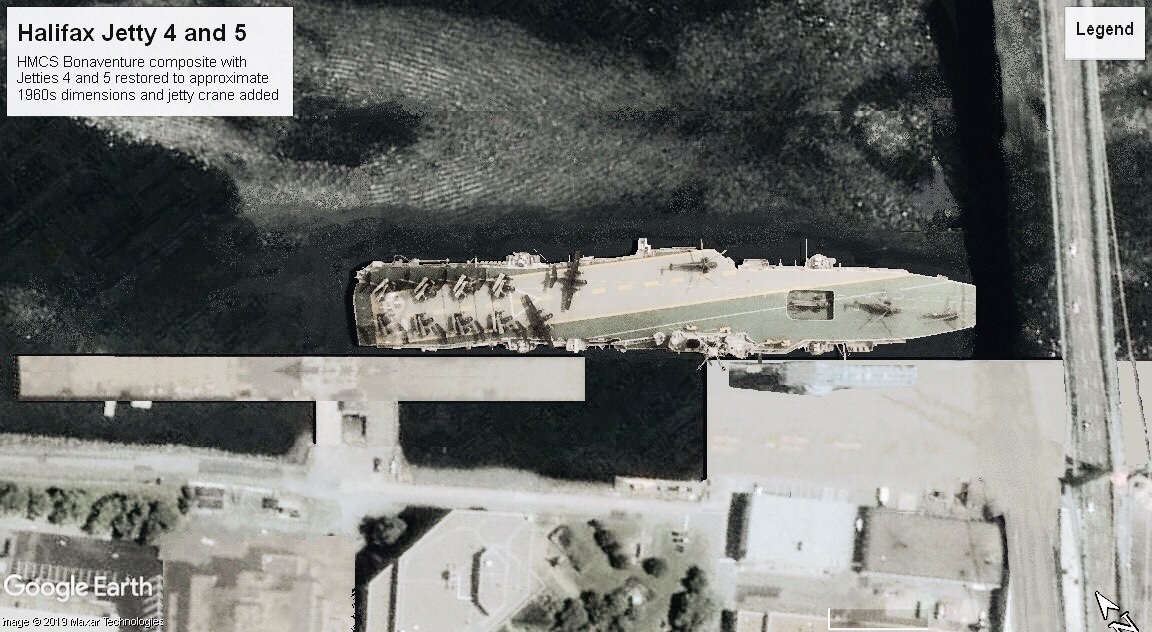
During the mid-1950s Canada arranged for the completion, to an updated design, of the ship which was intended to become HMS Powerful. Harland and Wolff shipyards in Belfast, Northern Ireland, (famous as the builders of ocean liners, including RMS Titanic) resumed work on the carrier, which was commissioned in January 1957 as HMCS Bonaventure. She had a stronger flight deck to operate larger, heavier aircraft, enlarged deck elevators to move them from the hangar, and more powerful steam catapults to launch these aircraft. A mirror landing sight system helped pilots maintain a safe approach, as they also heard audio tones to help them keep their eyes on the carrier, not their instruments.
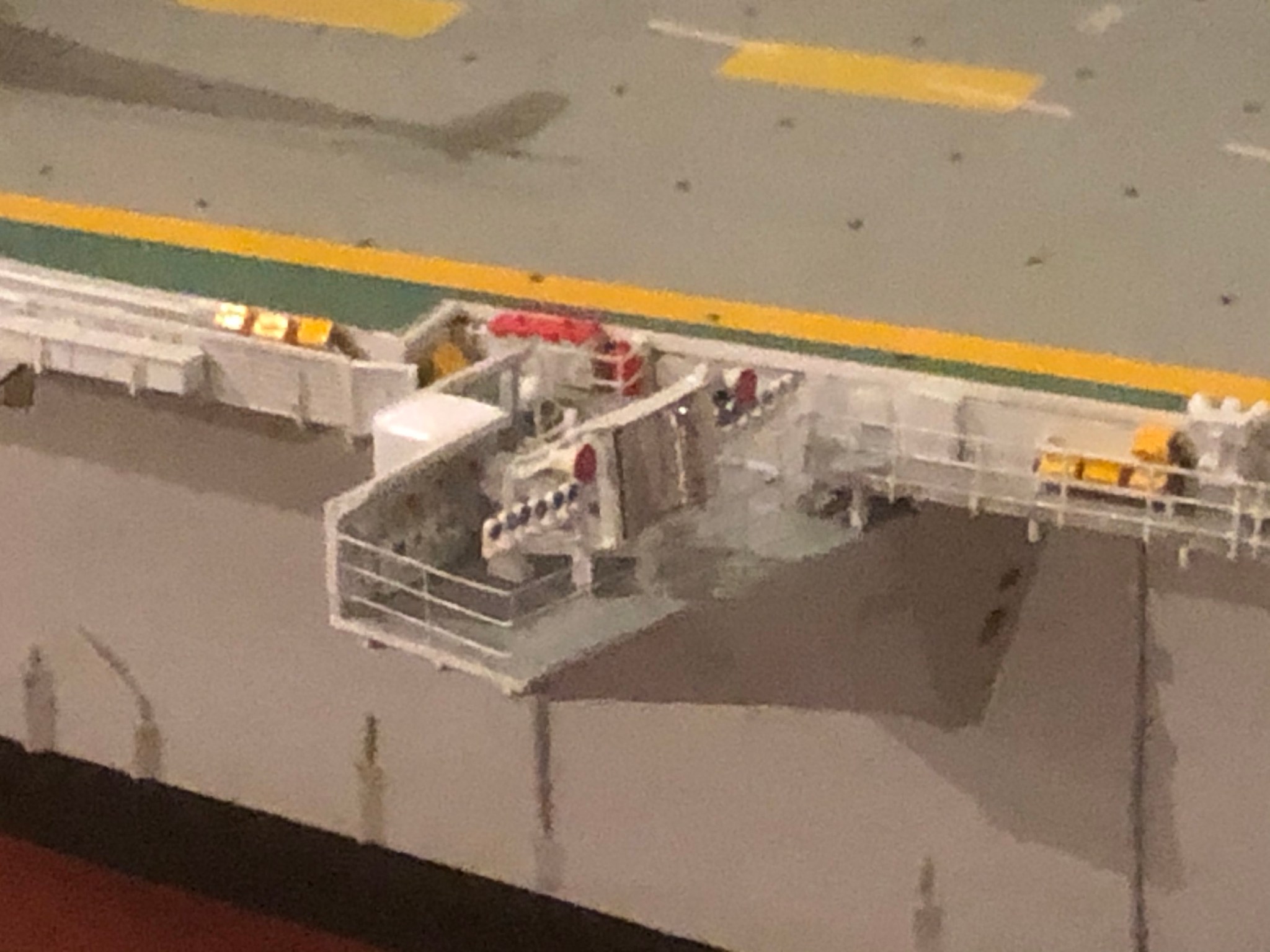
Most obviously, the carrier was the first in the class to be built with an angled flight deck, a development that made it one of the most advanced warships then in service. This feature helped increase the tempo of flying operations. Bonaventure could operate its complement of Banshee jet fighters, leaving some portions of the deck for landing as other areas could be used simultaneously for takeoffs, helicopter operation, or aircraft parking. The upgrades influenced other navies to embark on similar lengthy rebuilds of their carriers, and Vikrant, mentioned above, went through a similar rebuild of an uncompleted hull, before her transfer to the Indian Navy.
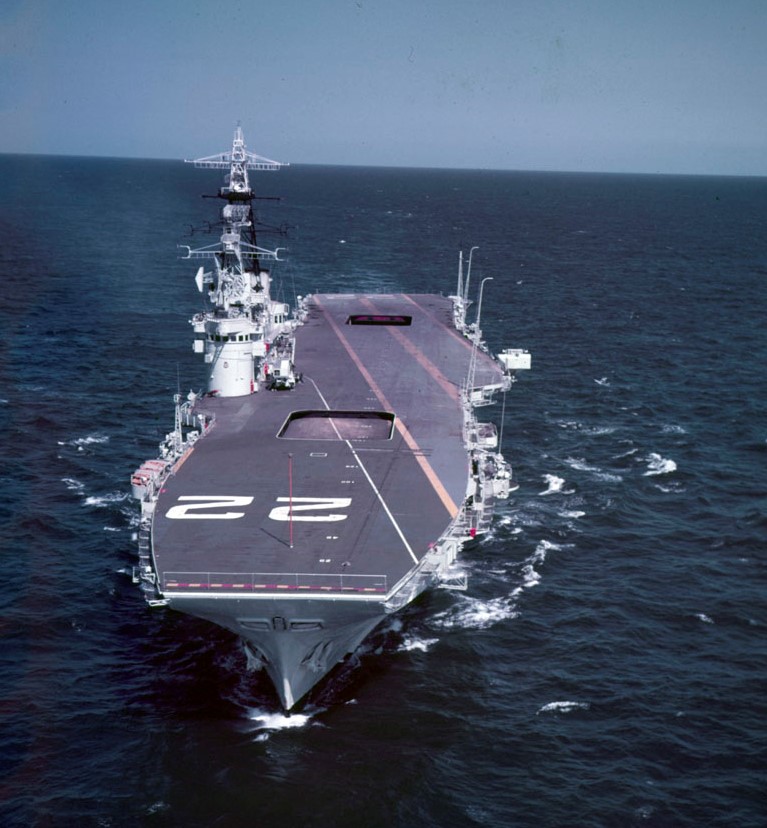
Compared to other ships in the class, Bonaventure had an active, if short, service life, with the standard ports-of-call visits, and many Cold War exercises with NATO allies designed to keep units ready to defend the sea lanes from Soviet submarines and surface ships. She operated several aircraft types, including McDonnell F2H Banshee jet fighters and Sikorsky HO4S helicopters. When the Banshees were decommissioned, the career was reoriented to an exclusively Anti-Submarine (ASW) role, with Grumman Tracker aircraft conducting patrols. Later, the new Sikorsky Sea King helicopters again upgraded Bonnie’s ASW capabilities. This busy career came to an abrupt end with the 1969 decision. Soon after her decommissioning, Bonaventure was sold for scrap, and made a last long journey to a ship breakers yard in Taiwan in 1971.
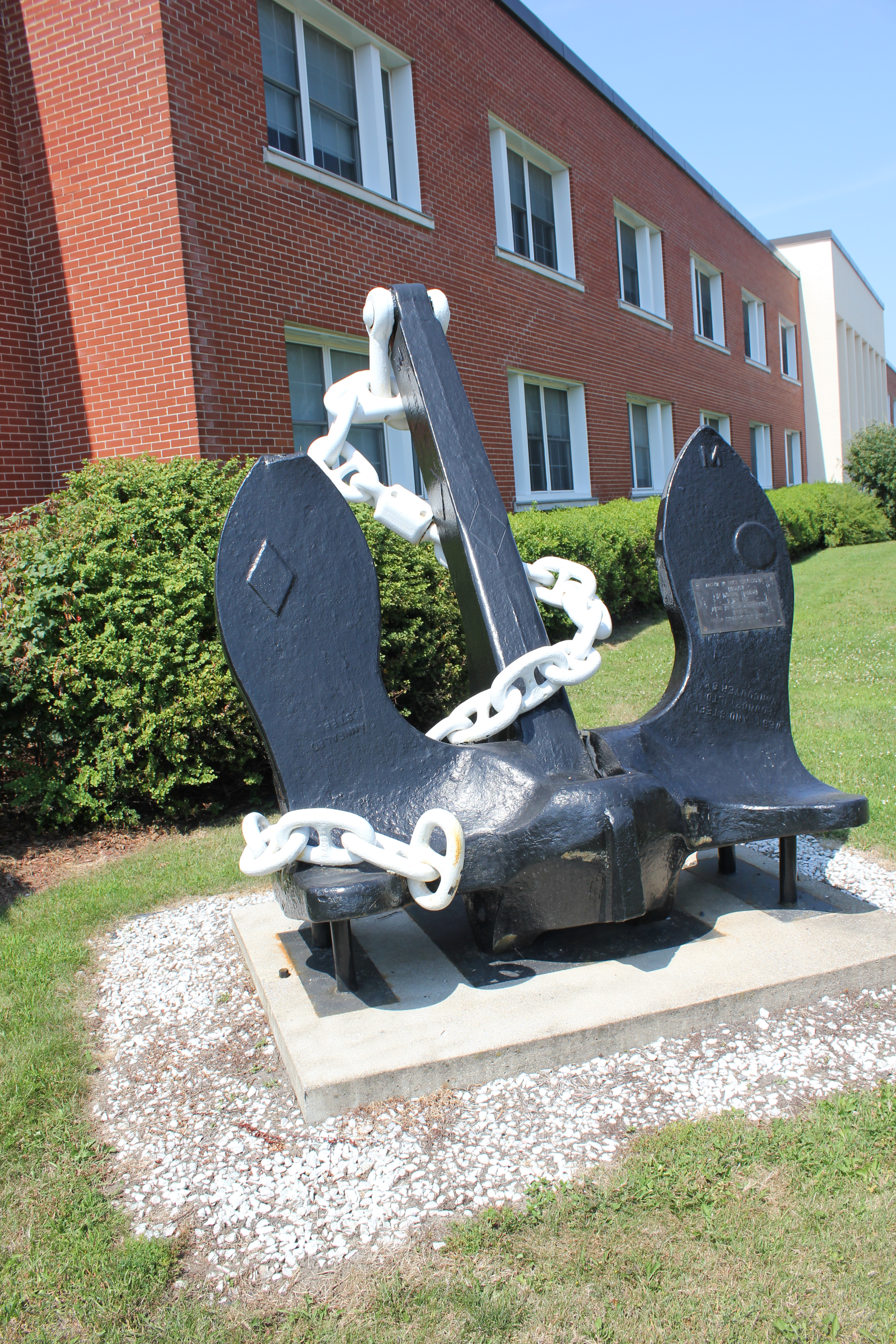
Fortunately, there are several relics of Bonaventure’s time in Canadian service scattered around Canada. In addition to several surviving aircraft in various museum collections, Bonnie’s “Mule” or deck tractor, is in the collection of the Canadian War Museum in Ottawa [click here for a link to the artifact entry]. The ship’s bell is at the Shearwater Aviation Museum, across the harbour from her usual berth, in Dartmouth, NS. Two signal guns are located at HMCS Discovery, Vancouver BC. Two of Bonaventure’s immense anchors are also preserved. The starboard anchor is on display at the Collège militaire royal de Saint-Jean, Saint-Jean-sur-Richelieu, Québec.
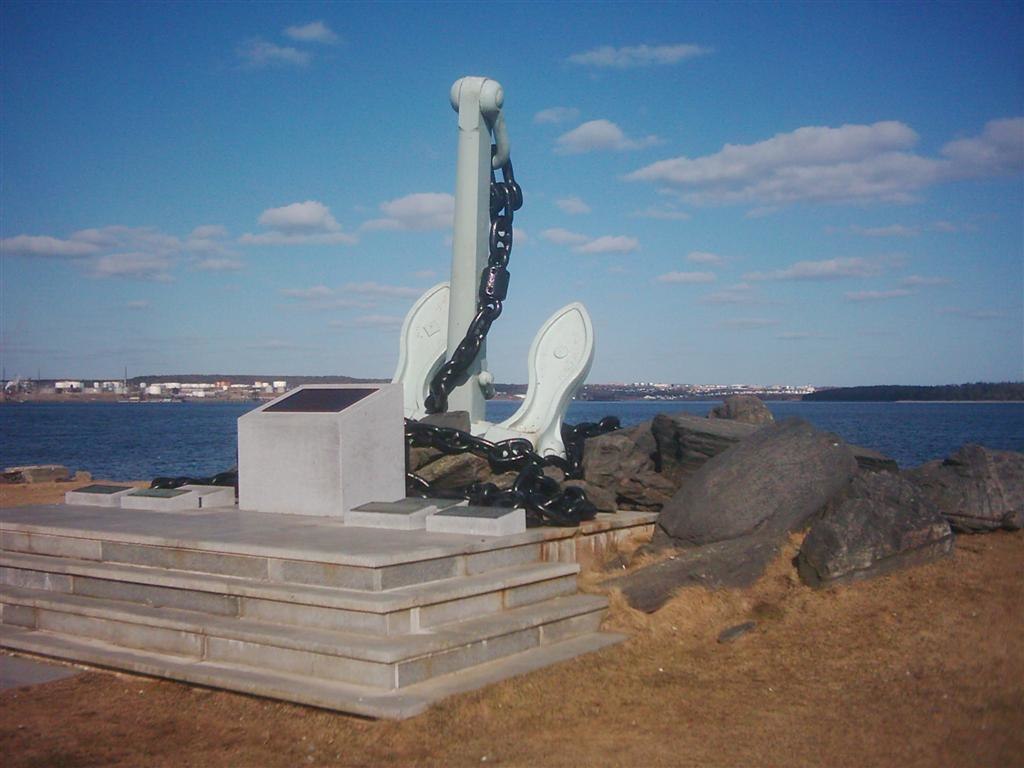
The port anchor has been located in Point Pleasant Park, Halifax, since 1973. This 9-ton stockless anchor is the centerpiece of the Canadian Peacetime Sailors’ Memorial, which is dedicated to the memory of post-1945 Canadian naval deaths. In early 2018, the deteriorating monument was substantially rebuilt by local reservist members of the Royal Canadian Air Force.
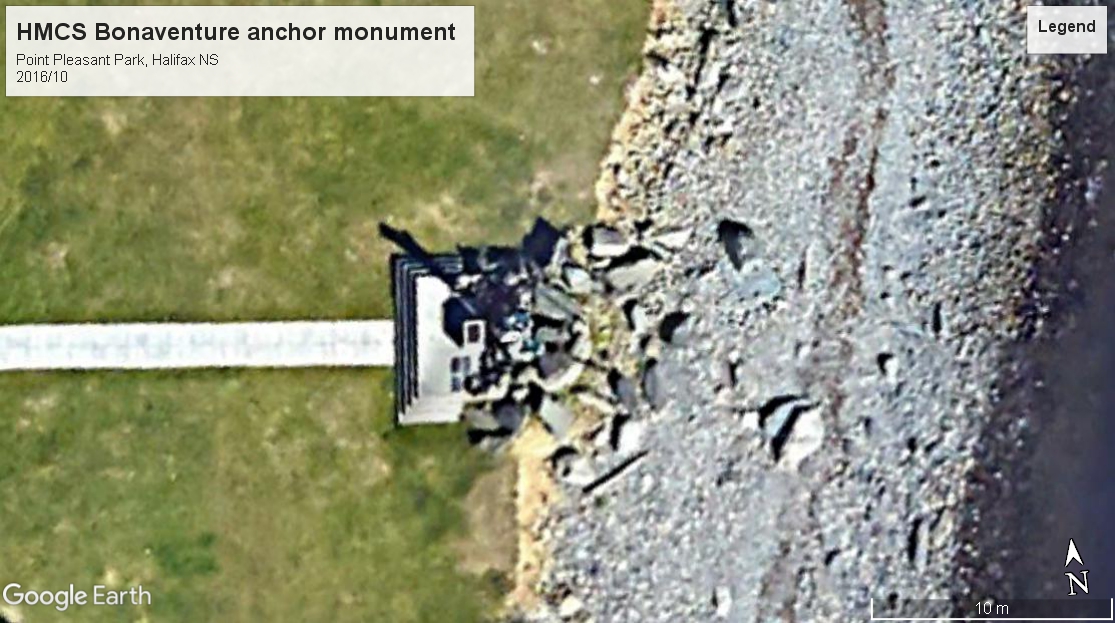 For a few more views of Bonnie and some related topics, check out our RCN carriers tribute page. We decided to add Bonaventure to our database project, which mostly features google earth images of (at last count) more than a thousand warships from 27 navies, because we intend to find other aerial imagery that allows us to further interpret the history of RCN carriers and other ships, once the World reopens.
- J.D.F. Kealy and E.C. Russell A History of Canadian Naval Aviation 1918-1962 (Ottawa: Queen’s Printer, 1965) p.116. ↩︎
- Differences between the two sub-classes, the original Colossus and the Majestic units, are explored elsewhere on this site, under the relevant navy pages that include these carriers. Two ships of the 15 were also completed as maintenance carriers, and had very different careers. ↩︎
- The Centaur class carrier INS Viraat (ex-HMS Hermes, shown above), served 58-years, from 1959-2017. By comparison, the longest serving US Navy aircraft carriers have been the USS Midway (1945-1992 – 47 years), and the recently decommissioned USS Enterprise (1961-2017 – 55 years) ↩︎
 The Searchers