Ships in desolation, in dire straits, in peril, beset, with icebergs the size of fortresses barreling down upon them. William Mumford painted what he saw, and what he saw was a lot of natural forces conspiring to destroy his ship, HMS Resolute. He was the ship’s carpenter, an important position, onboard a wooden ship surrounded by frigid water, ice, and barren rock.1
Here is more of the remarkable William T. Mumford collection of watercolours now in the custody of Library and Archives Canada.2 Please visit our recent post “A Resolute Perspective – What Mumford the Carpenter saw while searching for Franklin” for context, and the first group of artwork. Today, his little-known watercolours are a fine visual record of his 1852-1854 experiences on board Resolute, a member of the Sir Edward Belcher Expedition looking for the lost crews of Sir John Franklin. This instalment documents the transit up to Greenland and the early period of the searches. Mumford’s keen eye for detail will feature in several upcoming posts! Additional information has been supplied, mainly from passages in Mumford’s shipmate, George F. McDougall’s published journal The eventful voyage of H.M. discovery ship “Resolute” to the Arctic regions: in search of Sir John Franklin and the missing crews of H.M. discovery ships “Erebus” and “Terror.”3
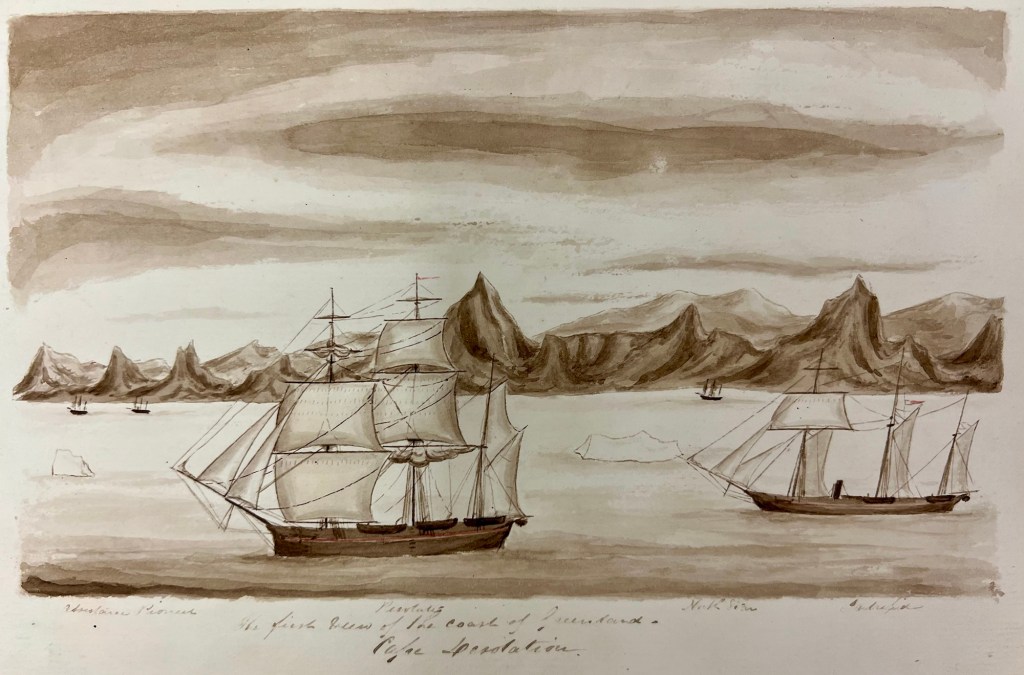
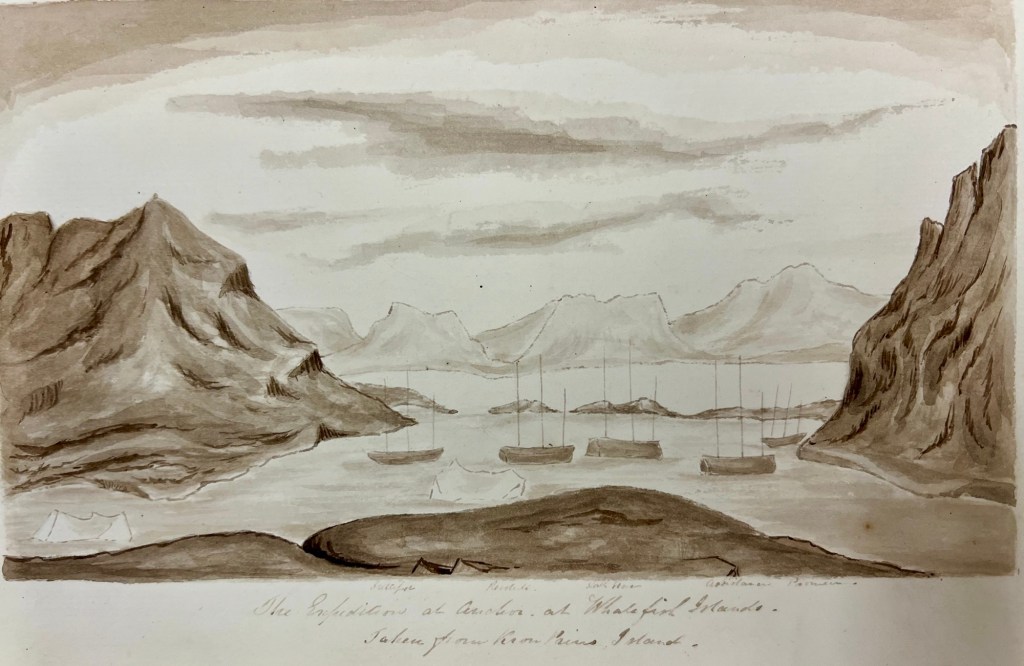
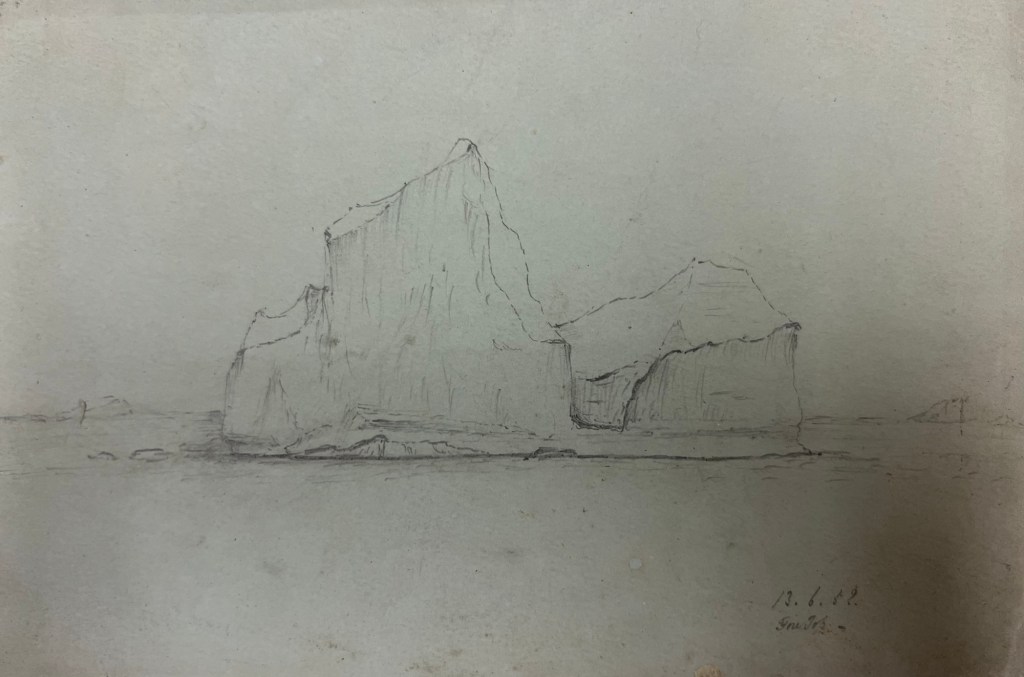
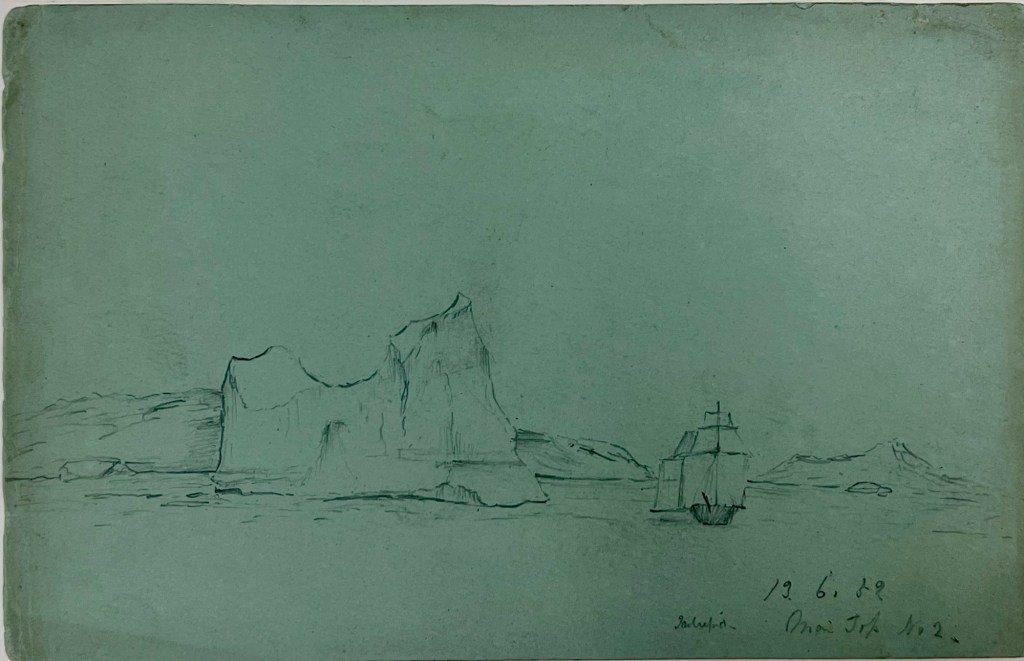
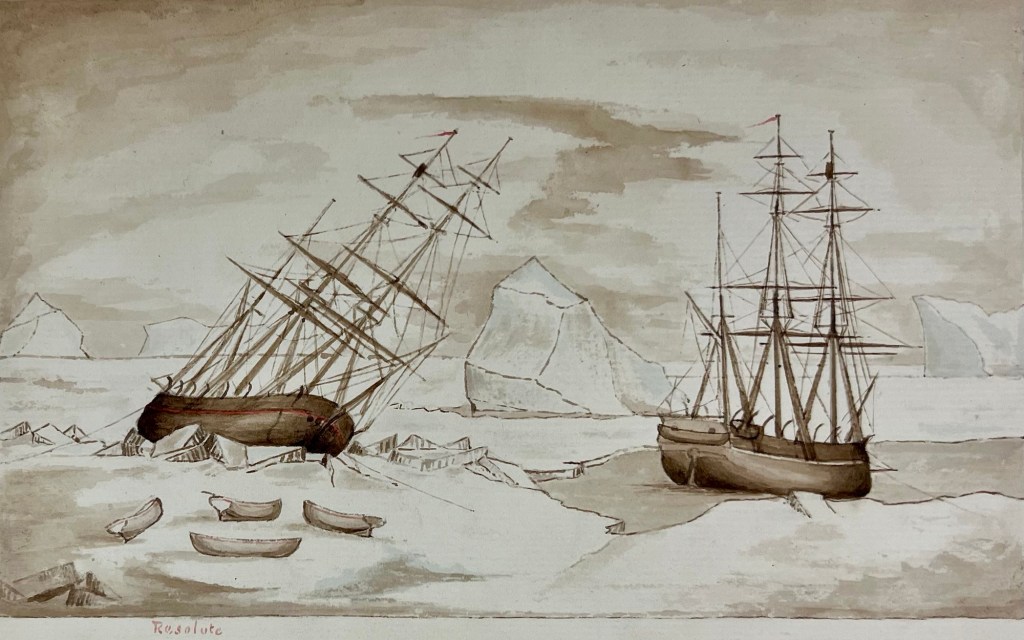
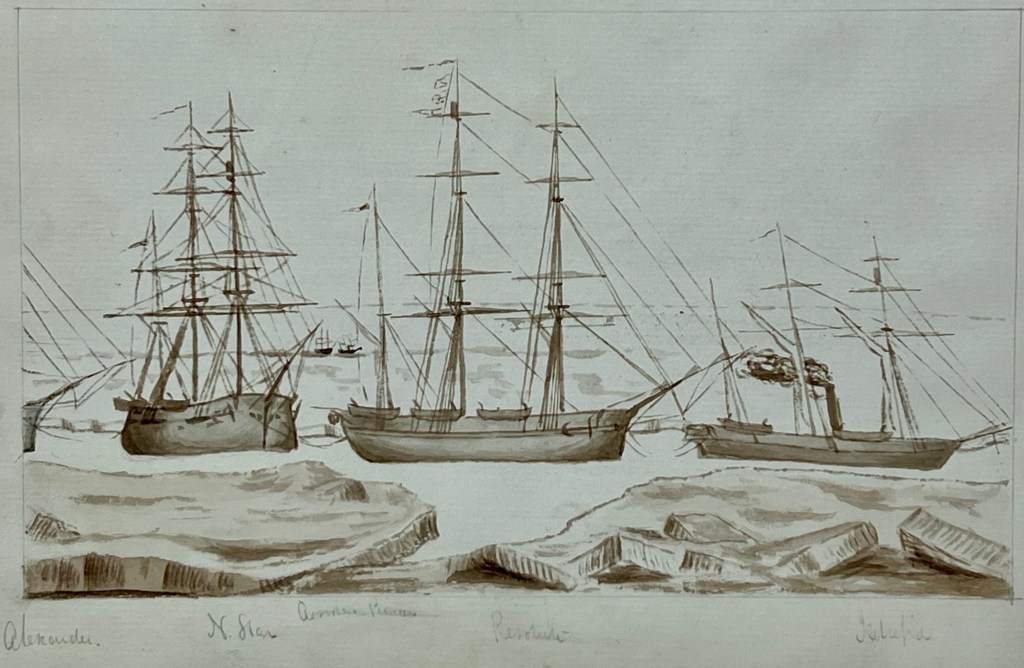
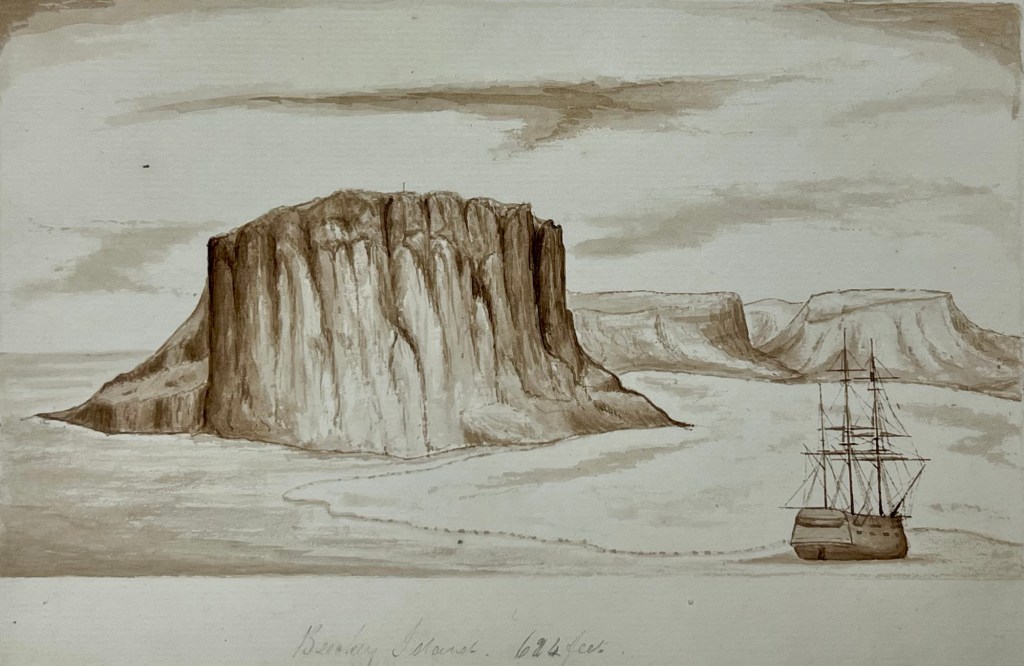
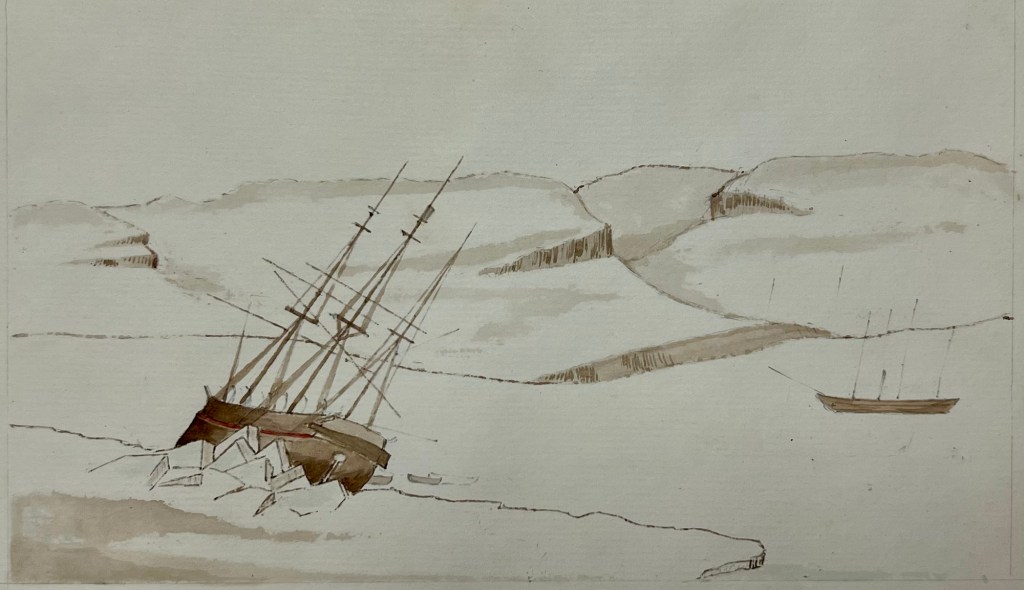
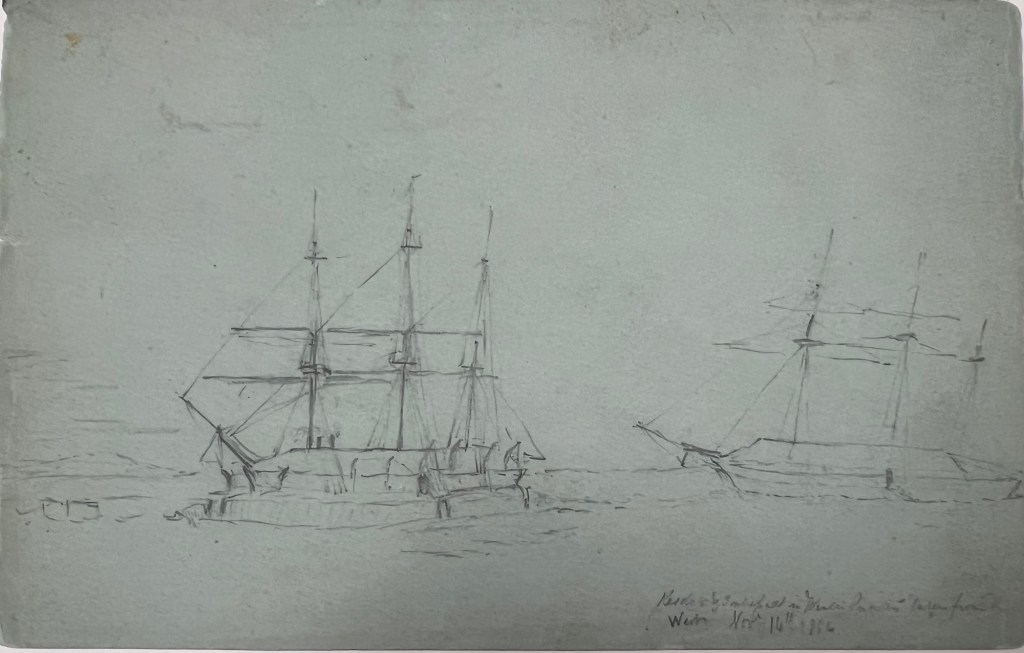
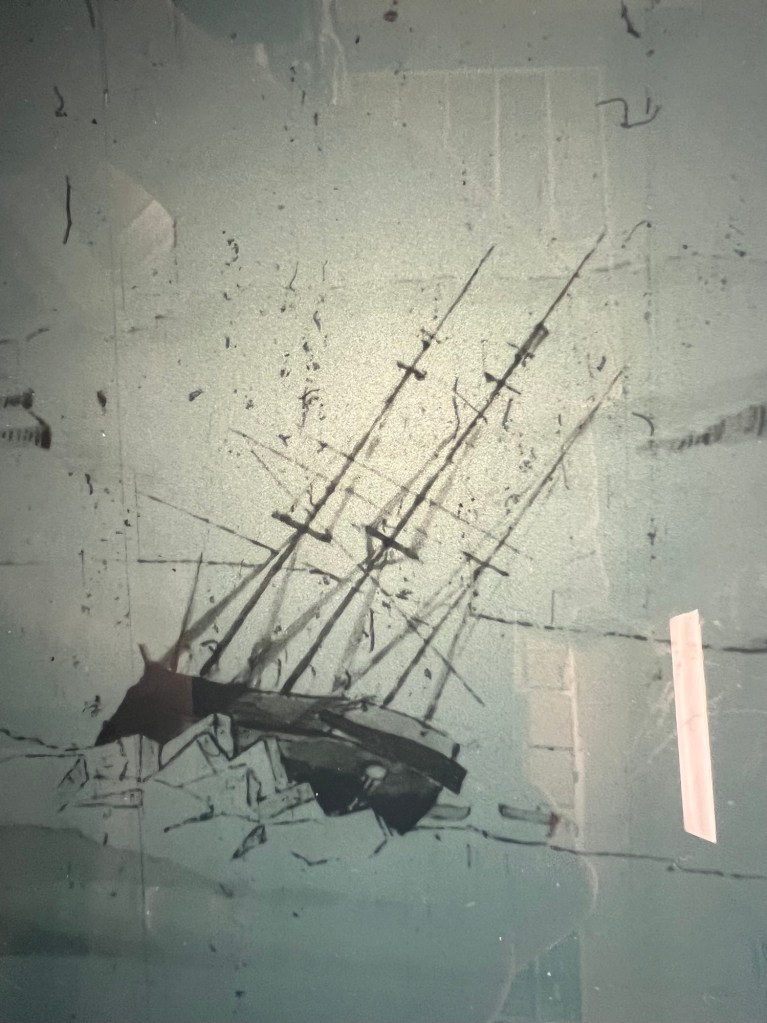
“The first view of Greenland, Cape Desolation 21 May 1852” the squadron is all depicted, with Resolute and Intrepid in the foreground, passing some bergy bits. Credit: LAC 86-18-3“The expedition at Anchor, Whalefish Islands. Taken from Kron Prins Island, Greenland May 1852.” The ships are identified (from left to right) HMS Intrepid, Resolute, North Star, Assistance, Pioneer. This view appears very similar to a calotype that Dr. William Domville, Resolute’s surgeon, captured somewhere on the Expedition. (Today in the custody of Royal Museums Greenwich P36CAL) Credit: LAC 86-18-4“Four Top Iceberg, Wargal Straits, Greenland June 13th 1852.” These impressive bergs were encountered in Waygat or Waygate Channel. Credit: LAC 86-18-5“Main Top Iceberg, Wargal Straits, Greenland June 13th 1852.”Credit: LAC 86-18-6“The Resolute [left] and another ship in Perilous Position in the Ice, Melville Bay, Greenland” ca. 26 June 1852. Mumford has added some colour by showing Resolute with her distictive red band around the ice channels. George F. M’Dougall relates in his published journal that on the 26th Resolute was badly nipped between a moving flow and land ice. The ship’s bell rung on its own, the boats were dragged out to the ice, and the rudder was destroyed. The vessel at right should be Assistance, which had a single white band, was nearby, and was cutting in to an ice dock. Mumford would have been heavily involved in setting up the spare rudder. Credit: LAC 86-18-7“The Alexander, North Star, Assistance[distant], Intrepid[distant], Resolute, Pioneer off Melville Bay, Greenland July 1852.” Given the complete absence of McLellan, a whaling ship which damaged Alexander and North Star, and the freeing of the ships, we can speculate that this is later in July. Alexander (a whaler from Dundee) accompanied the naval ships longest of the whalers. Credit: LAC 86-18-8“Beechey Island, 629 feet” [ca. 10 Aug. 1852] Our ID of this vessel would be HMS North Star. With Erebus and Terror Bay not yet clear of ice, she is waiting on the 10th or 11th to take up her inshore position off Beechey as the expedition’s longtime depot ship. Credit: LAC 86-18-10“The Resolute (?) in a Dreadful Position in the ice off Beechey Island (?) 16 August 1852” From M’Dougall’s diary we know that, while near Assistance Harbour on an errand to drop a whaler off at Cape Hotham, Resolute was again in peril of receiving a nip, with Intrepid nearby. Resolute (red band) and her crew has sensibly unshipped her rudder and hung it over the stern. Credit: LAC 86-18-12“Resolute and Intrepid in Winter Quarters, Melville Island November 16th 1852” Resolute’s first overwintering location. Credit: LAC 86-18-13
HMS Assistance (flagship), Intrepid, Pioneer were crushed in ice or otherwise foundered. As related in the previous Mumford post, Resolute, incredibly, drifted to discovery by whaling ships 1,900 km East. North Star survived her Beechey Island ordeals to help evacuate the other crews. Considering the marine casualties, and compared to Franklin’s two-ship Expedition, very few crew members died. ↩︎
William T. Mumford (1830 – 1908) was a young apprentice carpenter when he volunteered for service with HMS Resolute–captained by Henry Kellett–to scour the Arctic for Sir John Franklin and the missing crews of HMS Erebus and Terror (last seen by Europeans in 1845). Resolute was one of five vessels in a squadron commanded by Sir Edward Belcher. As Ship’s Carpenter, Mumford was rated a warrant officer. He kept a diary and other records of this 1852-1854 expedition. He also created a detailed visual record. He documented the Belcher ships, mostly during their long imprisonment in ice, their Beechey Island staging base, and important or perilous moments. Once Resolute was abandoned, he kept up with his diary and continued to illustrate his difficult journey back. Today, these interesting records are in the collection of Library and Archives Canada.
Mumford was an active participant to the important events of this phase of Arctic exploration. The two main search parties, Belcher in Assistance, Kellett in Resolute, respectively accompanied by their steam tenders, Pioneer and Intrepid, left their depot ship, North Star, at Beechey Island, to push further north and west. Once the ships were beset in ice, crews conducted further searches using sledges. Though they found virtually no new information out about the fate of the Franklin crews, they surveyed large swaths of the Arctic archipelago. A happy discovery was the location of the long-beset HMS Investigator at Mercy Bay. Kellett ordered Robert McClure, Investigator’s captain, to abandon his command and bring in his ailing crew. During June 1853 McClure sledged to Resolute. The next Spring, with his ships still firmly seized in ice, Belcher made the difficult decision to abandon all primary expedition vessels (still tightly frozen in), and retreat to Beechey to seek passage home. Kellett’s whole party, including the Investigators, were doing quite well after all this time, but Belcher ordered them to go.
HMS Resolute beset, with ship’s boats on the ice and her rudder swung out over the stern. The joys of consulting microfilm from a vintage reader! Credit: Library and Archives Canada, Acc. No. 1986-18
The Mumford collection was acquired by the National Archives of Canada in 1984 with the assistance of a grant from the Government of Canada under the Cultural Property Export and Import Act.1 In contrast to many of the official works and the officers’ records documenting the search efforts, Mumford’s archival fonds provides a different perspective: what a warrant officer with a keen eye for details witnessed of this great era in Arctic exploration. Mumford went on to have an important career with Lloyd’s of London, as a surveyor of ships from 1857-1889.2 He knew his ships, and so his depictions can be considered an accurate visual record. The diary was microfilmed soon after acquisition, and copies passed to Cambridge University and the National Maritime Museum. Interleaved with the text of some 150 pages were watercolours and drawings of ships and topographical scenes, maps, printed poster playbills for onboard theatrical entertainments, and some later correspondence (mostly a curated collection of press clippings that show Mumford to have kept up on developments in Canada’s distant North). After filming, the watercolours were removed and housed separately for long-term conservation. Of Mumford’s diary, we viewed the microfilm copy at LAC last October, and we failed spectacularly to decipher most entries! We hope the fine visual record, presented in chronological order with additional context, are of interest:
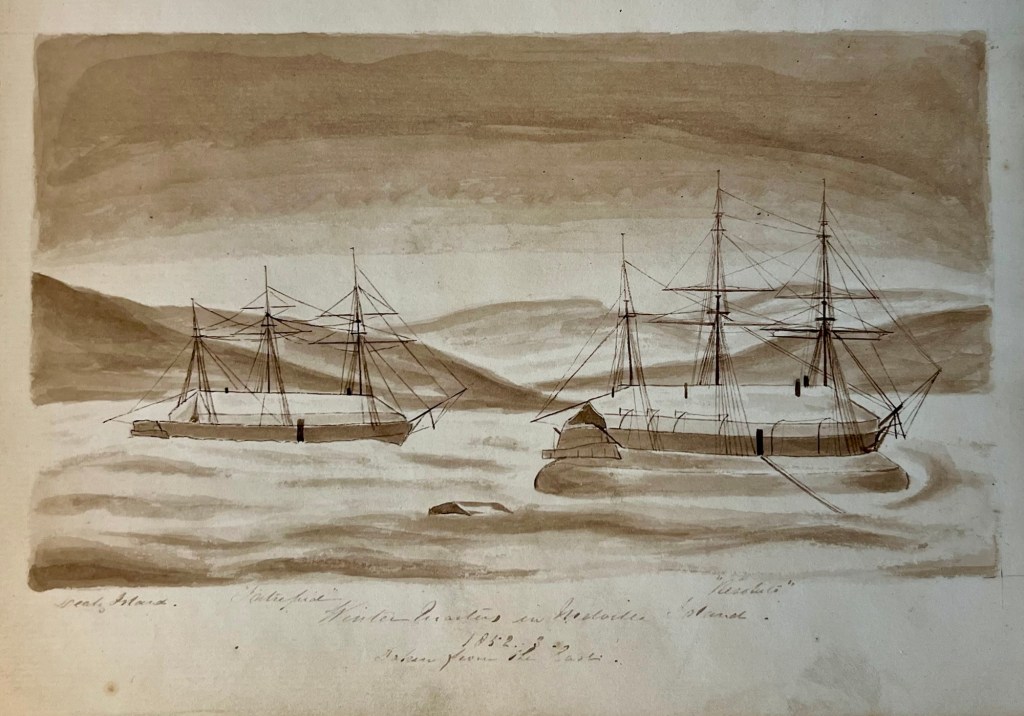
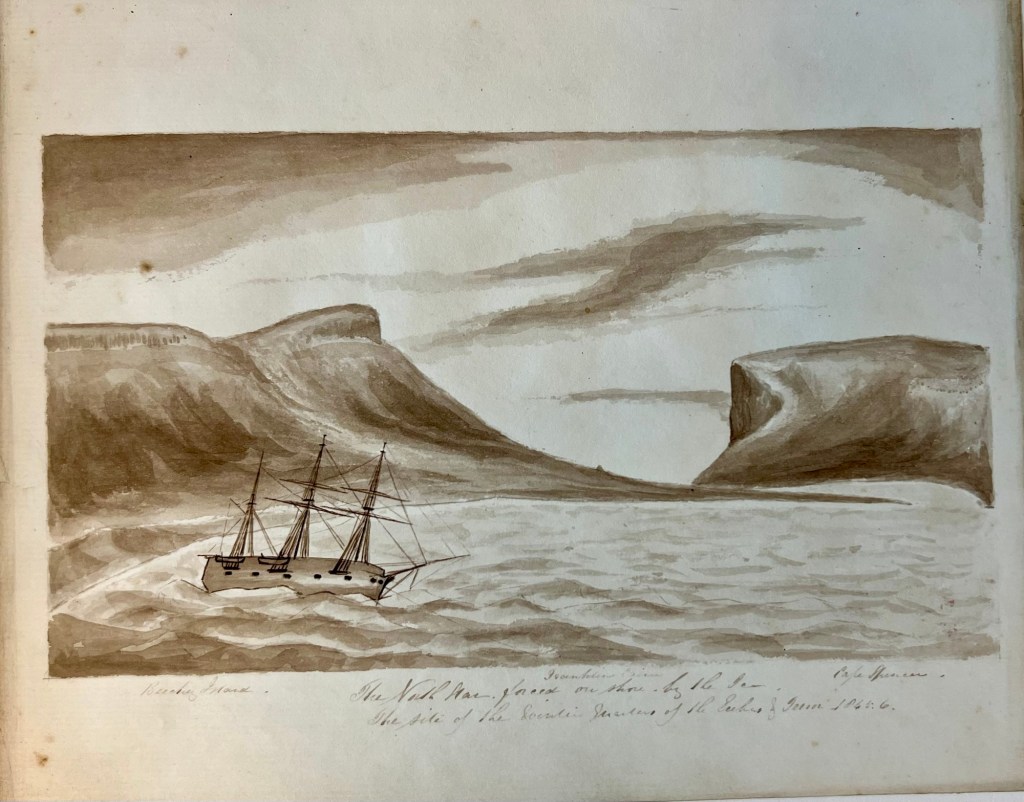
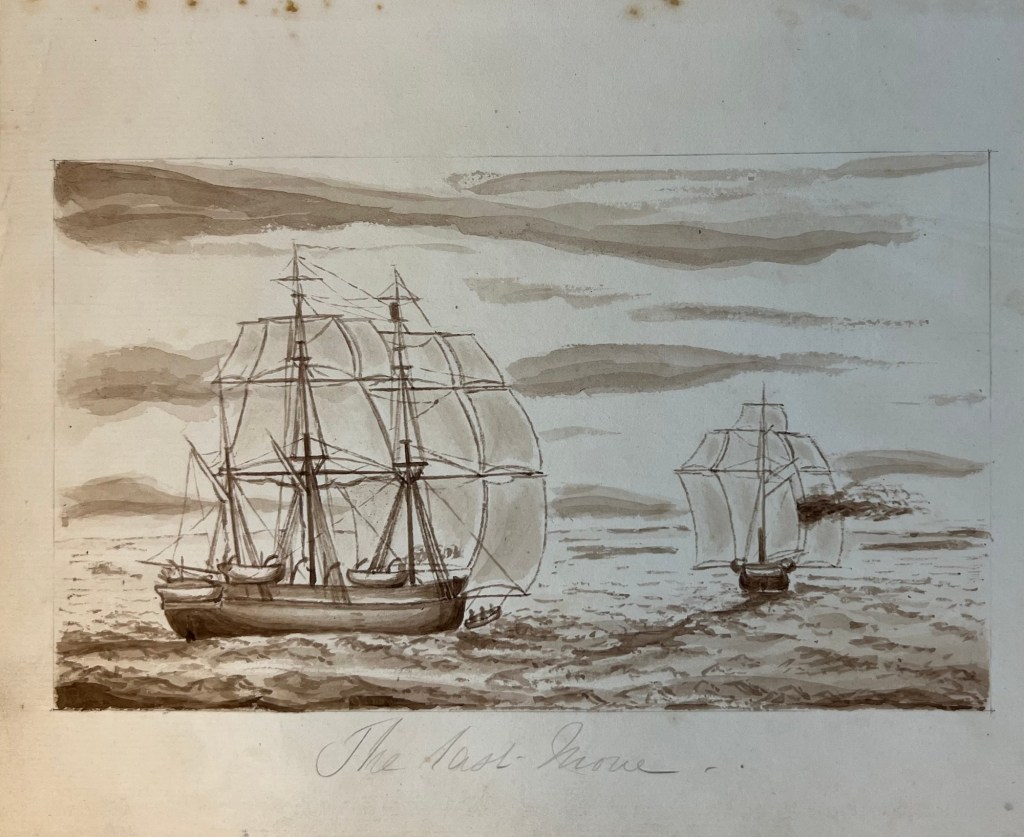
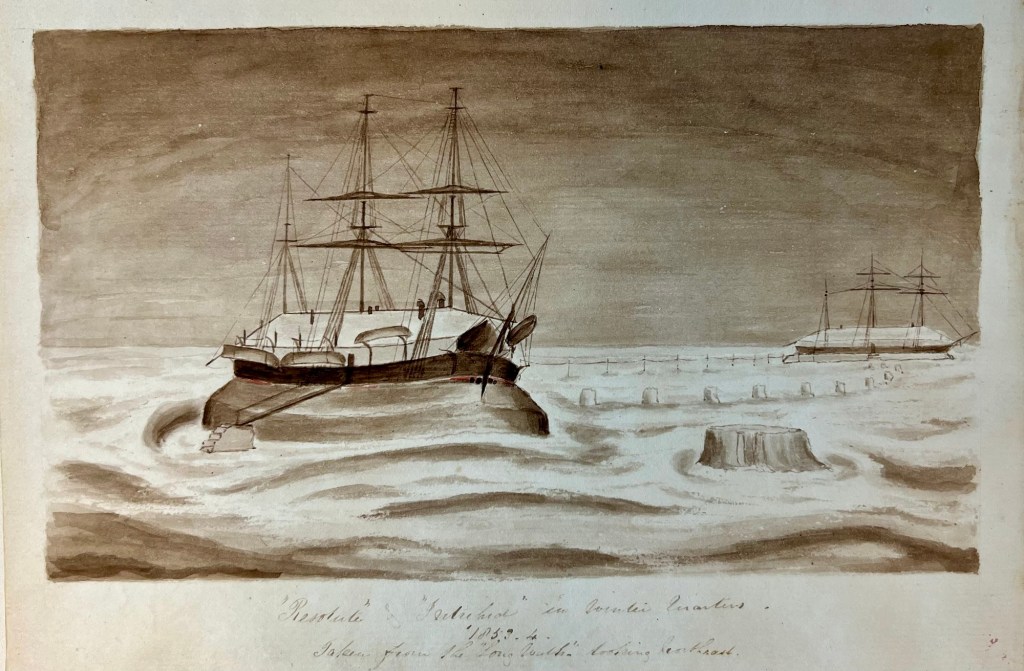
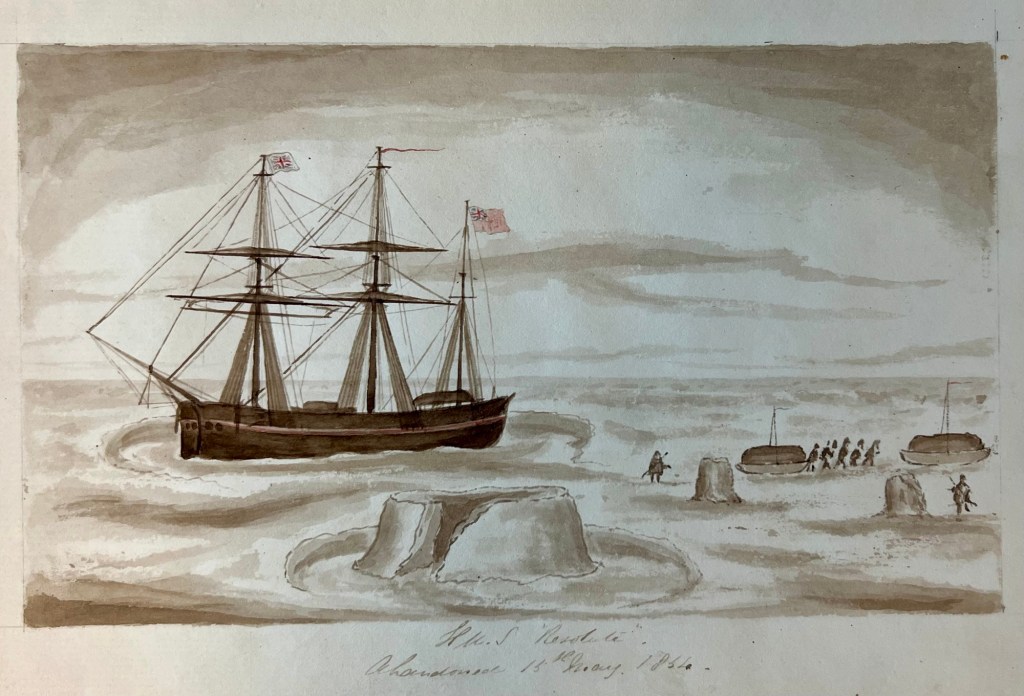
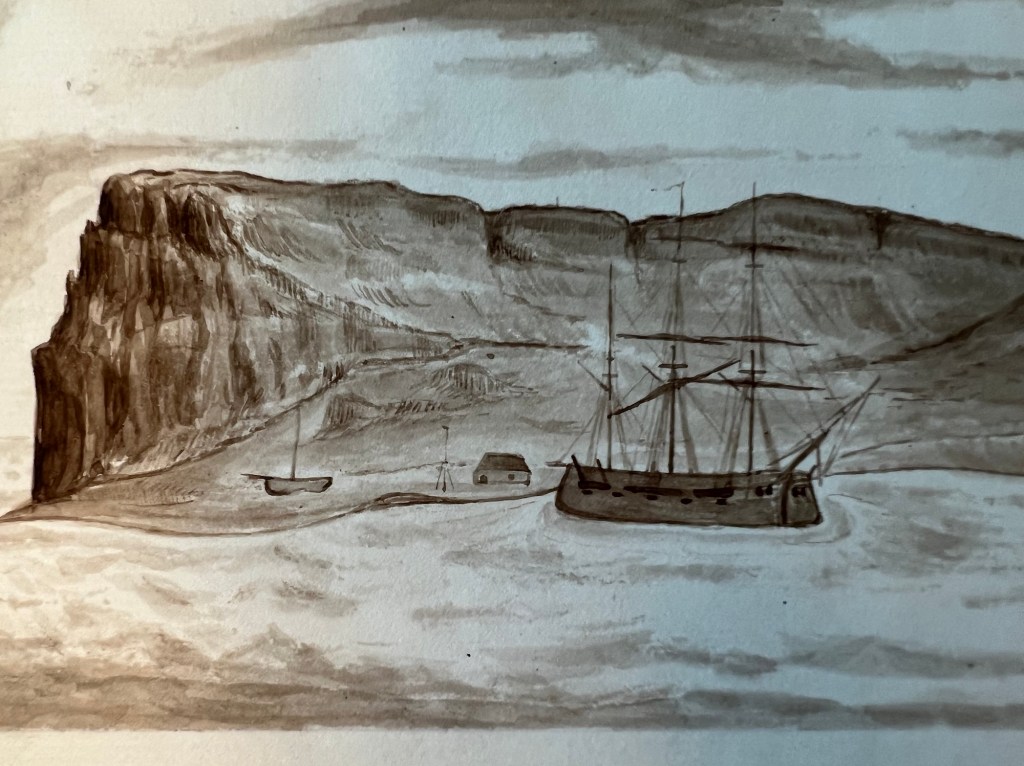
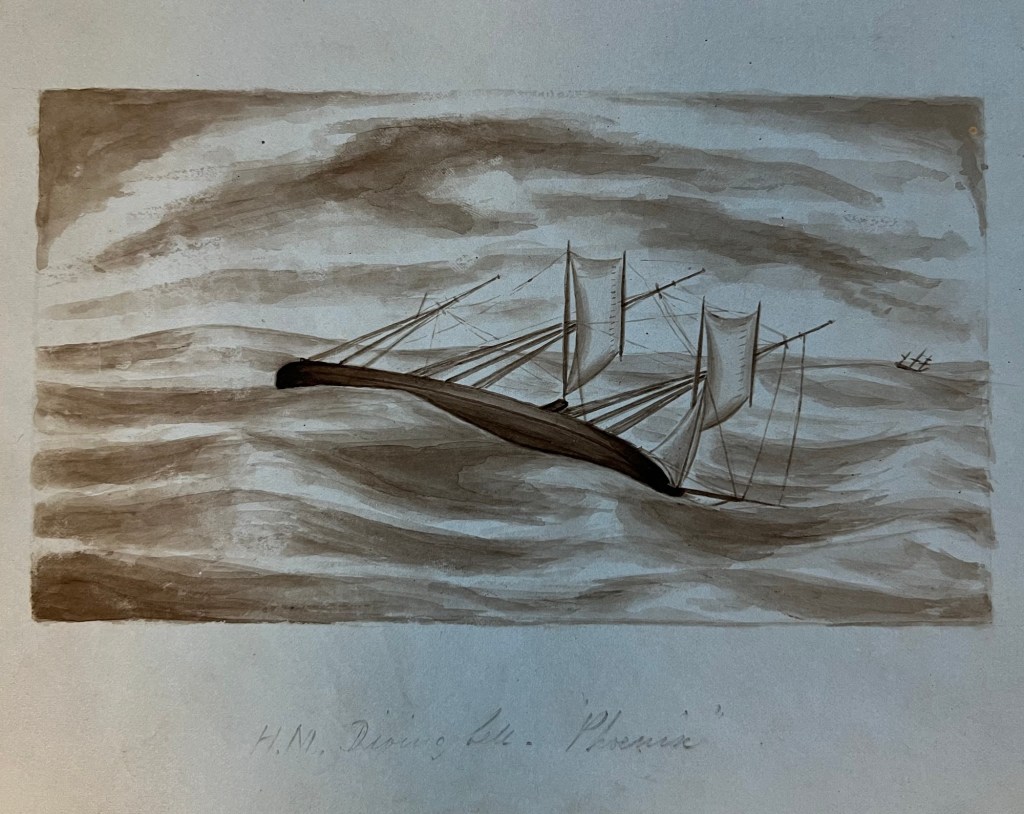
“Winter quarters at Melville Island, taken from the East” Feb. 1853. Even fitted for overwintering and bulwarked with snow, the contrast between the doughty search vessel Resolute, (right) and the rakish, fine lines of Intrepid, is notable. Credit: LAC 86-18-18“HMS North Star forced on shore by the ice at Beechey, near Cape Spencer”, This dramatic June 1853 view shows HMS North Star, the Belcher Expedition’s depot ship, located at Beechey Island, the site of the Franklin Expedition’s first wintering. Credit: LAC 1986-18-20“The Last Move” September 1853. HMS Intrepid, the steam tender, is leading Resolute with sail and steam up. Credit: LAC 1986-18-22“The Resolute and Intrepid in winter quarters, 1853-1854, taken from the ‘Long Walk’ looking East” Ca. Dec. 1853. This shows the two ships now wintering at their second encampment, located (in the moving pack) off Dealy Island. LAC 86-18-25“HMS Resolute abandoned May 15, 1854.” A depiction of the beginnings of the sledging trip of the combined crew of the Resolute and Investigator (Robert McClure’s ship, abandoned earlier at Mercy Bay) making a start towards Beechey Island, with Resolute and Intrepid still beset. Resolute was abandoned in good order with flags nailed to the mast trucks.3 Credit: LAC 1986-18-26HMS North Star, still at Beechey. Dated May 1854, this remarkable view shows Beechey’s imposing and bleak cliffs. Ashore, Northumberland House, the storehouse the Belcher crews built, and a large boat which is likely Sir John Ross’s rescue yacht Mary, are visible. [Detail of] LAC 1986-18-27“HMS Diving Bell, Phoenix” This dramatic watercolour appears to show Edward A. Inglefield’s command, HMS Phoenix, in a perilous situation. September 1854. At this time Inglefield was engaged in returning Robert McClure and the crew of Investigator to England. The distant vessel could be the accompanying HMS Talbot or North Star. Credit: LAC 1986-18-29
Mumford’s ship would eventually free itself from the ice, to drift on an incredible journey. Salvaged by American whalers in 1855, Resolute would be presented back to Great Britain in 1856. For a detailed summary see the online HMS Resolute project: https://www.hms-resolute.co.uk/the-nutshell/↩︎
 The Searchers