One class of Royal Navy vessel is connected to the search for the missing Sir John Franklin Expedition of 1845, and you’ve likely never heard of it! The Atholl class of corvettes were built two decades before Franklin’s Northwest Passage Expedition sailed, at the same time as HMS Erebus, Franklin’s lead ship. Four members of the class, HMS Rattlesnake, Herald, Talbot, and North Star participated in search efforts for the missing crews. In this post we explore the design of these ships and the Arctic service of three members of the class. A future post will reconstruct HMS North Star’s unique refitting and summarize her important career.
What is so special about these ships? Arctic and Antarctic exploration vessels were heavily-adapted to survive difficult conditions at the high latitudes. Exploration ships were under a different type of attack these warships had been designed for. Hulls required strengthening and fortification to serve in a chaotic environment characterized by ice floes; icebergs; bergy bits; growlers; land ice and pack ice. A ship overwintering–frozen-in to the pack–was subjected to prolonged pressures, or sharp, intense “nipping,” as the ice shifted. Exploration/discovery vessels in this period were about 100-120’ long on deck and displaced 500 tons or less. The Atholl class fits these general parameters, but its design lineage was not from the stout hulls of the bomb vessels, like HMS Terror, Hecla, Fury and Erebus. With the disappearance of these “bombs”, the Admiralty moved to searching for the lost Franklin crews with heavily converted merchant hulls: HMS Enterprise, Investigator, Assistance, Resolute.
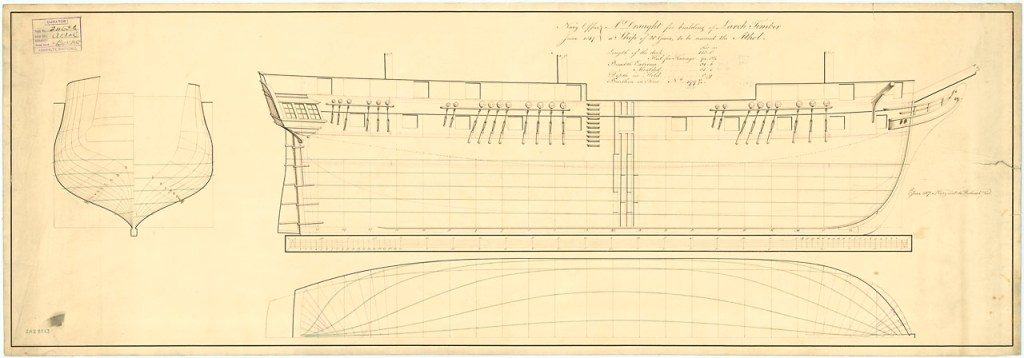
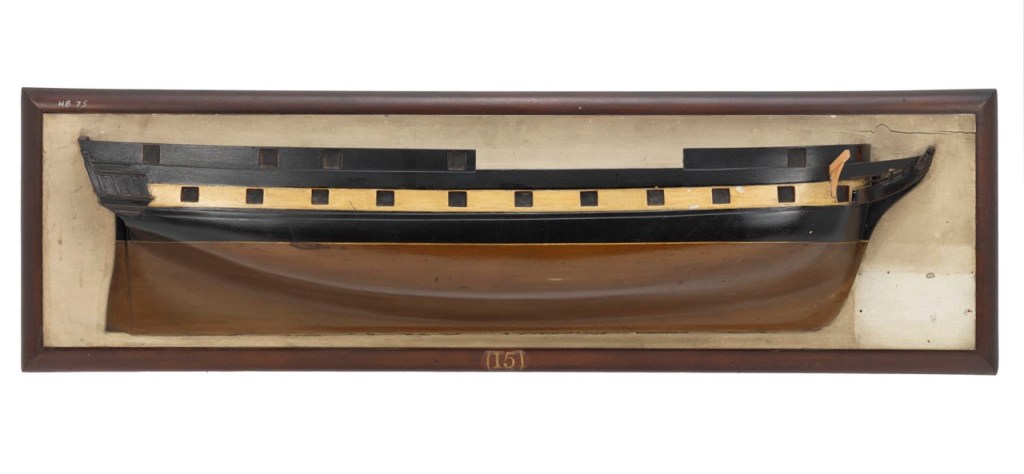
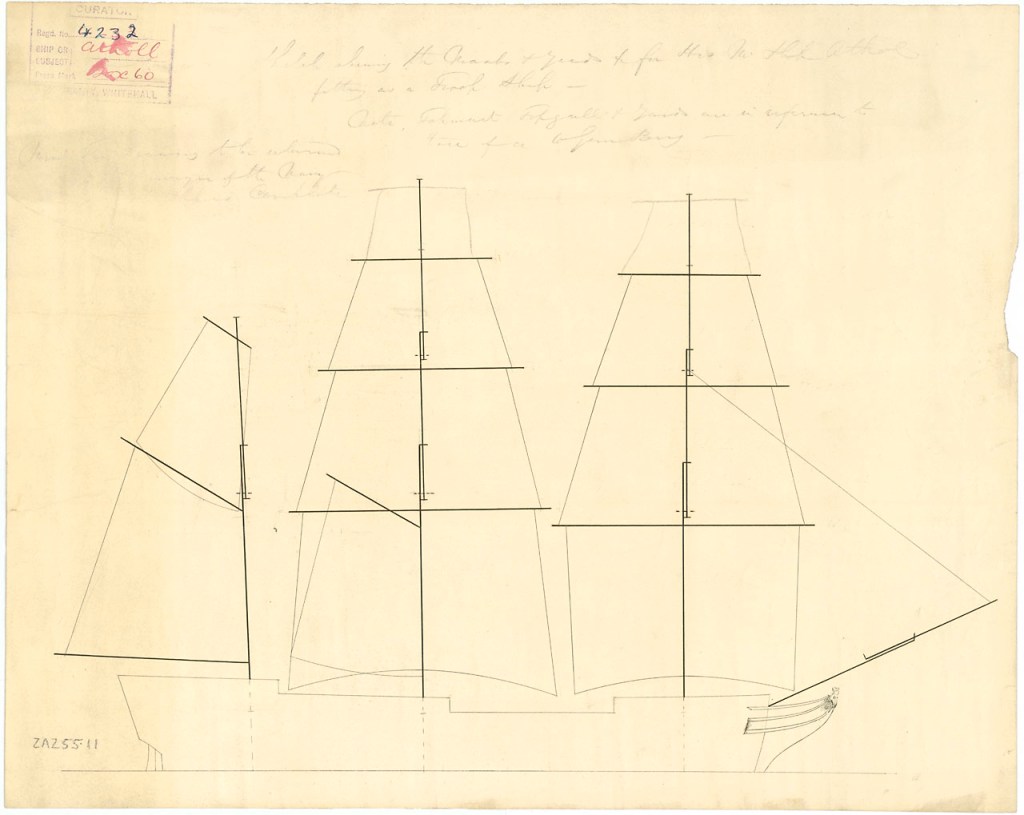
The Atholls were a different species altogether. Their full gundecks speak to their intended role: general-purpose warships. These 28-gun corvettes were designed just after the Napoleonic Wars had concluded. They fit into a category often called “donkey frigates” – corvettes that took on some of the duties of the more expensive to operate frigates – but they would have been considered light frigates in an earlier era. The original plans for the lead ship, Atholl, were co-signed by an important design team: Surveyors of the Navy Henry Peake, Joseph Turner, and Robert Seppings. Peake had designed the Vesuvius and Hecla class bomb vessels (HMS Terror and Erebus), while Seppings was implementing wide-ranging changes to the designs of all classes of ships. In contrast to the full bilges, rounded tumblehome, and sweeping sheer of 18th Century ships, Atholls had steeply rising floors (a “V-shaped lower hull), a distinctive flat rise at the waterline, and almost flat sheer along the length of the decks. In the early years of the 19th century, these were state-of-the-art design features. Above the deck, three towering masts supported the spars, cordage, and canvas of a three-masted, fully-rigged ship.
For their main armament, they were fitted with a modern, versatile battery of guns. Their gundeck was fitted with twenty heavy “smashers”: 32-pound carronades. This gave the class an outsized weight of broadside.1 Compared to the older “long guns” – traditional cannon – carronades were lighter and took less crew to work, but did not have the same range to strike more distant targets. The ships also had 9-pounder bow-chaser cannon and lighter carronades on the quarterdeck. While the bomb-vessels had been built to withstand the strain of firing their two massive mortars at land targets, the Atholls were designed to withstand the firing strain of broadsides of 32 and 18-pounder carronades.
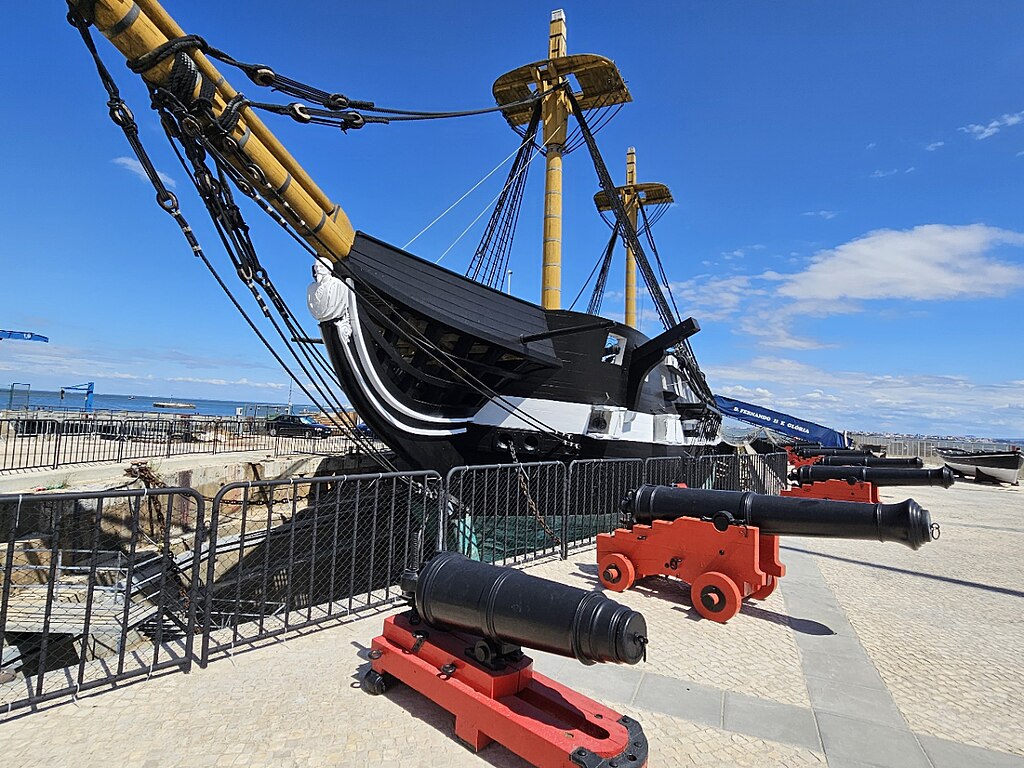
Fourteen ships were built in the period 1821-1828. Some of the class had been constructed in the East Indies, with design changes based on the availability of exotic timber and a shortage of iron knees.2 Three of these – Rattlesnake, Samarang, and Crocodile – appear to have had a second row of stern galleries (windows), at the level of the quarterdeck. At a time when decoration was being simplified or removed altogether, this odd arrangement for a warship made them appear similar to East India Company merchant ships.

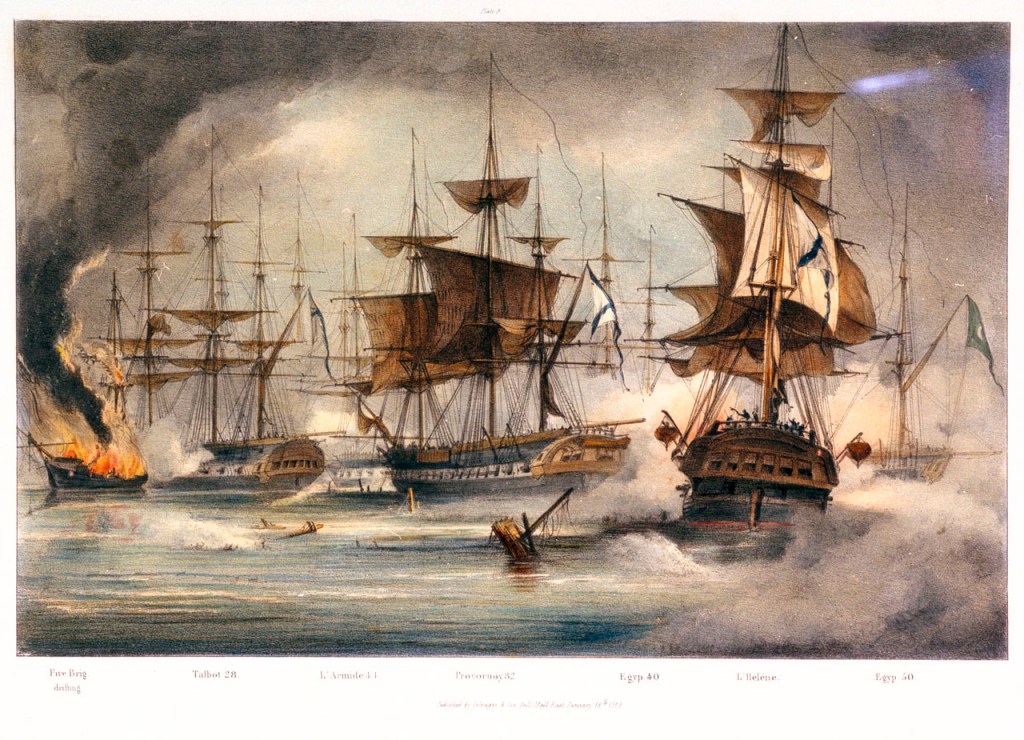
The Atholls served in some notable actions. HMS Talbot played an important role at the last great battle under sail, Navarino (1827), during the Greek War of Independence, and was also present at the 1840 Bombardment of Acre. North Star and Herald served in the First Anglo-Chinese or “Opium” War. In 1845-46, North Star was operating at New Zealand during the Flagstaff War at the same time the Franklin ships were overwintering at Beechey Island.
During their long careers, these ships proved to be very adaptable to new roles. They could be provisioned to serve out of distant posts of the British Empire, and could be quickly converted to carry troops. Units of the class got a new lease on life when many were converted to survey or depot/supply ships. Some common modifications appear from the 1830s on. Decoration at the bows and stern was minimized, and most of the armament was removed. The spaces of the old weather-deck were enclosed to form new focs’l and quarterdeck accommodation. The officer’s cabins and wardroom were extended, and the captain’s great cabin was moved up a deck to the newly-enclosed area aft. In some cases this building-up and decking-over created what in essence is a pint-sized two-decker. Later still, the ships were converted to a variety of rolls, such as receiving ships, supply ships, storehouses, or storage hulks. HMS Talbot’s final service, as a gunpowder hulk, is visually documented because of her proximity to the site of the tragic 1878 Princess Alice sinking. The last of the class known to exist was the former HMS Nimrod, scrapped in 1908.
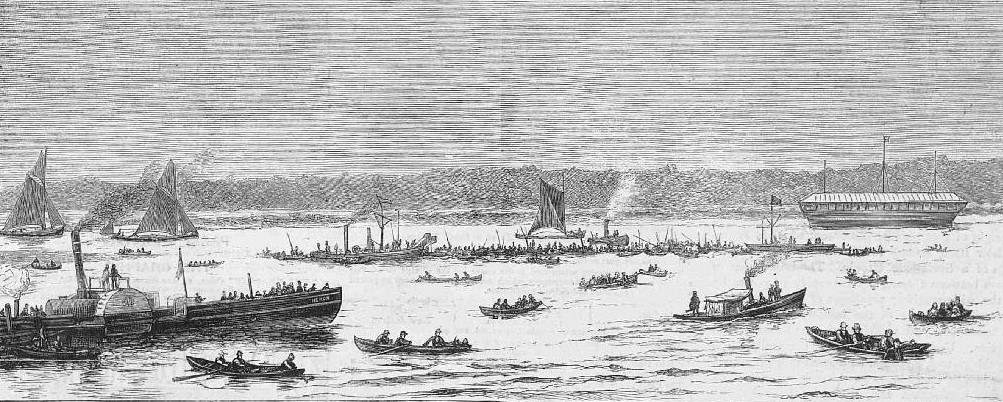
Let’s briefly explore the Franklin search-related efforts of three of the class:3
HMS Rattlesnake (1822): Rattlesnake played a minor role in the Franklin search efforts. She was commissioned on 28 December 1852 by Commander Henry Trollope (with a compliment of 80) for conveying relief supplies to the (western) Arctic ships employed in the search for Sir John Franklin’s expedition: HMS Enterprise (Richard Collinson) and HMS Investigator (Robert McClure). Rattlesnake’s captain between 1845 and 1850 had been Owen Stanley, who had served on Terror during the 1836 George Back expedition, and had accompanied her and Erebus north in 1845.
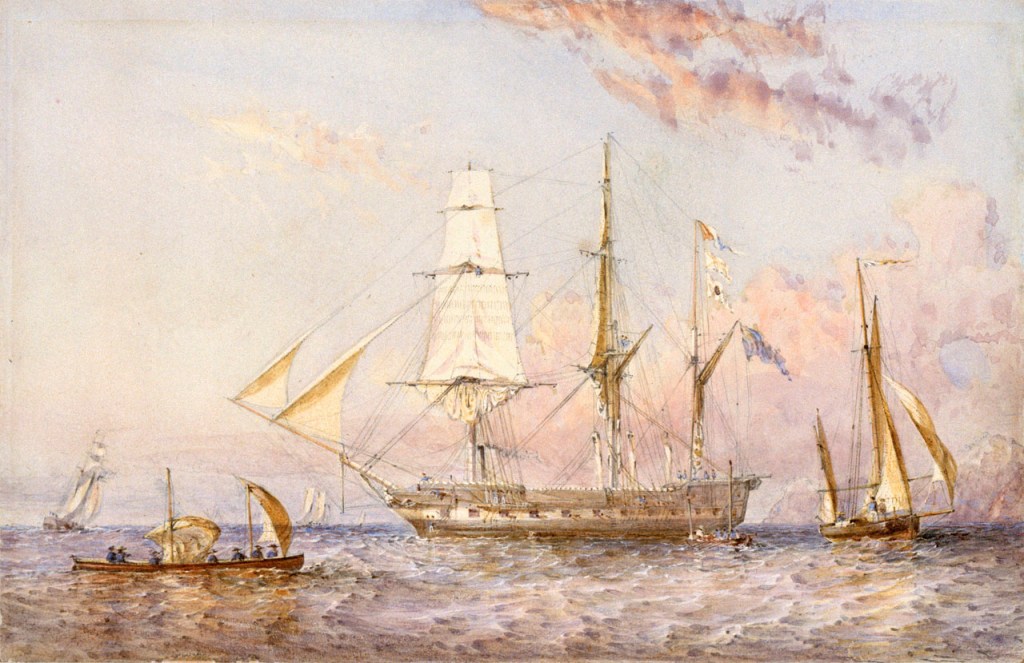
HMS Herald (1824): Captain Henry Kellett was involved in several of the western Arctic searches for the Franklin crews, from 1848 to 1850. He explored the Bering Strait (the early Admiralty assumption was that the Franklin ships may have been caught much further west along the Passage), discovered Herald Island, and in 1849 encountered HMS Investigator (Robert McClure). In the early period of searching, Kellett’s exploration complemented the searches of HMS Enterprise (James Clark Ross and later Richard Collinson) and Investigator. Herald was frequently used to resupply HMS Plover (T. E. L. Moore and then Maguire), during Plover’s six year vigil in the Pacific. In between Herald’s three forays up north, a succession of crews completed very important surveying along the Pacific coast.
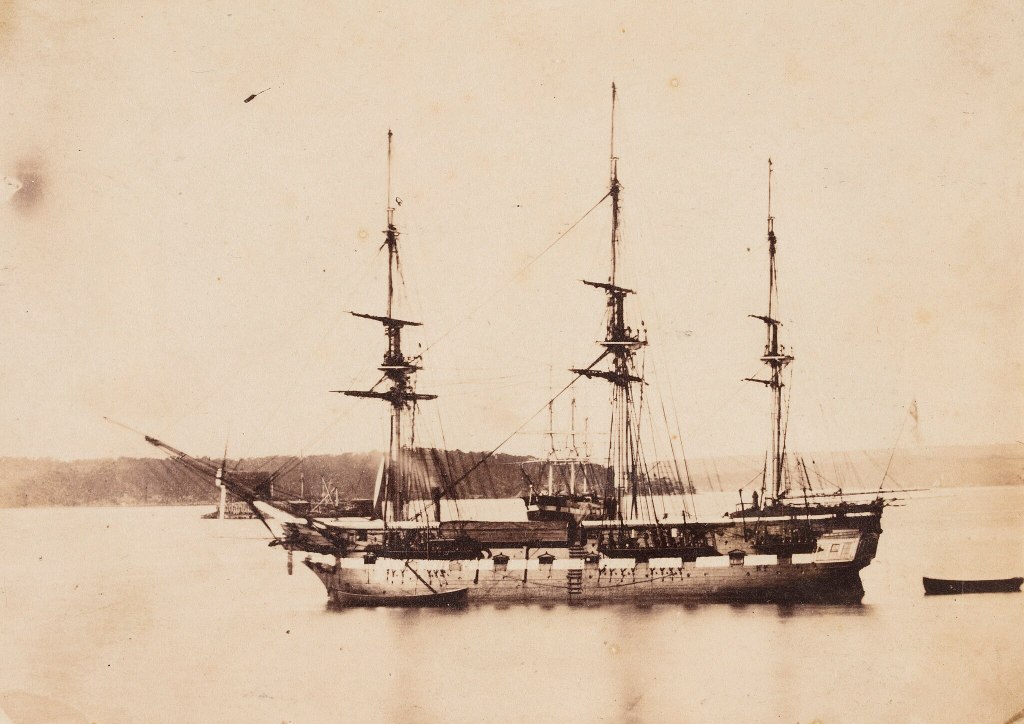
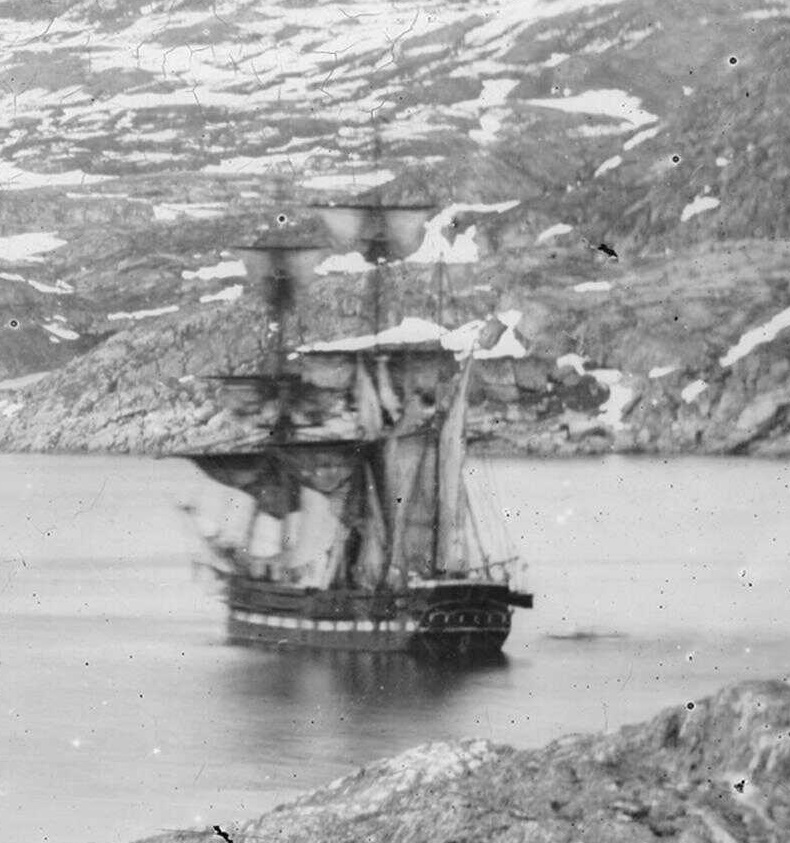
HMS Talbot (1824): After an active career, this veteran was converted to a storeship, to accompany Edward Augustus Inglefield’s 1854 provisioning mission to the Belcher Expedition at Beechey Island, in a similar way as Barretto Junior had helped provision the Franklin Ships in 1845.4 Unlike that ship, Talbot and Diligence (the other member of the squadron) continued on to Beechey, and were on hand to assist Inglefield’s command, HMS Phoenix, and North Star, to transport the crews of Belcher’s abandoned ships home. We are fortunate today to have a fine daguerreotype image of what Talbot looked like at this time on Inglefield’s stopover in Greenland. Talbot retains the trim appearance of a sixth-rate warship, with the characteristic updated variant of the “Nelson Chequer” of a white band picked out with black gunport lids. The transom shows some simplification, as the quarter galleries are not in evidence and the transom has been abbreviated to only five lights (windows). As with Herald above, there appears to be a building-up of the aft section to enclose new officers’ quarters.
Please watch for our upcoming post that will explore Atholl class HMS North Star’s incredible history and design features!
- In an age of fighting sailing ships, whose main armament was disposed over either Port or Starboard batteries of cannon, this is the weight of broadside or “striking power” based on the notional weight of cannon balls fired from all guns in a single broadside fired from either side. Carronades gave small ships a “smashing” broadside. Atholls broadside added up to 383 pounds: (10X32lbs+3X18lbs+1X9lbs). For comparison, a roughly equivalent ship of the previous era, HMS Surprise, of Patrick O’Brien novels’ fame, had an armament of 9-pounder cannon and a total weight of broadside of 164 lbs. ↩︎
- See for example National Maritime Museum midships sectional drawing ZAZ3436 of Termagant (which became Herald), Samarang, Alligator which describes some differences in these East Indies built ships. An aborted plan of the 1830s would have even cut down the design to create 20-gun ships. ↩︎
- For an excellent primer on the bewildering number of vessels involved in various search efforts, including the ships above, please see W. Gillies Ross’s “The Type and Number of Expeditions in the Franklin Search 1847–1859,” ARCTIC Vol. 55, No. 1 (MARCH 2002) 57–69 https://pubs.aina.ucalgary.ca/arctic/Arctic55-1-57.pdf ↩︎
- The previous year, Inglefield had gone up accompanied by the Breadalbane store ship, which was destroyed by ice in August 1853. ↩︎
 The Searchers
