A Voyage through History aboard HMS Calypso

HMS Calypso was completed as a a steam-powered corvette – a uniquely Victorian mix of old and new technologies- in 1883. After a career of transformations, her hulk rests, all these years later, in a quiet cove in Newfoundland. She remains a historic artifact of Newfoundland’s important naval traditions. Years after adding a Google Earth view to my shipsearcher database, I recently got a chance to visit the site. Join me as I explore Calypso’s interesting past and current state!

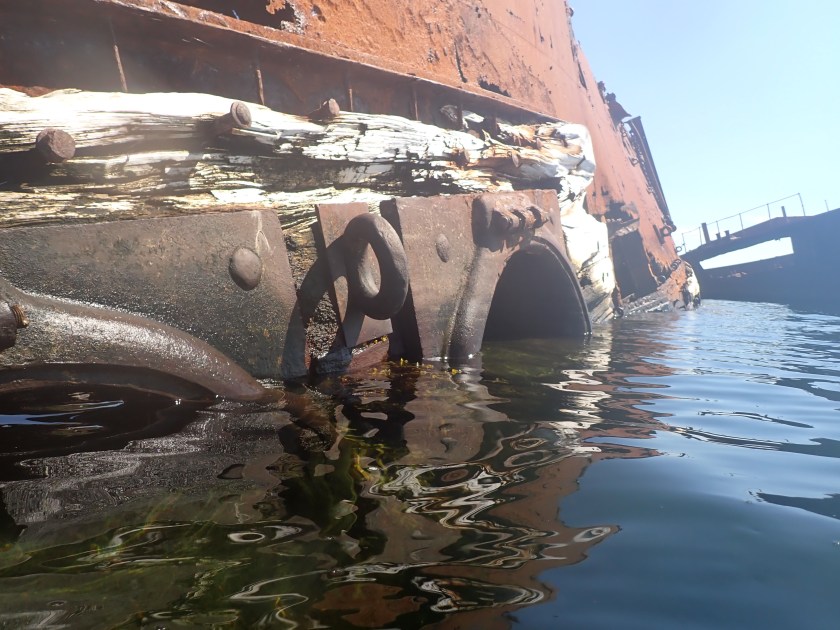
Calypso’s port bows, including two large hawse pipes. This is one of the most recognizable sections of the derelict hull (Credit: http://www.warsearcher.com). Inset image shows Calypso under sail, driving before the wind, ca. 1898. Credit: Imperial War Museum, Symonds & Co. collection (Q 21057).

In 1883, Robert Falcon Scott, a young midshipman serving in HMS Boadicea, sat down to sketch a picturesque seascape and a lovely ship: The newly-commissioned HMS Calypso. Boadicea, an older corvette, was sold to the scrappers at the turn of the 20th Century. Scott went on to legendary fame as a polar explorer, before perishing in Antarctica after attaining the South Pole in 1912. All these decades later, Calypso remains.
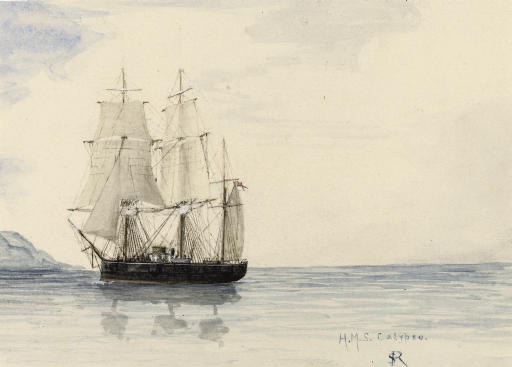
Robert Falcon Scott sketch of Calypso, ca. 1883, sold at a 2007 Christie’s auction. Via wikimedia commons

Sir Nathaniel Barnaby, Director of Naval Construction, had designed this and several predecessor classes of corvettes, and sisterships Calypso and Calliope were both built at Chatham Royal Dockyards. Where earlier corvettes were built of a mix of iron frames and wood planking, the Calypso class had a steel hull, with wooden sheathing, and a copper-clad underbody. The modern steel hull was structural and complete, but the wood (mahogany planking above water) aesthetically linked the ships to the rest of the sail-and-steam navy. More wood below the waterline created a barrier between the steel and the same sheets of copper alloy that the Royal Navy had used to protect its ships from wood-boring marine life and biofouling since the mid-eighteenth Century.1
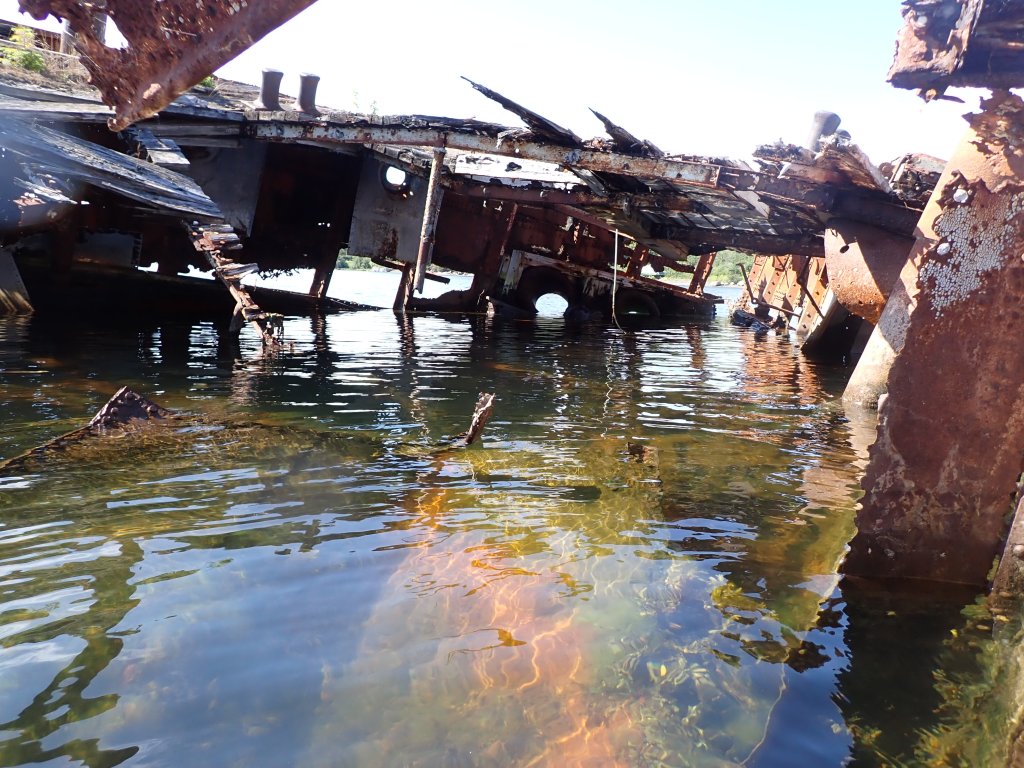
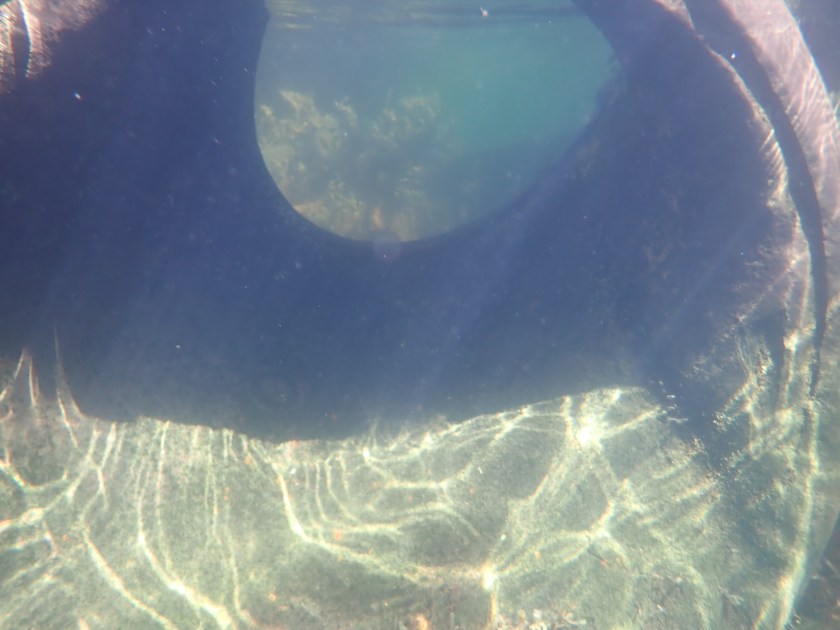
The view looking forwards towards the bows of the ship, with the inside of the distinctive hawseholes and some of the forecastle deck remaining above, including the cutout for the forward skylight, portholes, and a pair of heavy bollards. The steel hull is the reason that any of the structure of Calypso survives today, after deterioration and fire damage. Credit: http://www.warsearcher.com

The ship had vestigial features from the Victorian sailing navy: A towering three-masted sailing rig, a broadside layout of cannon, and elaborate stern galleries (which were merely decorative cladding).2 Contemporary photographs show that the Calypso had a spectacular appearance with all sails set, and, when running before the wind, studdingsails could extend the canvas outwards like wings. Improving on the Barnaby’s earlier Comus class, they were slightly longer, at 235’/71.6 m between perpendiculars, and heavier, at 2,700 tons. They were substantially more powerful, with larger engines that could propel the single screw with over 4,000 units of installed horsepower.3

HMS Calypso‘s original appearance, with a stately rig and aesthetic elements derived from the wooden-hulled sailing frigates. Allan C. Green original glass negative in State Library of Victoria, Australia, Public domain, via Wikimedia Commons

The class was armed with modern 6” breech-loading rifled guns.4 These were mounted in four sponsons (structures that mount armament which project out from the hull), with a wide field of fire. Five gunports were sited along the upper deck between the sponsons. A 5″ gun was mounted behind each port. Quicker firing light guns, Nordenfelts, were mounted high on the bulwarks, and were intended to protect from smaller, faster craft, such as torpedo boats. The two ships had a pair of 14″ diameter “carriage torpedoes.” These used compressed air to launch themselves out of cradles to start their run. Like the Comus class, the Calypsos had a partially-armoured deck of steel that protected some of the vital machinery – engines and boilers – low down in the hull just under the waterline.
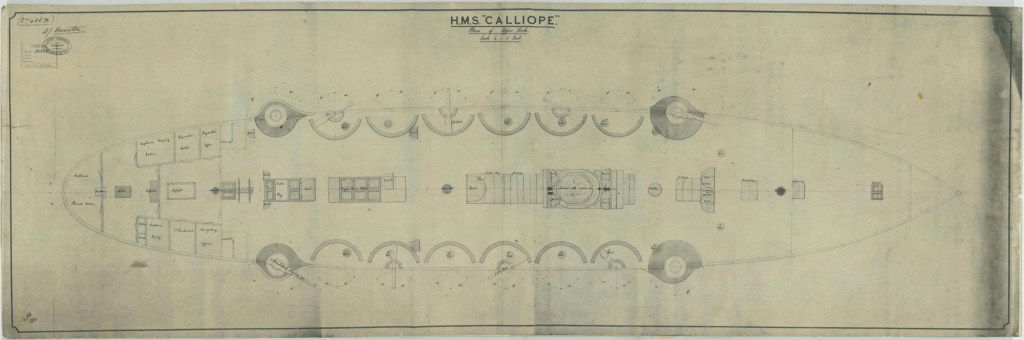
Plan of Upper Deck of HMS Calliope (1884) National Archives and Records Administration 78116457
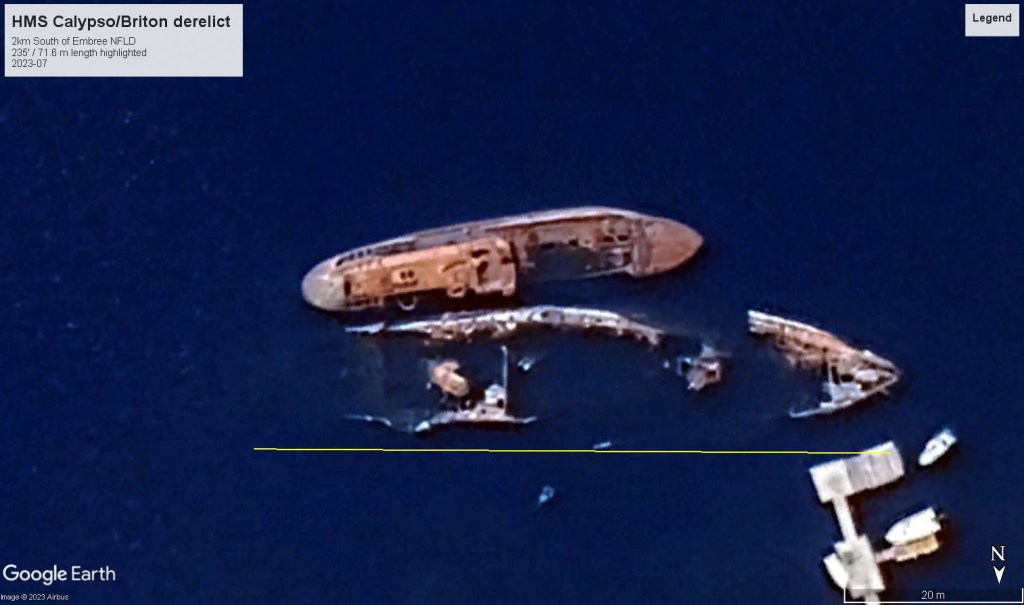
A recent Google Earth capture from July 2023 of the remains of Calypso, with a smaller trawler outboard. The google earth historical imagery shows marked deterioration since the first image, from 2006.

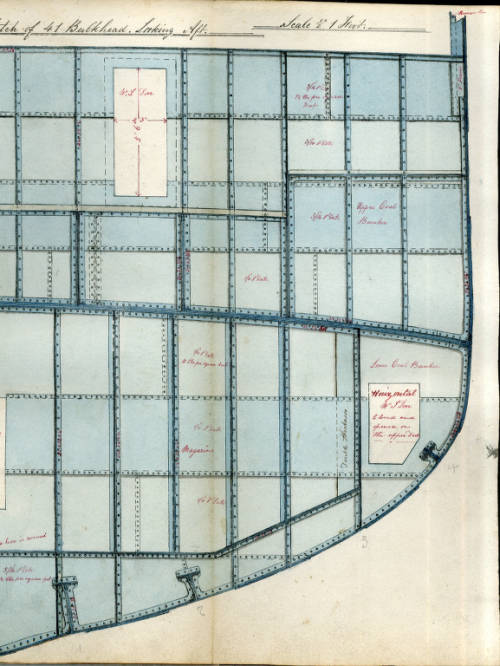
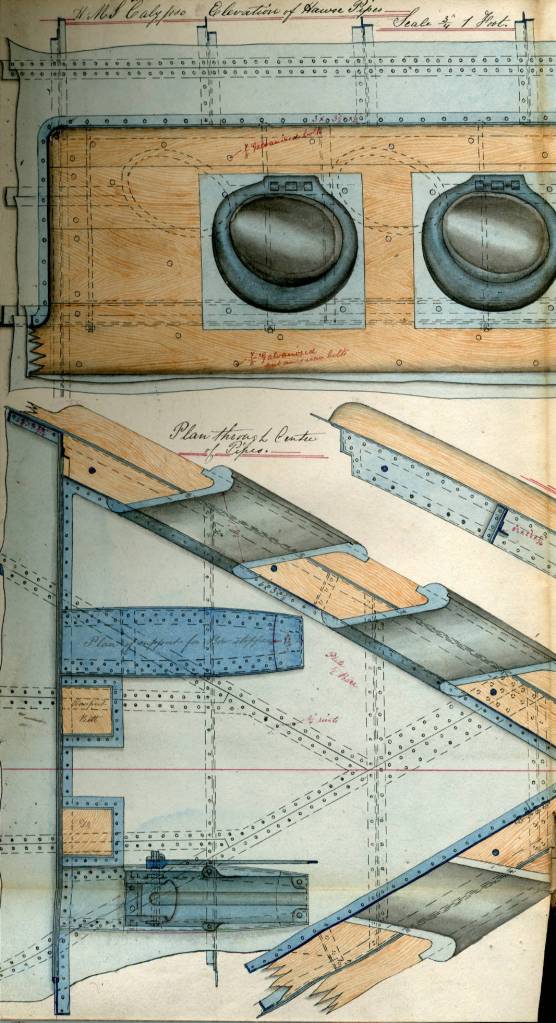
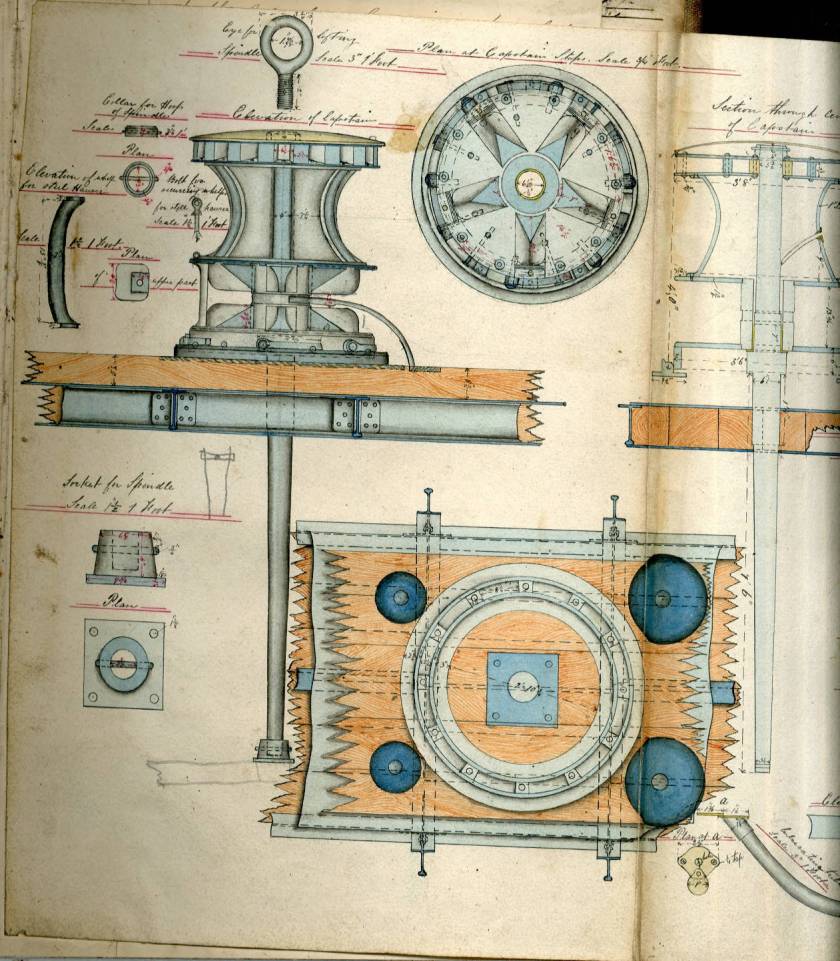
Predecessor Royal Naval classes had abandoned the graceful clipper stem for an upright bow with a massive bronze ram installed underwater. These were the last Royal Navy corvettes with a full sailing rig. Gaping deck ventilators and a wide buff-coloured funnel broke up the run of the upper deck. The ships were designed to be economical for long-distance cruising about the far-flung British Empire, and could sail and steam between widely-dispersed coaling stations. A contemporary folio of design blueprints, today in the archival collection of the Maritime History Archive, Memorial University, Newfoundland and Labrador, helps us reconstruct some of these technical design features (look out for these structures in our photos of what remains of Calypso elsewhere in this post)5:
Unfortunately, from the day they were designed, the idea of a sailing-steaming corvette cruising the world’s oceans was on borrowed time: A new generation of cruisers, the Leander class were being designed, and the Admiralty quickly halted plans to build more corvettes.6 The Leanders were larger, heavier, more powerful, and had more armour and more bunker capacity to steam to distant ports, or police merchant sea lanes. They improved upon the Iris class despatch vessels, and had a similarly cut-down barquentine rig.

Calypso’s Sistership HMS Calliope -completed in 1884- had an eventful career in the Far East, gaining fame for being the sole surviving warship from a terrible cyclone off Samoa in 1889. Calliope became a drill ship on the Tyne in 1907, and survived until dismantlement in 1951. Her name is perpetuated by the current shore establishment at Gateshead.
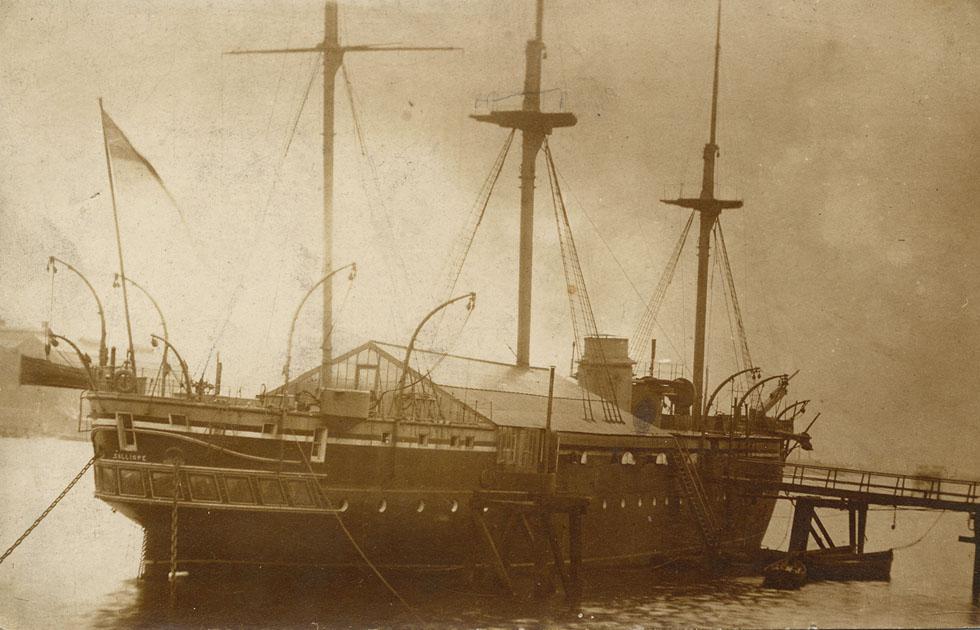
HMS Calliope at Blyth, ca. 1920 . This shows the trim appearance of the class, which is hulked with a built-up quarterdeck housing and rigging mostly unshipped, but still has the sponsons and funnel fitted. Credit: From an uncredited postcard collection, Public domain, via Wikimedia Commons

Calypso had a brief period of active service, cruising to distant ports as a member of the Sail Training Squadron. In 1895, Walter Hose, who would go on to serve as Director of the (Canadian) Naval Service during the Interwar era, was posted to Calypso. She was laid up at the end of the Nineteenth Century. In 1902, she was taken out of reserve and sent to Newfoundland to help train naval reservists in St. John’s for the newly-created Newfoundland Royal Naval Reserve. Newfoundland was the first colony where a naval reserve was formally established, and the Dominion was seen as a potential goldmine of seafaring experience, with many residents connected into seafaring traditions in the ports and outports of “the Rock.”7 Calyspo’s sailing and steaming days were over; the vessel was quickly converted to a depot ship, with deck houses built over the weather deck, funnels and machinery taken ashore, and most of the masts taken down.

Across the North Atlantic from Calliope, at St. John’s, Newfoundland, here is a similar view of Calypso around 1915. The false gallery windows have been emphasized in white, which also are cut-through with two heavy stern hawse pipes. The standing lower mizzen mast, the only vestige of the original rig, would remain a feature of the ship until at least 1960. Credit: Maritime History Archive, Malcolm Griffin Sealing Album collection PF-345.004

During the First World War, the Calypso establishment trained many young Newfoundlanders for service with the Royal Navy. Almost 2,000 members served in everything from the massive battlewagons of the Grand Fleet, to armed trawlers, and 192 died.8 Alongside the Royal Newfoundland Regiment, the Forestry Corps, and merchant mariners, they represented the Dominion’s outsized-contribution to the Allied cause.
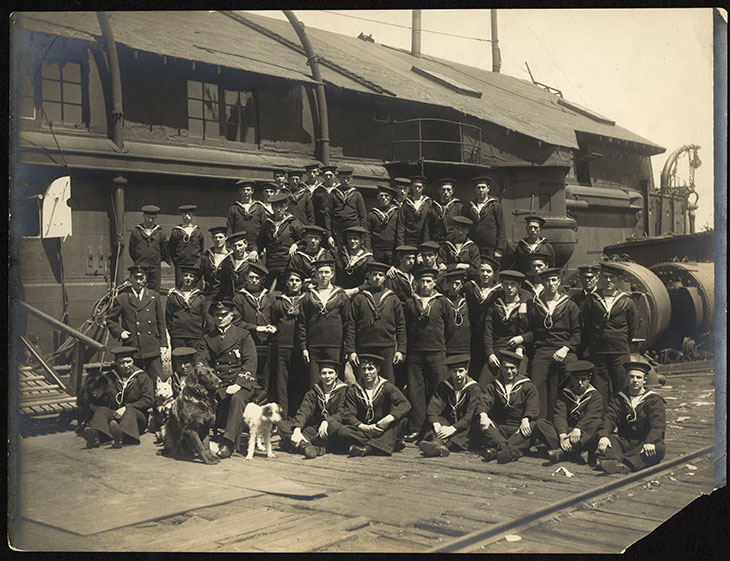
Reservists alongside the forward starboard side of Calypso, St. John’s, ca. 1916-1922. The ship still has armament in the sponsons, a Hotchkiss gun mounted near the gangway, and a heavy anchor suspended from the forward davit. Credit: The Rooms, Collection MG 110, Item A 142-30; B 3-29; NA 1529
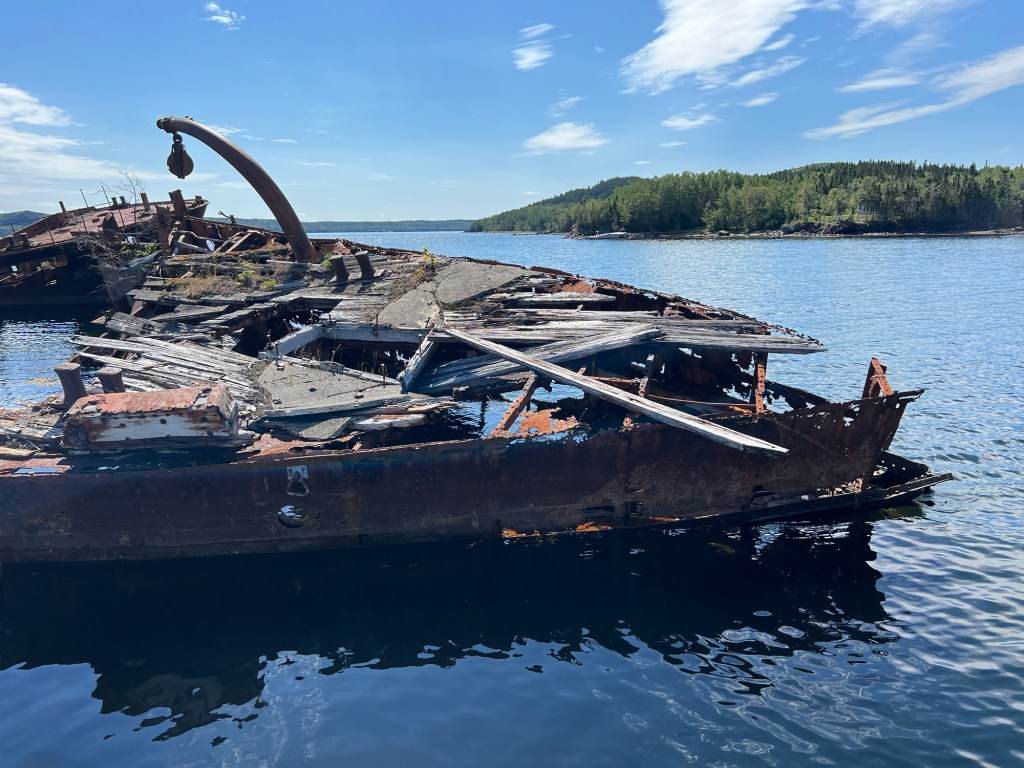
The starboard bows, showing the remains of forecastle decking, skylights, paired bollards and a heavy fish davit for the anchors. Credit: http://www.warsearcher.com

Calypso was renamed HMS Briton in 1916, to leave the name available for the new “C” Class cruiser. Eventually, Briton was sold off in 1922 to become a salt hulk in St. John’s. Moved to Lewisporte in 1952, most of the interior was stripped of valuable items. Some local residents hoped to save the moldering vessel for preservation. Instead, during 1968 the hulk was towed slightly north to near Embree, and set on fire.9
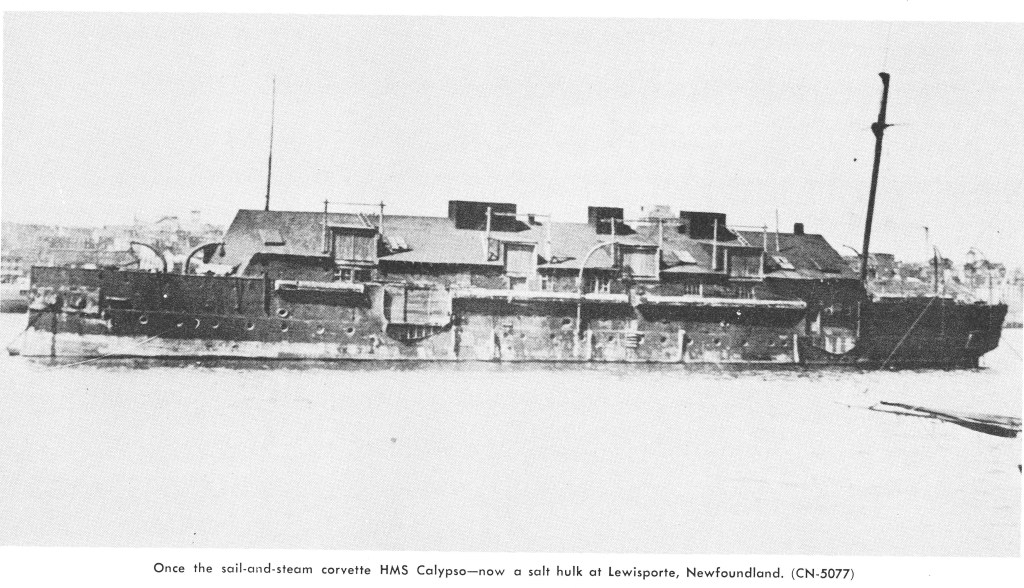
Calypso/Briton hulk with both port sponsons removed, decks built-over, and the lower mizzenmast still stepped. The photo was taken at St. John’s before the tow to Lewisporte. The Crowsnest Vol.12 No.4 Feb. 1960 P.15, Department of National Defence CN-3077.

The derelict has slowly deteriorated there ever since.10 Today, she functions as a sort of jetty or breakwater, alongside an old fishing trawler. There is remarkable drone and video footage of the site from 2022 at “Discovering Newfoundland.”11 Take a look at the footage below to see the submerged portions:

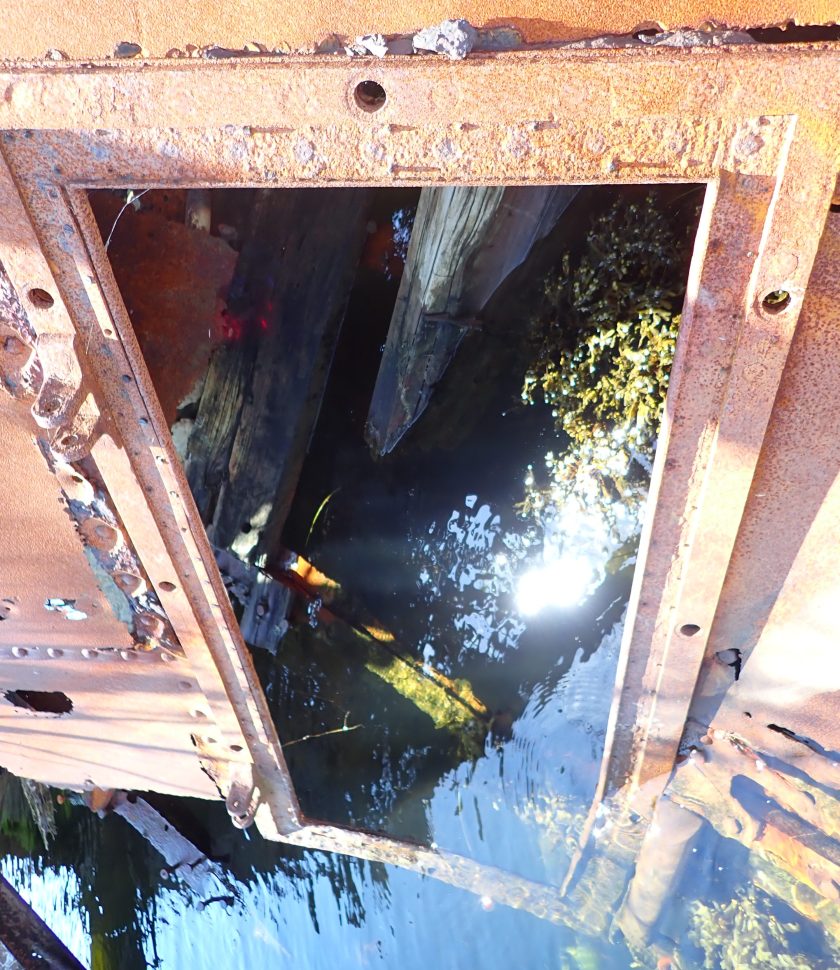
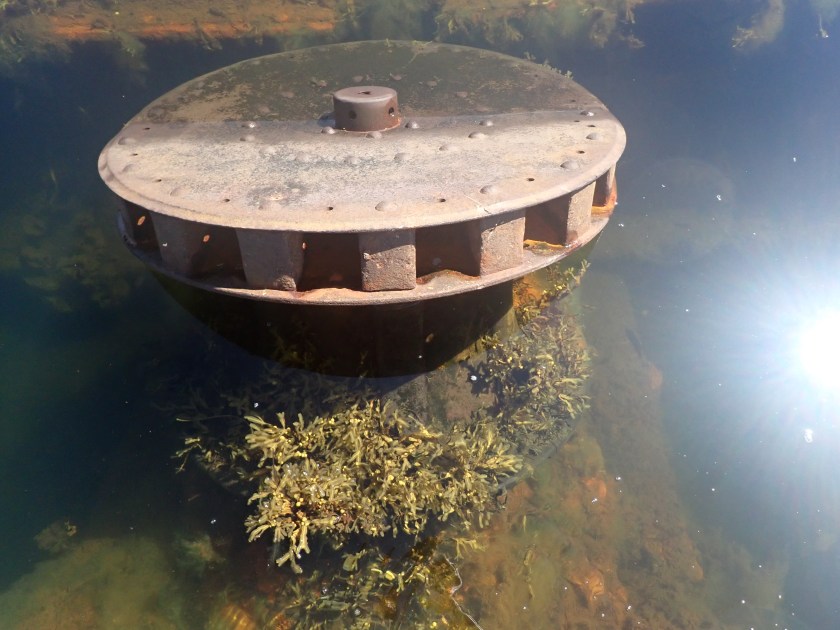
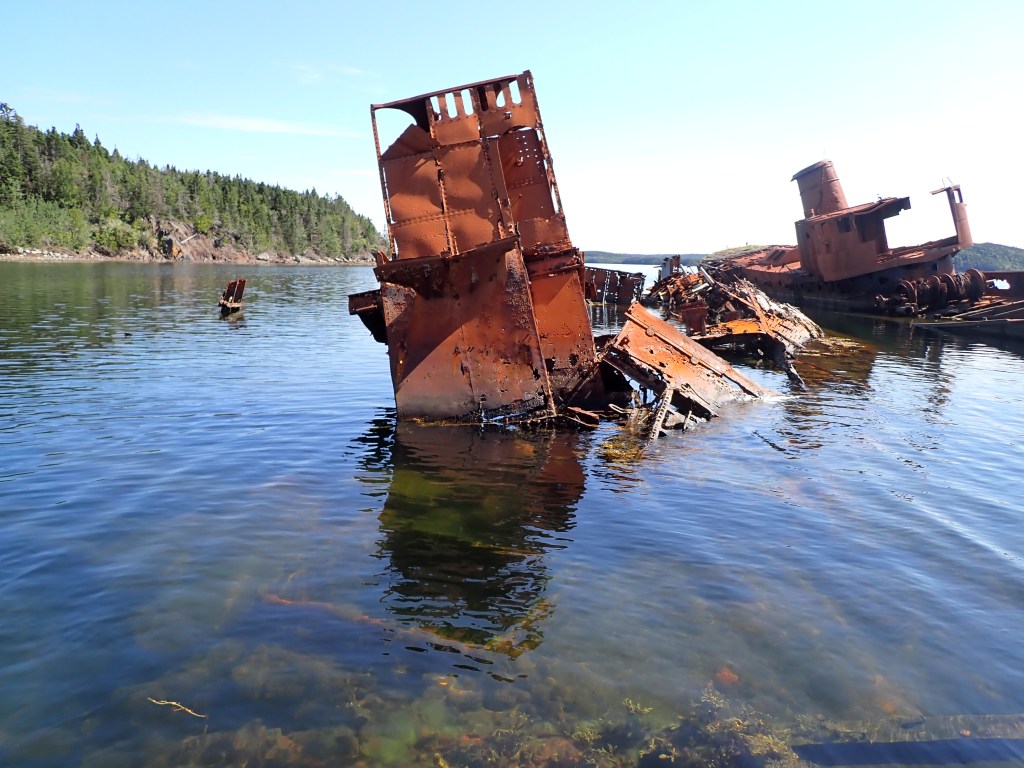
On a recent trip to Newfoundland, I had a chance to visit Embree and swim around the remains. The hull has settled at a slight list to starboard. The bows are most recognizable, along with the some of the ship’s deck structures, which rise out of the muck. These tall boxy features originally housed a set of ventilators, connected by a louvered structure. As the above drone footage shows, the submerged stern section is recognizable, and, incredibly, Calypso still had the remains of the lower mizzen mast jutting upwards above the site in 2022!12 The capstan, about a third of the way aft from the bows, is one of the remaining distinctive naval artifacts.
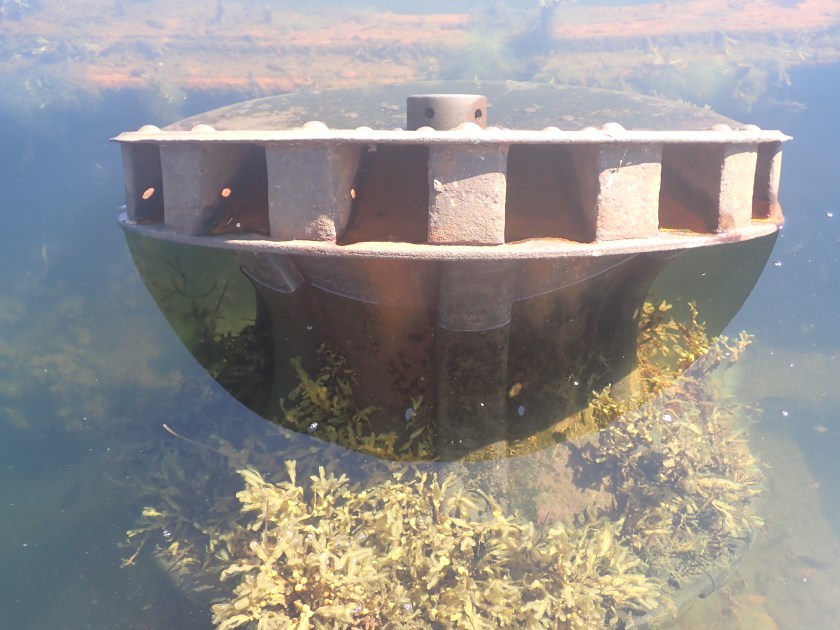
Much of the starboard side, adjacent to a small pier, is collapsed and displaced outwards onto the bottom. A small portion rises where the wheel would have been, where a bulkhead still shows a doorway.
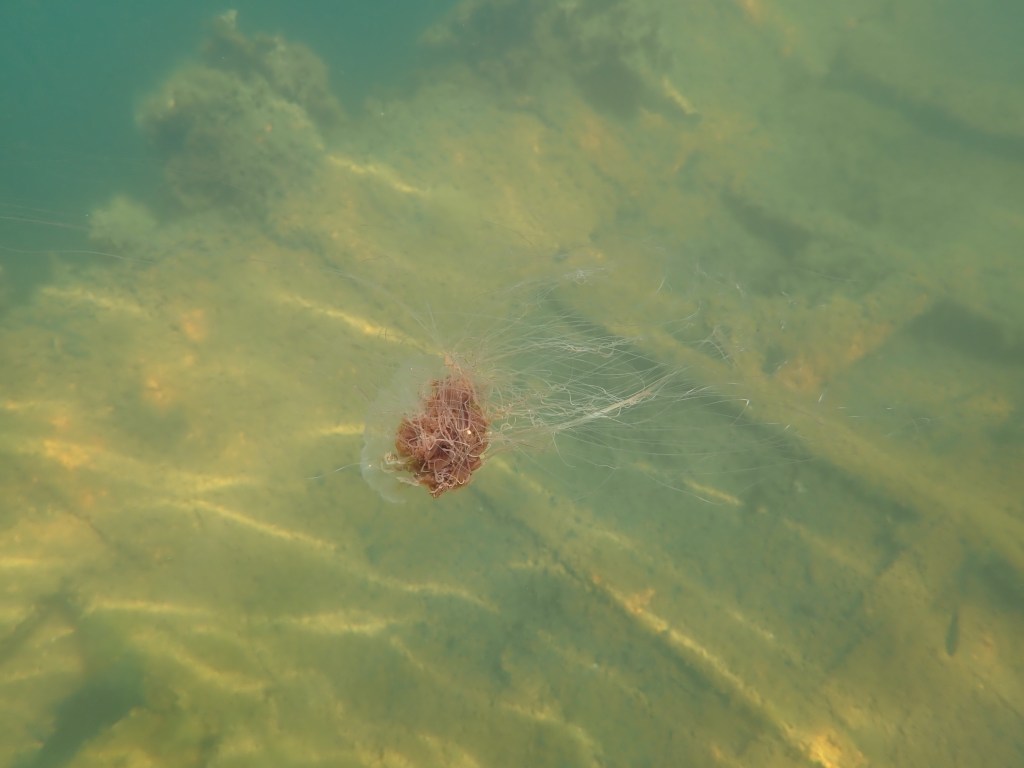
The now submerged starboard side, with a visiting jelly fish. Much of that side appears to have collapsed outwards onto the cove seabed. Credit: http://www.warsearcher.com

Immediately forwards of that is the housing for a large central ventilator with another distinctive louvered top. The port side elevation is more intact. In addition to this massive semi-submerged hulk, there are many artifacts which are preserved from Calypso.
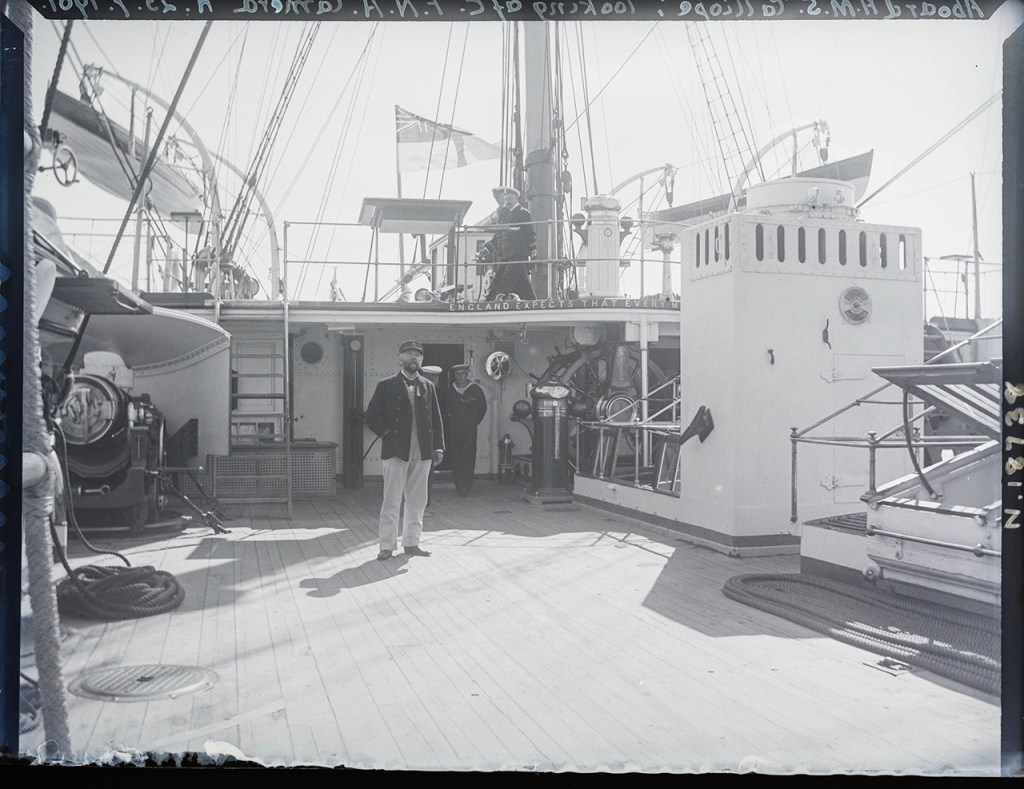
On deck of HMS Calliope in July, 1901, at anchor in the Downs, looking after towards the poop with the ships double wheel. A 6” gun is at left, while at right there is a distinctive deck structure, near the ladders to the lower deck, that trunked up a single large ventilator. N18738 Credit: National Maritime Museum, Greenwich, London, Adams Collection
We are roughly at the level of the upper deck, looking aft from the original break of the forecastle deck. A similar structure near the forward ladderway is one of the remaining highpoints of Calypso. It originally brought a matched set of ventilators above deck level (note two circular cutouts in the original roof). Credit: http://www.warsearcher.com

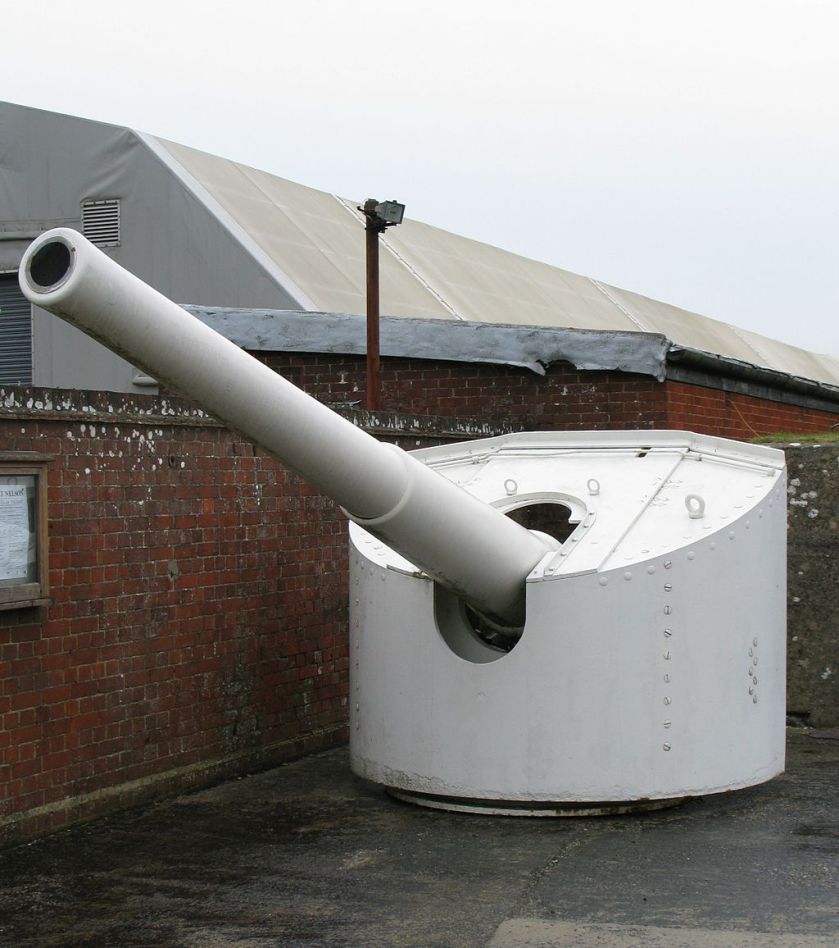
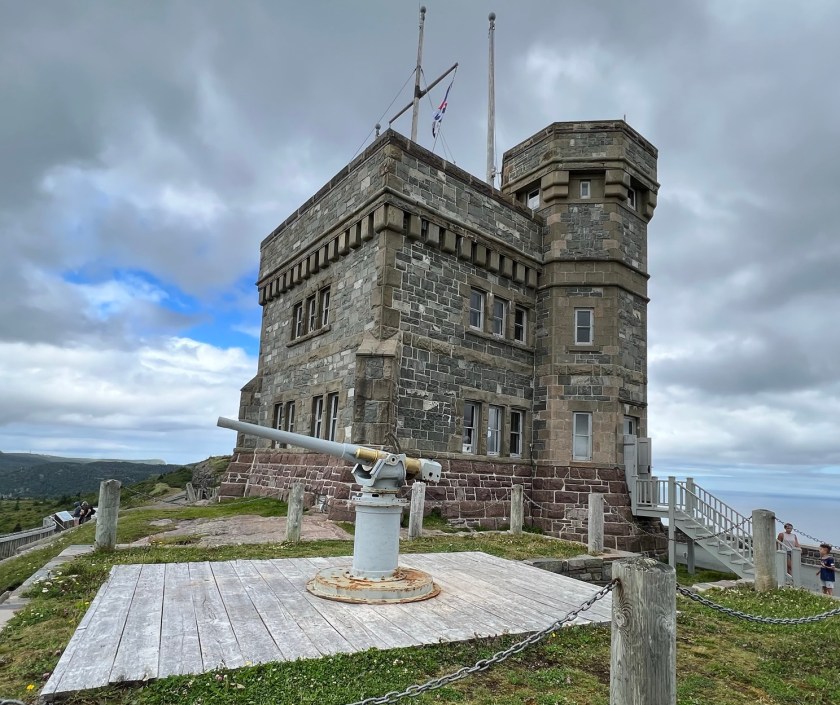
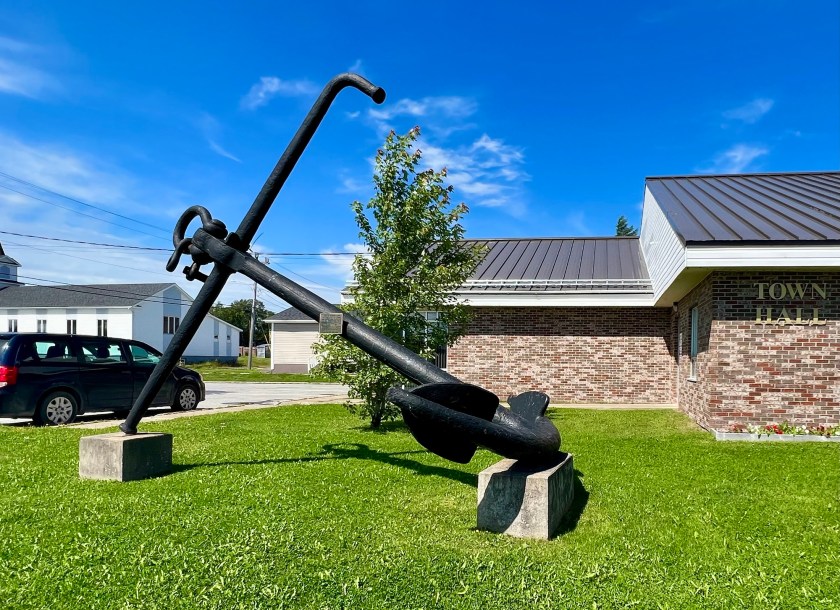
One of the ship’s large stockless anchors is now on display at Embree, while one of the 6” guns that originally was housed in one of the four sponsons is on display back in Portsmouth, UK. Two 3 pdr. Hotchkiss guns said to be from Calypso are also found at the shore establishment in St. John’s, HMCS Cabot, and near Cabot Tower at Signal Hill.13 This last still serves as a Noon Day Gun during the Summer!
Back where it all began, at Chatham dockyards, we are fortunate to have a preserved example of a smaller Barnaby design: A Doterel class sloop. HMS Gannet was about half the size of Calypso, and commissioned five years earlier. Like Scott’s old ship Boadicea, Her hull is composite – wood with iron frames – and she has a more traditional clipper bows.14 However, many of the interior spaces share much in common with Calypso, and this preserved museum ship has a sponson aft and quick-firing Nordenfelts installed!
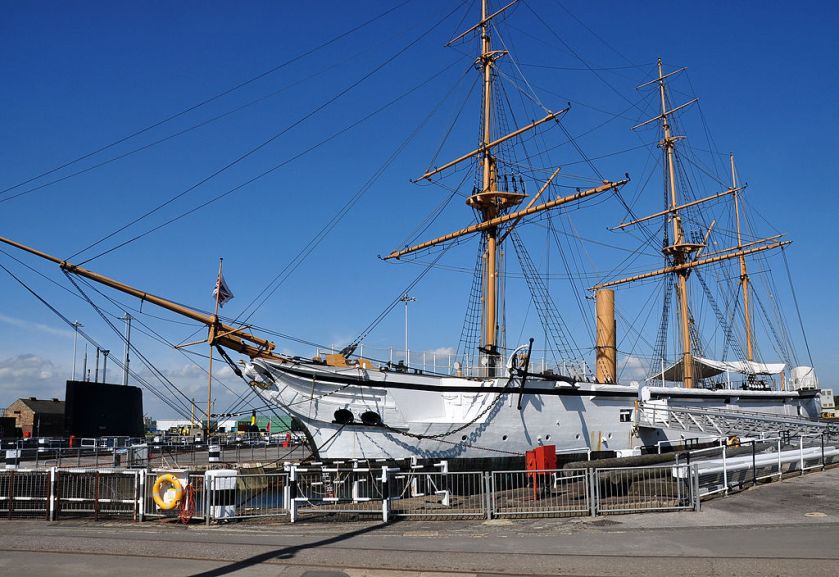
HMS Gannet at Chatham, ca. Credit: Nilfanion, CC BY-SA 4.0 , via Wikimedia Commons

Do you have old photos of HMS Calypso / HMS Briton that could complement the above post? Please comment!
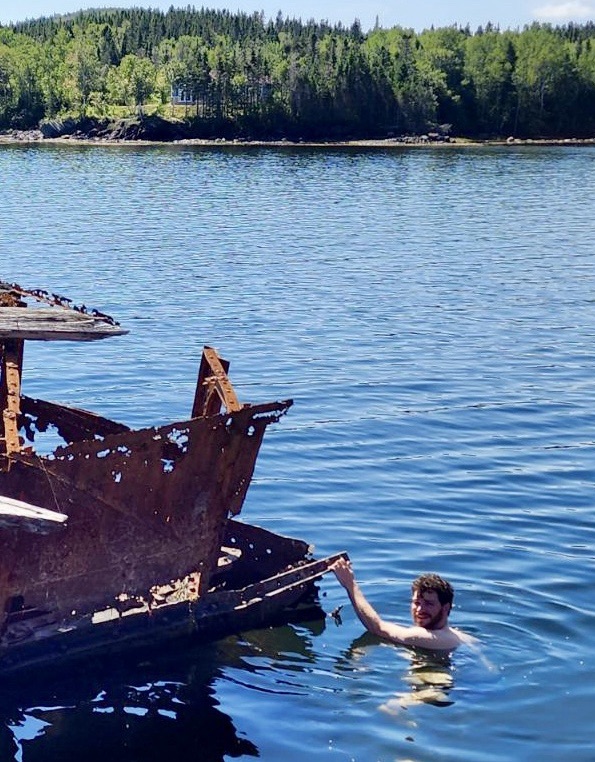
The author, looking for and not finding any remains of the bronze stem.
References (CLICK)

Propelling the Terror – modelling a lost Franklin Expedition Ship’s “Steampunk” Victorian Stern

I recently wrote “Could I contemplate a scenario where new information would compel me to get back to work revising my Terror diorama?”1 Well, that situation happened almost immediately! In this post, I focus on what may seem a minor discovery – HMS Terror’s 1845 screw propeller. I argue that it is one of the outstanding finds at either Franklin Expedition wreck site. I will explore the history of this well-preserved artifact and situate it in a revolutionary program of naval ship design. I will conclude by showing how I incorporated the propeller into my diorama of the wreck site.

One hundred and eighty years ago, a visitor to Her Majesty’s Dockyard, Woolwich, near London, would have been treated to a memorable sight: one of Queen Victoria’s warships – under refit to explore the Arctic – was up on the stocks in dry-dock. This was one of a pair of bomb vessels (a type of specialized mortar-armed bombardment ship) which had been converted years before for polar missions. These tough ships had more than proved their mettle during James Clark Ross’s wildly successful expedition to Antarctica. Now the duo – each painted in severe black with a broad white strake stretching along the hull – had been selected for a new “Discovery Service” mission, to be commanded by Sir John Franklin: Complete a Northwest passage across the top of North America. Walking around the dock to the ship’s stern, that visitor would have seen something unusual: a strange cavity low down at the swollen stern post. This was just inboard from an enormous rudder. The hole opened clear through to the other side, like some casemated gun embrasure. Set into this void was a metal monstrosity: A cylindrical shaft with two broad blades twisting away from it. The visitor may have recognized this as a screw propeller – a marvel of the age. When coupled by a long shaft to a steam engine mounted in the bowels of the ship, the rotating screw could propel the vessel – all without a single sail of the lofty three-masted rig drawing a favourable breeze. If that same visitor had returned later, they may have felt the dupe of some trick: the machinery could have completely disappeared, leaving the man-sized hole. As if by some further sleight of hand, the whole cavity could have also appeared closed up, with only a faint rectangular outline now in evidence. What category of navy ship was this anyways? A sometimes-steamer with a propeller that unscrewed right off?! Indeed, here was something completely new: The first auxiliary screw-propelled polar exploration vessel!

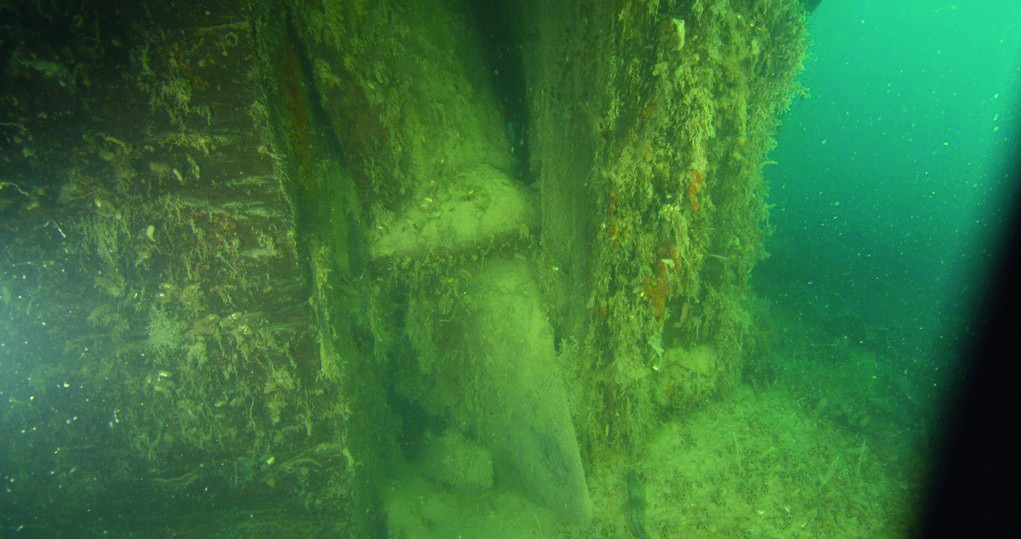
The propeller, lowered and possibly installed in its aperture at the stern of the HMS Terror wreck, as photographed by the Underwater Archaeology Team during the late summer of 2019. Credit: used with written permission of Parks Canada, who retain copyright. Scroll down to the next page to see my model of this area.

Early this year I was searching for information about the 2024 Parks Canada program of archaeology on the Sir John Franklin shipwrecks, HM Ships Erebus and Terror in Nunavut, Canada. Instead, I stumbled upon a new post “Anchors and Propellers” by Franklin Expedition scholar and veteran searcher David Woodman on his site: Aglooka.2 This update assembled interesting information about the ships’ complement of anchors, and also their propellers. Reading on, I encountered a previously unpublished image from the Parks Canada Underwater Archaeology Team (above). I was stopped dead in my wake! Here we see Terror’s screw propeller, installed in its aperture! With this photograph, we have the first visual confirmation that a marvelous piece of Victorian maritime technology has survived relatively intact after more than 175 years of immersion at Terror Bay.3

This simple two-bladed screw is one of the most important artifacts existing at either Franklin shipwreck site. The Commemorative Integrity Statement relating to this National Historic Site of Canada specifically identifies the marine screw propulsion as a character-defining aspect of the sites, demonstrating the 1845 technological innovation of the Expedition.4 From the waterline up, both ships looked much like they had during J.C. Ross’s expedition to Antarctica (1839-1843). Erebus and Terror were also not the first ships with an auxiliary steam engine to go north: In 1829 Ross’s uncle, Sir John Ross, had taken Victory north with an experimental – and mostly useless – steam engine.5 However, the idea of fitting a removable screw propeller into a Discovery Service exploration vessel was truly original. The suggestion came from a superstar in polar exploration. As Dr. Matthew Betts relates in his book HMS Terror – The Design, Fitting and Voyages of the Polar Discovery Ship, the seasoned Arctic explorer Sir William E. Parry – who now had an official role in investigating the optimal methods of steam propulsion in the Royal Navy – believed that the new propulsion technology could give vessels operating in the Arctic Archipelago a big advantage: The ability to navigate tight passages free from any dependence on the vagaries of the winds.6 Having auxiliary steam propulsion available to the Expedition captains could help force a constricted passage, position the vessels to better meet the rigors of overwintering in ice (for example by allowing them to get to a safe harbour or a more sheltered section of coast), or get them clear of an immediate hazard, such as an errant iceberg or a perilous lee shore. Parry’s experience commanding similar vessels in the Arctic provided him with an invaluable perspective on how screw propulsion could support this new attempt to transit the Northwest Passage. The Admiralty endorsed Parry’s idea.

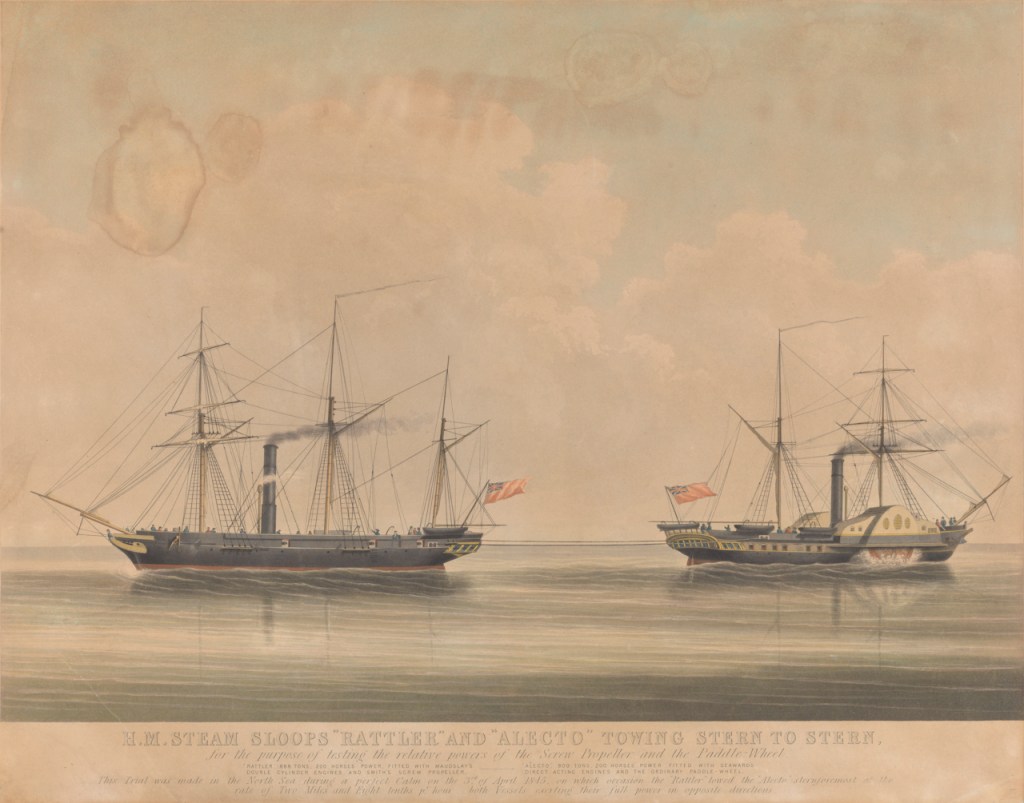
Oliver Lang, Master Shipwright at Woolwich, was responsible for working up a technical plan to meet this new requirement. A half-century after he had begun drafting designs, he remained at the forefront of marine technological innovation. During the early 1840s, the military strength of the Royal Navy still rested on the line of battle ships of the sailing navy, those wind-powered “wooden walls” whose broadsides of cannon had allowed Great Britain to dominate the World’s sea lanes. Lang applied new technologies to both mercantile and Royal Navy vessels. He strengthened the basic structure of warships, packed their hulls with new innovations, and enhanced crew comforts onboard, especially to improve lighting and circulation of air. His innovations helped equip the fleet with larger, stronger, and safer warships. He had recently turned to incorporating steam technology into his designs. There had been experiments with steam engines and, since the early 1820s, some small naval units had been propelled by paddle-wheel. The Admiralty was conducting a series of trials of steamers to test a variety of newly-designed screw propellers against paddle-wheel propulsion.7

The famous trial of H.M. Steam sloops Rattler and Alecto, 3 April 1845 (artist unknown). Rattler (left) displays Lang’s newly-installed mizzen mast. PAH0923 Credit: National Maritime Museum, Greenwich

Lang’s own treatise Improvements in Naval Architecture (1853) is an important source for understanding his remarkable career. In his own words he “Arranged and fitted the first SCREW propeller to ship and unship in a TRUNK, so as to be taken up on deck in the ships “Erebus” and “Terror” on the late Arctic Expedition for Sir John Franklin.”8 The years 1844-46 were a busy period for Lang, which saw him embark on an ambitious campaign of propeller experimentation, design, and installation. He had first improved upon Rattler’s recently-installed propeller by re-rigging this steamer with a new mizzen mast, which could be used to lift the propeller in its frame straight upwards through a slot which communicated with the steamer’s weather deck. This allowed the crew to ship and unship the propeller, without specialized dockyard facilities.

While building the large steam frigate HMS Terrible (1845 – fitted with paddle wheels), he moved on to designing and fitting his first complete naval propeller assembly. HMS Phoenix (1832) was modified from a paddle-wheeler to a screw steamer. Most of the essential elements of a Lang screw-fitted stern were now in place: propeller aperture, screw propeller, false stern or rudderpost behind the sternpost, a passage for lifting the screw upwards to the weather deck, and the means for lifting it out. The modifications to the Phoenix were underway when he got the “rush order” for the work on the two Northwest Passage exploration vessels.9

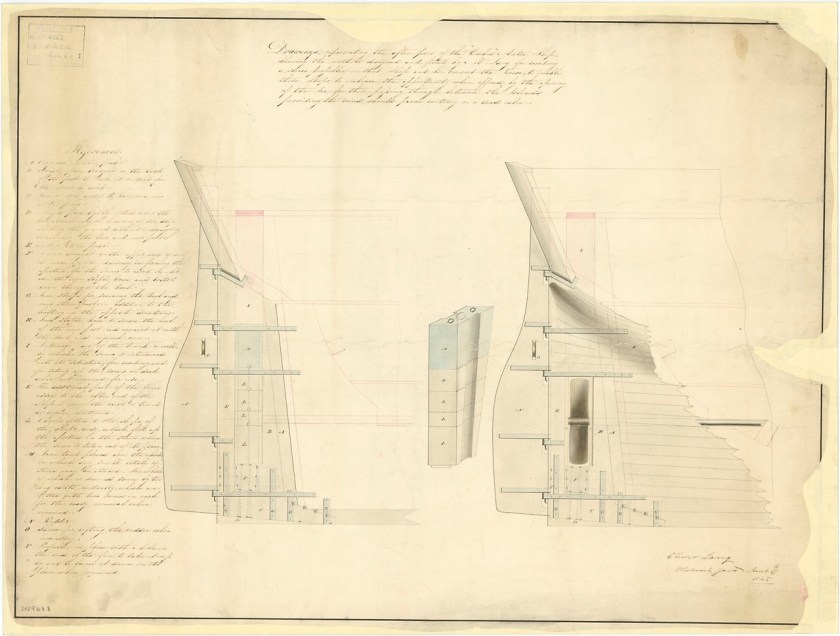
March 1845-dated plan of the modifications to the stern of both HMS Erebus and Terror, showing the massive rudder and stout construction. At left the screw propeller is raised and the full chock fills the aperture, while at right the simple two-bladed screw is installed and connected to the shaft which leads forward to the railroad steam locomotive that was installed in the hold. © Crown copyright. National Maritime Museum, Greenwich, London ZAZ5683, CC BY-NC-ND

The main difference in modifying Erebus and Terror with auxiliary propulsion (with much less powerful steam engines converted from railway locomotives) was that the screws would only be fitted during occasional steaming, and chocks would fill each ship’s propeller aperture most of the time. This filler needed to streamlined into the lines of the hull to not weaken a vulnerable area, and to continue to guide the flow of water aft to the rudder. Lang’s other designs had the propeller fitting into its own iron frame, with the entire assembly lifted through a narrow passage to the deck, or lowered back in place. Erebus and Terror, by contrast, had rails that guided the propeller, which was lifted on its own.

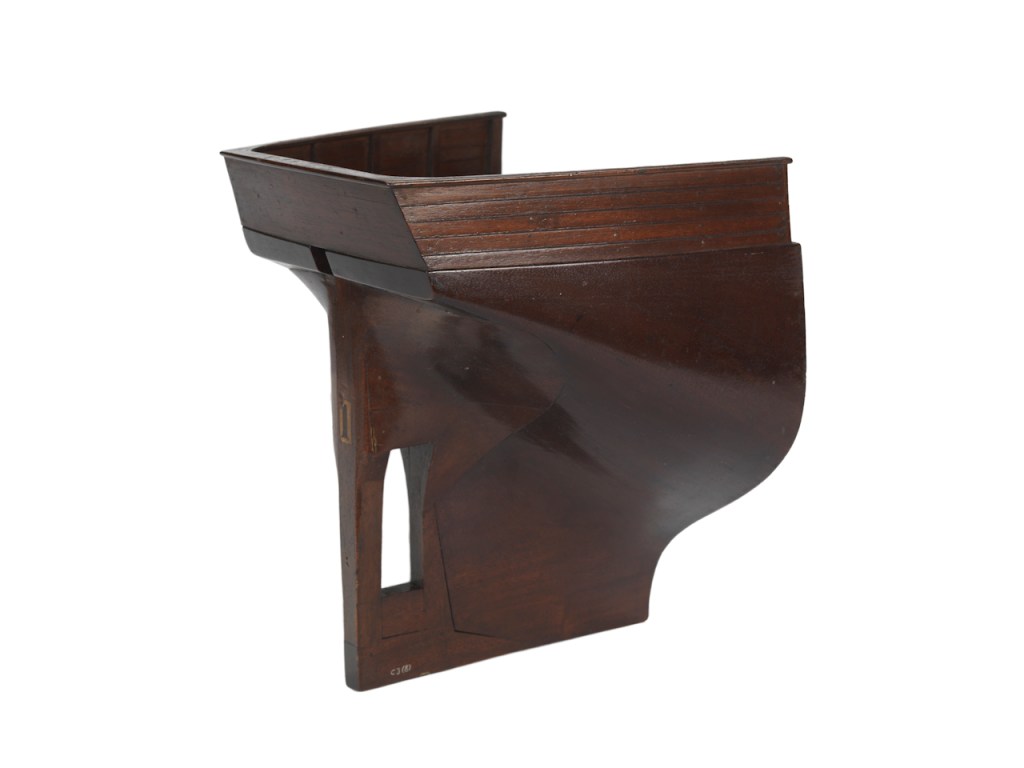
A model of the stern of the Arctic ships as modified by Lang in 1845, showing the propeller aperture, and the bracing of both the stern post and new rudder post to permit the propeller to be hauled up into the trunk and on deck. A view from above shows the almost square passage for lifting or lowering the screw and installing the chock, and the smaller opening for the head of the rudder. Like at the wreck-site, the enormous rudder that would normally project aft is absent. SLR2253 Credit: National Maritime Museum, Greenwich, London.

Phoenix was ready in February 1845, and Lang moved to the design of HMS Niger, which would go on to be used in a more balanced round of evaluations of screw-versus-paddle propulsion (with Niger and Basilisk a closer match than Rattler and Alecto had been). During April, the Franklin ships were modified with their unique combination of adapted railway steam locomotive – installed deep down in the after hold – and auxiliary propeller. Woolwich dockyards had its own highly specialized engineering facility – the “Steam Factory” – with the equipment and docking slips to install the new steam systems. Lieutenant Henry T.D. Le Vesconte of HMS Erebus provided a contemporary description of the work. Writing to his father on 2 April 1845 – after he discussed the excellent prospects for promotion that would come his way by serving with the Franklin Expedition – he noted: “The ships are at present in dock where we are rigging each and stowing them while the shipwrights are altering their sterns by bracing on abaft the stern posts an large mass of timber of the same thickness in which to work the screw propellers the engines will be put in next week[…].”10 After the engines and propellers were tested, and the ships finished provisioning, the Expedition departed from Greenhithe, 19 May 1845. (Continue to explore Terror’s screw propeller on the next page)